Best Container Tracking Apps in 2026: 7 Tools Compared

- project44 is our pick for broad carrier coverage and supply chain visibility.
- FourKites suits shippers that want tracking plus yard, order, and network tools.
- Vizion and GoComet suit teams that need tracking data through APIs or a focused platform.
- MarineTraffic, ShipsGo, and Container xChange suit vessel tracking, small shippers, or container trading needs.
Quick comparison
| Product | Ideal for | Price from | Free version | |
|---|---|---|---|---|
 project44 | Broad supply chain visibility | See website | No | Visit |
 FourKites | Tracking plus network tools | See website | No | Visit |
 Vizion | Tracking data through APIs | See website | No | Visit |
 GoComet | Focused shipment visibility | See website | No | Visit |
 MarineTraffic | Vessel and port tracking | Free | Yes | Visit |
 ShipsGo | Simple container tracking | See website | Free trial | Visit |
 Container xChange | Container trading and tracking | See website | No | Visit |
The best container tracking apps
Container tracking tools give shippers visibility into where a container is, when it will arrive, and what delays may affect it. For freight teams, that visibility replaces endless carrier website checks and email follow-ups.
We compared official product pages and pricing pages for each tool below. Our pick for most shippers is project44, because its network coverage is broad and its tracking data feeds into planning and customer updates.
Tracking quality depends on carrier data, so no tool can guarantee perfect real-time positions. The best tools combine carrier data, milestones, and alerts into a clear picture.
project44
Ideal for: Broad supply chain visibility
project44 provides supply chain visibility across ocean, air, road, and rail, with container tracking at its core. Shippers can follow containers, receive milestone updates, and share arrival estimates with customers.
Pricing is enterprise level and custom, and setup involves integrating carrier and system data. For larger shippers, the breadth of coverage justifies that effort.
Our view: the best broad visibility platform for serious shippers.
Bottom line: project44 is a strong fit for broad supply chain visibility, and its main draw is broad carrier network. Weigh that against the limits above before you commit, and test it with your own real work during any trial or free period.
- Broad carrier network
- Container and shipment tracking
- Customer update tools
- Enterprise pricing
- Setup needs integration work
FourKites
Ideal for: Tracking plus network tools
FourKites offers real-time supply chain visibility with container tracking, plus tools for yards, orders, and network performance. Its network covers many carriers and modes.
Like project44, it is enterprise priced and needs implementation planning. Shippers that want tracking plus wider network tools will value its breadth.
Our view: a strong enterprise alternative with broad network tools.
Bottom line: FourKites is a strong fit for tracking plus network tools, and its main draw is real-time tracking network. Weigh that against the limits above before you commit, and test it with your own real work during any trial or free period.
- Real-time tracking network
- Yard and order tools
- Broad mode coverage
- Enterprise pricing
- Implementation takes planning
Vizion
Ideal for: Tracking data through APIs
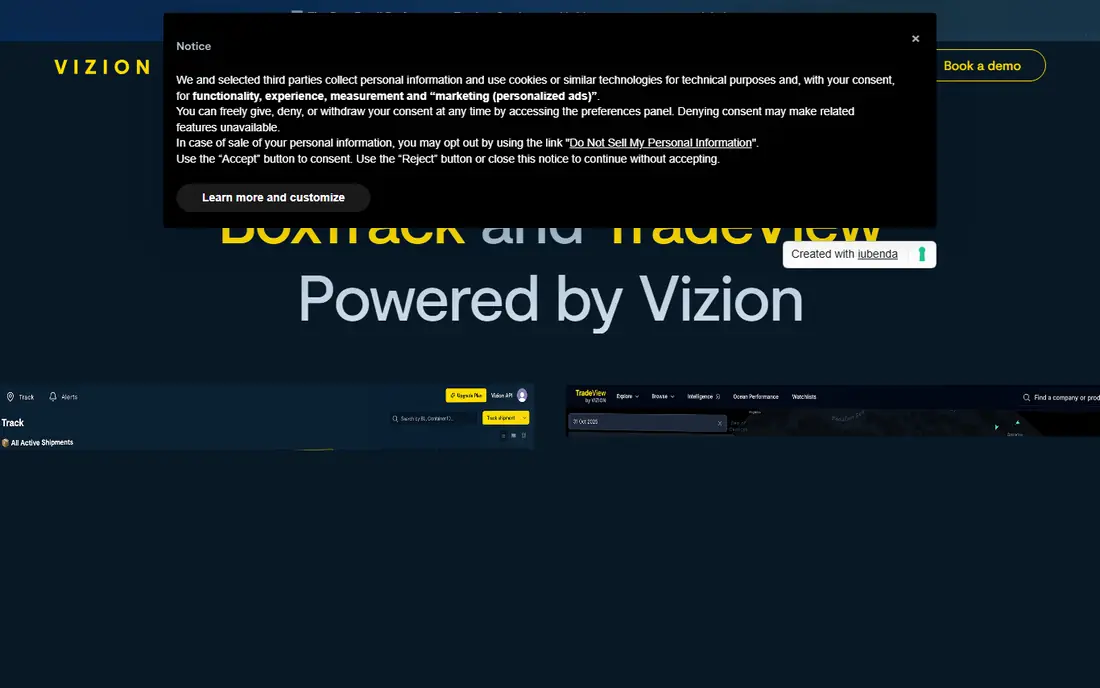
Vizion provides container tracking data through APIs, letting teams pull carrier milestones and events into their own systems, dashboards, or customer tools. It suits technical teams that want data, not another dashboard.
Non-technical teams may prefer a full platform such as project44, since Vizion focus is data delivery. Pricing is custom by volume.
Our view: the best API-first tracking data option for technical teams.
Bottom line: Vizion is a strong fit for tracking data through APIs, and its main draw is aPI-first container tracking. Weigh that against the limits above before you commit, and test it with your own real work during any trial or free period.
- API-first container tracking
- Carrier milestone data
- Developer friendly
- API focus means less built-in dashboard polish for non-technical teams
GoComet
Ideal for: Focused shipment visibility
GoComet offers container tracking, milestone updates, and shipment planning in a focused platform for shippers and freight forwarders. Its dashboards are clear and its setup is lighter than enterprise giants.
Carrier network breadth is smaller than project44 or FourKites, so check coverage for your main lanes. For mid-size shippers, its focus is a good fit.
Our view: a focused visibility platform for mid-size freight teams.
Bottom line: GoComet is a strong fit for focused shipment visibility, and its main draw is container tracking and milestones. Weigh that against the limits above before you commit, and test it with your own real work during any trial or free period.
- Container tracking and milestones
- Shipment planning tools
- Clear dashboards
- Smaller network than enterprise giants
- Pricing is custom
MarineTraffic
Ideal for: Vessel and port tracking
MarineTraffic tracks vessels live using AIS data, showing positions, routes, and port calls. It helps anyone follow a ship carrying containers, even without a freight platform subscription.
It tracks vessels, not individual containers, so container-level milestones need a freight tool. A free tier covers basic vessel tracking, with paid plans for more data.
Our view: the best free tool for following the vessel behind a shipment.
Bottom line: MarineTraffic is a strong fit for vessel and port tracking, and its main draw is live vessel positions. Weigh that against the limits above before you commit, and test it with your own real work during any trial or free period.
- Live vessel positions
- Port and route data
- Free tier for basic tracking
- Container-level detail is thinner than freight platforms
- Advanced features need payment
ShipsGo
Ideal for: Simple container tracking
ShipsGo lets shippers track containers by number with milestone updates and alerts, through a simple web tool. It suits small shippers and forwarders who want tracking without enterprise complexity.
Depth and analytics are thinner than project44, and carrier coverage varies, so test your main lanes first. A trial helps you check tracking quality.
Our view: a simple, accessible tracker for small shippers.
Bottom line: ShipsGo is a strong fit for simple container tracking, and its main draw is simple container tracking by number. Weigh that against the limits above before you commit, and test it with your own real work during any trial or free period.
- Simple container tracking by number
- Alerts
- Easy for small shippers
- Depth is thinner than enterprise platforms
- Coverage varies by carrier
Container xChange
Ideal for: Container trading and tracking
Container xChange is a marketplace for buying, selling, and leasing containers, with tracking tools for container movements and partner coordination. It suits firms that trade containers as well as ship them.
Pure shippers who only need tracking may prefer a focused tool, since Container xChange breadth is trading-led. For container traders, its combined tools are valuable.
Our view: the best platform for firms that trade and track containers.
Bottom line: Container xChange is a strong fit for container trading and tracking, and its main draw is container trading marketplace. Weigh that against the limits above before you commit, and test it with your own real work during any trial or free period.
- Container trading marketplace
- Tracking and leasing tools
- Partner network
- Marketplace focus means pure tracking is one part of a wider system
How we picked these
We compared official product pages and pricing pages, and we looked at carrier coverage, milestone data, alerts, APIs, and dashboard clarity. We favoured tools with clear coverage for their stated audience.
We did not claim hands-on shipping. Where pricing was custom, we wrote See website rather than inventing a figure.
How to choose a container tracking app
Start with your lanes and carriers. A tool is only as good as its coverage for the carriers and routes you actually use, so test tracking for your top ten containers before committing.
Decide between a platform and an API. Platforms suit operations teams that need dashboards and alerts, while APIs suit technical teams that want tracking data inside their own systems.
Check milestone detail, not just a dot on a map. Useful tracking includes departure, transshipment, arrival, and exception events, with alerts when milestones slip.
Test alerts and customer sharing. Your team and your customers should get timely, clear updates without manual work, so check alert rules and sharing options during a trial. Set alerts for your team first, then add customer alerts once internal alerts prove reliable.
Confirm data quality for your cargo type. Reefer, hazardous, and high-value containers may need extra sensor or milestone data, so ask how each tool handles those cases.
Finally, price for your volume. Enterprise platforms charge by scale, while simpler tools suit smaller volumes. Model your monthly container count before signing.
Also check how each tool handles exceptions such as rolled cargo, port congestion, and customs holds. Clear exception alerts matter more than a pretty map when a shipment goes wrong.
If you are still unsure, start with a free plan and move to a paid plan only when you hit its limits.
Frequently asked questions
How do I track a container by number?
Enter the container number into a tracking tool such as ShipsGo, project44, or a carrier site. The tool returns milestones such as loading, departure, transshipment, and arrival.
Can I track a container in real time?
Vessel positions can be followed live through tools such as MarineTraffic, while container milestones update as carriers report events. True second-by-second container positions are rare.
Which container tracking app is best for small shippers?
ShipsGo is a simple choice for small shippers, while MarineTraffic is useful free for vessel tracking. Larger shippers suit project44, FourKites, or GoComet.
Do container tracking tools cover all carriers?
No. Coverage varies by tool and lane, so test your main carriers and routes during a trial before committing to any platform.
Can tracking data feed into my own system?
Yes. API-first tools such as Vizion deliver tracking data to your systems, while platforms such as project44 offer integrations and customer update tools.
Can I get alerts when a container is delayed?
Yes. Most tracking platforms here offer delay and milestone alerts by email or dashboard, so your team and customers learn about changes without manual checks.