6 Content Syndication Platforms Ranked for 2026

- 1
 TripleLiftBrands wanting creative, high-impact programmatic formatsVisit
- 2
 NativoBranded content and storytelling campaignsVisit
- 3
 OutbrainPerformance and direct-response advertisers on the open webVisit
- 4
 TaboolaLarge-scale content discovery and performance campaignsVisit
- 5
 DianomiFinance, business and luxury brands on premium publishersVisit
- Number one here is TripleLift, a fit for brands wanting creative, high-impact programmatic formats.
- MGID is the one to check for small budgets learning native advertising.
- TripleLift, MGID and the 4 others all need a premium plan or a trial, since no free plan is listed.
- Outbrain comes with a trade-off: the brand business moved to Teads after the 2025 merger, so the offering is narrower than the old Outbrain.
- TripleLift, Nativo and Dianomi: pricing is by quote only, so plan time for a sales conversation.
Direct answer
Start with TripleLift if you need brands wanting creative, high-impact programmatic formats. Nativo is the stronger choice for branded content and storytelling campaigns, while Outbrain suits performance and direct-response advertisers on the open web. The full list of 6 tools follows, with prices and free plan facts.
Quick comparison
| Product | Ideal for | Price from | Free version | |
|---|---|---|---|---|
| TripleLift | Brands wanting creative, high-impact programmatic formats | See website (custom/programmatic buying) | No | Visit |
| Nativo | Branded content and storytelling campaigns | See website (custom quote) | No | Visit |
| Outbrain | Performance and direct-response advertisers on the open web | CPC (from $20/day campaign minimum per advertiser help center) | No | Visit |
| Taboola | Large-scale content discovery and performance campaigns | CPC (no fixed minimum; Taboola recommends $50/day or 10x target CPA) | No | Visit |
| Dianomi | Finance, business and luxury brands on premium publishers | See website (custom quote) | No | Visit |
 MGID | Small budgets learning native advertising | From $100 minimum deposit (CPC bids from ~$0.01) | No | Visit |
Our 6 content syndication platforms
This Ainotely guide covers 6 content syndication platforms. Each profile lists a starting price, free plan details, strengths and drawbacks, so you can drop poor fits quickly.
TripleLift
Ideal for: Brands wanting creative, high-impact programmatic formats
TripleLift works best for brands wanting creative, high-impact programmatic formats. TripleLift stopped being just a native ad network a whereas ago.
The pitch is that creative quality drives the outcome, and the formats are genuinely more interesting than the standard headline-plus-thumbnail box. The buying motion is programmatic, not self-serve. TripleLift shows no starting price here, so confirm the cost on the vendor site. TripleLift has no free plan.
Where it is weaker: Overkill if you just want cheap content-discovery clicks.
- Solid CTV and retail media choices
- Programmatic buying through a creative-focused SSP
- No self-serve small-budget path
Nativo
Ideal for: Branded content and storytelling campaigns
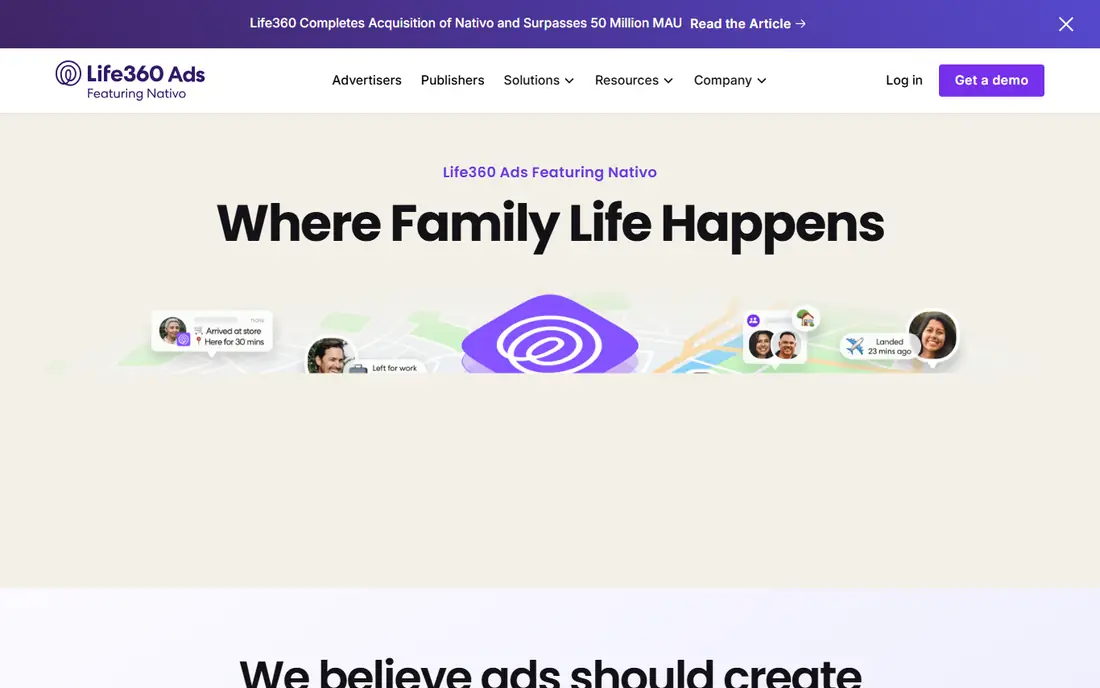
Nativo targets branded content and storytelling campaigns. Rather than optimizing for the cheapest click to an article, it is designed for brands telling a story: promoted content formats, predictive audiences, and measurement around attention and engagement instead of just CTR. Beyond that, everything about the buying motion is enterprise.
Where it is weaker: Custom-quoted with no self-serve path for small budgets.
That is a feature, not a bug, for the target buyer: a brand team running a content-led campaign with a five-figure budget gets a partner, not a dashboard. For everyday use, brand and content marketers who require their story told well, measured properly and placed safely should talk to Nativo. Nativo does not show a starting price in this comparison, so check the vendor site for current pricing. Nativo has no permanent free option.
- Made for branded content instead of cheap clicks
- Predictive audiences and content-first formats
- The Life360 acquisition means the product is evolving
Outbrain
Ideal for: Performance and direct-response advertisers on the open web

Outbrain serves performance and direct-response advertisers on the open web. Outbrain.com today is a different animal than the Outbrain of five years ago. Brand advertisers wanting premium storytelling should look at Teads or Nativo instead.
Watch-outs: The brand business moved to Teads after the 2025 merger, so the offering is narrower than the old Outbrain.
As for the details, standard campaigns run on CPC with budget controls at the daily, monthly and campaign level. The advertiser help center documents a $20/day campaign minimum. What did not change is the buying model. On top of that, if you remember Outbrain as the premium brand-safe network, recalibrate: this is now the conversion-focused sibling. Outbrain starts at: CPC. No free plan comes with Outbrain.
- Monthly and campaign budget controls
- CPC bidding with daily
- Strict content policies
Taboola
Ideal for: Large-scale content discovery and performance campaigns
Taboola makes the most sense for large-scale content discovery and performance campaigns. Bids can start around a cent in cheap geos, but competitive US placements clear far higher. On top of that, Taboola is the biggest name in content recommendation, and the Yahoo partnership is the reason it stays there.
On top of that, work backwards and a $50 target CPA means $500 a day, which is a real budget line, not a trial. More specifically, the advertiser system, now branded Realize, has moved beyond classic "around the web" boxes into conversion-focused bidding (Maximize Conversions), first-party audience targeting and broader creative formats. More specifically, test Taboola when you have a proven landing page and at least a handful of thousand dollars to learn with. Sampling it with $300 teaches you nothing. Taboola cost at the entry level: CPC. Taboola has no free tier.
Watch-outs: Creative approval can be strict.
- Enormous publisher footprint anchored by the exclusive Yahoo native partnership (Yahoo Finance, News, Sports, AOL)
- The Realize system now spans the full performance funnel beyond classic native
- The $50/day or 10x-CPA guidance means serious tests start around $1,500/month
Dianomi
Ideal for: Finance, business and luxury brands on premium publishers
Dianomi was built for finance, business and luxury brands on premium publishers. The network runs native placements across 320+ premium publishers in finance, business and luxury lifestyle, including Apple News inventory that is genuinely hard to buy elsewhere.
What Dianomi does well: Pay-per-engagement choices.
Where it falls short: Custom-quoted with no self-serve; Finance-heavy audience limits some verticals. As a London-listed company (Dianomi PLC), its advertiser numbers are public, and they present average spend around £109,000 per advertiser per half-year. That number is the entire review. This comparison lists no price for Dianomi; ask the vendor. There is no free plan with Dianomi.
- Affluent audience the company quantifies at 500M+ devices and 8B+ monthly impressions
- The most premium publisher lineup here (320+ publishers including major financial titles and Apple News)
- Enterprise budgets only: the company's own reports display average advertiser spend around £109k per half-year
MGID
Ideal for: Small budgets learning native advertising
MGID works best for small budgets learning native advertising. The honest tradeoff is inventory quality. As for the details, the system handles native, push, display and video, with selective bidding and rule-based optimization tools that are genuinely handy once you have conversion data flowing.
More specifically, the $100 minimum deposit is the lowest among the established networks, and CPC bids start around a cent in tier-2 and tier-3 geos (expect $0.015 to $0.10 for tier-1). As for the details, MGID is where smaller budgets go to learn native advertising without embarrassment. For brand advertisers who flinch at appearing next to questionable content, it is not. MGID cost at the entry level: From $100 minimum deposit. MGID has no free plan.
Best features of MGID: The lowest entry point among the serious networks at a $100 deposit. What to check first: Weaker US premium publisher footprint than Taboola or Outbrain.
- CPC bids from about a cent in less expensive geos
- Display and video formats in one dashboard with rule-based optimization
- Account managers push for $500 to $1,500 first budgets to gather data
What went into this list
The comparison looks at four things: starting price, free access, how well the feature set matches content syndication platforms, and the main limit of each tool. Plan names, prices and limits change often. Treat the figures here as a starting point and verify them with the vendor. The ranking is editorial: typical fit first, then clear pricing, then free access. If your needs are unusual, read the profiles rather than relying on position.
Questions to settle before buying
- Get a written quote from TripleLift, Nativo and Dianomi; the list shows no starting price for them.
- Before choosing TripleLift, weigh its main limit: no self-serve small-budget path.
- Look at which plan of Nativo unlocks the features you need; entry tiers are often cut down.
- Confirm that TripleLift connects to the apps your team already uses, on the plan you would actually buy.
- Test how quickly MGID answers a pre-sales question; it hints at how support will feel later.
Frequently asked questions
Does any tool for content syndication platforms here have a free plan?
A permanent free plan is not offered by TripleLift, MGID or the other tools here. Plan a short evaluation period instead.
Is TripleLift the right pick for everyone comparing content syndication platforms?
No single tool suits every team. TripleLift comes first because it fits brands wanting creative, high-impact programmatic formats, while Nativo suits branded content and storytelling campaigns and Outbrain suits performance and direct-response advertisers on the open web. Match the tool to your own size, budget and workflow before deciding.
How are the tools for content syndication platforms ordered?
The order follows typical fit for content syndication platforms, with TripleLift first and MGID last, then price clarity and free access. It is editorial judgement, not a score, so another team could rank the tools differently.
Do these tools publish their prices?
Not all of them. TripleLift, Nativo and Dianomi publish no starting price, so expect a quote request for those. The rest, Outbrain included, show a starting price, though seats and billing terms still change the final cost.