Best Contract Management Software Reviews in 2026: 7 Tools Compared

- Ironclad and Icertis suit large companies that need full contract lifecycle management with workflows and AI review.
- DocuSign CLM suits companies already using DocuSign for signatures that want lifecycle tools added.
- Agiloft suits teams that want flexible, configurable contract workflows without heavy coding.
- PandaDoc and Juro suit smaller teams that want fast drafting, negotiation, and signing.
- ContractWorks suits teams that want a simple, searchable contract repository with alerts.
Quick comparison
| Product | Ideal for | Price from | Free version | |
|---|---|---|---|---|
 Ironclad | Enterprise contract lifecycle | See website | No | Visit |
 Icertis | Large enterprise contracts | See website | No | Visit |
 DocuSign CLM | DocuSign users | See website | No | Visit |
 Agiloft | Configurable workflows | See website | Free trial | Visit |
 PandaDoc | Fast proposals and contracts | See website | Free trial | Visit |
 Juro | Modern contract collaboration | See website | Free trial | Visit |
 ContractWorks | Simple contract repository | See website | Free trial | Visit |
The best contract management software
We compared official feature pages, pricing pages, and public reviews for seven contract tools. Our pick for most companies is Ironclad for its lifecycle depth, with PandaDoc close behind for smaller teams that want speed.
Ironclad
Ideal for: Enterprise contract lifecycle
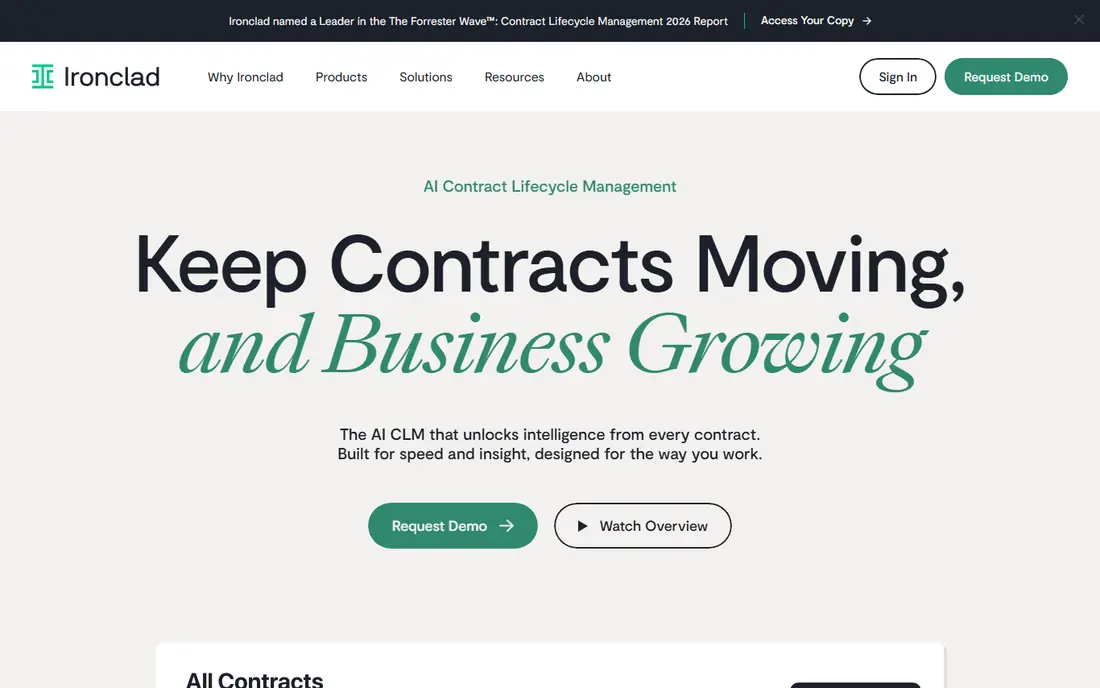
Ironclad covers the full contract lifecycle: drafting from templates, negotiation, approval, signature, storage, and renewal tracking, with AI tools that review clauses and extract key data. Legal, sales, and procurement teams can work in one system with permissions and audit trails. That depth suits companies with high contract volume and complex approvals.
Pricing is enterprise level, and implementation needs planning for templates and workflows. Smaller teams may find PandaDoc or Juro faster. For large companies that need control over every contract stage, Ironclad is a leading platform.
- Full lifecycle workflows
- AI review and data extraction
- Integrations
- Enterprise pricing
- Implementation takes time
Icertis
Ideal for: Large enterprise contracts
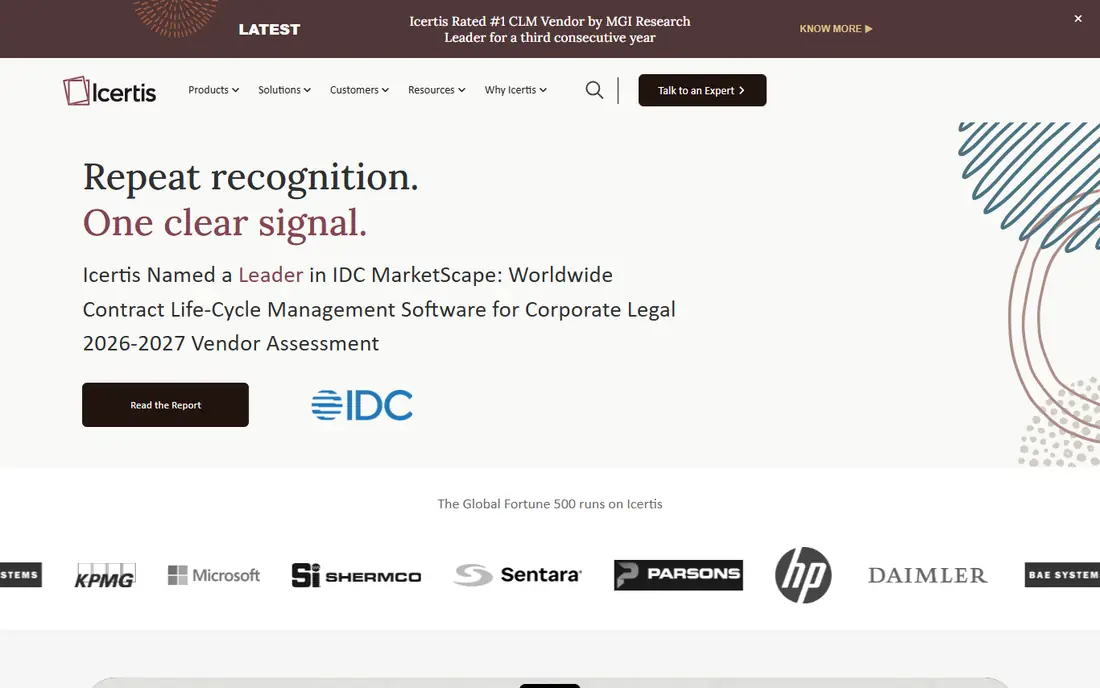
Icertis is an enterprise contract intelligence platform that manages contracts across their lifecycle, with AI that surfaces obligations, risks, and renewal dates. Large companies use it to track thousands of contracts, link them to business systems, and stay on top of commitments. That scale suits global firms with complex supplier and customer agreements.
Setup is complex, and pricing is enterprise level. Mid-size teams may find Ironclad or Agiloft more approachable. For global enterprises with heavy contract loads, Icertis gives strong intelligence and control.
- Enterprise scale
- AI contract intelligence
- Broad integrations
- Enterprise pricing
- Complex setup
DocuSign CLM
Ideal for: DocuSign users
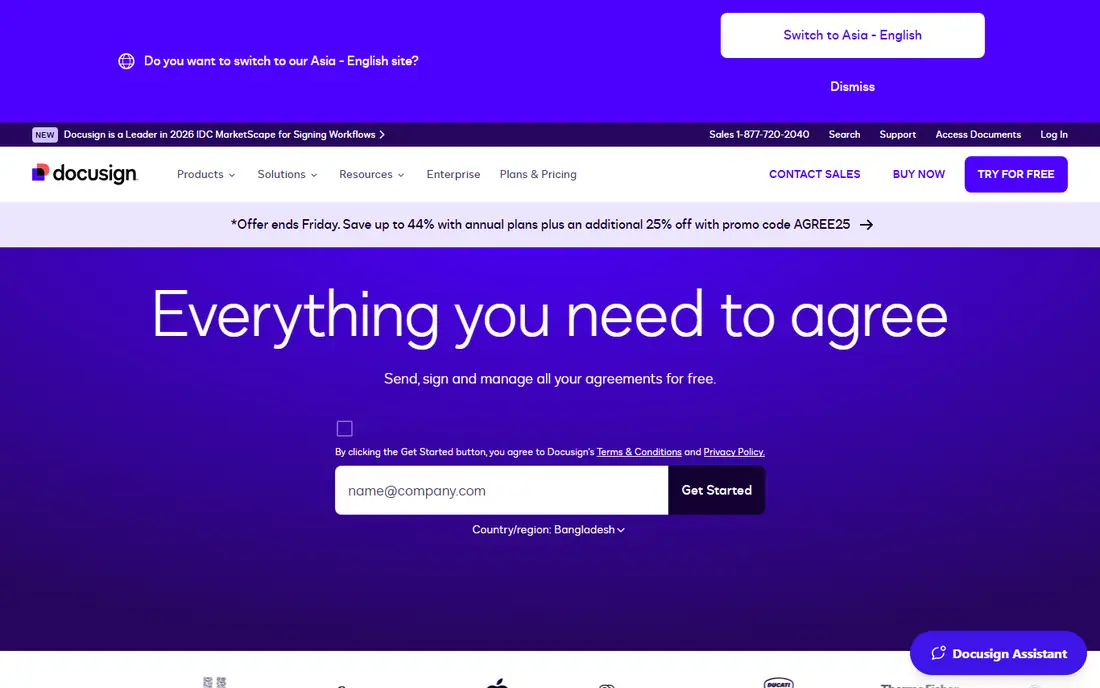
DocuSign CLM extends DocuSign e-signature with contract lifecycle tools: templates, generation, negotiation, approval, storage, and renewal alerts. Companies already using DocuSign for signing can add lifecycle control without switching signature providers. That continuity helps legal and sales teams adopt it fast.
CLM pricing adds to signature costs, and setup needs template and workflow planning. For DocuSign users who want lifecycle management in the same ecosystem, DocuSign CLM is a natural step.
- Links to DocuSign signatures
- Lifecycle workflows
- Document generation
- Pricing adds to signature costs
- Setup needs planning
Agiloft
Ideal for: Configurable workflows
Agiloft offers highly configurable contract management with no-code workflows, permissions, and reporting that adapt to varied business rules. Teams can build approval chains, renewal alerts, and custom fields without heavy development. That flexibility suits companies with unusual contract processes that off-the-shelf tools cannot match.
Setup takes care, since flexibility without planning can create messy workflows. The interface is functional rather than polished. For teams that need contracts to fit their process, not the other way round, Agiloft is a strong choice.
- Highly configurable
- No-code workflows
- Strong permissions
- Setup takes care
- Interface is functional
PandaDoc
Ideal for: Fast proposals and contracts
PandaDoc helps teams draft contracts and proposals fast from templates, send them for signature, and track opens and completion. Sales and operations teams like its speed and clean documents, while e-signatures keep deals moving. That simplicity suits small and mid-size companies that need contracts signed quickly.
Full lifecycle features like deep obligation tracking are lighter than in Ironclad or Icertis. For teams whose main need is fast, professional contracts with signatures, PandaDoc is an excellent fit.
- Fast drafting and templates
- E-signatures
- Tracking
- Lifecycle depth is lighter
- Enterprise features cost more
Juro
Ideal for: Modern contract collaboration
Juro offers a browser-native contract editor with collaboration, approvals, e-signatures, and a searchable repository. Teams can negotiate in the browser, track changes, and store signed contracts with key dates and alerts. That modern workflow suits startups and scale-ups that dislike Word-based contract ping-pong.
Enterprise depth is thinner than Ironclad or Icertis, and Juro is a newer vendor. For growing companies that want contracts to feel like modern software, Juro is a refreshing choice.
- Browser-native editor
- Collaboration and approvals
- Searchable repository
- Less enterprise depth
- Newer vendor than rivals
ContractWorks
Ideal for: Simple contract repository
ContractWorks focuses on a simple, secure contract repository with search, renewal alerts, and permissions. Teams can store signed contracts, find clauses fast, and get alerts before renewals. That focus suits companies whose main problem is lost contracts and missed dates, rather than complex drafting workflows.
Drafting and negotiation features are thinner than in Ironclad or Juro. For teams that need a reliable home for contracts with alerts, ContractWorks is a straightforward and affordable option.
- Simple searchable repository
- Renewal alerts
- Secure storage
- Fewer workflow features
- Less drafting depth
How we picked these
We compared official feature pages, pricing pages, and public reviews for each tool, and we favored tools that still work in October 2026 and cover real contract jobs: drafting, approval, signing, storage, and renewal. We did not claim hands-on testing, and we weighed lifecycle depth, ease of use, and price. Where pricing was quoted rather than listed we wrote "See website" rather than guessing.
What to check before you choose
Start with your contract volume and complexity. High-volume enterprises need Ironclad or Icertis, while small teams need PandaDoc or Juro. Audit your current contracts: if you cannot find signed copies or renewal dates, a repository tool like ContractWorks may fix the biggest pain first. If drafting is slow, prioritize templates and collaboration.
Next, check approval workflows and permissions. Legal, finance, and sales need different access, and approvals must be clear under deadline pressure. Test search and alerts with real contracts, since a repository that cannot find a clause fast will be ignored. Finally, confirm signature legality and storage security for your jurisdictions before rollout.
Also standardize your templates before scaling any tool, since a contract system full of inconsistent templates creates more risk than it removes. Work with legal to approve standard clauses for common deals, and lock those clauses where possible so sales teams cannot quietly change risk terms. Keep a short list of approved fallback positions for negotiation, so teams know what they can concede without legal review and what needs approval. Track clause changes during negotiation, since a small wording shift in liability, payment, or termination can matter more than the headline price. Version control should make it obvious which draft is current and who changed what, or negotiations will drift into email chaos. Train non-legal teams on the basics: what they can edit, what needs review, and when to stop and ask.
Obligation tracking is where contract tools earn their keep after signing. A signed contract is not finished work: renewal dates, payment milestones, service levels, and notice periods all need owners and reminders. Set an owner for each key obligation, with alerts well before deadlines, not on the day. Review high-value contracts quarterly, checking whether both sides met their commitments and whether terms still fit the relationship. Keep signed copies, amendments, and side letters together, since a missing amendment can change what a contract actually requires. Finally, audit access regularly: former staff, old vendors, and outdated roles should lose access promptly, since contracts contain sensitive commercial terms that should stay inside the business.
One more practice keeps contract data useful: a regular review of key dates and obligations by someone who owns the commercial relationship, not just the legal file. Legal teams track terms, but sales and operations teams live with delivery, payment, and service promises every day. Bring those teams together quarterly to review upcoming renewals, price changes, and service levels for the largest contracts, and agree on actions before deadlines force rushed decisions. That review often surfaces chances to renegotiate better terms, consolidate vendors, or end contracts that no longer serve the business. A contract tool that only stores documents will not deliver that value, but a tool paired with a quarterly review habit will.
Frequently asked questions
What is the best contract management software?
Ironclad is our pick for large companies that need full lifecycle control, while PandaDoc suits smaller teams that want speed. DocuSign CLM suits DocuSign users, and ContractWorks suits teams that mainly need a searchable repository. Match the tool to your volume and workflow.
What does contract lifecycle management mean?
Contract lifecycle management covers drafting, negotiation, approval, signing, storage, obligation tracking, and renewal for a contract. CLM tools keep every stage in one system with audit trails, so teams can find, track, and act on contracts without email searches.
Can small businesses use contract management software?
Yes. PandaDoc, Juro, and ContractWorks suit small teams with templates, signatures, and repositories at accessible prices. Start with a trial and a few key templates, then expand workflows only when volume justifies it.
How does contract software help with renewals?
Contract tools track renewal and expiry dates, send alerts before deadlines, and store key terms for review. That prevents auto-renewals of unwanted contracts and gives teams time to renegotiate. Set alert owners, not just dates, so alerts lead to action.
Is e-signature legally valid for contracts?
E-signatures are legally valid for most business contracts in the US and many other countries, with exceptions for certain document types. Check rules for your jurisdiction and contract type, and use a reputable signature tool with audit trails. Legal review is wise for high-value agreements.