Best Contract Organization Software in 2026: 8 Tools Compared

- 1
 IroncladFull contract lifecycleVisit
- 2
 PandaDocDocuments and signaturesVisit
- 3
 DocuSign CLMEnterprise contract managementVisit
- 4
 AgiloftFlexible contract workflowsVisit
- 5
 ContractWorksSimple contract repositoryVisit
- Ironclad and Agiloft suit full contract lifecycle management, with Ironclad leaning to modern workflows and Agiloft to flexible configuration.
- PandaDoc and Concord suit documents plus e-signatures, with PandaDoc leaning to proposals and Concord to free contract editing.
- DocuSign CLM and ContractWorks suit organized repositories, with DocuSign CLM leaning to enterprise and ContractWorks to simple storage.
- Juro and Zoho Contracts suit growing teams, with Juro leaning to browser-native contracts and Zoho Contracts to small business value.
Quick comparison
| Product | Ideal for | Price from | Free version | |
|---|---|---|---|---|
| Ironclad | Full contract lifecycle | See website | No | Visit |
| PandaDoc | Documents and signatures | See website | Yes | Visit |
| DocuSign CLM | Enterprise contract management | See website | No | Visit |
| Agiloft | Flexible contract workflows | See website | No | Visit |
| ContractWorks | Simple contract repository | See website | No | Visit |
 Concord | Free contract editing | See website | Yes | Visit |
 Juro | Browser-native contracts | See website | Yes | Visit |
 Zoho Contracts | Small business contracts | See website | Yes | Visit |
The best contract organization software
We compared official feature pages, pricing pages, and app listings to find contract tools with organized repositories, search, alerts, and workflows that work in October 2026. This is general information only, not legal advice. Have a qualified professional review important contracts before signing, since software organizes documents but does not replace legal judgment.
Ironclad
Ideal for: Full contract lifecycle
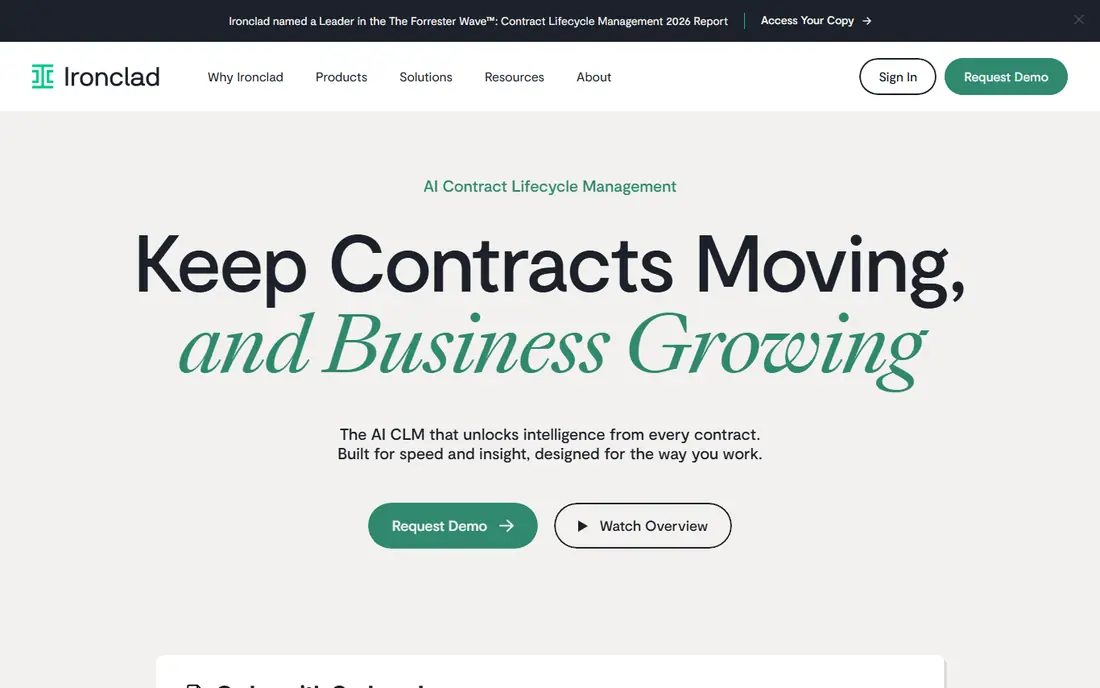
Ironclad covers the full contract lifecycle, from drafting and negotiation to signature, storage, and renewal alerts, in one modern platform. AI tools help review clauses and flag risks, while workflow automation routes contracts to the right approvers without manual chasing. That end-to-end coverage suits legal and operations teams handling many contracts.
There is no free plan, the price suits larger teams better than small ones, and setup takes time to configure workflows. Still, for full lifecycle management with modern automation, Ironclad is our pick.
- Full lifecycle from draft to signature
- AI clause tools
- Workflow automation
- No free plan
- Price suits larger teams
- Setup takes time
PandaDoc
Ideal for: Documents and signatures
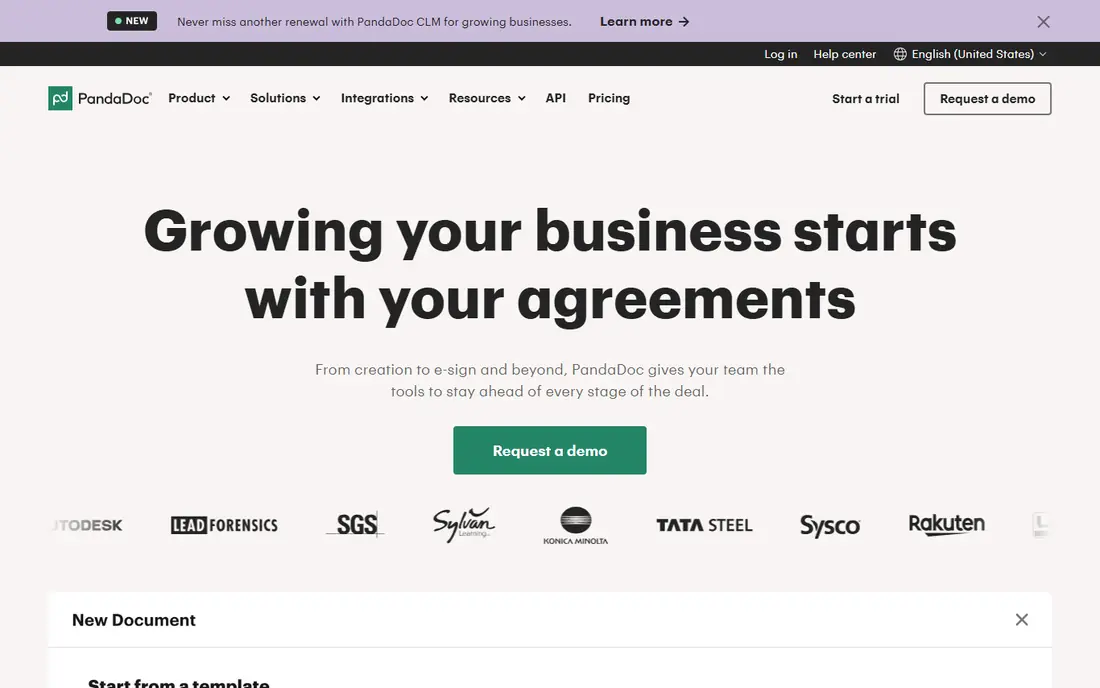
PandaDoc makes it easy to create documents, get signatures, and track status, with templates for contracts, proposals, and quotes. That ease suits sales and operations teams who need contracts signed quickly without a heavy legal system. Payment collection can also be built into documents, which speeds up closing deals.
Lifecycle features such as deep clause analysis and renewal workflows are lighter than Ironclad's. Full features also need a paid plan. Still, for fast document creation and signing, PandaDoc is our pick.
- Easy document creation
- E-signatures
- Templates and payments
- Lifecycle features are lighter than Ironclad
- Full features need a paid plan
DocuSign CLM
Ideal for: Enterprise contract management
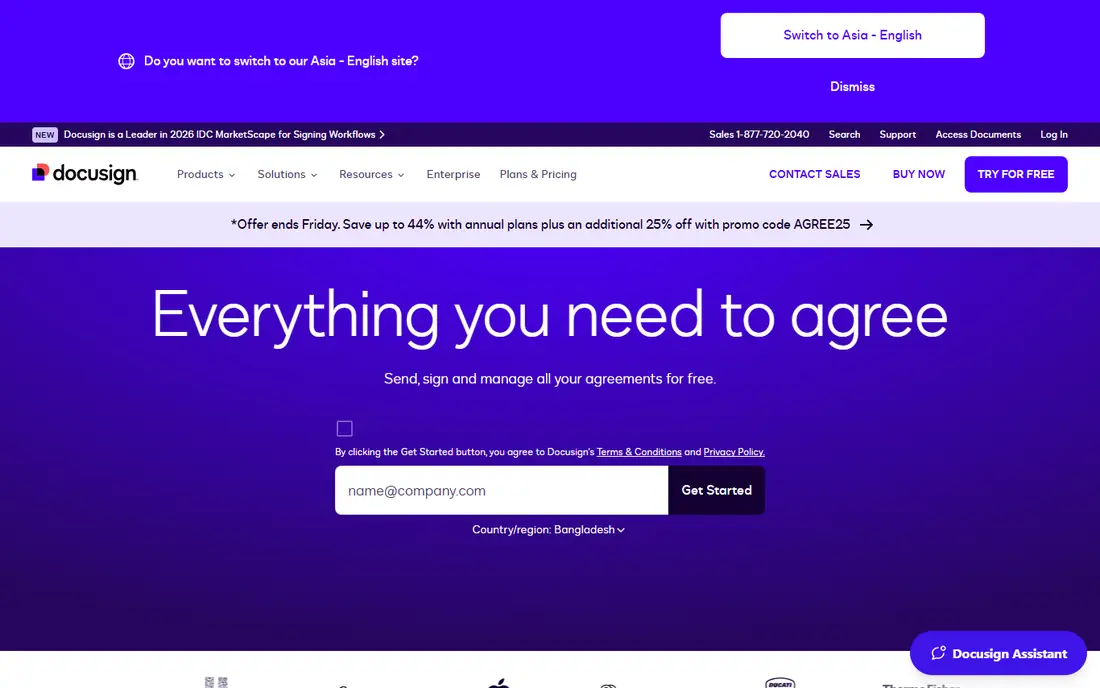
DocuSign CLM, from the e-signature leader, offers enterprise contract lifecycle management with drafting, negotiation, signature, and repository tools. Integrations with CRM, ERP, and storage systems keep contracts linked to business data. That enterprise depth suits large organizations with high contract volumes and strict controls.
There is no free plan, complexity suits larger teams, and the price is high. Still, for enterprise contract management with trusted e-signatures, DocuSign CLM is our pick.
- Enterprise lifecycle management
- E-signature leader
- Strong integrations
- No free plan
- Complexity suits larger teams
- Price is high
Agiloft
Ideal for: Flexible contract workflows
Agiloft offers highly configurable contract workflows, letting teams design approval chains, alerts, and data fields to match their exact process. AI tools help with clause extraction and review, while strong permissions control who sees sensitive contracts. That flexibility suits organizations with unusual or complex contract processes.
There is no free plan, and configuration takes time and skill to get right. Still, for teams that need a system shaped to their workflow rather than a fixed template, Agiloft is our pick for flexibility.
- Highly configurable workflows
- AI clause tools
- Strong permissions
- No free plan
- Configuration takes time and skill
ContractWorks
Ideal for: Simple contract repository
ContractWorks focuses on a simple, searchable contract repository with alerts for renewals and expirations, plus tagging and permissions. That simplicity suits teams whose main problem is finding contracts and tracking dates, rather than complex negotiation workflows. Setup is quick compared with full lifecycle platforms.
There is no free plan, and workflow features are lighter than Ironclad or Agiloft. Still, for a clean repository with reliable alerts, ContractWorks is our pick for straightforward organization.
- Simple, searchable repository
- Alerts for renewals
- Quick setup
- No free plan
- Workflow features are lighter than full CLM tools
Concord
Ideal for: Free contract editing
Concord offers free contract editing, negotiation, and e-signatures, with collaborative tools that let parties comment and revise in the same document. Deadline alerts help track renewals and expirations, which covers the core organization need for many small teams. That free tier makes it easy to start without a budget decision.
Advanced lifecycle features such as AI clause analysis are limited compared with Ironclad or Agiloft. Full features also need a paid plan. Still, for free, collaborative contract work, Concord is our pick.
- Free contract editing and signing
- Collaborative negotiation
- Deadline alerts
- Advanced lifecycle features are limited
- Full features need a paid plan
Juro
Ideal for: Browser-native contracts
Juro offers a browser-native contract platform, where contracts are created, negotiated, signed, and stored as structured data rather than static files. That structure makes it easy to search clauses, track data, and automate workflows from contract terms. Templates and analytics help teams see bottlenecks in their contracting process.
Full features need a paid plan, and the ecosystem is smaller than DocuSign's. Still, for modern, browser-based contract management, Juro is our pick for growing teams.
- Browser-native contract editor
- Templates and automation
- Analytics
- Full features need a paid plan
- Smaller ecosystem than DocuSign
Zoho Contracts
Ideal for: Small business contracts
Zoho Contracts offers contract organization at good value for small businesses, with a searchable repository, alerts for renewals, and e-signatures. Integration with other Zoho apps suits businesses already using Zoho CRM or Books, since contract data flows between systems. A free tier covers basic use for small teams.
Depth is less than enterprise tools like Ironclad or DocuSign CLM, and the interface can feel busy. Still, for small business contract organization at a fair price, Zoho Contracts is our pick for value.
- Good value for small business
- Alerts and repository
- Zoho integration
- Less depth than enterprise CLM tools
- Interface can feel busy
How we picked these
We compared official feature pages, pricing pages, and app listings for contract tools live in October 2026. We favored tools with organized repositories, search, alerts, and signing, covering full lifecycle platforms, simple repositories, and value options. We left out generic storage tools with no contract features.
What to check before you choose
Start with your contract volume and complexity. Small teams with few contracts suit Concord, ContractWorks, or Zoho Contracts. Growing teams suit PandaDoc or Juro. Large teams with complex workflows suit Ironclad, DocuSign CLM, or Agiloft.
Next, check search and alerts. A repository you cannot search is just a folder, so test clause search, tagging, and renewal alerts with real contracts before committing. Confirm who can see sensitive contracts through permission controls.
Finally, check signing and integration. Contracts should flow from draft to signature to storage without manual re-entry, and the tool should connect to your CRM or storage system where needed. Test a full contract cycle in a trial before paying.
Before you commit to one option, spend a short trial period with your top two choices from this list. Use each one for a real task from your own work or daily routine, not just a demo, and note where you get stuck, what feels slow, and which features you actually open twice. Check the official pricing page again at that point, since free plans and paid tiers change, and confirm that the plan you need covers the users, projects, or devices you will use. Read the privacy and support pages too, especially for tools that hold personal or work data, and confirm how to export your work if you later switch. A tool that fits your routine in a two-week trial is a far better choice than a more powerful option you avoid opening, so let daily use, not a feature list alone, decide your final pick for best contract organization software.
Frequently asked questions
What is the best contract organization software overall?
Ironclad is our pick for full lifecycle management, while ContractWorks is our pick for a simple repository. PandaDoc suits fast signing, and Zoho Contracts suits small business value. Pick by volume and workflow complexity.
Is there free contract organization software?
Yes, PandaDoc, Concord, Juro, and Zoho Contracts all have free tiers for basic contract work. Ironclad, DocuSign CLM, Agiloft, and ContractWorks generally require paid plans. Start free and pay for lifecycle or AI features when volume grows.
Which tool is best for contract renewal alerts?
ContractWorks, Concord, and Zoho Contracts all offer renewal and expiration alerts, with Ironclad and Agiloft adding workflow automation around renewals. Set alerts well before expiry, not on the day, so you have time to renegotiate.
Do contract tools replace lawyers?
No, they organize, track, and speed up contracts, but they do not replace legal judgment. AI clause tools can flag risks, but a qualified professional should review important contracts before signing, especially for high-value or high-risk deals.
Can I search contracts by clause with these tools?
Yes, most tools here offer full-text search, and Ironclad, Agiloft, and Juro add clause-level search and data extraction. Test search with your own contract types, since accuracy varies by document format and language.
How do I pick between the free and paid plans in this list?
Start with the free plan or trial for any best contract organization software option that offers one, and use it for at least two weeks on real tasks. Upgrade only when you hit a clear limit, such as a missing feature, a user cap, or a storage limit, rather than paying on day one for features you may never use. Compare the paid tier against the next option in this list as well, since a different tool's free plan may already cover what the first tool charges for.