For contact center QA and CX automation, Observe.AI is where this list starts. If your case is different, Chorus by ZoomInfo suits teams pairing calls with B2B data and Revenue.io suits Salesforce-centered sales engagement. The other 3 tools in the list cover narrower or pricier cases.
Ainotely put together this guide to conversation analytics software for readers who want a clear shortlist without reading every vendor page. It compares 6 tools on starting price, free plans, who each one suits and where each one falls short.
Key takeaways
Number one here is Observe.AI, a fit for contact center QA and CX automation.
Invoca fits inbound call conversion and routing.
No starting price is shown for any of the 6 tools, Observe.AI and Invoca included, so plan time for sales calls.
None of the 6 tools, from Observe.AI to Invoca, has a free plan, so budget for a subscription or use a trial.
The main caution on Salesloft: conversation analytics is one part of a wider suite.
Pick Observe.AI if this describes you: contact center QA and CX automation. Observe.AI brings AI agents for customer experience into a single system.
Beyond that, confirm which capabilities apply to your channels before selecting it. Observe.AI does not show a starting price in this comparison, so check the vendor site for current pricing. On free options: Not stated.
Downsides: Aimed at CX operations, not sales pipelines.
Chorus by ZoomInfo makes the most sense for teams pairing calls with B2B data. Chorus by ZoomInfo is a conversation intelligence product for sales teams.
Where it is weaker: Sales-call focus rather than support.
Also, the most solid fit is sales organizations that value the underlying B2B data layer. The vendor describes it as distilling insights from sales calls whereas drawing on ZoomInfo's B2B data, which can add account and contact context to what is discussed on a call. Chorus by ZoomInfo shows no starting price here, so confirm the cost on the vendor site. Free plan details: Not stated.
Choose Revenue.io for Salesforce-centered sales engagement. Check integration requirements and current capabilities with the vendor. Revenue.io describes itself as a revenue system that links sales engagement, conversation intelligence and AI with Salesforce context.
That combination lets teams analyze calls alongside CRM records and engagement activity to support decisions. The system is oriented toward Salesforce environments, so teams on other CRM systems may not get the same benefit. Revenue.io does not show a starting price in this comparison, so check the vendor site for current pricing. Free access: Not stated.
Watch-outs: Less suited to non-sales support teams.
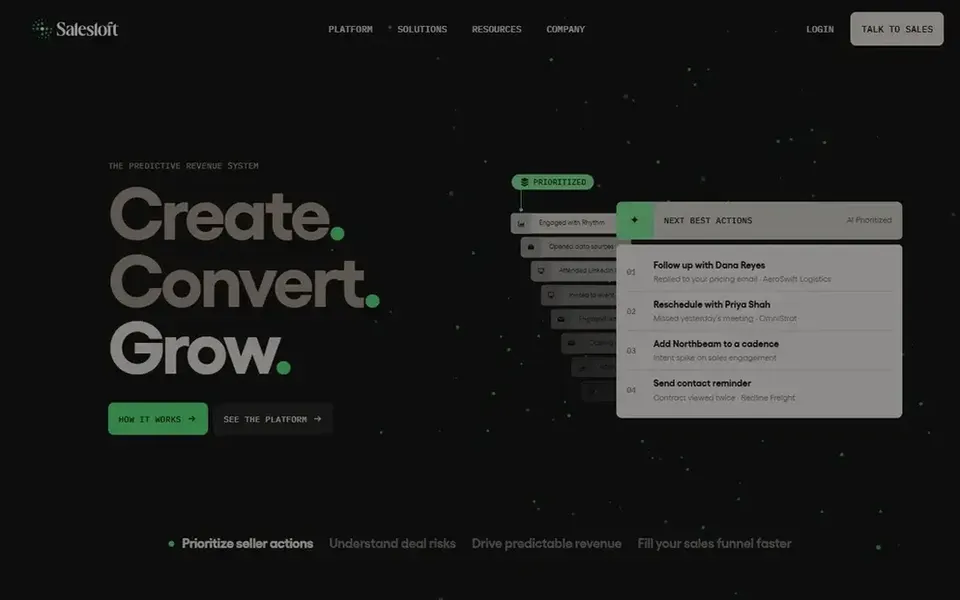
Salesloft works best for turning buyer signals into action. Conversation data feeds into that broader workflow alongside engagement activity.
Limits to weigh: Conversation analytics is one part of a wider suite.
For everyday use, confirm the current analytics feature set straight with the vendor. Salesloft shows no starting price here, so confirm the cost on the vendor site. Free plan details: Not stated.
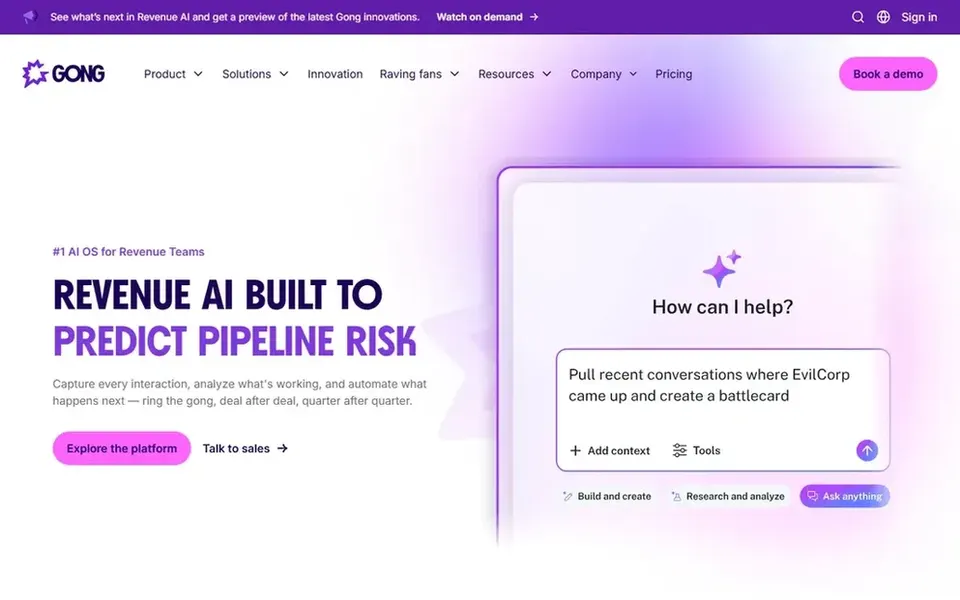
In short, Gong is for revenue teams tracking deal signals. It processes multimodal revenue signals from customer interactions and applies specialized AI agents and purpose-built applications across a go-to-market organization.
The main drawbacks: Focused chiefly on revenue use cases.
As for the details, confirm current module scope on the vendor site before committing. Gong shows no starting price here, so confirm the cost on the vendor site. Trial and free access: Not stated.
Invoca serves inbound call conversion and routing. Its conversation data is pitched at understanding which inbound calls turn into revenue.
Drawbacks to consider: Narrower than full sales conversation products.
It fits marketing and sales teams that create phone leads and need visibility into call outcomes and routing. No starting price is listed for Invoca here; confirm pricing on the vendor site. As for free access: Not stated.
Confirm the entry price with every vendor: no tool from Observe.AI to Invoca shows a fixed starting price.
Read the limits listed for Observe.AI first: designed for CX operations, not sales pipelines.
Look at which plan of Observe.AI unlocks the features you need; entry tiers are often cut down.
Make sure Revenue.io lets you export your data in a format another tool can read.
Check the support hours and onboarding help Salesloft offers; smaller vendors vary a lot here.
How we picked
Ainotely used vendor pricing pages and product documentation as the base, then compared plans, free access and documented limits for 6 tools. Prices and plan limits come from vendor pages and can change, so confirm them on the vendor site before you buy. The sequence is a judgement call: typical use case first, then pricing transparency, then free access. Use the profiles to check fit. Keep it in mind while reading the 6 conversation analytics software profiles on this page.
Every price and plan detail on this page comes from the vendors’ own websites. We did not run hands-on tests unless the text says so, and we do not publish star ratings or review scores. See how we score and our disclosure.
Keep your shortlist in one place
Paste prices, trial dates and notes from this guide into Ainotely, our AI note app. It files them into a topic and pulls out tasks like “cancel trial by Friday”. Free 7-day trial, no card needed.
Not by default. None of the tools, from Observe.AI to Invoca, lists a free plan or a free trial here, so ask each vendor for a demo before committing.
Does any tool for conversation analytics software here have a free plan?
No tool in this list, Observe.AI and Invoca included, has a permanent free plan. Trials and quotes are the usual route, so plan a short evaluation period.
How should I evaluate these tools before buying?
Test each product against real call recordings and your own coaching or QA scenarios. Check channel coverage, integration depth, data governance and the features included in the edition you would actually deploy.
Is Observe.AI the right pick for everyone comparing conversation analytics software?
No single tool suits every team. Observe.AI comes first because it fits contact center QA and CX automation, while Chorus by ZoomInfo suits teams pairing calls with B2B data and Revenue.io suits Salesforce-centered sales engagement. Match the tool to your own size, budget and workflow before deciding.
How are the tools for conversation analytics software ordered?
The order follows typical fit for conversation analytics software, with Observe.AI first and Invoca last, then price clarity and free access. It is editorial judgement, not a score, so another team could rank the tools differently.