Best CRM Software for Restaurants (2026): 5 Options Compared

- 1
 ThanxLoyalty and guest engagementVisit
- 2
 Yelp Guest ManagerWaitlists and Yelp trafficVisit
- 3
 Eat AppAll-in-one reservationsVisit
- 4
 SevenRoomsAll-around restaurant CRMVisit
- 5
 OpenTableMarketplace reach plus CRMVisit
- Thanx takes the first slot, best suited to loyalty and guest engagement.
- OpenTable suits marketplace reach plus CRM.
- Every tool from Thanx to OpenTable works by quote, with no list price shown.
- Thanx, OpenTable and the 3 others all need a premium plan or a trial, since no free plan is listed.
Direct answer
Thanx is the first pick on this list for loyalty and guest engagement. Yelp Guest Manager fits waitlists and Yelp traffic; Eat App fits all-in-one reservations. Details, prices and limits for the rest of the 5 tools are below.
Quick comparison
| Product | Ideal for | Price from | Free version | |
|---|---|---|---|---|
| Thanx | Loyalty and guest engagement | See website | No | Visit |
| Yelp Guest Manager | Waitlists and Yelp traffic | See website | No | Visit |
| Eat App | All-in-one reservations | See website | No | Visit |
| SevenRooms | All-around restaurant CRM | See website | No | Visit |
| OpenTable | Marketplace reach plus CRM | See website | No | Visit |
Tool-by-tool breakdown
Ainotely compared 5 CRM software for restaurants. The goal is a practical shortlist: published prices, free plan facts, best-fit use cases and honest limits for every entry.
Thanx
Ideal for: Loyalty and guest engagement
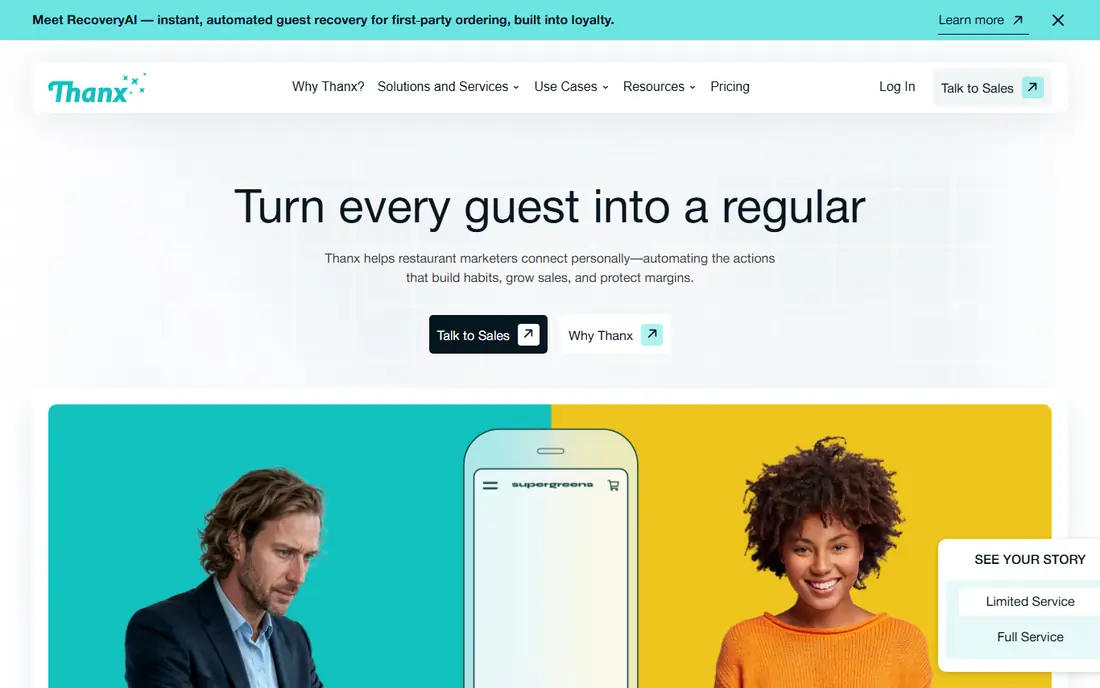
In short, Thanx is for loyalty and guest engagement. Thanx approaches restaurant CRM from the loyalty side. It helps restaurant marketers turn guests into regulars by automating personalized engagement, with AI-powered segmentation across more than 400 guest attributes, automatic email and push campaigns, and rewards that go beyond discounts, like VIP access and secret menus.
Its guest recovery tool resolves flagged orders in under a minute, and the system processes more than a billion transactions per year with 60-plus POS and technology integrations. Beyond that, the important distinction is that Thanx is not a reservation system. It pairs with your POS and ordering channels instead of replacing your booking tool, and it is aimed at multi-location brands that require enterprise-scale engagement. No starting price is listed for Thanx here; confirm pricing on the vendor site. There is no free plan with Thanx.
What to check first: Best for multi-location brands instead of single standalone operators.
- Guest data completely owned by the restaurant
- Loyalty and engagement aimed at restaurant brands
- Not a reservation product
Yelp Guest Manager
Ideal for: Waitlists and Yelp traffic

Think of Yelp Guest Manager for waitlists and Yelp traffic. Yelp Guest Manager is aimed at restaurants that already get significant traffic from Yelp. It converts that search traffic into reservations and waitlist joins.
Trade-offs to know: CRM features are lighter than dedicated products.
Its waitlist tools suit walk-in heavy restaurants where a reservation book alone does not capture demand. Since it sits on Yelp, it also ties naturally into reviews and business information that diners already check before choosing a restaurant. Also, the limitation is CRM depth. Pricing for Yelp Guest Manager is not stated here, so ask the vendor for current figures. Yelp Guest Manager does not include a free plan.
- Review integration
- Turns Yelp search traffic into bookings and waitlist joins
- Value depends on your Yelp presence
Eat App
Ideal for: All-in-one reservations
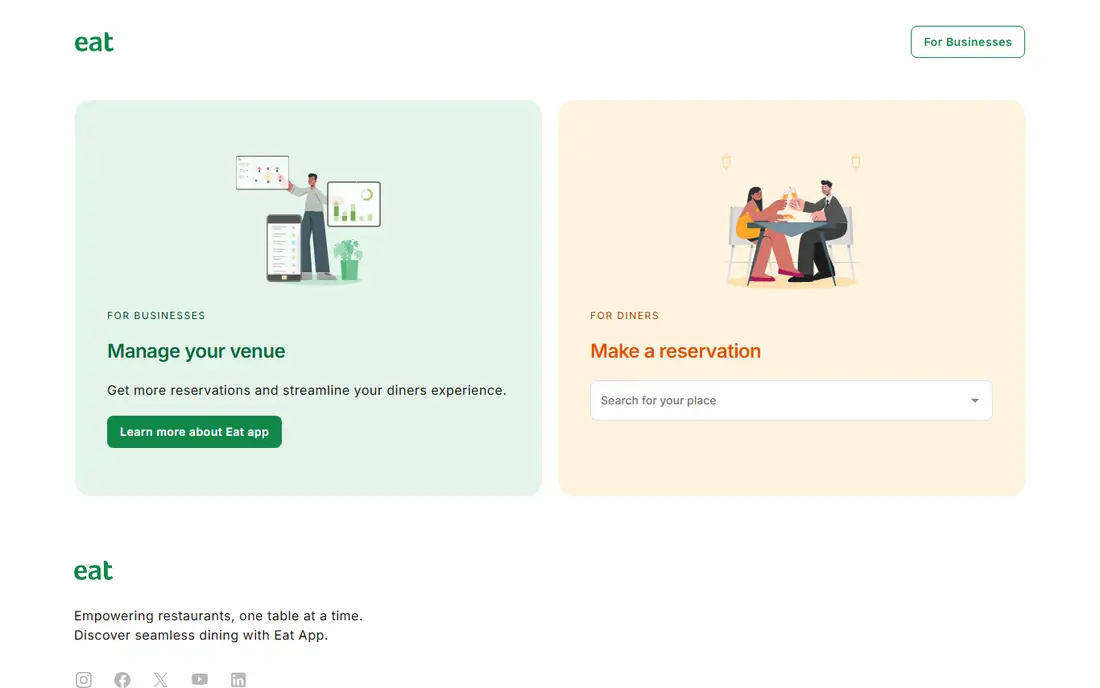
Eat App is built with all-in-one reservations in mind. The venue tools handle reservation management and the diner experience.
The system has grown across multiple regions, giving it an international footprint that fits groups with venues in more than one market. Beyond that, the honest weakness is scale and depth. This comparison lists no price for Eat App; ask the vendor. No free plan comes with Eat App.
Downsides: Smaller marketplace than OpenTable or Resy.
- Straightforward venue management
- Expanding international presence
- Fewer advanced marketing features
SevenRooms
Ideal for: All-around restaurant CRM
For all-around restaurant CRM, SevenRooms is a natural candidate. SevenRooms is the closest thing to a true CRM for restaurants. It serves more than 15,000 restaurants globally, from local favorites to Michelin-starred rooms.
Downsides: Full value needs using multiple modules together.
It brings together guest data across every booking, visit, and order so staff can see preferences and spend history before a guest sits down. As for the details, the honest catch is pricing: it is quote-based. The product's full value comes from using reservations, table management, CRM, and marketing together instead of as a single module. More specifically, reservations come in from your website, Google, Instagram, Yelp, and delivery products, and its AI table management seats guests quicker with pacing controls and include forecasting. Pricing for SevenRooms is not stated here, so ask the vendor for current figures. SevenRooms has no permanent free option.
- Automatic email and SMS marketing
- Direct booking channels that avoid marketplace commissions
- Pricing is quote-based
OpenTable
Ideal for: Marketplace reach plus CRM
OpenTable is aimed squarely at marketplace reach plus CRM. For restaurants with solid direct demand, a direct-first product like SevenRooms may keep more margin.
That discovery engine is something no standalone CRM can replicate. No starting price is listed for OpenTable here; confirm pricing on the vendor site. OpenTable does not include a free plan.
Limits to weigh: Marketplace bookings can carry per-cover fees.
- Mature reservation and guest management tools
- More than 70,000 restaurants worldwide and huge diner traffic
- Diners may book through OpenTable instead of straight
Our selection method
The comparison looks at four things: starting price, free access, how well the feature set matches CRM software for restaurants, and the main limit of each tool. Plan names, prices and limits change often. Treat the figures here as a starting point and verify them with the vendor. Position on the page reflects fit for a typical buyer first, with price clarity and free access breaking ties. Treat it as a guide, not a ruling.
Pre-purchase checklist
- Request quotes from Thanx, OpenTable and the others; the list shows no fixed prices.
- Read the limits listed for Thanx first: not a reservation product.
- Confirm the exact Yelp Guest Manager plan that includes your must-have features.
- Total up the real monthly cost of SevenRooms, including add-ons, extra users and usage-based fees.
- Ask OpenTable how an export works before you move any records in; an easy exit lowers the risk.
Frequently asked questions
Can I try these tools before paying?
Not by default. None of the tools, from Thanx to OpenTable, lists a free plan or a free trial here, so ask each vendor for a demo before committing.
How are the tools for CRM software for restaurants ordered?
Thanx sits first and OpenTable last because the order follows typical fit for CRM software for restaurants, then price clarity and free access. It is a judgement call, so read each profile for fit and limits.
Does restaurant CRM work for casual and fast-casual restaurants?
Yes, but the emphasis shifts. Casual and fast-casual brands benefit more from loyalty, ordering data, and automatic engagement, which is Thanx's focus, than from white-tablecloth guest profiles.
Is Thanx the right pick for everyone comparing CRM software for restaurants?
No single tool suits every team. Thanx comes first because it fits loyalty and guest engagement, while Yelp Guest Manager suits waitlists and Yelp traffic and Eat App suits all-in-one reservations. Match the tool to your own size, budget and workflow before deciding.
Do these tools publish their prices?
No. None of the tools, from Thanx to OpenTable, shows a fixed starting price here, so budget time for quotes.