Start with Mixpanel if you need product teams running experiments and analysis. Listed starting prices: Mixpanel from $100 a month. Alternatives: Google Analytics 360 for teams already invested in Google tooling, and Heap for capturing unknown user behavior automatically. Prices, free plans and limits for all 6 tools follow.
Short on time? The summary and table above give the quick view of 6 customer analytics tools for enterprises, and the profiles that follow give the detail behind each entry.
Key takeaways
Number one here is Mixpanel, a fit for product teams running experiments and analysis.
Mixpanel, Heap: these are the 2 tools out of 6 that offer a free plan.
Salesforce Marketing Cloud fits Marketing engagement tied to customer data.
Before buying Heap, weigh this: Autocapture can produce large volumes of data.
Best for: Product teams running experiments and analysis
Mixpanel serves product teams running experiments and analysis. Results rely on disciplined event tracking and naming.
Points against: Product-centric instead of marketing-centric.
For everyday use, Mixpanel describes itself as a product intelligence product for the AI era, combining analytics, session replay, experiments, feature flags and AI-powered insights. It is built around product events, so marketing measurement and enterprise journey reporting are not its center of gravity. Mixpanel starts at: $100 per month. Mixpanel offers a free plan.
Best for: Teams already invested in Google tooling
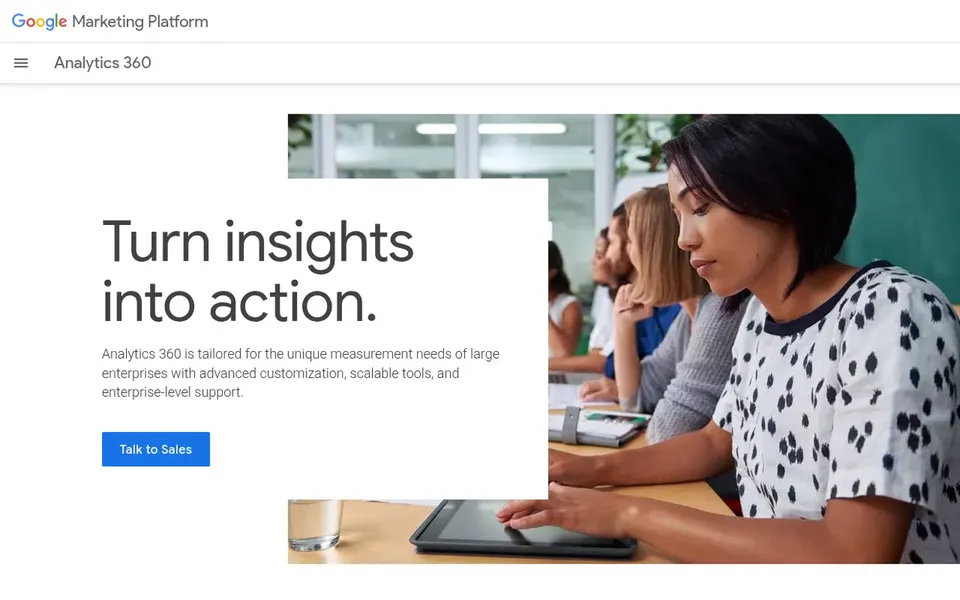
Think of Google Analytics 360 for teams already invested in Google tooling. Its strengths are tied to the Google ecosystem, so organizations standardized elsewhere may face integration effort.
Google Analytics 360 shows no starting price here, so confirm the cost on the vendor site. Trial and free access: Not stated.
Where it is weaker: Enterprise setup needs planning and governance.
Best for: Capturing unknown user behavior automatically
Heap makes the most sense for capturing unknown user behavior automatically. Heap by Contentsquare is described as a digital insights product that presents everything users do on your site, revealing the unknown unknowns that stay invisible with other tools. If your teams prefer tightly defined event schemas or need campaign attribution as a core function, another system may align better.
Honest limits: Autocapture can produce large volumes of data.
Also, automatic capture can produce substantial data volume, so governance and interpretation still matter. More specifically, the emphasis is on behavioral insight instead of marketing performance measurement. No starting price is listed for Heap here; confirm pricing on the vendor site. Free access exists with Heap.
Best for: Product teams building self-improving products
Think of Amplitude for product teams building self-improving products. Consider it when product insight, not marketing reporting, is the priority.
Beyond that, Amplitude presents itself as opening a new era for product teams, bringing AI into every step of building self-improving products from analytics to feedback to code. Its orientation is product development, so organizations seeking channel attribution or enterprise-wide customer data unification should look at broader systems. Check the vendor site for Amplitude pricing; none is listed in this comparison. Trial and free access: Not stated.
Points against: Centred on product instead of marketing analytics.
Best for: Unified customer data and journey measurement
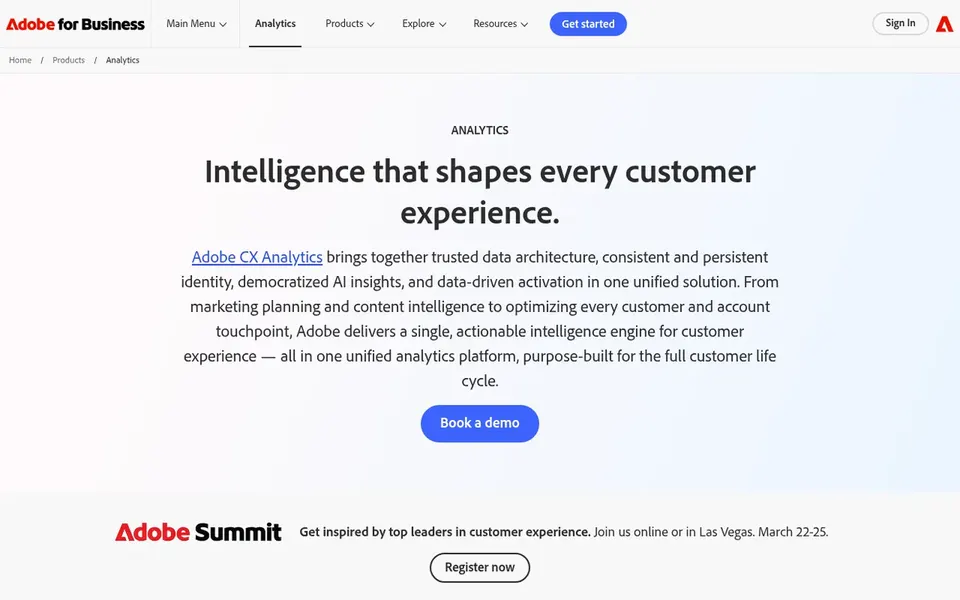
Adobe Analytics makes the most sense for unified customer data and journey measurement. Teams without a wider Adobe footprint may find the ecosystem less relevant.
No starting price is listed for Adobe Analytics here; confirm pricing on the vendor site. Free options: Not stated.
The main drawbacks: Wide product that can take time to configure.
Best for: Marketing engagement tied to customer data
Salesforce Marketing Cloud works best for Marketing engagement tied to customer data. Look elsewhere if you only need product-level event analytics. From a buyer's view, the value depends heavily on the quality of underlying customer data.
Trade-offs to know: Marketing-first instead of a pure analytics workspace.
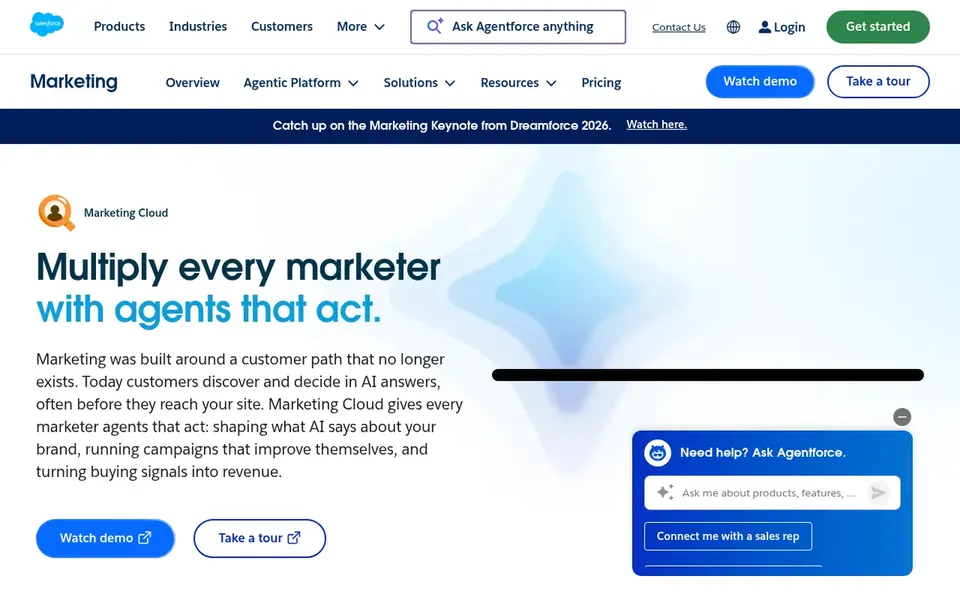
More specifically, Salesforce Marketing Cloud is described as a marketing system that helps organizations win customers, boost engagement and grow revenue. It is oriented toward campaigns and engagement instead of being a standalone analytics workbench, so teams seeking deep behavioral exploration may need another tool alongside it. Check the vendor site for Salesforce Marketing Cloud pricing; none is listed in this comparison. Trial and free access: Not stated.
Get a written quote from Google Analytics 360, Heap, Amplitude and others; the list shows no starting price for them.
Read the fine print on the free plans from Mixpanel and Heap; seat, project and feature caps differ.
Read the limits listed for Mixpanel first: product-centric instead of marketing-centric.
Confirm that Adobe Analytics connects to the apps your team already uses, on the plan you would actually buy.
Pick one real project and run it in Google Analytics 360 first; a small pilot shows fit faster than a checklist.
How we picked
Ainotely used vendor pricing pages and product documentation as the base, then compared plans, free access and documented limits for 6 tools. Prices and plan limits come from vendor pages and can change, so confirm them on the vendor site before you buy. Tools are placed by general fit for customer analytics tools for enterprises, with price clarity and free access as tie-breakers. A different team can reasonably rank them differently.
Every price and plan detail on this page comes from the vendors’ own websites. We did not run hands-on tests unless the text says so, and we do not publish star ratings or review scores. See how we score and our disclosure.
Keep your shortlist in one place
Paste prices, trial dates and notes from this guide into Ainotely, our AI note app. It files them into a topic and pulls out tasks like “cancel trial by Friday”. Free 7-day trial, no card needed.
What is the cheapest option for customer analytics tools for enterprises in this list?
On published monthly entry prices, Mixpanel is the lowest here at $100 per month. Entry price is only part of the cost, because seats, add-ons and billing terms can change the total. Pricing, free plan details and limits for all 6 tools in this customer analytics tools for enterprises roundup sit on the individual cards above.
Can I try these tools before paying?
Often, yes. Mixpanel and Heap have a free plan. Use your own data and a real task during the test, and check what the free tier or trial limits before you rely on it.
Which tool is a good match for enterprises that require both customer data and marketing measurement?
Mixpanel comes first here and is built for product teams running experiments and analysis. Buyers with other needs may prefer Google Analytics 360 (for teams already invested in Google tooling) or Heap (for capturing unknown user behavior automatically). Compare costs and limits first.
What makes Heap different from the other choices?
Heap by Contentsquare emphasizes capturing everything users do on your site to reveal unknown unknowns that other tools may miss. The tradeoff is that data volume and interpretation still need governance.
How should we evaluate these tools before buying?
Confirm governance, permissions and data retention controls, and validate how much implementation effort each vendor expects. Worth adding: details should always be confirmed on the vendor sites.
Is Mixpanel the right pick for everyone comparing customer analytics tools for enterprises?
No single tool suits every team. Mixpanel comes first because it fits product teams running experiments and analysis, while Google Analytics 360 suits teams already invested in Google tooling and Heap suits capturing unknown user behavior automatically. Match the tool to your own size, budget and workflow before deciding.