Shortlist: 8 Best Customer Data Platforms Cdp Tools for 2026

- 1
 AmperityRetail and hospitality brands obsessed with identity resolutionVisit
- 2
 HightouchTeams with a data warehouse that want activation without another data storeVisit
- 3
 Twilio SegmentEngineering-led teams that want clean tracking plans and quick integrationsVisit
- 4
 LyticsMid-market teams that want AI-driven segmentation without enterprise overheadVisit
- 5
 TealiumEnterprises where compliance, consent and tag governance dominateVisit
- Amperity sits first on this list: retail and hospitality brands obsessed with identity resolution.
- RudderStack fits teams that want open-source CDP infrastructure under their own control.
- Twilio Segment, RudderStack: these are the 2 tools out of 8 that offer a free plan.
- What to know about Twilio Segment first: costs scale steeply with event volume.
Direct answer
Our first pick is Amperity, best for retail and hospitality brands obsessed with identity resolution. If your case is different, Hightouch suits teams with a data warehouse that want activation without another data store and Twilio Segment suits engineering-led teams that want clean tracking plans and quick integrations. All 8 tools are compared below on price, free plan and limits.
Quick comparison
| Product | Ideal for | Price from | Free version | |
|---|---|---|---|---|
| Amperity | Retail and hospitality brands obsessed with identity resolution | Custom | No | Visit |
| Hightouch | Teams with a data warehouse that want activation without another data store | See website | Free trial | Visit |
| Twilio Segment | Engineering-led teams that want clean tracking plans and quick integrations | Free tier; Team from $120/month | Yes | Visit |
| Lytics | Mid-market teams that want AI-driven segmentation without enterprise overhead | Custom | No | Visit |
| Tealium | Enterprises where compliance, consent and tag governance dominate | Custom | No | Visit |
 Salesforce Data Cloud | Enterprises already standardized on Salesforce | Custom | No | Visit |
 Treasure Data | Enterprises running AI and machine learning on customer data | Custom | No | Visit |
 RudderStack | Teams that want open-source CDP infrastructure under their own control | See website | Yes | Visit |
Tool-by-tool breakdown
Choosing customer data platforms cdp usually comes down to price, fit and limits. This Ainotely guide sets 8 tools side by side on those three points, with the facts kept short and checkable.
Amperity
Ideal for: Retail and hospitality brands obsessed with identity resolution
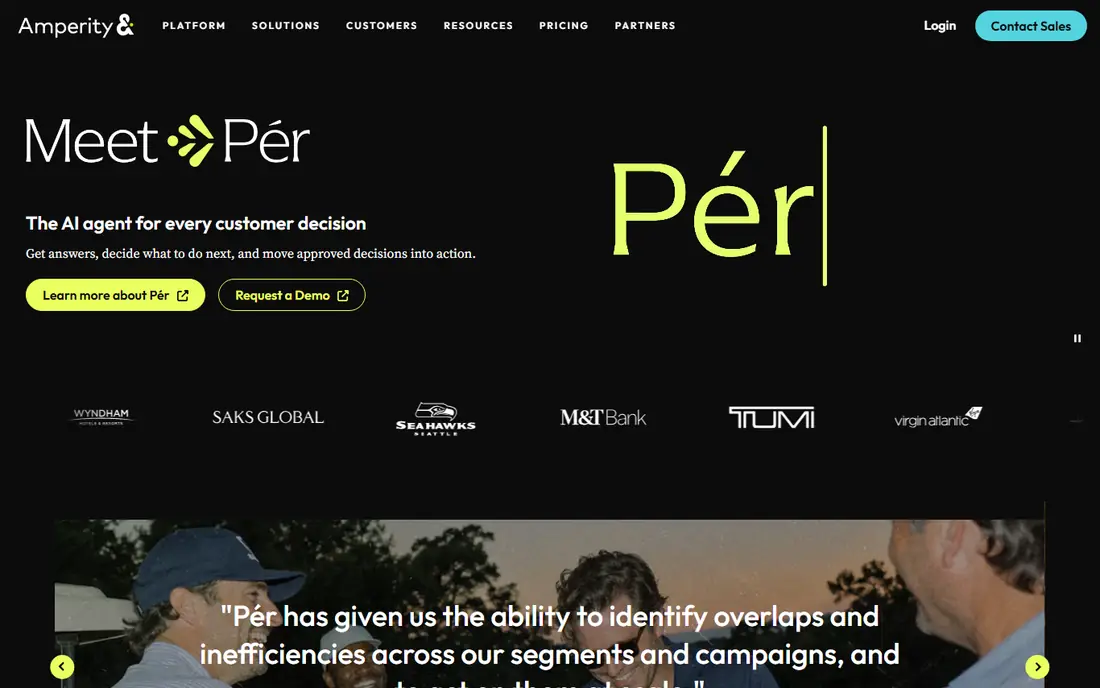
Amperity is a good fit for retail and hospitality brands obsessed with identity resolution. For identity-heavy retail use cases, it is the specialist to beat.
Its machine-learning identity resolution takes care of the duplicates, householding and sparse identifiers that break more straightforward CDPs, which is why multi-brand retailers and hotel groups standardize on it. More specifically, pricing is custom and enterprise, and buyers should know that no CDP fixes dirty source data: cleaning duplicates and standardizing formats at the source remains prerequisite work. Amperity does not publish a starting price; ask for a quote. Amperity has no free tier.
Trade-offs to know: Implementation needs data cleanup first.
- Decent activation into marketing channels
- Travel and multi-brand retail
- Retail and hospitality focus means less fit elsewhere
Hightouch
Ideal for: Teams with a data warehouse that want activation without another data store
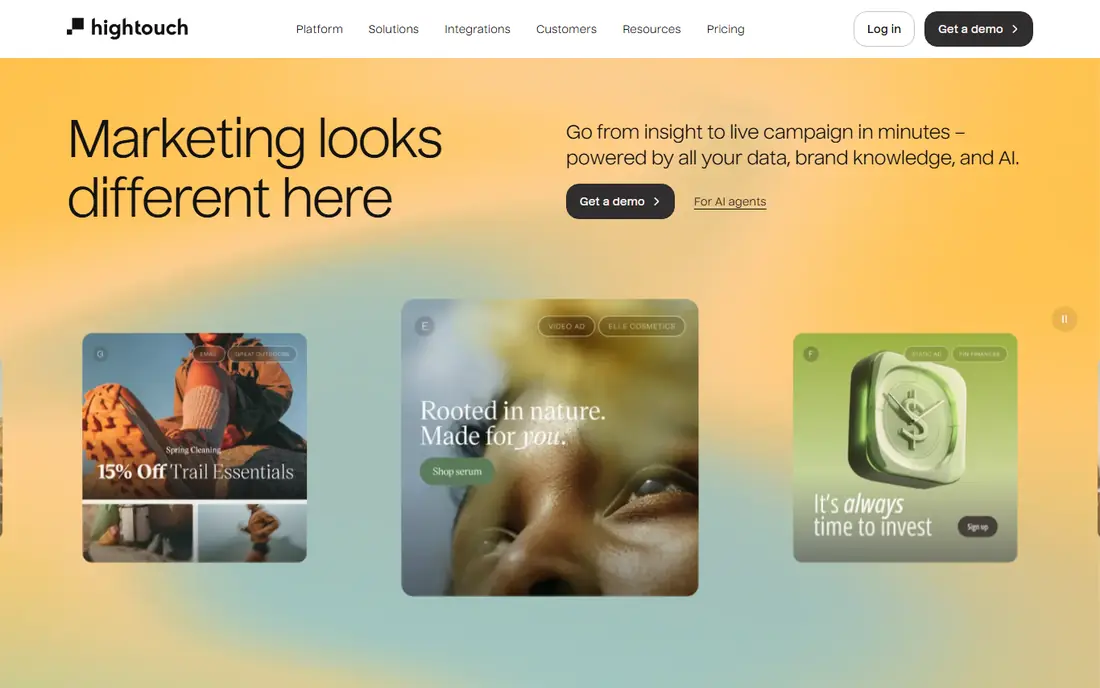
Pick Hightouch if this describes you: teams with a data warehouse that want activation without another data store. Hightouch pioneered the composable CDP: rather than copying customer data into yet another system, it activates straight from the warehouse with reverse ETL.
Where Hightouch stands out: No-code audience building for marketers.
Drawbacks to consider: Identity resolution is lighter than Amperity.
For firms that already invested in Snowflake, BigQuery or Databricks, it avoids paying to store the same data twice. Pricing for Hightouch is not stated here, so ask the vendor for current figures. Free options: Free trial.
- Quick syncs to 200+ destinations
- More straightforward pricing story than classic CDPs
- Needs a functioning warehouse first
Twilio Segment
Ideal for: Engineering-led teams that want clean tracking plans and quick integrations
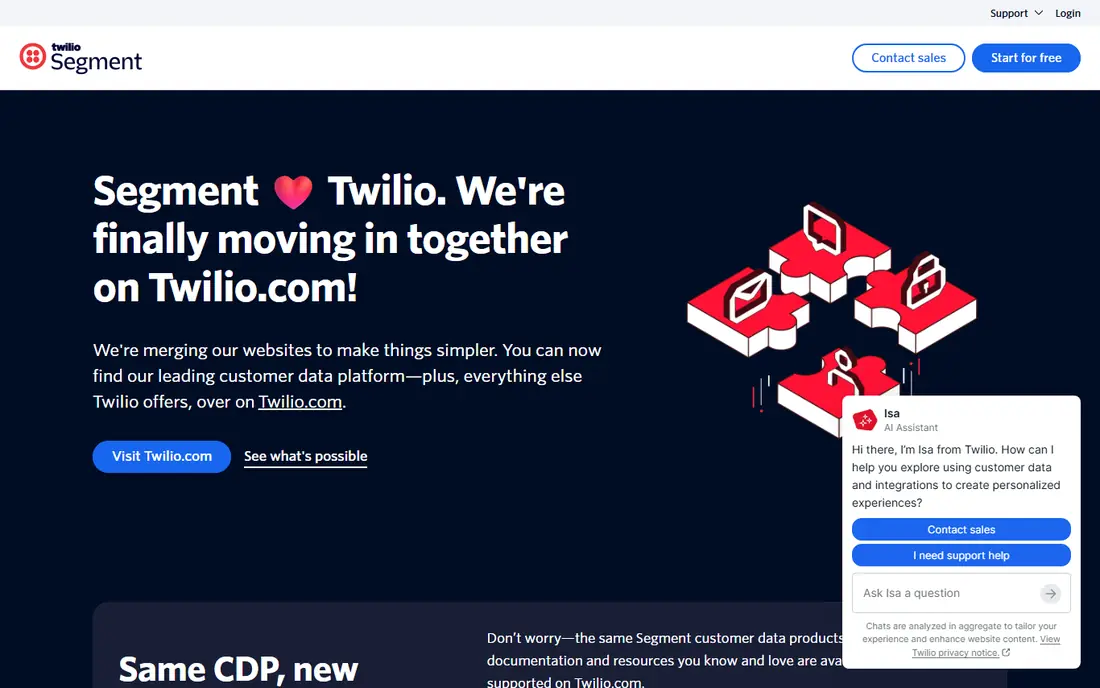
Twilio Segment is aimed squarely at engineering-led teams that want clean tracking plans and quick integrations. Segment is the developer's CDP.
What you pay to start with Twilio Segment: Free tier. Free access exists with Twilio Segment.
Points against: Advanced identity features sit on higher plans. Main advantages: Protocols enforces tracking-plan discipline.
- 400+ pre-built integrations
- Free level makes real trials possible
- Marketer self-service is thinner than BlueConic
Lytics
Ideal for: Mid-market teams that want AI-driven segmentation without enterprise overhead
Lytics works best for mid-market teams that want AI-driven segmentation without enterprise overhead. Its CDP merges profile unification with AI-driven recommendations and behavioral scoring, so smaller marketing teams get personalization features that normally need a data science group.
What users get: Decent integration set.
Where it is weaker: Custom pricing with less transparency.
From a buyer's view, for mid-size companies that want intelligent segmentation without hiring a data team or signing an enterprise contract, it deserves a place on the shortlist. Lytics sells by quote instead of a published price. There is no free plan with Lytics.
- Behavioral scoring from day one
- Approachable for mid-size companies
- Enterprise scale stories are thinner
Tealium
Ideal for: Enterprises where compliance, consent and tag governance dominate
Tealium makes the most sense for enterprises where compliance, consent and tag governance dominate. Tealium grew out of tag management into a full customer data hub, and that heritage presents in its governance strengths.
Best features of Tealium: Live unification with adaptable identity resolution.
Points against: Implementation takes months and frequently professional services. Teams evaluating Tealium should scope professional services honestly and test end-to-end latency, since quick ingestion does not always mean quick profile updates downstream. The integration marketplace is among the largest in the category. Pricing for Tealium is quote based, so budget talks start with the vendor. There is no free plan with Tealium.
- Capable tag management heritage
- 1,000+ integration marketplace
- Complexity overwhelms smaller teams
Salesforce Data Cloud
Ideal for: Enterprises already standardized on Salesforce
Salesforce Data Cloud makes the most sense for enterprises already standardized on Salesforce. The pricing follows the Salesforce model: custom, consumption-based, and easiest to justify inside an existing enterprise agreement. More specifically, businesses not on Salesforce should look elsewhere, since the integration advantage evaporates.
What to check first: Complexity matches the product.
Where Salesforce Data Cloud stands out: Massive partner ecosystem. But for the Salesforce-committed enterprise, evaluating anything else first is normally wasted effort. On top of that, customer profiles unify across Sales, Service and Marketing Clouds, and activation into journeys, advertising and Einstein AI features happens natively. Salesforce Data Cloud does not publish a starting price; ask for a quote. No free plan comes with Salesforce Data Cloud.
- Native to the Salesforce ecosystem with deep CRM integration
- Solid governance and consent tooling
- Non-Salesforce shops get little of the advantage
Treasure Data
Ideal for: Enterprises running AI and machine learning on customer data
Think of Treasure Data for enterprises running AI and machine learning on customer data. Treasure Data is the CDP for businesses where the data team, not the marketing team, drives the purchase. It ingests enormous event volumes, supports machine learning models straight on the system, and hands engineers SQL-level control over identity, profiles and activation.
Also, firms building churn models, lifetime value scoring and AI personalization on unified profiles will find it suits. In daily use, enterprises with serious data science ambitions pick it over marketer-friendly alternatives. Treasure Data sells by quote instead of a published price. Treasure Data has no free plan.
Strengths: Adaptable schema for complicated data models.
Points against: Enterprise pricing and sales motion.
- 400+ connectors
- Deals with massive data volumes with ML tooling built in
- Needs data engineering and data science skills
RudderStack
Ideal for: Teams that want open-source CDP infrastructure under their own control
RudderStack was built for teams that want open-source CDP infrastructure under their own control. RudderStack is the open-source answer to Segment: event collection, transformation and routing that teams can self-host, keeping raw customer data inside their own infrastructure.
Also, privacy-sensitive businesses and engineering-led teams that refuse another SaaS data store choose it for control and cost at scale. This comparison lists no price for RudderStack; ask the vendor. Free access exists with RudderStack.
Trade-offs to know: Self-hosting means operational responsibility. Upsides: No vendor lock-in on event data.
- Developer-friendly and extensible
- Open source with full data control
- Marketer UI trails commercial CDPs
More on customer data platforms cdp
Get it wrong and every downstream AI feature works on partial, duplicated or stale data. The category now splits four ways: developer-first collectors, marketer-owned segmentation tools, enterprise compliance engines, and warehouse-native activators that skip storing data altogether.
Our selection method
The comparison looks at four things: starting price, free access, how well the feature set matches customer data platforms cdp, and the main limit of each tool. Prices and plan limits come from vendor pages and can change, so confirm them on the vendor site before you buy. We ordered the tools by general fit, then by how clearly pricing is shown, then by free access. A buyer with unusual needs may reorder them.
Before you commit
- Ask Amperity, Hightouch, Lytics and others for a written quote, since no starting price is shown.
- Check what the free option really includes: Twilio Segment and RudderStack offer a free plan, and usage caps differ.
- Run a trial of Hightouch with real work before paying for a year; your own workflow is the best test.
- Read the limits listed for Amperity first: custom enterprise pricing.
- Test how quickly Tealium answers a pre-sales question; it hints at how support will feel later.
- Ask Salesforce Data Cloud whether prices are locked for the first term and what happens at renewal.
Frequently asked questions
Which options for customer data platforms cdp have a free plan?
On this list, Twilio Segment and RudderStack include a free plan. Caps on seats, usage or features are common, so test the free plan against your real workload. One other tool offers a trial instead.
Is Amperity the right pick for everyone comparing customer data platforms cdp?
No single tool suits every team. Amperity comes first because it fits retail and hospitality brands obsessed with identity resolution, while Hightouch suits teams with a data warehouse that want activation without another data store and Twilio Segment suits engineering-led teams that want clean tracking plans and fast integrations. Match the tool to your own size, budget and workflow before deciding.
Do these tools publish their prices?
Not all of them. Amperity, Hightouch, Lytics and others publish no starting price, so expect a quote request for those. The rest, Twilio Segment included, show a starting price, though seats and billing terms still change the final cost.
How are the tools for customer data platforms cdp ordered?
Amperity sits first and RudderStack last because the order follows typical fit for customer data platforms cdp, then price clarity and free access. It is a judgement call, so read each profile for fit and limits.