Best Customer Success Software in 2026: 7 Tools Compared

- Gainsight is the enterprise standard for customer success, with deep health scoring and playbooks.
- Totango and ChurnZero suit mid-size teams that want strong automation without enterprise complexity.
- Vitally and Planhat offer modern, flexible platforms for growing SaaS teams.
- Custify and CustomerSuccessBox suit smaller teams that need core success tools at lower cost.
Quick comparison
| Product | Ideal for | Price from | Free version | |
|---|---|---|---|---|
 Gainsight | Enterprise customer success | See website | No | Visit |
 Totango | Mid-size customer success teams | See website | Free trial | Visit |
 ChurnZero | Automation for SaaS success teams | See website | No | Visit |
 Planhat | Modern success platform for SaaS | See website | Free trial | Visit |
 Vitally | Flexible success for growing teams | See website | Free trial | Visit |
 Custify | Affordable success for smaller teams | See website | Free trial | Visit |
 CustomerSuccessBox | Success tools for B2B SaaS | See website | Free trial | Visit |
The best customer success software
Customer success software helps SaaS and subscription teams keep customers: tracking health, onboarding, usage and renewal risk in one place. The tools below differ in scale and focus, from enterprise platforms to simpler tools for smaller teams. We compared them on health scoring, playbooks, integrations and price, since a tool nobody updates helps no one.
Gainsight
Ideal for: Enterprise customer success
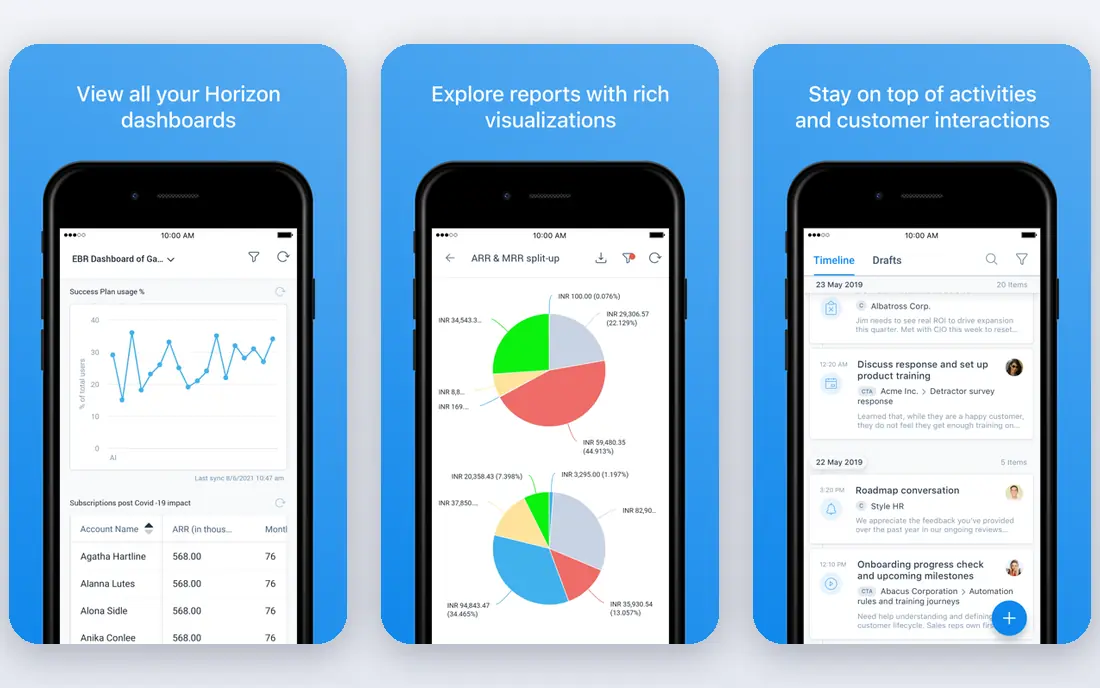
Gainsight is the enterprise standard for customer success, with deep health scoring, playbooks, journey orchestration and integrations across CRM, billing and product data. Large SaaS teams use it to manage thousands of accounts, automate renewals and report on retention to leadership. Its depth is unmatched for complex success operations.
Pricing is enterprise level, and implementation takes time and planning. Smaller teams will find it heavy and expensive. For enterprises with large customer bases and defined success processes, Gainsight is the benchmark.
For readers focused on enterprise customer success, Gainsight is worth a trial before deciding, since the free tier or trial shows its real feel fast. Check the current plan details on the vendor site, since prices and limits change, and confirm that the version you need works on your devices.
- Deep health scoring
- Playbooks and journeys
- Strong integrations
- Enterprise pricing
- Implementation takes time
Totango
Ideal for: Mid-size customer success teams
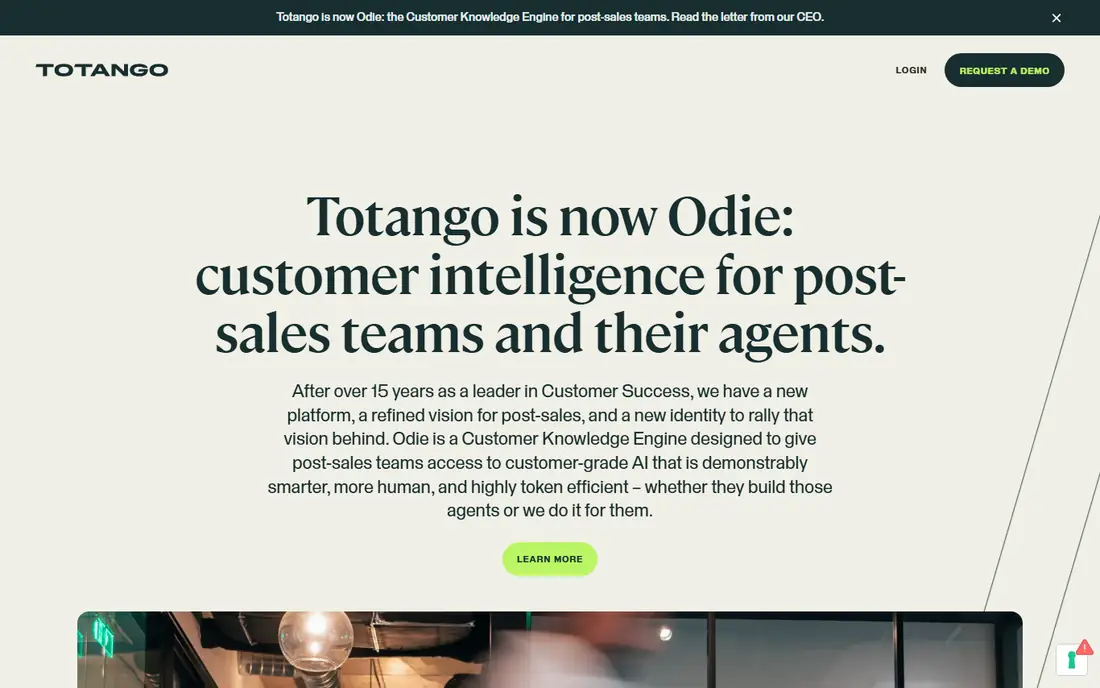
Totango serves mid-size customer success teams with health scoring, customer segments, campaigns and playbooks in a clear platform. Its integrations pull usage and billing data into health views, and its campaigns automate onboarding and check-ins. Teams growing beyond spreadsheets find it a natural step.
Pricing varies by tier, and enterprise features such as advanced analytics need higher plans. Its depth also trails Gainsight for very large operations. For mid-size SaaS teams, Totango balances power and usability well.
We would shortlist Totango for mid-size customer success teams, and compare it directly with the two options nearest it in price before paying. Check the current plan details on the vendor site, since prices and limits change, and confirm that the version you need works on your devices.
- Health scoring and segments
- Campaigns and playbooks
- Integrations
- Pricing varies
- Enterprise features need higher tiers
ChurnZero
Ideal for: Automation for SaaS success teams
ChurnZero focuses on real-time customer health, alerts and in-app messaging, with playbook automation that triggers actions when usage or risk changes. Its in-app guides help onboarding without extra tools, and its integrations cover CRM and billing data. SaaS teams that want proactive, automated success use it widely.
Pricing varies, and setup needs data integration work to make health scores accurate. Smaller teams may find its automation more than they need. For SaaS teams that live on real-time signals, ChurnZero is strong.
If automation for SaaS success teams is your main need, ChurnZero deserves a place on a shortlist, provided you test the catch described above first. Check the current plan details on the vendor site, since prices and limits change, and confirm that the version you need works on your devices.
- Real-time health and alerts
- In-app messaging
- Playbook automation
- Pricing varies
- Setup needs data integration work
Planhat
Ideal for: Modern success platform for SaaS
Planhat is a modern customer success platform with a flexible data model, health scoring, workflows and a clean interface that growing SaaS teams like. Its data model adapts to different customer structures, and its workflows automate onboarding, renewals and expansions without heavy configuration.
Pricing varies, and its ecosystem of integrations is smaller than Gainsight. Very large enterprises may want deeper reporting. For growing SaaS teams that want a modern, adaptable success platform, Planhat is appealing.
Our view is that Planhat earns its place here for modern success platform for SaaS, even with the limits noted above. Check the current plan details on the vendor site, since prices and limits change, and confirm that the version you need works on your devices.
- Flexible data model
- Health and workflows
- Modern interface
- Pricing varies
- Smaller ecosystem than Gainsight
Vitally
Ideal for: Flexible success for growing teams
Vitally offers flexible customer success tools with custom health scores, views, automation and integrations, in a modern interface that teams adopt quickly. Its flexibility suits SaaS companies with varied customer segments, since health and playbooks can differ by segment. Growing teams use it to replace spreadsheets without enterprise complexity.
Pricing varies, and advanced analytics need higher tiers. Its brand is newer than Gainsight or Totango, so community resources are smaller. For growing teams that want flexible success tooling, Vitally is a strong modern choice.
For readers focused on flexible success for growing teams, Vitally is worth a trial before deciding, since the free tier or trial shows its real feel fast. Check the current plan details on the vendor site, since prices and limits change, and confirm that the version you need works on your devices.
- Custom health scores and views
- Automation
- Integrations
- Pricing varies
- Advanced analytics need higher tiers
Custify
Ideal for: Affordable success for smaller teams
Custify gives smaller SaaS teams health scoring, lifecycle tracking and automation at a clearer, lower price than enterprise platforms. Its dashboard shows customer health and tasks without overwhelming new users, and its integrations cover common CRM and billing tools. It suits teams adopting success software for the first time.
Its feature set is smaller than enterprise rivals, and some integrations vary by plan. Large teams will outgrow it. For smaller teams that need core success tools affordably, Custify is good value.
We would shortlist Custify for affordable success for smaller teams, and compare it directly with the two options nearest it in price before paying. Check the current plan details on the vendor site, since prices and limits change, and confirm that the version you need works on your devices.
- Health scoring and lifecycle tracking
- Automation
- Clear pricing
- Smaller feature set than enterprise rivals
- Integrations vary
CustomerSuccessBox
Ideal for: Success tools for B2B SaaS
CustomerSuccessBox serves B2B SaaS teams with health scoring, risk alerts, onboarding playbooks and integrations for usage and billing data. Its focus on B2B journeys, including multi-user accounts and long onboardings, suits companies selling to teams rather than individuals.
Pricing varies, and its interface is functional rather than modern. Its ecosystem is smaller than larger rivals. For B2B SaaS teams that want focused success tooling, it is a practical option.
If success tools for B2B SaaS is your main need, CustomerSuccessBox deserves a place on a shortlist, provided you test the catch described above first. Check the current plan details on the vendor site, since prices and limits change, and confirm that the version you need works on your devices.
- Health scoring and risk alerts
- Onboarding playbooks
- Integrations
- Pricing varies
- Interface is functional
How we picked these
We compared official feature pages, pricing pages, app store listings, privacy policies and public reviews for each option below. We checked that each product is still available and that its stated plans match what the vendor publishes. We did not run hands-on tests, so our picks rest on documented features, pricing and the fit for the reader described in each section, not on lab results. Where a price could not be confirmed on the vendor site at the time of writing, we wrote See website rather than guessing. We also looked at how each option handles the everyday details that decide whether a tool gets used: setup time, device support, what happens when you cancel or downgrade, and whether help is available when something breaks. A product that looks strong on a feature list but is hard to set up, hard to leave, or poorly supported will cost more in time than it saves, so we weighed those practical points alongside price and features. Where reviewers or users reported a recurring problem, we noted it in the honest catch for that product, rather than leaving it out because the vendor page did not mention it.
How to choose customer success software for your team
Start with your customer data: can the tool pull usage, billing and support data cleanly, or will your team enter numbers by hand? Define a simple health score first, with three or four signals that actually predict churn for you, then pick a tool that scores and alerts on those signals. Check playbooks for onboarding and renewal, since automation only helps when the steps are clear. Finally, trial with a real book of customers for a month, because a health dashboard that looks good in a demo can still be noisy in practice.
A final check before you commit
Run a short trial on a real task before you pay for a year or move a whole team. Use the free plan or trial to complete one full job, from setup to export or delivery, and note where you got stuck. Check the cancellation path too: can you leave and keep your data, or does leaving mean starting over? Read the pricing page for renewal rates, not just the first-year offer, and confirm what support you get on the plan you will actually buy. Finally, ask one current user about the worst part of the product, since that answer tells you more than any feature list. If the trial feels good on a real task and the exit path is clear, the choice is much safer.
Frequently asked questions
What is the best customer success software?
Gainsight is the enterprise standard, with deep health scoring and playbooks. Totango and ChurnZero suit mid-size teams, while Vitally and Planhat offer modern platforms for growing SaaS companies.
What does customer success software do?
It tracks customer health, usage, onboarding and renewal risk, automates playbooks for common journeys, and alerts managers to at-risk or expansion-ready accounts. It usually integrates with CRMs, billing and support tools.
How is customer success different from support?
Support reacts to problems customers report. Customer success proactively guides onboarding, adoption and renewals, aiming to prevent churn and grow accounts before problems appear.
Do small SaaS teams need customer success software?
Small teams can start with a CRM and spreadsheets, but a dedicated tool helps once customer counts and usage data grow beyond manual tracking. Custify and CustomerSuccessBox offer lighter, lower-cost starting points.
What is a customer health score?
A health score combines signals such as product usage, support tickets, billing status and engagement into a rating of churn risk. Teams use it to prioritize outreach to at-risk accounts and spot expansion opportunities.