Best Cybersecurity Services for Startups

- 1
 Huntressmanaged EDR with a 24/7 SOCVisit
- 2
 CrowdStrike Falcon Gobasic antivirus for small teamsVisit
- 3
 SentinelOne Singularityautonomous endpoint protectionVisit
- 4
 Bitdefender GravityZonebusiness endpoint securityVisit
- 5
 Sophos Intercept Xendpoint protection with deep learningVisit
- Entry prices run from $6 per user per month for NordLayer Lite to $69.99 per endpoint per year for SentinelOne Core.
- Three vendors in this list publish no price at all, so Bitdefender, Sophos, and ThreatLocker need a quote or a partner conversation.
- CrowdStrike Falcon Go and Huntress both offer free trials, which is the best way to test endpoint protection before committing.
- The cheapest tier is often antivirus only, so check whether EDR, firewall management, and identity protection are included.
- Minimum seat counts matter for small teams, because Huntress direct purchase starts at 50 seats per product.
Quick comparison
| Product | Ideal for | Price from | Free version | |
|---|---|---|---|---|
| Huntress | managed EDR with a 24/7 SOC | $8.99 per endpoint per month | Free trial | Visit |
| CrowdStrike Falcon Go | basic antivirus for small teams | $7.99 per device per month | Free trial | Visit |
| SentinelOne Singularity | autonomous endpoint protection | $69.99 per endpoint per year | No | Visit |
| Bitdefender GravityZone | business endpoint security | quote only | Free trial | Visit |
| Sophos Intercept X | endpoint protection with deep learning | quote only | Free trial | Visit |
 NordLayer | business VPN and network access | $6 per user per month (billed annually) | No | Visit |
 JumpCloud | identity and device management | $9 per user per month (billed annually) | Free trial (30 days) | Visit |
 ThreatLocker | application allowlisting and control | quote only | Free trial (30 days) | Visit |
The best cybersecurity services for startups
Huntress
Ideal for: managed EDR with a 24/7 SOC
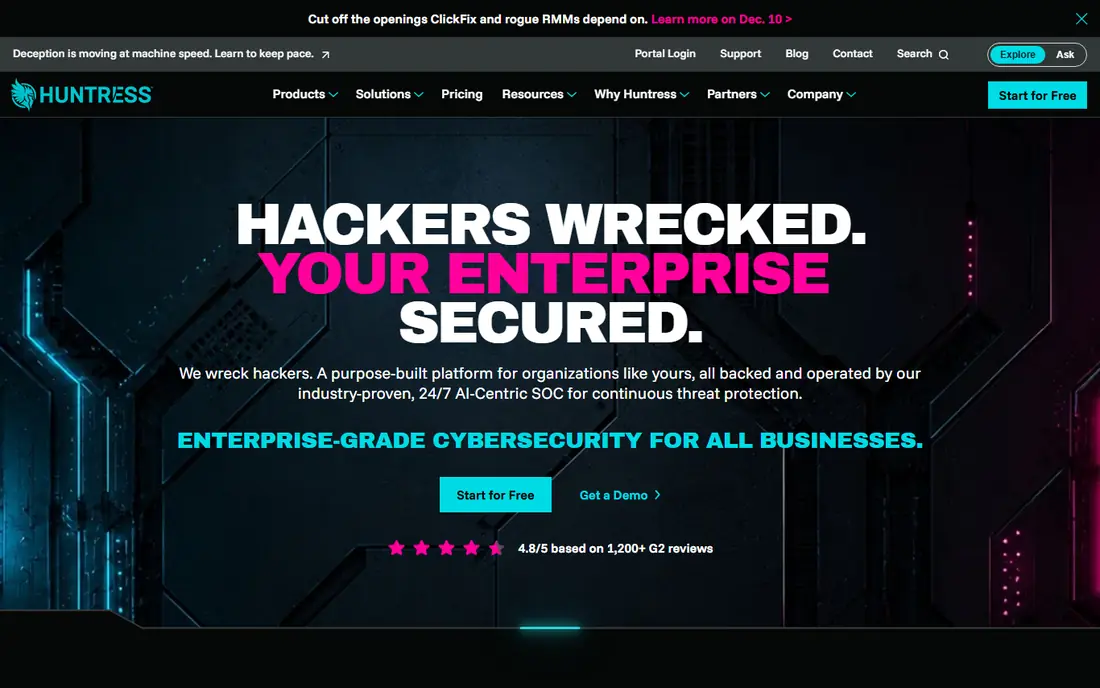
Huntress offers managed endpoint detection and response for small and midsize businesses, with a security operations centre that watches for threats around the clock. The Managed EDR plan has a listed price of $8.99 per endpoint per month on a 12-month term, with monthly or annual billing. That price covers detection, response, and human analysts, which is the main reason small teams choose it over a tool that only sends alerts.
The limit is how you buy it. Direct purchase needs a 50 seat minimum per product, and Huntress sells mainly through managed service providers and resellers, so a very small team may need to go through a partner. The free trial is fully featured and includes the SOC, so a startup can test the service on real endpoints before signing. The price was read from the vendor pricing page on 12 November 2026.
- Fully featured free trial including the 24/7 SOC
- Managed detection and response without hiring analysts
- Direct purchase requires a 50 seat minimum per product, and most teams must buy through an MSP or reseller
CrowdStrike Falcon Go
Ideal for: basic antivirus for small teams
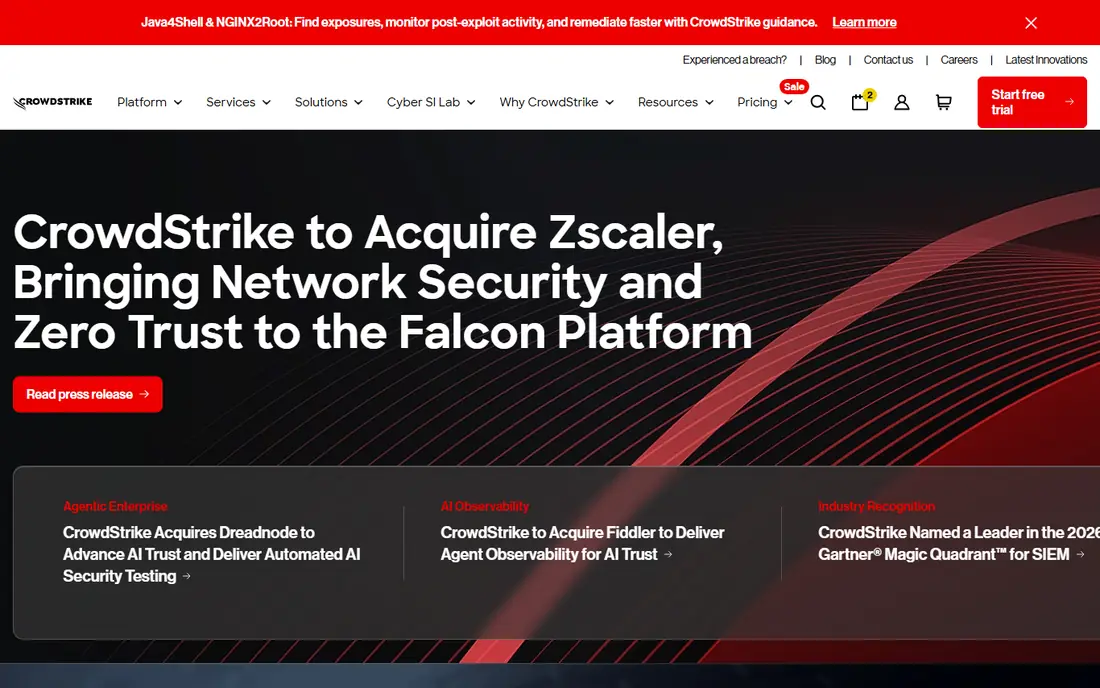
Falcon Go is CrowdStrike's entry bundle for small businesses, built around next-generation antivirus with cloud management. It costs $7.99 per device billed monthly, or $59.99 per device billed annually, and the prices are shown on the vendor homepage. Setup is quick, the console is simple, and the free trial needs no credit card, which makes it an easy first step for a startup with no security staff.
The limit is scope. Go covers antivirus only, so a team that later needs endpoint detection and response, threat hunting, firewall management, identity protection, or IT hygiene must move to Falcon Pro or Enterprise. That upgrade is where the real cost appears, so buyers should price the tier they expect to need in a year, not just the entry tier. Prices were shown on the vendor homepage on 12 November 2026.
- Simple setup with next-generation antivirus
- Free trial with no credit card required
- Go is antivirus only, and EDR, threat hunting, firewall management, identity protection, and SIEM need Pro or Enterprise
SentinelOne Singularity
Ideal for: autonomous endpoint protection
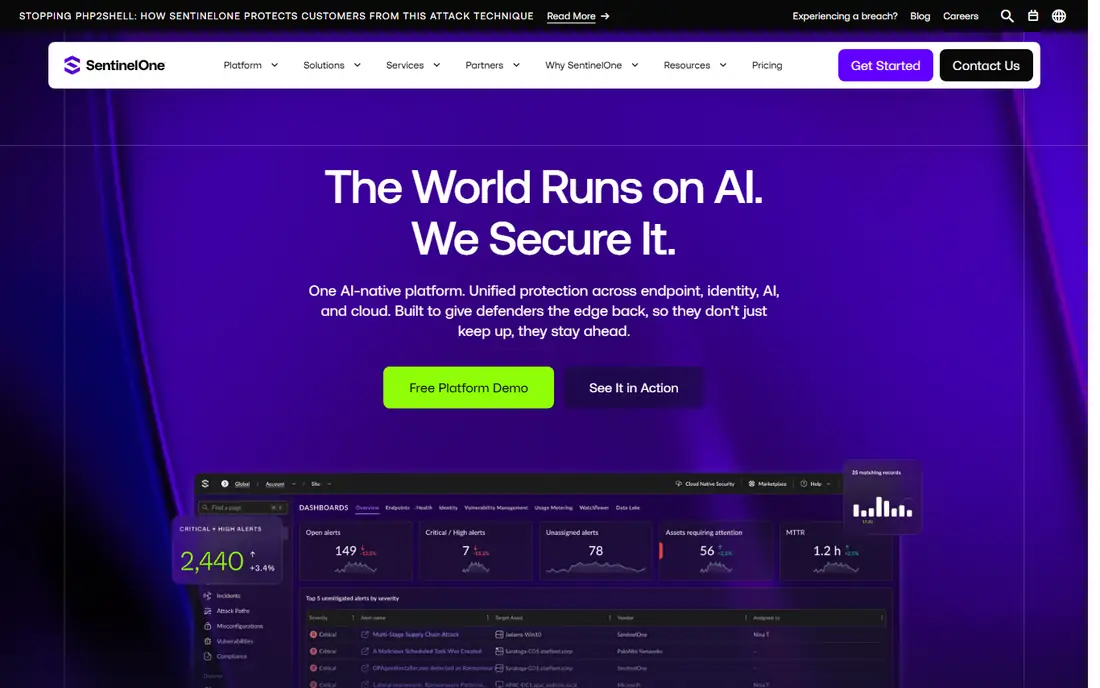
SentinelOne Singularity is an endpoint platform that detects threats and responds on its own, using AI models on the device rather than relying on cloud lookups alone. The Core tier costs $69.99 per endpoint per year on annual billing, which makes it one of the more affordable entry points for a platform of this type. It suits startups that want strong protection without a security team to manage it.
The Core tier is limited. It keeps only 14 days of data retention and lacks full endpoint detection and response and ransomware rollback, which need the Complete tier at $179.99 per endpoint per year. There is no free plan and no free trial listed on the vendor pricing page. The $69.99 figure comes from a vendor pricing page crawl dated 4 May 2026, corroborated by several independent checks dated October to November 2026. Re-check the price before publishing.
- Autonomous response that can roll back ransomware damage on higher tiers
- Strong detection without constant tuning
- Core keeps only 14 days of data retention and lacks full EDR and ransomware rollback, which need Complete at $179.99 per endpoint per year
Bitdefender GravityZone
Ideal for: business endpoint security
Bitdefender GravityZone is a business endpoint security platform with antivirus, anti-malware, device control, and optional EDR and XDR. It suits startups that want a single console for Windows, Mac, and Linux endpoints, with policies that an IT lead can set once and leave running. The vendor offers a free trial, so a team can test detection and the console before talking to sales.
The limits are price transparency and tiering. Bitdefender publishes no public price list for GravityZone, so budgeting needs a quote, and the EDR and XDR features that larger teams need sit on higher tiers or need extra licences. The vendor pricing page could not be read on 12 November 2026 because of a rate limit, and third-party trackers report figures that are not vendor-verified, so this article lists the price as quote only. Get the quote in writing before comparing it with the priced options in this list.
- Layered endpoint protection from a long-established vendor
- Free trial to test on real machines
- Advanced features such as EDR and XDR need higher tiers or additional licences, and no public price list exists
Sophos Intercept X
Ideal for: endpoint protection with deep learning
Sophos Intercept X, renamed Sophos Endpoint in October 2025, is an endpoint product that pairs deep learning malware detection with anti-exploit, anti-ransomware, and device control features. It suits startups that want strong prevention on laptops and servers without managing many separate tools. The vendor offers a free trial, and the product is sold through partners and resellers who can bundle it with support.
The limits are transparency and tiering. Sophos publishes no list price for Intercept X, so a buyer must get a quote from a partner, and the EDR, XDR, and managed detection and response features that a growing team may need are separate tiers with their own cost. Third-party reseller lists put Intercept X Advanced near $5.54 per user per month billed annually, but that figure is unverified and the vendor itself publishes no price, so this article lists it as quote only.
- Deep learning malware detection with anti-exploit and anti-ransomware features
- Free trial available
- No public price and partner-only sales, so budgeting needs a quote, and EDR, XDR, and MDR are separate tiers
NordLayer
Ideal for: business VPN and network access
NordLayer is a business VPN and network access service from the team behind NordVPN, built for startups whose people work from home, cafes, and client sites. The Lite plan costs $6 per user per month billed annually, or $8 per user per month billed monthly, and it covers encrypted connections, a kill switch, and basic access controls. Setup takes minutes, and there is a 14-day money-back guarantee, though no free plan and no free trial is stated.
The limit is what Lite leaves out. Dedicated IP, cloud firewall, device posture checks, DNS filtering, an application blocker, and site-to-site connections all need higher plans, so a team that needs more than a basic VPN will pay more than the entry price. The $6 figure was read from the vendor pricing page on 12 November 2026, where the plan cards show $8, $11, and $14 per user per month with annual billing savings.
- Quick setup for secure remote access
- Lite plan covers basic VPN needs at a low price
- Lite excludes dedicated IP, cloud firewall, device posture security, DNS filtering, application blocker, and site-to-site
JumpCloud
Ideal for: identity and device management
JumpCloud is a cloud directory platform that handles user identity, single sign-on, and device management for Windows, Mac, and Linux, which suits startups with no on-premise server. The Device Management plan costs $9 per user per month billed annually, or $11 per user per month billed monthly, and it covers device policies, patch management, and remote access controls. A 30-day free trial lets a team test it on real devices.
The billing quirk is the main limit. The vendor pricing FAQ states that suspended users are still billed at the full per-user rate, so a startup must remove departed users promptly rather than suspending them. The free plan closed to new sign-ups in February 2024, and platform bundles are quote only. The $9 figure comes from third-party checks of the vendor pricing page dated September to October 2026, because the prices did not render in the text read on 12 November 2026. Re-check the price before publishing.
- Directory, identity, and device management in one console
- 30-day free trial
- Suspended users are still billed at the full per-user rate, and platform bundles are quote only
ThreatLocker
Ideal for: application allowlisting and control
ThreatLocker takes a different approach from antivirus, by blocking every application that is not on an approved list. That deny-by-default model stops unknown software, including new malware, from running at all, which suits startups that want tight control over what can execute on company machines. The vendor offers a 30-day free trial, and the console covers application control, storage control, and elevation control.
The limit is the setup effort. Allowlisting needs about two weeks in learning mode before enforcement, while the system learns which applications the team actually uses, and policies need ongoing upkeep as software changes. The product is cloud only, so offline control is limited. ThreatLocker publishes no public price list, and the vendor pricing page could not be read on 12 November 2026 because of a rate limit, so this article lists the price as quote only.
- Deny-by-default allowlisting that blocks unknown software
- 30-day free trial
- Allowlisting needs about 2 weeks in learning mode before enforcement, plus ongoing policy upkeep, and the product is cloud only
How we chose
We compared the vendor pricing pages, product pages, and documentation for each service, and we checked that every homepage loads. Prices come from the vendor's own pricing page or homepage where the figures rendered, and the rest are listed as quote only because the vendor publishes no list price. We did not run hands-on tests, and we did not use third-party estimates as prices. Where a price rests on an older crawl or a third-party read, the article says so in the tool section, and those figures should be re-checked before publishing.
What to check before you buy
Check whether the entry tier includes endpoint detection and response or only antivirus, because the upgrade to EDR is where the real cost appears. Ask about minimum seat counts, since Huntress direct purchase starts at 50 seats per product. Confirm the contract length, the renewal price, and whether suspended or unused users are billed. Test the free trial on real machines, not just in a demo, and check that the console covers every operating system your team uses. Ask whether support, the security operations centre, and onboarding are included or billed separately.
| Team size and budget | Best fit | Why | | 1 to 10 people, under $100 per month | CrowdStrike Falcon Go or NordLayer Lite | Low per-device price, free trial, quick setup | | 10 to 25 people, $100 to $300 per month | SentinelOne Core or JumpCloud | Endpoint protection plus identity and device control | | 25 to 50 people, $300 to $500 per month | Huntress or Bitdefender GravityZone | Managed detection with a SOC, or layered endpoint security | | 50 or more people, custom budget | ThreatLocker or Sophos Intercept X | Allowlisting or partner-managed endpoint protection at scale |
Frequently asked questions
What is the best cybersecurity service for a startup?
The best service depends on what the startup needs most. CrowdStrike Falcon Go and NordLayer Lite are the cheapest entry points for antivirus and VPN access. SentinelOne Core and JumpCloud cover endpoint protection and identity for a growing team. Huntress suits teams that want a managed security operations centre without hiring analysts. Test the free trial on real machines before choosing.
How much does cybersecurity cost for a small startup?
Entry prices in this list run from $6 per user per month for NordLayer Lite to $69.99 per endpoint per year for SentinelOne Core. A team of 10 people can expect roughly $60 to $100 per month for basic protection, while managed detection and response costs more. Three vendors here publish no price, so a quote is needed to compare them with the priced options.
Do startups need EDR or is antivirus enough?
Antivirus blocks known malware, while endpoint detection and response watches for suspicious behaviour and helps a team respond to an attack. A very small team with no sensitive data can start with antivirus such as Falcon Go. A startup that handles customer data, payment details, or health records should plan for EDR, which is why the upgrade cost matters when comparing entry prices.
Is there a free cybersecurity service for startups?
None of the eight services in this list offers a free plan. Huntress, CrowdStrike, Bitdefender, Sophos, JumpCloud, and ThreatLocker offer free trials, usually 30 days, and NordLayer offers a 14-day money-back guarantee. Free trials are the practical way to test a service, but a startup should budget for a subscription from the start, since trials end and protection stops.
What is the difference between EDR and antivirus?
Antivirus scans files against known threats and blocks matches, while EDR records activity on each endpoint, detects behaviour that looks like an attack, and gives tools to investigate and respond. EDR usually costs more and needs more setup, but it catches attacks that antivirus misses. Several entry tiers in this list are antivirus only, so buyers should check which one they are buying.