Claroty comes first here, mainly for cyber-physical systems security. Listed starting prices: Microsoft Defender for IoT from $12.00 user/month, premium yearly. If your case is different, Microsoft Defender for IoT suits Microsoft-centric IoT and OT security and Fortinet FortiNAC suits network access control with IoT visibility. The full list of 6 tools follows, with prices and free plan facts.
This Ainotely guide covers 6 options for cybersecurity solutions for IoT. Each profile lists a starting price, free plan details, strengths and drawbacks, so you can drop poor fits quickly.
Key takeaways
This list starts with Claroty, which is built for cyber-physical systems security.
Claroty, Nozomi Networks and the 4 others all need a premium plan or a trial, since no free plan is listed.
Microsoft Defender for IoT is the lowest-priced starter here at $12.00 user/month, premium yearly.
Fortinet FortiNAC comes with a trade-off: centred on NAC instead of full IoT security.
Nozomi Networks fits OT network and endpoint visibility.
Claroty is a good fit for cyber-physical systems security. Claroty's specialization in cyber-physical systems means it may be more than needed for general IoT security. Claroty secures cyber-physical systems, helping organizations protect connected assets, cut business risks, and increase operational efficiency.
It is aimed at environments where IoT and OT converge, like industrial and critical infrastructure, offering deep visibility and threat detection. More specifically, organizations with primarily IT-focused IoT devices might consider broader IT security products. No starting price is listed for Claroty here; confirm pricing on the vendor site. On free options: Not stated.
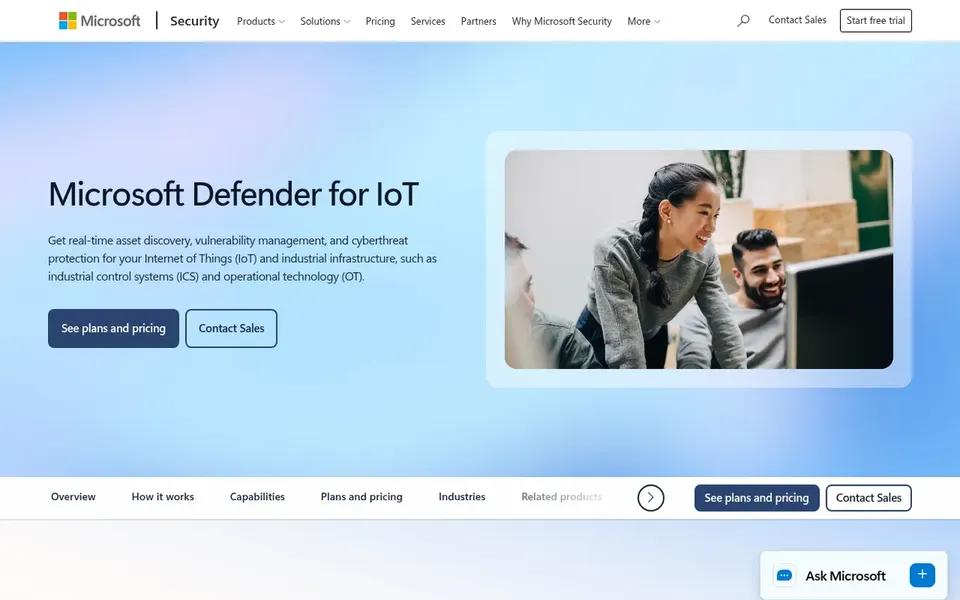
Microsoft Defender for IoT serves Microsoft-centric IoT and OT security. The tool is likely to be most beneficial within a Microsoft-centric stack; those without Microsoft infrastructure may find integration challenging.
Honest limits: May need Microsoft ecosystem.
Worth adding: Microsoft Defender for IoT supplies security options for IoT and ICS/OT devices, including asset discovery, vulnerability management, and threat protection. Starting cost for Microsoft Defender for IoT: $12.00 user/month, premium yearly. Trial and free access: Free trial.
Best for: Network access control with IoT visibility
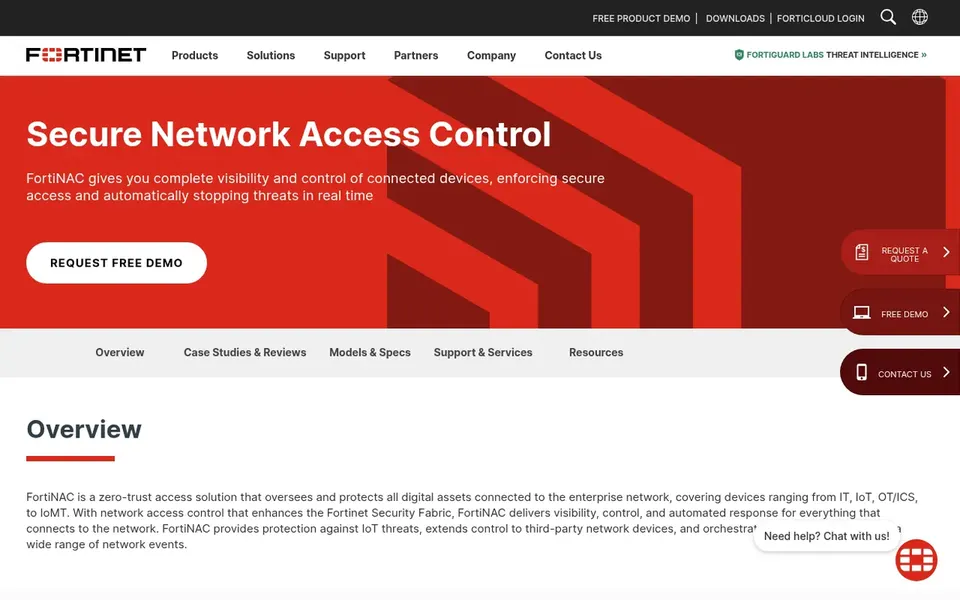
Fortinet FortiNAC targets network access control with IoT visibility. Fortinet FortiNAC is a network access control option that gives you enhanced visibility into IoT devices, helping organizations handle and secure network access.
Reasons to shortlist it: Enhanced IoT visibility.
Trade-offs to know: May need Fortinet infrastructure.
Organizations needing deeper OT security might need extra tools. As for the details, Whereas FortiNAC supplies capable NAC capabilities, it may not handle all aspects of IoT security like threat detection or vulnerability management. Pricing for Fortinet FortiNAC is not stated here, so ask the vendor for current figures. Trial and free access: Not stated.
Forescout Continuum was built for full asset visibility and control. Forescout Continuum continuously discovers, assesses, controls, and governs every connected asset across IT, IoT, IoMT, and OT.
For everyday use, the platform's breadth may introduce complexity, requiring dedicated staff to handle. As for the details, smaller organizations or those with restricted IT resources might find simpler options more appropriate. Check the vendor site for Forescout Continuum pricing; none is listed in this comparison. Free plan details: Not stated.
Drawbacks to consider: Can be complicated to deploy.
For unified IT, IoT, and OT security, Palo Alto Networks IoT Security is a natural candidate. Organizations with primarily Microsoft or specialized OT needs might consider other choices.
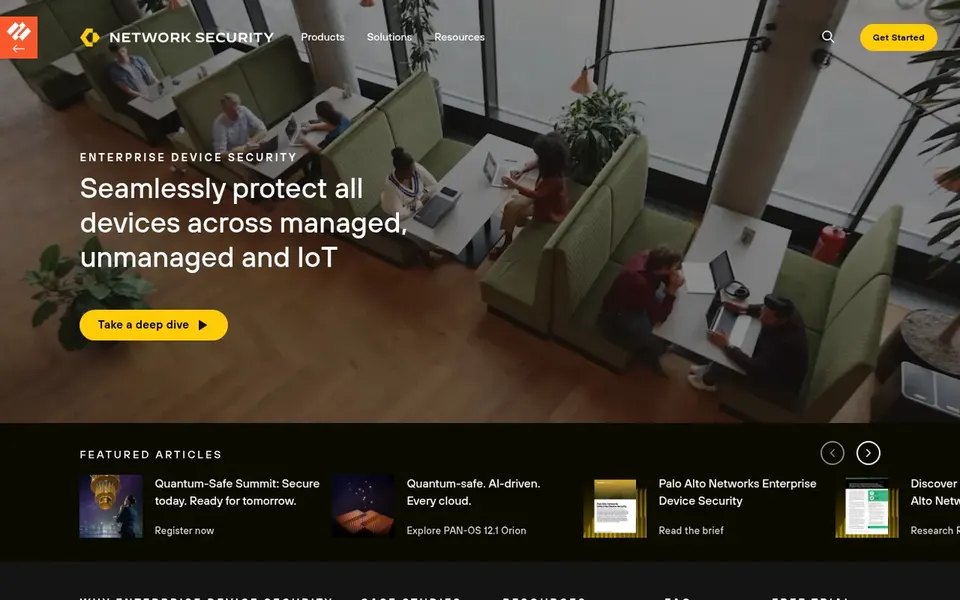
The option may be most effective when integrated with Palo Alto Networks infrastructure, which could limit adaptability for mixed-vendor environments. From a buyer's view, Palo Alto Networks IoT Security is a system that proactively secures all devices, from IT to IoT and OT, delivering full visibility, actionable risk insights, and adaptive security enforcement. This comparison lists no price for Palo Alto Networks IoT Security; ask the vendor. Trial and free access: Not stated.
Where it is weaker: May need integration with Palo Alto ecosystem.
Nozomi Networks was built for OT network and endpoint visibility. Organizations seeking a single system for all device types might need to integrate extra options.
Drawbacks to consider: Primarily OT-focused.
Nozomi Networks does not show a starting price in this comparison, so check the vendor site for current pricing. Free access: Not stated.
Get a written quote from Claroty, Fortinet FortiNAC, Forescout Continuum and others; the list shows no starting price for them.
Take the trial from Microsoft Defender for IoT and push a live task through it before you pay.
Before choosing Claroty, weigh its main limit: centred on cyber-physical systems.
Get the contract term, renewal terms and any onboarding fees from Nozomi Networks in writing.
Look at which plan of Palo Alto Networks IoT Security unlocks the features you need; entry tiers are often cut down.
How we picked
We compared the tools on published pricing, free plan or trial availability, feature coverage for cybersecurity solutions for IoT, and the limits each vendor documents. Seat minimums, billing terms and add-ons can move the real cost, so the starting prices here are a guide and not a quote. Tools are placed by general fit for cybersecurity solutions for IoT, with price clarity and free access as tie-breakers. A different team can reasonably rank them differently.
Every price and plan detail on this page comes from the vendors’ own websites. We did not run hands-on tests unless the text says so, and we do not publish star ratings or review scores. See how we score and our disclosure.
Keep your shortlist in one place
Paste prices, trial dates and notes from this guide into Ainotely, our AI note app. It files them into a topic and pulls out tasks like “cancel trial by Friday”. Free 7-day trial, no card needed.
How are the tools for cybersecurity solutions for IoT ordered?
Claroty sits first and Nozomi Networks last because the order follows typical fit for cybersecurity solutions for IoT, then price clarity and free access. It is a judgement call, so read each profile for fit and limits.
Can I try these tools before paying?
Often, yes. Microsoft Defender for IoT offers a free trial. Use your own data and a real task during the test, and check what the free tier or trial limits before you rely on it.
What should I look for in an IoT cybersecurity option?
Key factors bundle full device visibility, threat detection, access control, and integration with your existing infrastructure. Consider the mix of IT, IoT, and OT devices in your environment and whether the option supports the protocols they use.
What is the cheapest option for cybersecurity solutions for IoT in this list?
On published monthly entry prices, Microsoft Defender for IoT is the lowest here at $12.00 user/month, premium yearly. Entry price is only part of the cost, because seats, add-ons and billing terms can change the total. Pricing, free plan details and limits for all 6 tools in this Cybersecurity solutions for IoT roundup sit on the individual cards above.
What is the difference between Microsoft Defender for IoT and Claroty?
Microsoft Defender for IoT concentrates on asset discovery, vulnerability management, and threat protection for IoT and ICS/OT devices, with capable integration into Microsoft ecosystems.
Do these tools publish their prices?
Not all of them. Claroty, Fortinet FortiNAC, Forescout Continuum and others publish no starting price, so expect a quote request for those. The rest, Microsoft Defender for IoT included, show a starting price, though seats and billing terms still change the final cost.