5 Top Data Lakehouse Platforms Compared (2026)

- 1
 StarburstFederated queries across numerous sourcesVisit
- 2
 DremioSQL on Iceberg without moving dataVisit
- 3
 DatabricksSpark, SQL, and AI on one productVisit
- 4
 AWS Lake FormationGoverned lakes on AWSVisit
- 5
 TrinoFree open source query engineVisit
- This list starts with Starburst, which is built for Federated queries across numerous sources.
- Trino fits free open source query engine.
- Starburst, Dremio, Trino: these are the 3 tools out of 5 that offer a free plan.
- Pricing across the list, from Starburst to Trino, is by quote only.
Direct answer
Starburst leads the list, best for Federated queries across numerous sources. If your case is different, Dremio suits SQL on Iceberg without moving data and Databricks suits Spark, SQL, and AI on one system. Details, prices and limits for the rest of the 5 tools are below.
Quick comparison
| Product | Ideal for | Price from | Free version | |
|---|---|---|---|---|
| Starburst | Federated queries across numerous sources | See website | Yes | Visit |
| Dremio | SQL on Iceberg without moving data | See website | Yes | Visit |
| Databricks | Spark, SQL, and AI on one product | See website | Free trial | Visit |
| AWS Lake Formation | Governed lakes on AWS | See website | No | Visit |
| Trino | Free open source query engine | See website | Yes | Visit |
Data Lakehouse Platforms profiles
Ainotely put together this guide to data lakehouse platforms for readers who want a clear shortlist without reading every vendor page. It compares 5 tools on starting price, free plans, who each one suits and where each one falls short.
Starburst
Ideal for: Federated queries across numerous sources
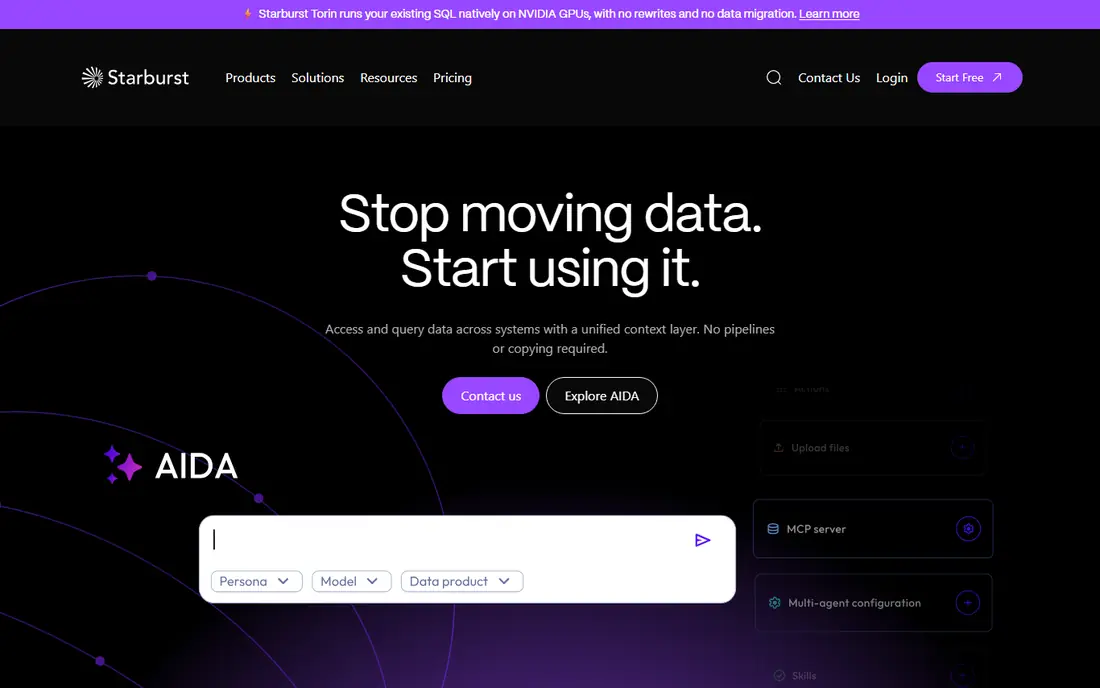
Starburst is a good fit for Federated queries across numerous sources. Beyond that, the honest limit is source dependence.
More specifically, start with a small set of high value federated use cases, measure query time and cost, and expand only where federation plainly beats copying data. More specifically, a federated query is only as quick as its slowest source, and poorly modelled source tables can still produce slow, expensive queries. Check the vendor site for Starburst pricing; none is listed in this comparison. A free plan is available with Starburst.
Limits to weigh: Managed pricing is credit based.
- Queries plenty of sources in one SQL statement
- Managed Trino with Iceberg support
- Federated performance relies on source systems
Dremio
Ideal for: SQL on Iceberg without moving data
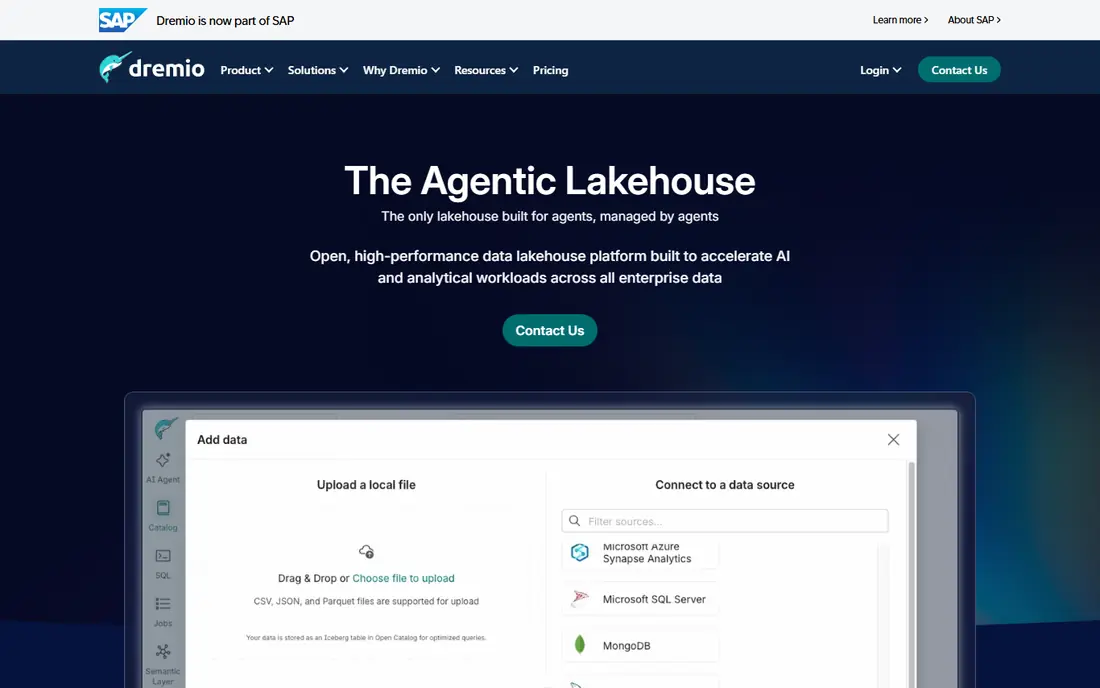
Choose Dremio for SQL on Iceberg without moving data. For organisations with plenty of BI users hitting the same tables, that acceleration can be the difference between a dashboard that feels instant and one that times out.
Dremio shows no starting price here, so confirm the cost on the vendor site. A free plan is available with Dremio.
Where it is weaker: Cloud pricing is usage based and needs monitoring.
- Automatic acceleration for BI
- Quick SQL on Iceberg and other sources
- SAP ownership may affect long term roadmap questions
Databricks
Ideal for: Spark, SQL, and AI on one product

Databricks was built for Spark, SQL, and AI on one product. The honest catch is cost control.
Databricks bills in units that vary by workload and level, and your cloud provider bills the underlying compute and storage separately. Pricing for Databricks is not stated here, so ask the vendor for current figures. Free options: Free trial.
Watch-outs: Complexity grows for small teams.
- Delta Lake and Iceberg support
- Capable Spark, SQL, streaming
- Usage pricing has two parts, product plus cloud
AWS Lake Formation
Ideal for: Governed lakes on AWS
Pick AWS Lake Formation if this describes you: governed lakes on AWS. It centralises permissions for databases and tables in the Glue Data Catalog, supports fine grained row and column controls, and helps teams share data inside and outside an organisation with audit trails. The limit is scope.
Where it falls short: not a full analytics system.
Lake Formation does not replace a query engine, a BI tool, or a pipeline system. For regulated teams, that governance layer is frequently the missing piece between raw storage and trusted reporting. No starting price is listed for AWS Lake Formation here; confirm pricing on the vendor site. AWS Lake Formation does not include a free plan.
- Central permissions for AWS data lakes
- Fine grained access control
- AWS only
Trino
Ideal for: Free open source query engine
Choose Trino for free open source query engine. It queries object storage, databases, and warehouses in place, supports Iceberg and Delta Lake, and plugs into typical BI tools through standard SQL. On top of that, the honest catch is operations.
Trino itself does not offer managed governance, automatic table maintenance, or support, so your team owns deployment, scaling, security, and upgrades. That cost is real, even if licence cost is zero. Pricing for Trino is not stated here, so ask the vendor for current figures. Free access exists with Trino.
Where it falls short: You operate it yourself.
- Free and open source
- Quick federated SQL across plenty of sources
- No managed governance or support without a vendor for example Starburst
Selection criteria
Selection started from tools commonly considered for data lakehouse platforms, then narrowed to 5 that have clear pricing information or a clear quote process. Where a vendor does not publish a price, the entry says quote. Where a price depends on seats or billing term, the entry says so. Order on the page follows fit for the typical buyer first, then price transparency and free access. Your own requirements should decide the final pick.
What to check before you buy
- Ask each vendor, from Starburst to Trino, for a written quote; none of them publishes a starting price.
- Check what the free option really includes: Starburst, Dremio and Trino offer a free plan, and usage caps differ.
- Take the trial from Databricks and push a live task through it before you pay.
- Before choosing Starburst, weigh its main limit: Federated performance relies on source systems.
- Add up seats, add-ons and usage charges for Dremio before comparing it with cheaper entries.
- Run a one or two week pilot of Starburst with the people who will use it every day.
Frequently asked questions
Which options for data lakehouse platforms have a free plan?
Starburst, Dremio and Trino offer a free plan in this list. Free plans usually cap users, projects or features, so check the limits on the vendor page. One other tool offers a trial instead.
Do I need a lakehouse if I already have a warehouse?
Not always. A warehouse alone performs well for structured, governed reporting. A lakehouse helps when you also need raw or semi structured data, streaming, machine learning, or open format access from multiple engines. If your warehouse already meets those needs, a lakehouse may add complexity without clear benefit.
Can I try these options before paying?
Often, yes. Starburst, Dremio and Trino have a free plan and Databricks offers a free trial. Use your own data and a real task during the test, and check what the free tier or trial limits before you rely on it.
Can I query data without moving it?
Yes, with federated engines for example Dremio, Starburst, and Trino, and with Iceberg support in multiple managed systems. For everyday use, for heavy, repeated analytics, materialising key tables commonly still makes sense.
What is a data lakehouse?
It aims to combine the adaptability and cost of a data lake with the reliability and query speed of a data warehouse, without copying data between separate systems.
How are the tools for data lakehouse platforms ordered?
The order follows typical fit for data lakehouse platforms, with Starburst first and Trino last, then price clarity and free access. It is editorial judgement, not a score, so another team could rank the tools differently.