6 Best Data Management Platforms for Healthcare Options for 2026

- 1
 DatabricksHealthcare and life sciences teams running analytics, machine learning, and AI at scaleVisit
- 2
 SnowflakeData teams building a governed healthcare data cloud on a general-purpose systemVisit
- 3
 InnovaccerHealth systems and payers unifying clinical, claims, and operational data on one systemVisit
- 4
 IMO HealthHealth tech vendors and data teams that require clinical terminology, coding, and data normalizationVisit
- 5
 ArcadiaValue-based care organizations, accountable care organizations, and health plans managing riskVisit
- The list opens with Databricks, aimed at healthcare and life sciences teams running analytics, machine learning, and AI at scale.
- What to know about IMO Health first: narrow scope: a terminology and clinical context layer instead of a full warehouse or analytics suite, so buyers still need a separate product for storage and reporting.
- Cotiviti suits Payers, government programs, and large provider groups needing interoperability and payment integrity data.
- Databricks is the only tool of the 6 with a free plan.
- No starting price is published for Innovaccer, IMO Health and Cotiviti; expect a quote.
Direct answer
Databricks leads the list, best for healthcare and life sciences teams running analytics, machine learning, and AI at scale. For a different need, Snowflake covers data teams building a governed healthcare data cloud on a general-purpose system and Innovaccer covers Health systems and payers unifying clinical, claims, and operational data on one system.
Quick comparison
| Product | Ideal for | Price from | Free version | |
|---|---|---|---|---|
| Databricks | Healthcare and life sciences teams running analytics, machine learning, and AI at scale | From 0.15 dollars per Databricks Unit, usage-based (third-party reported); cloud infrastructure billed separately | Yes | Visit |
| Snowflake | Data teams building a governed healthcare data cloud on a general-purpose system | From 2 dollars per credit on demand, usage-based (third-party reported); Business Critical edition from 4 dollars per credit for HIPAA workloads | Free trial (30 days) | Visit |
| Innovaccer | Health systems and payers unifying clinical, claims, and operational data on one system | Quote | No | Visit |
| IMO Health | Health tech vendors and data teams that require clinical terminology, coding, and data normalization | Quote | No | Visit |
| Arcadia | Value-based care organizations, accountable care organizations, and health plans managing risk | Quote, annual contracts reported from 250,000 to 1.5 million dollars (third-party reported) | No | Visit |
 Cotiviti | Payers, government programs, and large provider groups needing interoperability and payment integrity data | Quote | No | Visit |
The 6 tools in detail
Choosing data management platforms for healthcare usually comes down to price, fit and limits. This Ainotely guide sets 6 tools side by side on those three points, with the facts kept short and checkable.
Databricks
Ideal for: Healthcare and life sciences teams running analytics, machine learning, and AI at scale
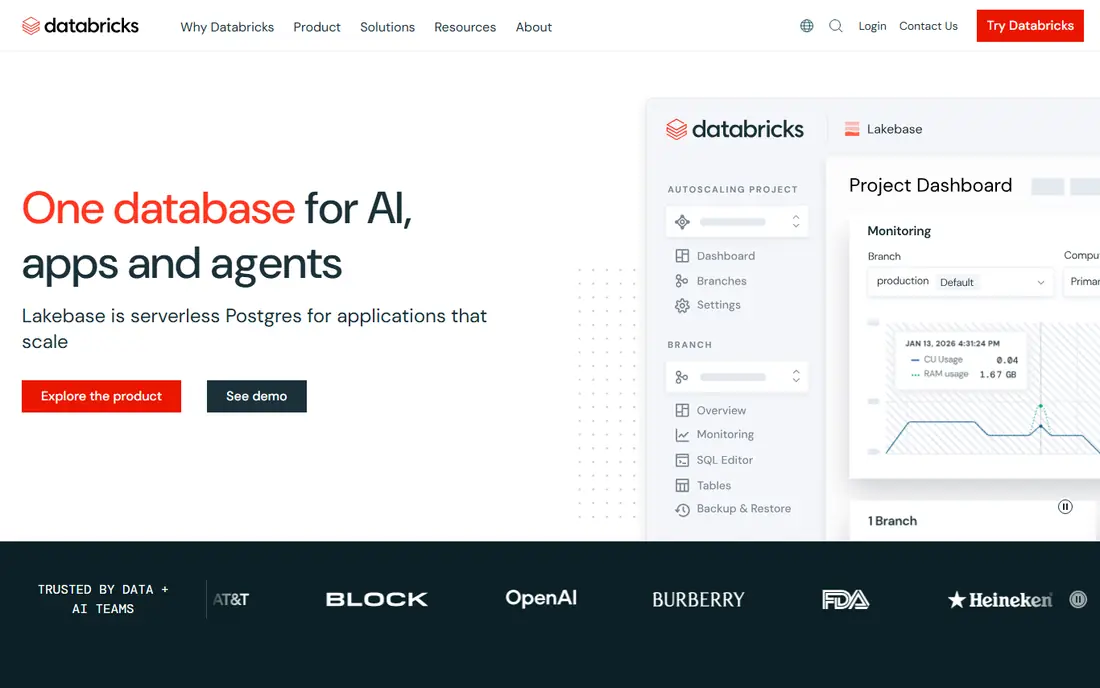
Where Databricks fits: healthcare and life sciences teams running analytics, machine learning, and AI at scale. Databricks is a unified data and AI system built on the lakehouse architecture, and its healthcare offering applies that foundation to clinical, claims, genomic, and imaging data.
What you pay to start with Databricks: From 0.15 dollars per Databricks Unit, usage-based. Databricks includes a free tier.
Where it falls short: costs are hard to predict since Databricks and cloud infrastructure arrive as two separate bills.
- Capable genomics and unstructured data handling
- Lakehouse architecture brings together warehousing, engineering, AI
- Steep ramp-up time for teams without Spark expertise
Snowflake
Ideal for: Data teams building a governed healthcare data cloud on a general-purpose system
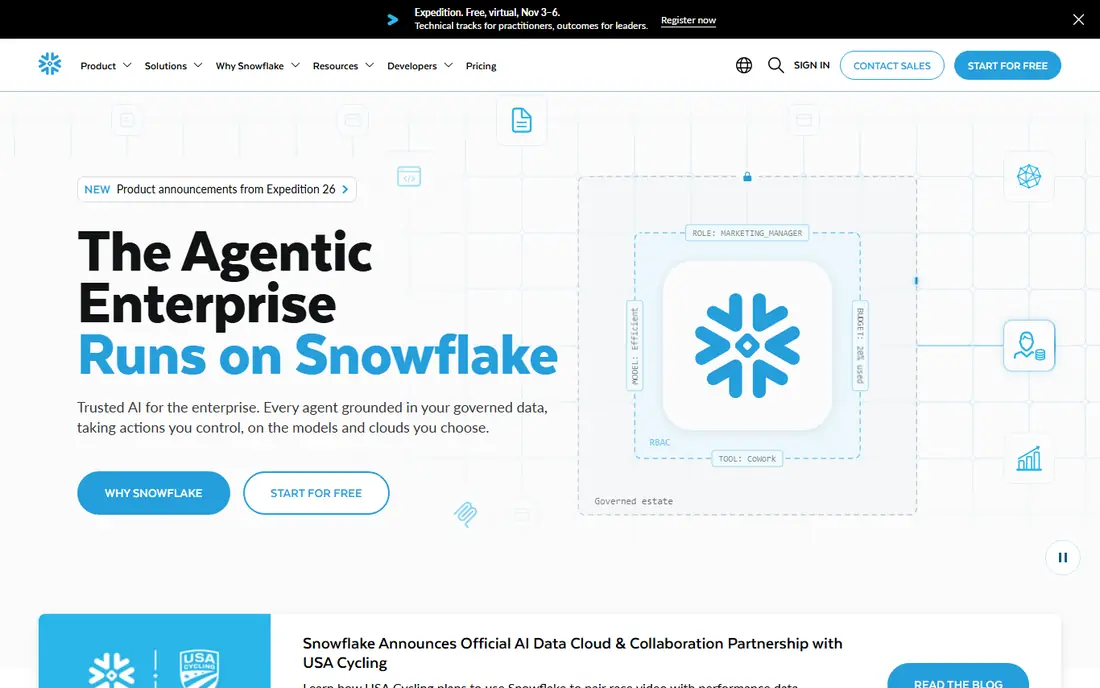
Snowflake is aimed squarely at data teams building a governed healthcare data cloud on a general-purpose system. The main limit is that Snowflake is not healthcare-native, so your team must design the patient data model or buy one from a partner.
Downsides: Usage-based billing is hard to predict without careful workload management.
Snowflake starts at: From 2 dollars per credit on demand, usage-based. Free plan details: Free trial (30 days).
- Solid data sharing and marketplace
- HIPAA, HITRUST, FedRAMP
- Healthcare teams must build or buy the healthcare data model themselves
Innovaccer
Ideal for: Health systems and payers unifying clinical, claims, and operational data on one system
Choose Innovaccer for Health systems and payers unifying clinical, claims, and operational data on one platform. Innovaccer brings together clinical, claims, financial, and operational data into a single layer for analytics, care management, and population health. Its Gravity product sits underneath AI agents for prior authorization, coding, care coordination, and revenue cycle work.
More specifically, Innovaccer raised a 275 million dollar Series F round in January 2025, based on Wikipedia. Beyond that, the company reports 54 million patient records unified, and its customers bundle Kaiser Permanente, Ascension, and Trinity Health. There is no list price for Innovaccer, so a quote is the way in. No free plan comes with Innovaccer.
Drawbacks to consider: the product fits large organizations with staff to run a data unification program.
What Innovaccer does well: Large US health system customer base.
- Solid population health and value-based care tooling
- Unified data model across clinical, claims, financial
- Quote-only pricing hides the real cost until late in the sales process
IMO Health
Ideal for: Health tech vendors and data teams that require clinical terminology, coding, and data normalization
IMO Health is built with Health tech vendors and data teams that need clinical terminology, coding, and data normalization in mind. Its knowledge graph maps clinician language to standard codes across ICD-10-CM, SNOMED CT, LOINC, and RxNorm, and it reports 25 percent more specific encounters and 92 percent fewer manual data quality tasks.
The limit is scope: IMO Health normalizes and enriches clinical data. But it does not store it or run analytics on it, so buyers must pair it with a warehouse or analytics product. IMO Health does not show a fixed starting price, so you request a quote. IMO Health has no free tier.
- Maintenance-free code set updates
- Knowledge graph used by more than 90 percent of US physicians and 4,500 provider organizations
- Narrow scope: a terminology and clinical context layer instead of a full warehouse or analytics suite, so buyers still need a separate product for storage and reporting
Arcadia
Ideal for: Value-based care organizations, accountable care organizations, and health plans managing risk
Arcadia works best for value-based care organizations, accountable care organizations, and health plans managing risk. Arcadia brings together claims, clinical, and social-determinant data for organizations that carry financial risk for patient populations.
As for the details, Arcadia also sells a care management layer, so the same governed data feeds both analytics and frontline workflows. Arcadia starts at: Quote, annual contracts reported from 250,000 to 1.5 million dollars. There is no free plan with Arcadia.
The main drawbacks: normalizing external claims and EHR data generally takes 3 to 6 months.
- More than 2,600 connected data sources
- HITRUST certified
- Quote-only pricing hides the real cost until late in the sales process
Cotiviti
Ideal for: Payers, government programs, and large provider groups needing interoperability and payment integrity data
In short, Cotiviti is for Payers, government programs, and large provider groups needing interoperability and payment integrity data. Its interoperability products support FHIR, X12, EDIFACT, HIPAA, and HL7, giving payers a single front door to unify intake of administrative and clinical transactions.
Drawbacks to consider: Payer-focused, so providers get less direct value.
Pricing for Cotiviti is quote based, so budget talks start with the vendor. Cotiviti has no free plan.
- 2026 Best in KLAS for CMS payer interoperability under the Edifecs name
- Processes more than 3.5 billion claims per year across more than 150 million covered lives
- Quote-only pricing hides the real cost until late in the sales process
What data management platforms for healthcare does
It differs from a generic data product since it understands healthcare formats: EHR extracts, HL7 v2 messages, FHIR resources, X12 claims, and code sets for example ICD-10 and SNOMED CT. Worth adding: a general-purpose tool can store those files, but it will not know that a problem list entry, a claim line. A lab result can all describe the same patient event.
They also manage the compliance layer healthcare demands: HIPAA controls, business associate agreements, and audit trails. If your team also needs to review the systems that produce the data, our guides to the best EMR and EHR software and the best HIPAA compliance software include those adjacent choices.
What to expect to pay for data management platforms for healthcare
Snowflake and Databricks are the exceptions, publishing usage-based rates: Snowflake charges from 2 dollars per compute credit on demand, and Databricks charges from 0.15 dollars per Databricks Unit, with cloud infrastructure billed separately. From a buyer's view, the subscription is only part of the bill, since implementation, data migration, training, and professional services frequently add a large share in year one.
Choosing data management platforms for healthcare: what matters
Check FHIR and HL7 support, HIPAA compliance with a signed business associate agreement, data governance controls. The real implementation timeline before you sign. Ask each vendor to list the data sources it links to from day one, including your EHR, claims clearinghouse, and lab feeds, and how long each connection takes in practice.
Confirm who owns the data model, how you export your data if you leave, and what happens to historical data at contract end.
How we chose
We compared the tools on published pricing, free plan or trial availability, feature coverage for data management platforms for healthcare, and the limits each vendor documents. Seat minimums, billing terms and add-ons can move the real cost, so the starting prices here are a guide and not a quote. Order on the page follows fit for the typical buyer first, then price transparency and free access. Your own requirements should decide the final pick.
What to confirm before you sign up
- Get a written quote from Innovaccer, IMO Health and Cotiviti; the list shows no starting price for them.
- Look at the free plan from Databricks closely: its caps decide whether it is usable for real work.
- Take the trial from Snowflake and push a live task through it before you pay.
- Read the limits listed for Databricks first: steep ramp-up time for teams without Spark expertise, and costs are hard to predict since Databricks and cloud infrastructure arrive as two separate bills.
- Look at the renewal terms for Innovaccer: auto-renewal, notice periods and price changes can matter more than the first-year price.
- Look at the help docs and support options for Arcadia before you commit.
Frequently asked questions
Is Databricks the right pick for everyone comparing data management platforms for healthcare?
No single tool suits every team. Databricks comes first because it fits healthcare and life sciences teams running analytics, machine learning, and AI at scale, while Snowflake suits data teams building a governed healthcare data cloud on a general-purpose platform and Innovaccer suits Health systems and payers unifying clinical, claims, and operational data on one platform. Match the tool to your own size, budget and workflow before deciding.
Do these tools publish their prices?
Not all of them. Innovaccer, IMO Health and Cotiviti publish no starting price, so expect a quote request for those. The rest, Databricks included, show a starting price, though seats and billing terms still change the final cost.
How are the tools for data management platforms for healthcare ordered?
The order follows typical fit for data management platforms for healthcare, with Databricks first and Cotiviti last, then price clarity and free access. It is editorial judgement, not a score, so another team could rank the tools differently.
Do these systems support FHIR and HL7?
Cotiviti and IMO Health are most solid on standards, with wide support for FHIR, HL7, X12, and USCDI requirements. Snowflake and Databricks can store and process FHIR resources, but they depend on partner tools or your own engineering.
Can I try these tools before paying?
Often, yes. Databricks has a free plan and Snowflake offers a free trial. Use your own data and a real task during the test, and check what the free tier or trial limits before you rely on it.