Redis is the first pick on this list for live in-memory data for apps. Listed starting prices: Redis from $5 a month. MongoDB is better for adaptable document data across clouds, and MySQL is better for widely used open source relational databases. The other 3 tools in the list cover narrower or pricier cases.
Ainotely put together this guide to database software for linux for readers who want a clear shortlist without reading every vendor page. It compares 6 tools on starting price, free plans, who each one suits and where each one falls short.
Key takeaways
Redis is the opening pick, best for live in-memory data for apps.
The main caution on Redis: not a primary relational store.
For the cheapest start, look at Redis: $5 per month.
For enterprise open source with scalability focus, MariaDB is worth a look.
Choose Redis for live in-memory data for apps. Redis is an in-memory data store focused on live data for agents and applications. In practice, choose Redis when live speed and in-memory data structures are the core requirement.
Also, Redis is not a primary relational store, and memory capacity planning is important for predictable behavior. On top of that, if you need durable relational transactions, pair Redis with PostgreSQL or another engine. Redis starts at: $5 per month. Redis has a free plan.
MongoDB serves adaptable document data across clouds. Schema design still needs discipline to avoid performance pitfalls. In practice, MongoDB is a document database positioned as an intelligent data system for the AI era.
Its homepage emphasizes adaptable, live data that scales across any cloud. It is not a relational SQL engine, so teams needing joins and strict schemas may prefer PostgreSQL or MySQL. In daily use, choose MongoDB when document adaptability and cloud-scale live data are central to your application design. This comparison lists no price for MongoDB; ask the vendor. MongoDB has a free plan.
Best for: Widely used open source relational databases
MySQL serves widely used open source relational databases. MySQL is a widely used open source relational database with wide ecosystem support, notably in web application stacks. For everyday use, choose MySQL when ecosystem familiarity and application compatibility matter most for your Linux environment.
Points against: Advanced tuning can be involved.
More specifically, if you need more solid standards compliance or extensibility, PostgreSQL is frequently preferred. Worth adding: feature sets can differ across editions, and advanced tuning may need care. Pricing for MySQL is not stated here, so ask the vendor for current figures. Free options: Not stated.
Best for: Enterprise critical workloads with AI features
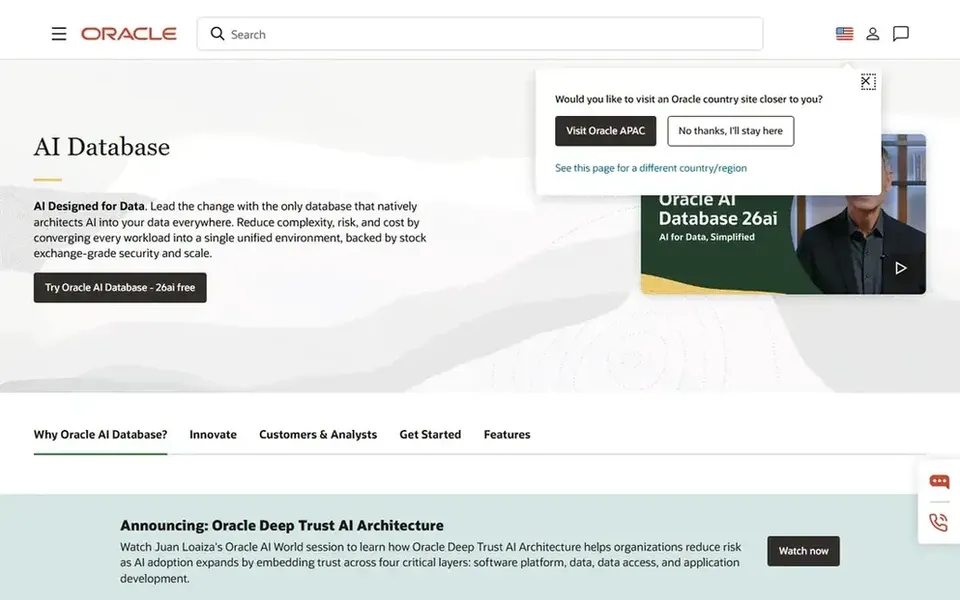
Oracle Database is a good fit for enterprise critical workloads with AI features. The system is known for administrative complexity and a substantial resource footprint, so smaller teams may prefer a lighter engine. Choose Oracle when its enterprise features and AI tooling align with your requirements.
What to check first: Complicated administration.
If you need a straightforward open source relational database, PostgreSQL or MySQL is a more practical starting point. Oracle Database is a flagship relational system positioned for app development and critical workloads. Oracle Database shows no starting price here, so confirm the cost on the vendor site. Trial and free access: Not stated.
Best for: General-purpose open source relational workloads
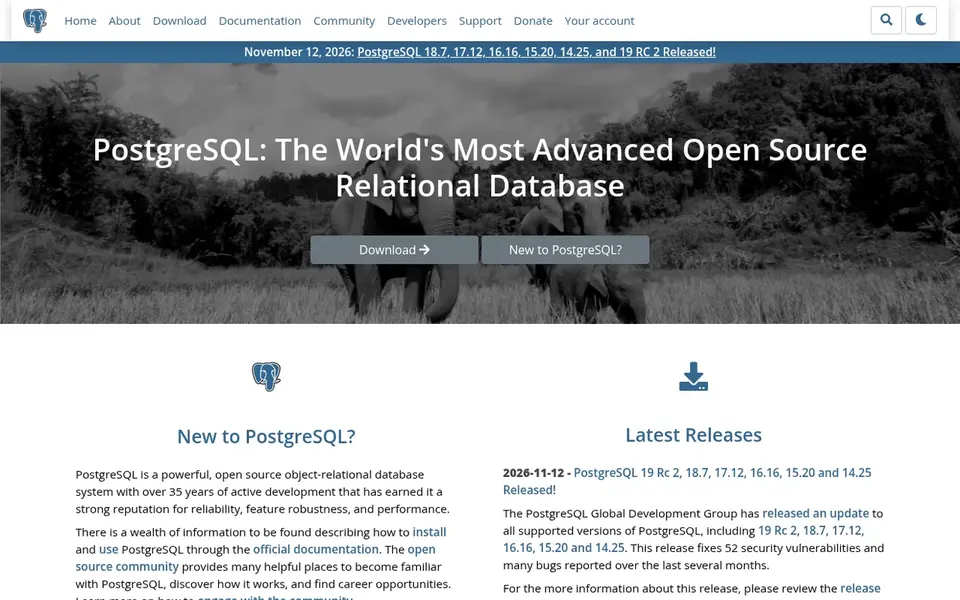
For general-purpose open source relational workloads, PostgreSQL is a natural candidate. The official site describes it as the world's most advanced open source database.
In practice, performance tuning and advanced features can demand expertise, and some capabilities depend on extensions. If you need a more straightforward setup or a MySQL-compatible stack, consider MySQL or MariaDB. PostgreSQL does not show a starting price in this comparison, so check the vendor site for current pricing. On free options: Not stated.
Best for: Enterprise open source with scalability focus
MariaDB is aimed squarely at enterprise open source with scalability focus. Choose MariaDB when open source enterprise support and scalability for critical workloads are the deciding factors.
Watch-outs: Some tooling differs by vendor.
In practice, organizations migrating from MySQL commonly evaluate MariaDB for its compatible heritage and community-driven development. MariaDB shows no starting price here, so confirm the cost on the vendor site. Free options: Not stated.
Ask MongoDB, MySQL, Oracle Database and others for a written quote, since no starting price is shown.
Look at free plan limits closely: Redis and MongoDB have one, and the caps decide whether it is usable for real work.
Read the limits listed for Redis first: not a primary relational store.
Get the contract term, renewal terms and any onboarding fees from Redis in writing.
Make sure PostgreSQL lets you export your data in a format another tool can read.
How we picked
Selection started from tools commonly considered for database software for linux, then narrowed to 6 that have clear pricing information or a clear quote process. Where a vendor does not publish a price, the entry says quote. Where a price depends on seats or billing term, the entry says so. The sequence is a judgement call: typical use case first, then pricing transparency, then free access. Use the profiles to check fit.
Every price and plan detail on this page comes from the vendors’ own websites. We did not run hands-on tests unless the text says so, and we do not publish star ratings or review scores. See how we score and our disclosure.
Keep your shortlist in one place
Paste prices, trial dates and notes from this guide into Ainotely, our AI note app. It files them into a topic and pulls out tasks like “cancel trial by Friday”. Free 7-day trial, no card needed.
Not all of them. MongoDB, MySQL, Oracle Database and others publish no starting price, so expect a quote request for those. The rest, Redis included, show a starting price, though seats and billing terms still change the final cost.
Which database is a good match for a Linux web application?
Redis is the pick this page puts first, mainly for real-time in-memory data for apps. If your situation differs, MongoDB suits adaptable document data across clouds, and MySQL suits widely used open source relational databases. Compare price and limits before you decide.
What is the cheapest option for database software for linux in this list?
On published monthly entry prices, Redis is the lowest here at $5 per month. Entry price is only part of the cost, because seats, add-ons and billing terms can change the total. Each of the 6 options in this database software for Linux guide has its own card above with the price, free plan and limits.
Can I try these tools before paying?
Often, yes. Redis and MongoDB have a free plan. Use your own data and a real task during the test, and check what the free tier or trial limits before you rely on it.
How are the tools for database software for linux ordered?
Redis sits first and MariaDB last because the order follows typical fit for database software for linux, then price clarity and free access. It is a judgement call, so read each profile for fit and limits.