DCO Platforms: 7 Tools Worth Comparing in 2026

- 1
 HunchFeed-driven product adsVisit
- 2
 BannerflowScaling display creativeVisit
- 3
 CeltraEnterprise creative automationVisit
- 4
 Display & Video 360Google-stack advertisersVisit
- 5
 FlashtalkingCreative ad serving and DCOVisit
- The list opens with Hunch, aimed at feed-driven product ads.
- Every tool from Hunch to DaVinci Commerce works by quote, with no list price shown.
- DaVinci Commerce fits Commerce media creative.
- Hunch comes with a trade-off: narrower than full DCO suites.
Direct answer
Hunch leads the list, best for feed-driven product ads. Bannerflow is the stronger choice for scaling display creative, while Celtra suits enterprise creative automation. The remaining 4 options are covered below with prices and limits.
Quick comparison
| Product | Ideal for | Price from | Free version | |
|---|---|---|---|---|
| Hunch | Feed-driven product ads | See website | No | Visit |
| Bannerflow | Scaling display creative | See website | No | Visit |
| Celtra | Enterprise creative automation | See website | No | Visit |
| Display & Video 360 | Google-stack advertisers | See website | No | Visit |
| Flashtalking | Creative ad serving and DCO | See website | No | Visit |
 Adform | European programmatic DCO | See website | No | Visit |
 DaVinci Commerce | Commerce media creative | See website | No | Visit |
The full DCO platforms list
This Ainotely guide covers 7 DCO platforms. Each profile lists a starting price, free plan details, strengths and drawbacks, so you can drop poor fits quickly.
Hunch
Ideal for: Feed-driven product ads
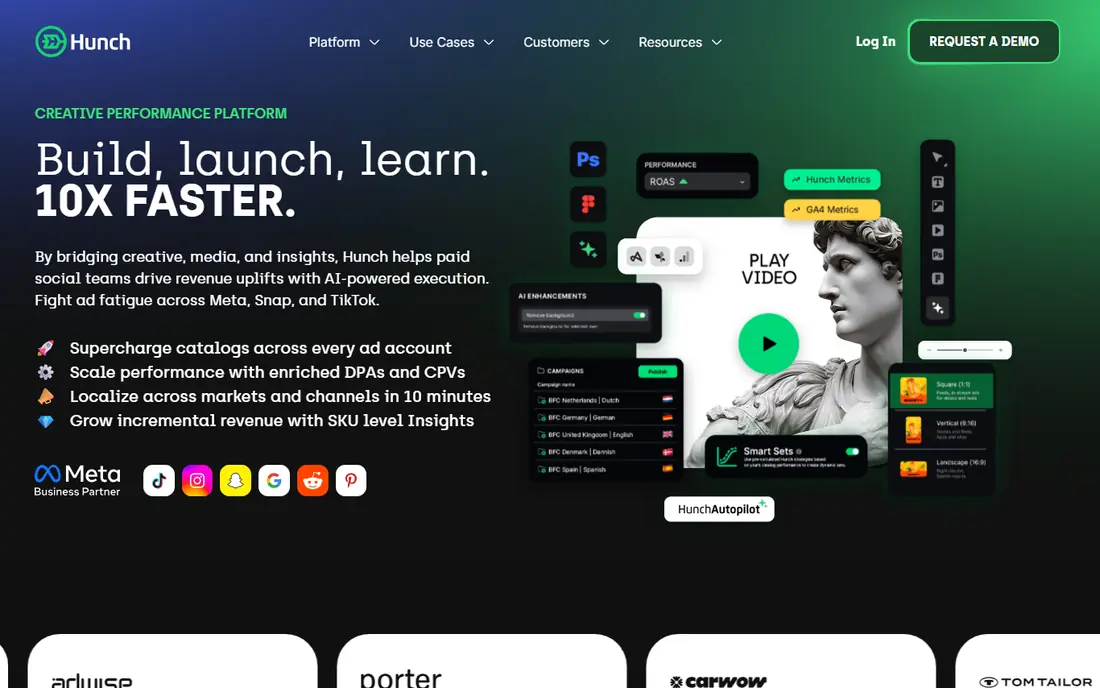
Hunch makes the most sense for feed-driven product ads. Hunch concentrates on the most demanding corner of dynamic creative: product catalog ads. It ingests product feeds and creates thousands of on-brand variants for social and programmatic, updating creative automatically as prices, inventory, and promotions change.
The main drawbacks: Narrower than full DCO suites.
Brand campaigns without a product feed will not use half of what Hunch does. Worth adding: the specialization is also the boundary. For retailers and ecommerce advertisers running dynamic product ads at scale, though, a feed-native tool beats a general product trying to handle the same ground. Hunch shows no starting price here, so confirm the cost on the vendor site. There is no free plan with Hunch.
- Aimed at catalog and feed ads
- Quick variant generation
- Best for product advertisers
Bannerflow
Ideal for: Scaling display creative
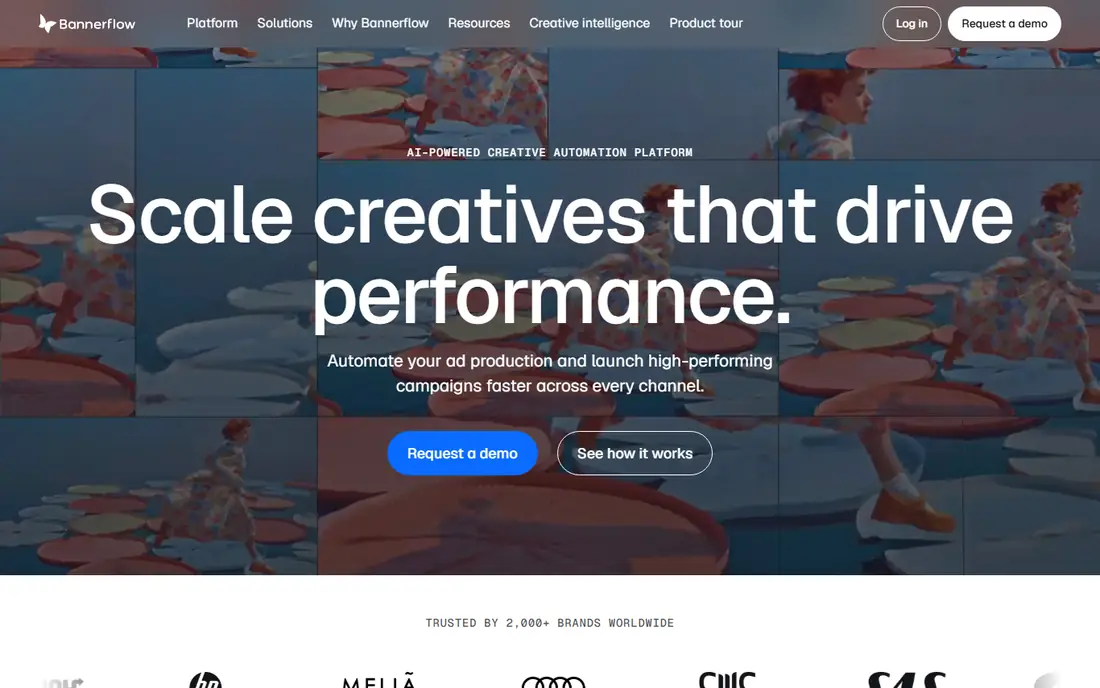
Bannerflow serves scaling display creative. Bannerflow centres on doing one thing well: scaling HTML5 display creative across markets and formats. Designers build responsive ads in a visual editor, localize them for dozens of markets, and push live updates to running campaigns without re-trafficking.
Trade-offs to know: Less depth in video and CTV.
In practice, collaboration features let distributed teams work on the same creative with approval workflows. In daily use, for advertisers whose media plan is display-heavy, Bannerflow's simplicity and localization workflow are capable advantages. The focus is display advertising. Pricing for Bannerflow is not stated here, so ask the vendor for current figures. Bannerflow has no free plan.
- Decent collaboration tools
- Easy-to-learn creative builder
- Display-focused
Celtra
Ideal for: Enterprise creative automation
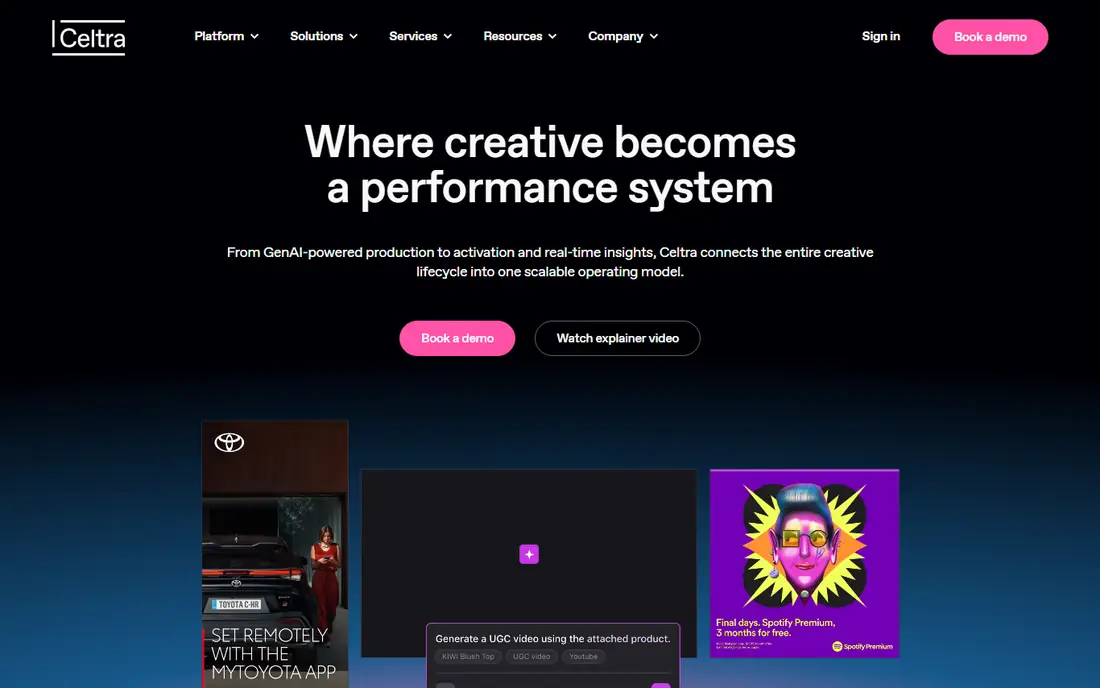
Celtra makes the most sense for enterprise creative automation. Celtra has spent years refining creative automation for large brands. In daily use, marketing teams like the balance: automation deals with the volume, whereas designers keep control of the look.
Drawbacks to consider: Implementation takes planning.
This is enterprise software with enterprise pricing and onboarding. In practice, for global brands running always-on campaigns across markets and formats, Celtra's combination of scale and brand governance is the reason it keeps appearing on shortlists. Check the vendor site for Celtra pricing; none is listed in this comparison. There is no free plan with Celtra.
- Decent analytics
- Brand control features
- Enterprise pricing
Display & Video 360
Ideal for: Google-stack advertisers
Display & Video 360 makes the most sense for Google-stack advertisers. Dynamic creative optimization lives naturally inside Google's buying system. Advertisers running significant spend outside Google will need a neutral system.
What to check first: Google-centric.
DV360's DCO performs best with Google inventory and Google data, and pricing reflects enterprise media commitments. Also, the limitation is the walled garden. Display & Video 360 pairs with Studio (formerly Google Web Designer workflows) to assemble personalized display and video creative from data feeds, then serves the right variant to each audience. Display & Video 360 does not show a starting price in this comparison, so check the vendor site for current pricing. Display & Video 360 does not include a free plan.
- Native Google media integration
- Studio for dynamic creative
- Enterprise pricing and contracts
Flashtalking
Ideal for: Creative ad serving and DCO
Flashtalking serves creative ad serving and DCO. Like most ad-tech infrastructure, it is sold to sophisticated buyers through enterprise channels. Cookieless tracking and advanced analytics support advertisers preparing for the post-cookie world.
Where it falls short: Interface reflects ad-tech heritage.
On top of that, the combination matters: creative personalization tied straight to serving and measurement, without based on a media owner's stack. On top of that, the interface reflects its ad-serving roots instead of modern creative-tool polish. Check the vendor site for Flashtalking pricing; none is listed in this comparison. There is no free plan with Flashtalking.
- Cookieless tracking
- Capable measurement
- Enterprise sales motion
Adform
Ideal for: European programmatic DCO
Adform makes the most sense for European programmatic DCO. For advertisers running programmatic across European markets, the integrated stack eases both buying and creative.
What to check first: Enterprise positioning.
On top of that, the product is enterprise-positioned with custom pricing. As for the details, US advertisers will find a smaller footprint and partner network than domestic alternatives. Check the vendor site for Adform pricing; none is listed in this comparison. No free plan comes with Adform.
- Transparent product
- Capable in Europe
- Smaller US presence
DaVinci Commerce
Ideal for: Commerce media creative
DaVinci Commerce makes the most sense for Commerce media creative. DaVinci Commerce is the new name for Jivox, which rebranded in early 2026 to focus on AI-driven commerce marketing.
If your advertising lives in retail media networks and marketplaces, this is one of the most specialized choices. DaVinci Commerce does not show a starting price in this comparison, so check the vendor site for current pricing. There is no free plan with DaVinci Commerce.
Limits to weigh: Commerce-centric may not fit all advertisers.
- Retail media focus
- Quick campaign activation
- New brand identity
How we built this list
Pricing pages, product documentation and feature lists were the main sources, and every entry carries at least one honest drawback. Prices and plan limits come from vendor pages and can change, so confirm them on the vendor site before you buy. The order reflects how well each tool fits the most common buying scenario for DCO platforms, then price clarity, then free plan access. It is a starting point, not a verdict.
A buyer's checklist
- Confirm the entry price with every vendor: no tool from Hunch to DaVinci Commerce shows a fixed starting price.
- Before choosing Hunch, weigh its main limit: narrower than full DCO suites.
- Ask whether Display & Video 360 integrates with your current software, and whether that comes standard or as an add-on.
- Check whether Celtra bills monthly or annually, and what cancelling early costs.
- Total up the real monthly cost of DaVinci Commerce, including add-ons, extra users and usage-based fees.
Frequently asked questions
Can I try these options before paying?
Not by default. None of the tools, from Hunch to DaVinci Commerce, lists a free plan or a free trial here, so ask each vendor for a demo before committing.
Is Hunch the right pick for everyone comparing DCO platforms?
No single tool suits every team. Hunch comes first because it fits feed-driven product ads, while Bannerflow suits scaling display creative and Celtra suits enterprise creative automation. Match the tool to your own size, budget and workflow before deciding.
Do these tools publish their prices?
No. None of the tools, from Hunch to DaVinci Commerce, shows a fixed starting price here, so budget time for quotes.
How is DCO different from A/B testing?
DCO produces numerous versions continuously and serves each viewer the variant most likely to perform, commonly optimizing automatically. A/B testing answers "which ad is best"; DCO answers "which ad is a good match for this person right now."
Does any tool for DCO platforms here have a free plan?
No tool in this list, Hunch and DaVinci Commerce included, has a permanent free plan. Trials and quotes are the usual route, so plan a short evaluation period.