Best Decision Intelligence Software in 2026: 7 Tools Compared

- 1
 Aera TechnologyOperational decisionsVisit
- 2
 TelliusAI metric explanationsVisit
- 3
 PeakRetail and supply decisionsVisit
- 4
 Pyramid AnalyticsGoverned enterprise analyticsVisit
- 5
 QuantexaConnected data decisionsVisit
- Aera Technology suits companies that want AI-assisted operational decisions across supply chains and finance.
- Tellius and Sisu Data suit teams that want AI to explain why metrics changed, not just show dashboards.
- Peak suits retailers and manufacturers that want AI decisions tied to inventory and demand.
- Pyramid Analytics and Quantexa suit enterprises that need governed analytics and connected data for decisions.
- Diwo suits teams that want decision models with clear trade-offs and what-if testing.
Quick comparison
| Product | Ideal for | Price from | Free version | |
|---|---|---|---|---|
| Aera Technology | Operational decisions | See website | No | Visit |
| Tellius | AI metric explanations | See website | Free trial | Visit |
| Peak | Retail and supply decisions | See website | No | Visit |
| Pyramid Analytics | Governed enterprise analytics | See website | Free trial | Visit |
| Quantexa | Connected data decisions | See website | No | Visit |
 Sisu Data | Automated metric analysis | See website | Free trial | Visit |
 Diwo | Decision modeling | See website | No | Visit |
The best decision intelligence software
We compared official feature pages, pricing pages, and public reviews for seven decision intelligence tools. Our pick for most companies is Aera Technology for its operational decision focus, with Tellius close behind for teams that need clear explanations of metric changes.
Aera Technology
Ideal for: Operational decisions
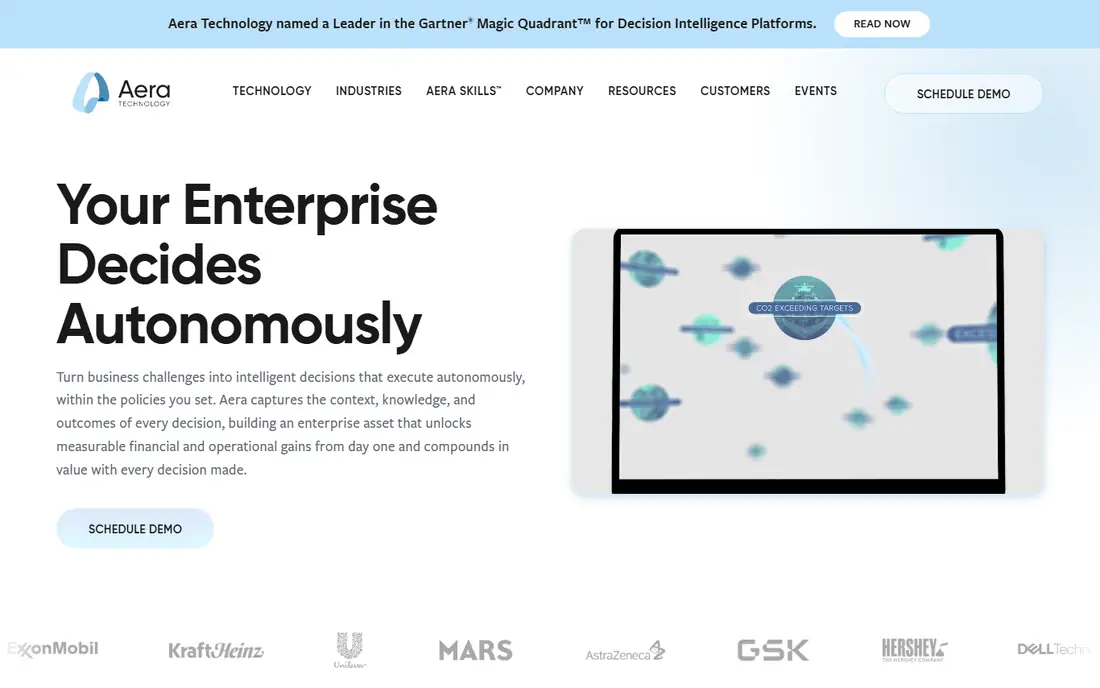
Aera Technology builds decision intelligence skills that monitor operations, recommend actions, and in some cases automate routine decisions. It harmonizes data from many systems, so supply, finance, and sales views share one picture. That suits large companies where slow decisions cost money, such as inventory, logistics, and working capital.
Implementation is an enterprise project, with data work and change management, and pricing is quoted. Smaller teams will find Tellius or Sisu simpler. For large operations teams that want decisions made faster and with more consistency, Aera is a leading platform.
- Decision skills for operations
- Data harmonization
- Workflow automation
- Enterprise pricing
- Implementation takes time
Tellius
Ideal for: AI metric explanations
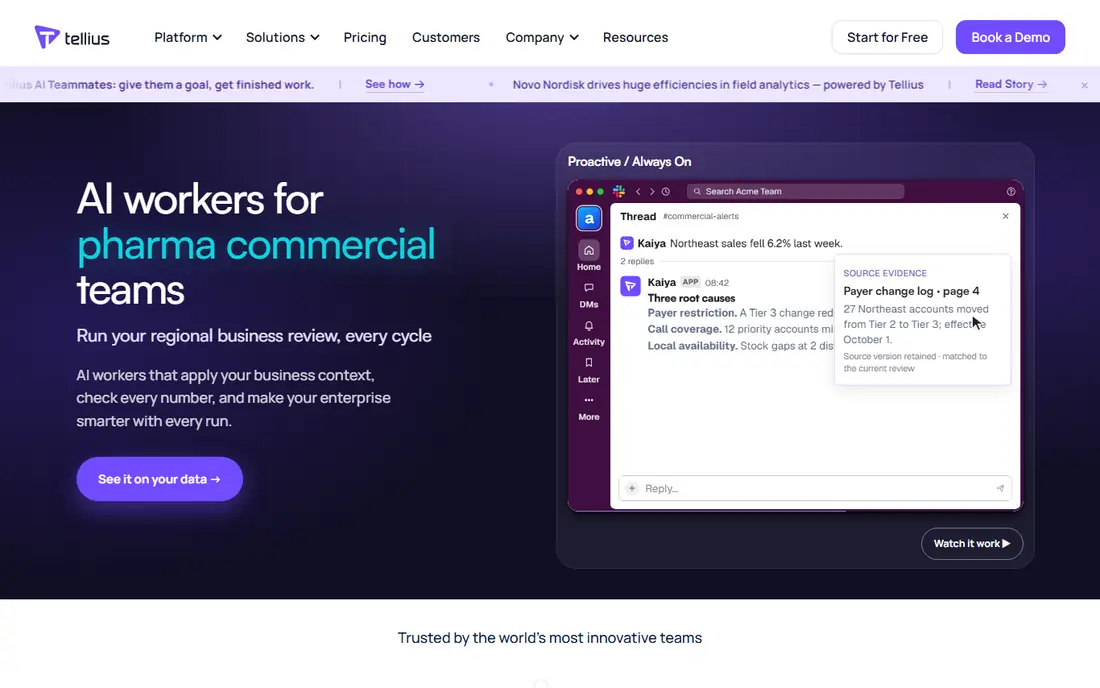
Tellius lets business users ask questions in plain language and get answers with charts and explanations of what drove a change. Its AI highlights key drivers behind a metric move, so a sales drop or churn rise comes with reasons, not just a chart. Guided analysis helps non-technical users explore without writing queries.
Clean, well-modeled data matters, since poor data gives poor explanations. Pricing grows with scale. For teams tired of dashboards that show what happened but not why, Tellius gives a clear step toward decision-ready analysis.
- Natural language questions
- Automated insights
- Guided analysis
- Needs clean data
- Pricing rises with scale
Peak
Ideal for: Retail and supply decisions
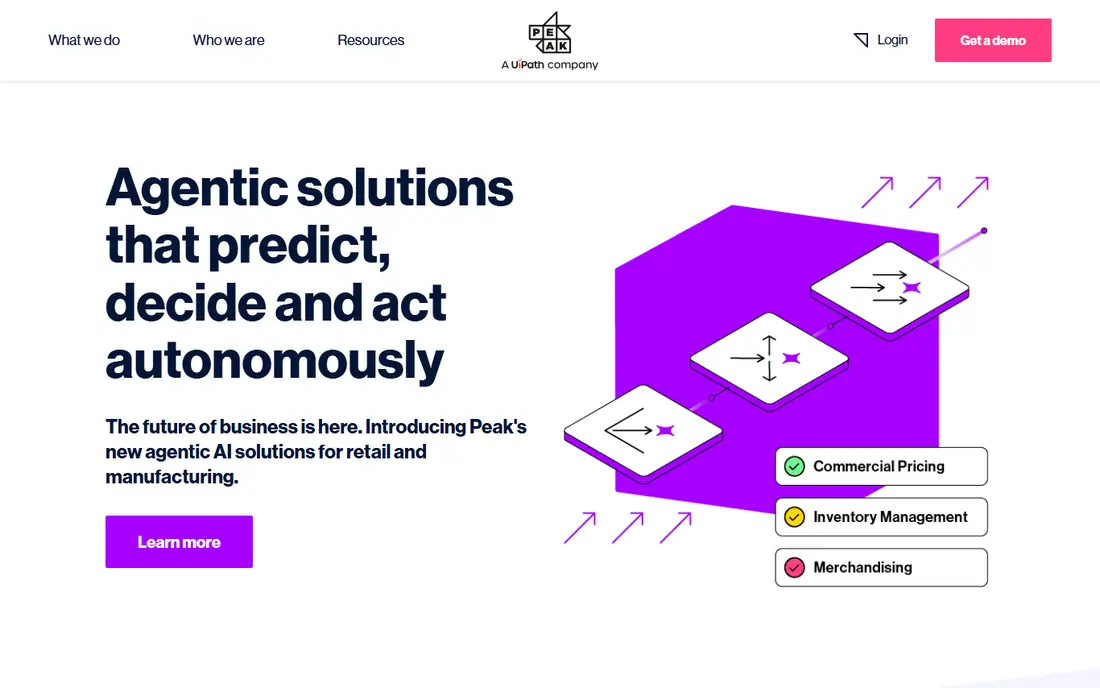
Peak builds AI decision apps for retail, manufacturing, and supply businesses, covering inventory, pricing, and demand decisions. Its apps turn models into recommendations that planners can accept, adjust, or reject, with outcomes tracked over time. That decision loop suits companies where inventory and price choices directly affect margin.
Peak is industry-focused, so companies outside retail and supply may find less fit. Pricing is enterprise level. For retailers and manufacturers that want AI tied to commercial decisions, Peak is a strong specialist.
- AI for inventory and demand
- Decision apps
- Retail focus
- Enterprise pricing
- Narrower industry focus
Pyramid Analytics
Ideal for: Governed enterprise analytics
Pyramid Analytics offers a governed analytics platform where business users can explore data, build models, and get AI-assisted insights without breaking data rules. IT keeps control over definitions and access, while users get self-service analysis. That balance suits large companies that need both freedom and governance.
The platform has a learning curve, and pricing suits enterprises. Smaller teams may prefer a lighter tool. For companies that want decision support inside a governed analytics platform, Pyramid is a solid choice.
- Governed analytics platform
- AI insights
- Enterprise security
- Learning curve
- Pricing aimed at enterprises
Quantexa
Ideal for: Connected data decisions
Quantexa connects data across systems to build a single view of customers, suppliers, and entities, with networks that reveal hidden links. That connected view supports decisions in risk, fraud, compliance, and customer management, where a single record rarely tells the full story. Banks, insurers, and government users are core audiences.
Data work is complex, and pricing is enterprise level. Quantexa is not a general dashboard tool. For organizations whose decisions depend on knowing who is connected to whom, Quantexa is a powerful platform.
- Entity resolution and networks
- Risk and fraud decisions
- Scalable platform
- Enterprise pricing
- Complex data work
Sisu Data
Ideal for: Automated metric analysis
Sisu Data monitors metrics in a data warehouse and automatically explains changes, finding the segments and drivers behind a rise or fall. That saves analysts from manual slicing when a KPI moves, and gives business users a clear answer fast. Alerts can flag changes as they happen, so teams act sooner.
Sisu needs a data warehouse and clean metrics to work well, and it is narrower than a full BI platform. For data teams that already have a warehouse and want faster root-cause answers, Sisu is a useful addition.
- Automated root-cause analysis
- Metric monitoring
- Clear explanations
- Needs data warehouse setup
- Narrower than full BI
Diwo
Ideal for: Decision modeling
Diwo helps business users build decision models, test trade-offs, and run what-if scenarios without heavy coding. You can model a pricing, hiring, or inventory choice, see outcomes under different assumptions, and compare options side by side. That clarity suits managers who need to defend a decision with numbers.
Diwo is a smaller vendor than Aera or Pyramid, so enterprise buyers should check support and roadmap. Pricing is quoted. For teams that want decision modeling in plain business terms, Diwo is a focused and practical tool.
- Decision models and trade-offs
- What-if testing
- Business user focus
- Smaller vendor
- Pricing quoted
How we picked these
We compared official feature pages, pricing pages, and public reviews for each tool, and we favored tools that still work in October 2026 and support decisions, not just reporting. We did not claim hands-on testing, and we weighed AI explanations, data governance, workflow support, and fit for different company sizes. Where pricing was quoted rather than listed we wrote "See website" rather than guessing.
What to check before you choose
Start with one decision, not a platform rollout. Pick a recurring choice, such as pricing, inventory, or churn response, and test whether the tool improves speed and outcome. Check data needs early: some tools need a warehouse and clean models, while others work with connected apps. A tool that needs six months of data work will not help a team that needs answers now.
Next, check who decides. A good decision tool shows its reasoning, lets a human adjust the recommendation, and tracks outcomes. Black-box automation without oversight creates risk, especially for regulated decisions. Finally, check governance: definitions, access, and audit trails matter when decisions affect customers, money, or compliance.
Also start with decision ownership, since a tool cannot fix a decision nobody owns. For each key decision, name the owner, the data they need, the deadline, and how success will be judged after the fact. Without that clarity, recommendations pile up and nobody acts, no matter how good the model is. Build a simple decision log: what was decided, what data supported it, what alternatives were considered, and what happened next. That log turns one-off choices into learning, and it helps new managers understand why past decisions were made. Review decisions after a set period, such as a quarter, and compare predicted outcomes with real ones, so model quality improves over time.
Data quality deserves more attention than model choice. A decision tool fed with duplicate customers, stale inventory, or inconsistent definitions will recommend confidently wrong actions. Assign data owners for key sources, agree on definitions for metrics like churn, margin, and demand, and fix those definitions before buying advanced tools. Test the tool on a past decision where you know the outcome, and see whether it would have recommended the right action with the data available at the time. That backtest reveals more than a vendor demo. Finally, keep humans in the loop for high-stakes decisions: AI should recommend and explain, while people weigh ethics, customer impact, and risks that data alone cannot capture.
One more discipline helps decision tools deliver value: separate the decision from the forecast. A forecast predicts what will happen, while a decision chooses what to do, and mixing the two leads to endless debate about numbers instead of action. For each decision, write down the options, the criteria that matter, and the weight each criterion carries, before looking at model output. Then use the tool to test options against those criteria, and record why the winning option was chosen. That structure keeps discussions focused, makes decisions easier to explain to stakeholders, and creates a record that future teams can learn from. Without it, even the best model becomes another dashboard that nobody acts on.
Frequently asked questions
What is decision intelligence software?
Decision intelligence software helps organizations make better choices by combining data, AI models, and workflows. It explains why metrics changed, recommends actions, and tracks outcomes, going beyond dashboards that only show what happened. Human oversight remains part of good decision tools.
How is decision intelligence different from business intelligence?
Business intelligence shows data and trends, while decision intelligence adds recommendations, trade-off testing, and decision workflows. BI answers what happened, and decision tools help choose what to do next. Many companies use both, with BI for reporting and decision tools for key choices.
What is the best decision intelligence software?
Aera Technology suits large operational decisions, while Tellius suits teams that need clear metric explanations. Peak suits retail and supply decisions, and Pyramid suits governed enterprise analytics. Pick based on your main decision type, not on feature count.
Do I need AI to use decision intelligence tools?
AI helps with explanations and recommendations, but clear data, defined decisions, and human judgment matter more. A tool with good models and poor data will mislead, so invest in data quality alongside any platform. Start with one well-defined decision and expand from there.
Can small companies use decision intelligence software?
Yes, lighter tools like Tellius and Sisu suit mid-size teams with a data warehouse, while enterprise platforms suit larger firms. Small teams should start with one decision and a trial, rather than buying a full platform. Good spreadsheets and clear metrics often precede a dedicated tool.