Best Degree for Software Developer in 2026: 7 Programs Compared

- 1
 Oregon State Post-Bacc CSCareer changersVisit
- 2
 Georgia Tech OMSCSAffordable online masterVisit
- 3
 WGU BS Computer ScienceFlexible online bachelorVisit
- 4
 SNHU BS Computer ScienceOnline bachelorVisit
- 5
 ASU Online BS Computer ScienceLarge university onlineVisit
- A Bachelor of Science in Computer Science is the most direct degree for software developer roles in most hiring.
- Oregon State post-bacc suits career changers who already hold a degree and want CS fast.
- Georgia Tech OMSCS suits graduates who want an affordable, respected online master degree in CS.
- WGU, SNHU, and ASU Online suit working adults who need flexible, fully online bachelor programs.
- Penn State World Campus suits students who want a software engineering degree from a large university online.
Quick comparison
| Product | Ideal for | Price from | Free version | |
|---|---|---|---|---|
| Oregon State Post-Bacc CS | Career changers | See website | No | Visit |
| Georgia Tech OMSCS | Affordable online master | See website | No | Visit |
| WGU BS Computer Science | Flexible online bachelor | See website | No | Visit |
| SNHU BS Computer Science | Online bachelor | See website | No | Visit |
| ASU Online BS Computer Science | Large university online | See website | No | Visit |
 Penn State World Campus BS Software Engineering | Software engineering focus | See website | No | Visit |
 University of London BSc Computer Science | Global online bachelor | See website | No | Visit |
The best degrees for software developers
We compared official program pages, curriculum outlines, and public reviews for seven degree programs for software developers. Our pick for most students is a BS in Computer Science from a flexible online provider, with Oregon State post-bacc close behind for career changers.
Oregon State Post-Bacc CS
Ideal for: Career changers
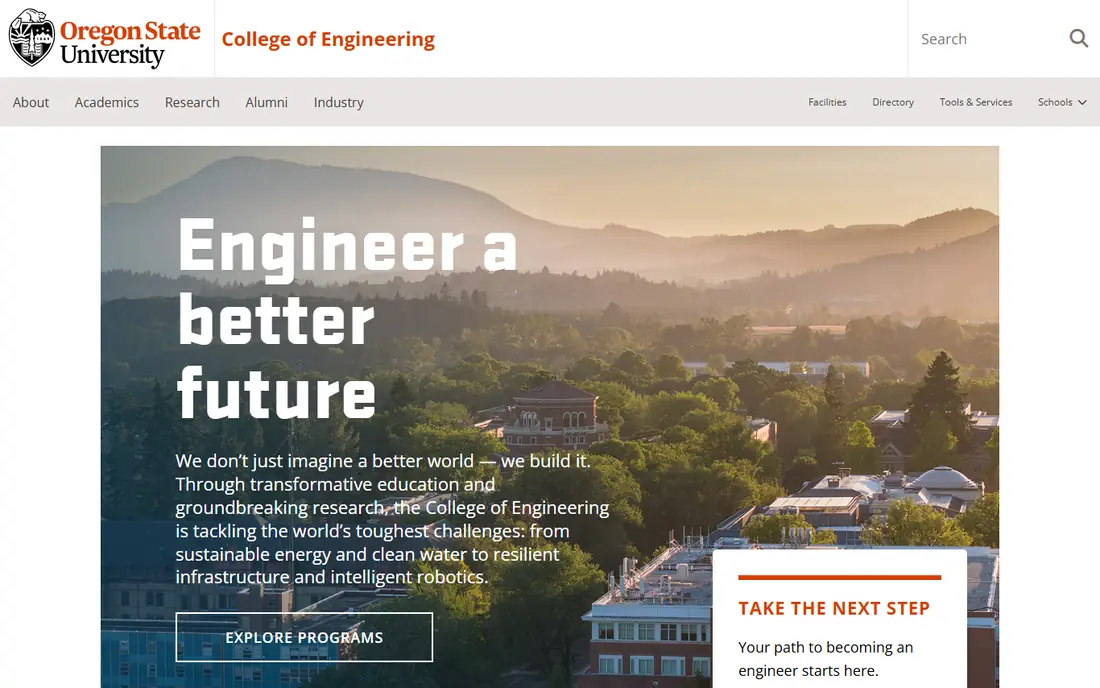
Oregon State post-bacc computer science is built for people who already hold a bachelor degree in another field and want to move into software. The curriculum skips general education and focuses on CS core: programming, data structures, algorithms, systems, and software engineering. Online delivery suits working adults who cannot move to campus.
The pace is intensive, and a prior degree is required, so recent school leavers should choose a full bachelor instead. For career changers who want a respected CS credential without repeating general courses, Oregon State is one of the best-known post-bacc options.
- Designed for degree holders
- Focused CS curriculum
- Online delivery
- Requires a prior bachelor degree
- Intensive pace
Georgia Tech OMSCS
Ideal for: Affordable online master
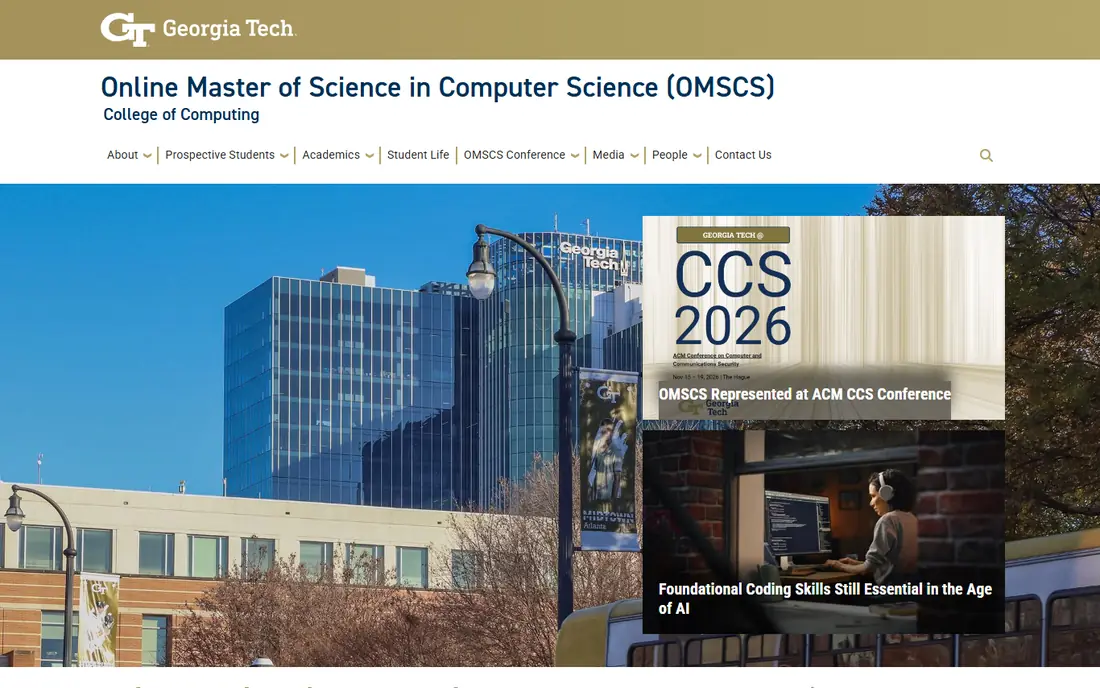
Georgia Tech Online Master of Science in Computer Science, known as OMSCS, is a fully online master degree with specializations in areas like machine learning, computing systems, and human-computer interaction. Its tuition is famously lower than many on-campus master programs, and its reputation helps graduates in competitive hiring. The program suits developers who want deeper CS knowledge or a credential for senior roles.
OMSCS expects a CS background, so applicants without programming and math foundations should build those first. The workload is graduate level and demanding alongside full-time work. For developers with a bachelor who want an affordable, respected master, OMSCS is hard to beat.
- Respected CS master
- Affordable tuition
- Many specializations
- Requires a CS background
- Graduate-level workload
WGU BS Computer Science
Ideal for: Flexible online bachelor
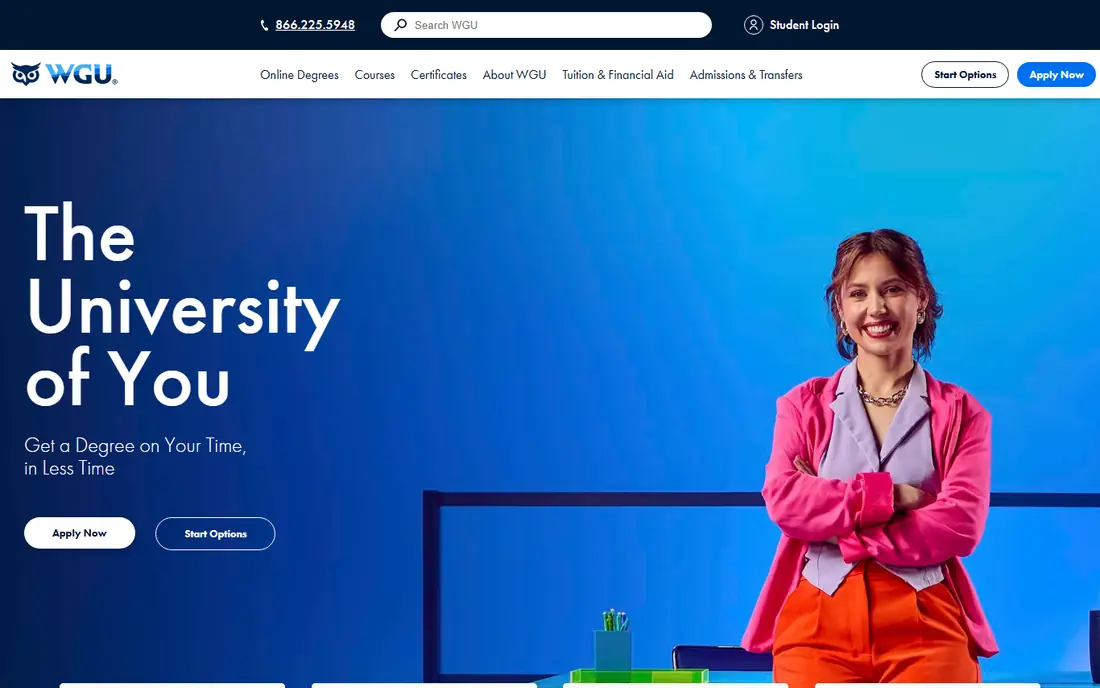
Western Governors University offers a BS in Computer Science with competency-based pacing, meaning you move through courses as you prove mastery, not on a fixed semester clock. Flat-rate terms let motivated students finish faster for less total cost, and the curriculum includes industry certifications. That model suits working adults with prior knowledge or strong self-discipline.
WGU has less live lecture teaching than traditional universities, so students who need classroom structure may struggle. Support comes from mentors and course instructors rather than daily lectures. For self-driven adults who want a flexible, affordable bachelor, WGU is a strong choice.
- Competency-based pacing
- Flat-rate terms
- Industry certifications
- Less live teaching
- Needs self-discipline
SNHU BS Computer Science
Ideal for: Online bachelor
Southern New Hampshire University offers a BS in Computer Science online, with concentrations and transfer-friendly policies for students with prior credits. Support services, advising, and a clear online structure suit students who want guidance while studying remotely. The program covers programming, databases, systems, and software design.
SNHU carries less technical reputation than Georgia Tech or Oregon State in some hiring circles, though skills and projects matter most. Costs also add up over a full degree. For students who want a supportive online bachelor with flexible transfer, SNHU is a practical option.
- Fully online with support
- Transfer-friendly
- Varied concentrations
- Less technical reputation than some rivals
- Costs add up
ASU Online BS Computer Science
Ideal for: Large university online
Arizona State University Online offers a BS in Computer Science from a large research university, with a curriculum covering algorithms, systems, software engineering, and electives. Online delivery suits students who want a big-university credential without relocating, and ASU has broad online support and resources. The degree name matches the on-campus program, which helps in hiring.
Costs are higher than competency-based options like WGU, and classes can be large. For students who want a well-known university name and a full CS curriculum online, ASU Online is a solid choice.
- Large research university
- Strong CS curriculum
- Online flexibility
- Higher cost than WGU
- Large classes
Penn State World Campus BS Software Engineering
Ideal for: Software engineering focus
Penn State World Campus offers a BS in Software Engineering online, with a focus on the full software lifecycle: requirements, design, testing, and project management, alongside programming and systems. That engineering focus suits students who want to build large, reliable systems rather than only write code. The Penn State name also carries weight with employers.
The curriculum is demanding, and tuition is higher than some online rivals. For students who want a software engineering degree specifically, rather than a general CS degree, Penn State World Campus is a strong pick.
- Software engineering focus
- Penn State credential
- Online delivery
- Higher cost
- Engineering curriculum is demanding
University of London BSc Computer Science
Ideal for: Global online bachelor
The University of London BSc in Computer Science, delivered online, offers a global bachelor degree with flexible pacing and modules in programming, algorithms, databases, and electives. It suits international students and US students who want an affordable, flexible degree from a respected UK university. The program structure supports part-time study alongside work.
US employers may know it less well than US universities, though skills and projects still matter most. Self-study demands discipline, since support is more remote than in cohort programs. For flexible, global online study, the University of London degree is a useful option.
- Global online degree
- Flexible pacing
- Coursera delivery
- Less US name recognition
- Self-study demands discipline
How we picked these
We compared official program pages, curriculum outlines, and public reviews for each program, and we favored programs that still run in October 2026 and lead to software developer roles. We did not claim hands-on testing, and we weighed curriculum depth, flexibility, reputation, and cost structure. Where tuition varied by residency or pace we wrote "See website" rather than guessing, so check current tuition for your situation.
What to check before you choose
Start with your starting point. School leavers need a full bachelor, career changers with a degree suit post-bacc or master paths, and working developers may suit a master or certifications instead. Check accreditation, transfer credit rules, and total cost, not just per-term price, since a slow pace can raise total cost in flat-rate programs.
Next, check curriculum against job goals. A CS degree covers theory and systems, while a software engineering degree adds lifecycle and project skills. Both suit developer roles, but employers vary by team. Build projects, internships, or open-source work alongside any degree, since hiring managers weigh proof of skill heavily. Finally, confirm math requirements early, since calculus and discrete math trip up many CS students.
Also build proof of skill alongside any degree, since employers hire for what you can build, not just what you studied. Start a small portfolio early: a web app, a command-line tool, a mobile app, or contributions to an open-source project, each with clear code and a short write-up of the problem it solves. Seek internships, co-ops, or freelance work during study, since real project experience teaches teamwork, deadlines, and legacy code in ways coursework cannot. Learn version control, testing, and code review habits from the start, since those practices matter in every developer job. Join a study group or coding community for accountability, especially in online programs where isolation can slow progress. Present your work clearly in interviews by explaining choices, trade-offs, and what you would improve next time.
Financing and pacing need honest planning too. Compare total degree cost, including fees and books, against expected earnings and loan burden, and check employer tuition help if you already work in tech. Part-time study suits working adults, but a slower pace extends the time before a career change pays off, so set a realistic finish date and review progress each term. Check transfer credit for prior courses, certifications, and work experience, since accepted credits can cut both cost and time. If a full degree feels too long, consider a shorter path first, such as a bootcamp or certificate, then a degree later, but weigh how each step counts toward your long-term goal. A degree plus a portfolio plus real experience is the combination that opens the most doors.
Frequently asked questions
What is the best degree for software developer?
A BS in Computer Science is the most direct and widely recognized degree for software developer roles. Software engineering degrees also suit developer roles, especially for large-system work. Choose based on curriculum fit, flexibility, and cost, then build projects to prove skill.
What is the best major for software engineer?
Computer science is the most common major for software engineers, with software engineering close behind. Related majors like computer engineering and information systems can also lead to developer roles, but CS gives the broadest foundation in algorithms, systems, and programming.
Can I become a software developer without a degree?
Yes, many developers enter through bootcamps, self-study, and portfolios, especially in web development. A degree still helps for larger companies, visa rules, and senior roles, and it teaches theory that self-study often skips. A strong portfolio matters in every path.
Is a master degree worth it for software developers?
A master like OMSCS suits developers who want depth in areas like machine learning or systems, or a credential for senior and research roles. For most junior developer jobs, a bachelor plus projects is enough. Weigh cost and time against your career goal before committing.
How long does a CS degree take?
A full bachelor usually takes four years full-time, while post-bacc programs for degree holders can take one to two years. Competency-based programs like WGU can be faster for motivated students with prior knowledge. Part-time study extends timelines, so plan around work and life.