Comparing 6 Digital OOH Advertising Platforms in 2026

- The list opens with Adomni, aimed at self serve audience buying.
- Vistar Media is the one to check for programmatic DOOH at scale.
- Adomni, Vistar Media and the 4 others all sell by quote; expect sales conversations before you see a price.
- The Trade Desk comes with a trade-off: seat and enterprise pricing.
- Adomni, Vistar Media and the 4 others all need a premium plan or a trial, since no free plan is listed.
Direct answer
If you need self serve audience buying, Adomni is the first tool to look at here. The Trade Desk is better for DOOH in omnichannel plans, and AdQuick is better for US OOH native buying. The full list of 6 tools follows, with prices and free plan facts.
Quick comparison
| Product | Ideal for | Price from | Free version | |
|---|---|---|---|---|
 Adomni | Self serve audience buying | See website | No | Visit |
 The Trade Desk | DOOH in omnichannel plans | See website | No | Visit |
 AdQuick | US OOH native buying | See website | No | Visit |
 Hivestack | Specialist buy and sell side | See website | No | Visit |
 Broadsign | Network infrastructure | See website | No | Visit |
 Vistar Media | Programmatic DOOH at scale | See website | No | Visit |
Every option for digital OOH advertising platforms explained
Choosing digital OOH advertising platforms usually comes down to price, fit and limits. This Ainotely guide sets 6 tools side by side on those three points, with the facts kept short and checkable.
Adomni
Ideal for: Self serve audience buying

Choose Adomni for self serve audience buying. Buyers can plan, target audiences, and launch campaigns without a managed service contract. For a mid size brand testing programmatic DOOH without an enterprise seat, Adomni is the most accessible specialist choice.
More specifically, minimums vary by campaign, and trigger support for weather or live events is restricted compared to specialists. Adomni provides self serve programmatic DOOH buying with audience based CPM pricing, which lowers the barrier for brands that cannot meet enterprise DSP minimums. Adomni does not show a starting price in this comparison, so check the vendor site for current pricing. Adomni has no free tier.
Where it is weaker: Smaller inventory depth than Vistar or Place Exchange.
- Audience based CPM pricing
- Self serve programmatic buying
- Trigger support is restricted
The Trade Desk
Ideal for: DOOH in omnichannel plans

The Trade Desk is built with DOOH in omnichannel plans in mind. The trade is specialization: DOOH creative support handles static images and standard video well, but some advanced formats need specialist handling, and pricing is seat and enterprise based.
Where it is weaker: Seat and enterprise pricing.
Check the vendor site for The Trade Desk pricing; none is listed in this comparison. The Trade Desk has no free plan.
- Optimization and reporting across channels
- DOOH inside a leading omnichannel DSP
- DOOH is one channel among plenty
AdQuick
Ideal for: US OOH native buying
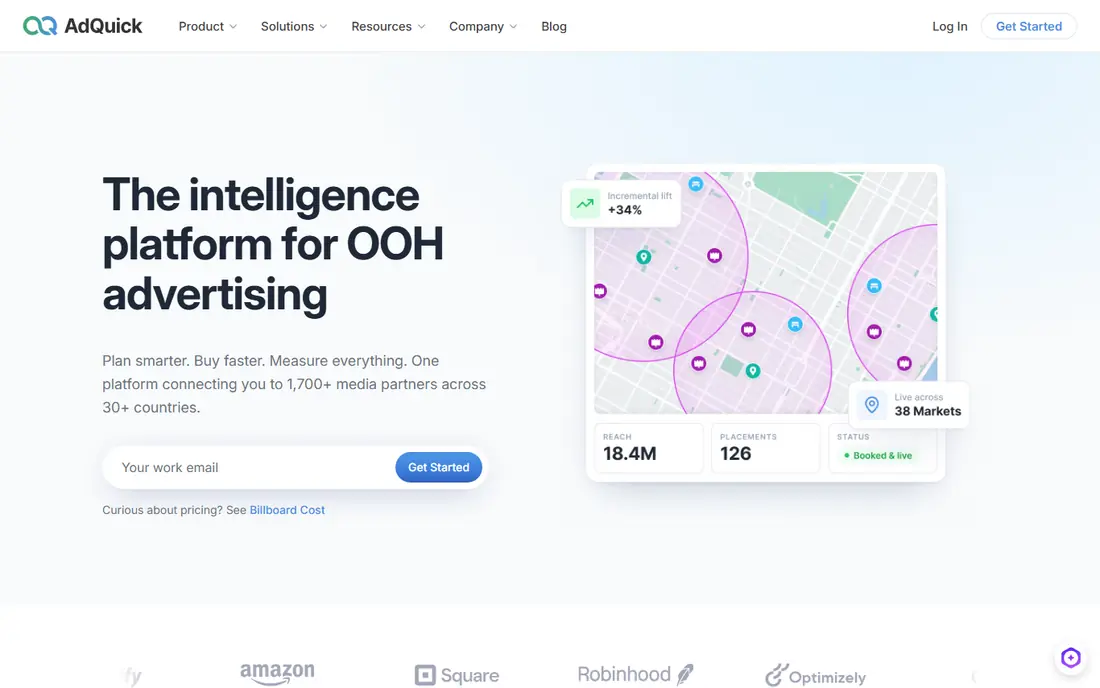
AdQuick was built for US OOH native buying. Published digital CPMs run about $3 to $15, with minimum flights around four weeks and spend in the low thousands.
Drawbacks to consider: Minimum flights of about four weeks and low thousands in spend.
It includes classic and digital formats across the US, with a marketplace plus managed service choices. For everyday use, self serve is partial, so smaller buyers may work through managed service, and coverage outside the US is restricted. AdQuick shows no starting price here, so confirm the cost on the vendor site. AdQuick has no free tier.
- Handles classic and digital formats across the US
- Most OOH native buying experience
- Restricted outside the US
Hivestack
Ideal for: Specialist buy and sell side
For specialist buy and sell side, Hivestack is a natural candidate. Hivestack, now part of Perion after its December 2023 acquisition, merges a DOOH demand side product with supply side tools.
Its inventory also reaches buyers through open auction and private deals in other DSPs, including Yahoo DSP. Pricing for Hivestack is not stated here, so ask the vendor for current figures. Hivestack has no free tier.
Downsides: Smaller brand recognition than Vistar in the US.
- Specialist DOOH DSP plus supply side tools
- Wide international coverage
- Enterprise oriented
Broadsign
Ideal for: Network infrastructure
Broadsign serves network infrastructure. Its programmatic buying system, formerly Campsite, expanded to the US and Australia. It is the infrastructure behind networks instead of a straightforward marketplace for buying one billboard.
For an operator monetizing screens, Broadsign is the most complete workflow available. As for the details, pricing is custom and unpublished. Check the vendor site for Broadsign pricing; none is listed in this comparison. Broadsign has no free plan.
What to check first: Pricing is custom.
- Programmatic selling
- Network analytics included
- Ramp-up time for full workflow use
Vistar Media
Ideal for: Programmatic DOOH at scale
Vistar Media is built with programmatic DOOH at scale in mind. The trade is enterprise fit: pricing is CPM at auction with unpublished minimums, and fees can stack across layers.
Watch-outs: Fee structure can involve multiple layers.
No starting price is listed for Vistar Media here; confirm pricing on the vendor site. Vistar Media has no free tier.
- Leading programmatic DOOH ecosystem with DSP and SSP
- Wide venue and screen access
- Campaign quality relies on inventory controls
Our selection method
Pricing pages, product documentation and feature lists were the main sources, and every entry carries at least one honest drawback. Plan names, prices and limits change often. Treat the figures here as a starting point and verify them with the vendor. The ranking is editorial: typical fit first, then clear pricing, then free access. If your needs are unusual, read the profiles rather than relying on position.
Things to verify first
- Confirm the entry price with every vendor: no tool from Adomni to Vistar Media shows a fixed starting price.
- Read the limits listed for Adomni first: minimums vary.
- Test how quickly Broadsign answers a pre-sales question; it hints at how support will feel later.
- Verify that exporting from Hivestack is possible on your plan and covers all your records.
- List the apps you already depend on and check that The Trade Desk supports each one on the plan you would buy.
Frequently asked questions
How is DOOH measured?
Typical measures contain impressions, proof of play reporting, foot traffic lift, website visits, and brand recall studies. Confirm measurement choices before launch, since they vary sharply by system and inventory.
Can I try these options before paying?
Not by default. None of the tools, from Adomni to Vistar Media, lists a free plan or a free trial here, so ask each vendor for a demo before committing.
Is Adomni the right pick for everyone comparing digital OOH advertising platforms?
No single tool suits every team. Adomni comes first because it fits self serve audience buying, while The Trade Desk suits DOOH in omnichannel plans and AdQuick suits US OOH native buying. Match the tool to your own size, budget and workflow before deciding.
Do these tools publish their prices?
No. None of the tools, from Adomni to Vistar Media, shows a fixed starting price here, so budget time for quotes.
Can small firms buy DOOH?
Self serve products like Adomni and marketplace choices like AdQuick support smaller budgets, and hyper local buys can start near $1,000. Enterprise DSP seats are not required for a first test.
How are the tools for digital OOH advertising platforms ordered?
Adomni sits first and Vistar Media last because the order follows typical fit for digital OOH advertising platforms, then price clarity and free access. It is a judgement call, so read each profile for fit and limits.