Start with Nintex if you need end-to-end process and workflow management. Listed starting prices: UiPath from $25 a month. For a different need, Appian covers orchestrating AI agents and systems and Pega Platform covers workflow automation and legacy modernization. All 6 tools are compared below on price, free plan and limits.
Ainotely compared 6 tools for digital process automation software for enterprise. The goal is a practical shortlist: published prices, free plan facts, best-fit use cases and honest limits for every entry.
Key takeaways
Nintex sits first on this list: end-to-end process and workflow management.
Only UiPath offers a free plan among these 6 tools.
What to know about Nintex first: less emphasis on AI agent orchestration.
Starting prices begin at $25 per month with UiPath.
Best for: End-to-end process and workflow management
Nintex makes the most sense for end-to-end process and workflow management. Nintex concentrates on process management and workflow automation, and its homepage positions it around end-to-end process and workflow automation with custom app development for integrated workflows. Choose Nintex when structured workflows and process visibility are the primary priorities.
Trade-offs to know: Complicated programs need governance.
Also, Nintex is oriented toward process and workflow management instead of agentic AI orchestration, so teams prioritizing AI agents may look elsewhere. As for the details, bigger automation programs still need governance and ownership. Nintex does not show a starting price in this comparison, so check the vendor site for current pricing. As for free access: Free trial.
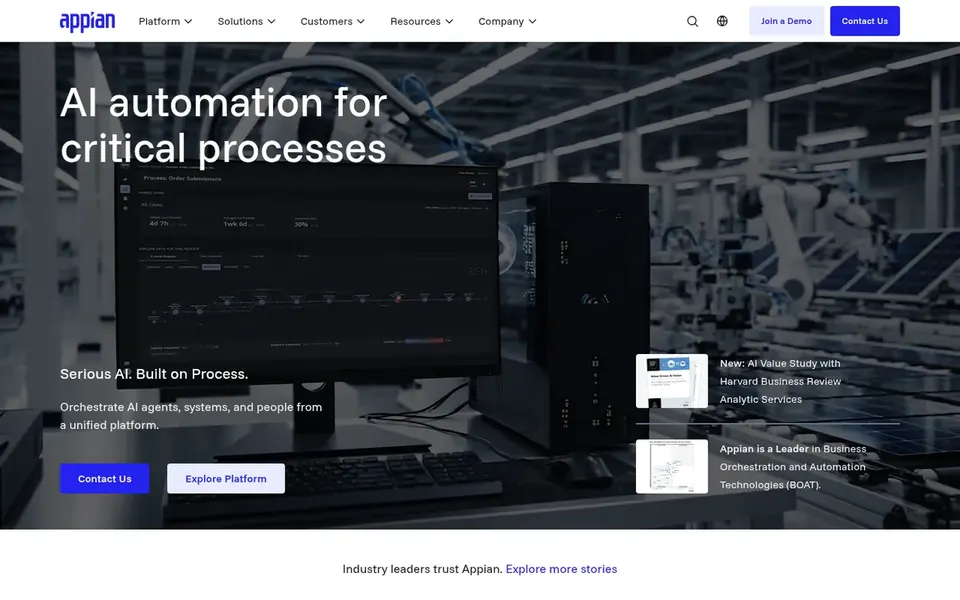
Appian is built with orchestrating AI agents and systems in mind. Appian describes itself as an enterprise product for AI-powered process orchestration. Its homepage flags automating critical processes by coordinating AI agents, systems and people, and it emphasizes doing so without replacing your existing systems.
Watch-outs: System depth may need training.
That makes it a fit for enterprises that want to layer automation over current infrastructure instead of rebuild it. Appian's strength in orchestration means teams should expect a ramp-up time and some design effort. If your needs are straightforward task automation, a lighter tool may be more practical. Appian shows no starting price here, so confirm the cost on the vendor site. Free access: Not stated.
Best for: Workflow automation and legacy modernization
Pega Platform serves workflow automation and legacy modernization. It fits enterprises pursuing wider transformation instead of isolated task automation, notably where customer-facing processes and older systems are in scope.
The main drawbacks: Needs skilled administration.
As for the details, the product's breadth can translate into complexity, and effective use usually calls for trained administrators and clear governance. No starting price is listed for Pega Platform here; confirm pricing on the vendor site. Free access: Not stated.
Best for: Open agentic orchestration with governance
Camunda targets open agentic orchestration with governance. Camunda describes itself as an open system for agentic orchestration, coordinating AI agents, people and systems across end-to-end processes with governance and control.
It suits enterprises that want transparency and control over how automatic and human steps interact, notably where processes are complicated and technical teams want an open approach. This comparison lists no price for Camunda; ask the vendor. Free plan details: Free trial.
Where Camunda stands out: Open product for orchestration.
Points against: Best fit for process-centric teams.
Best for: Automation combining robots, agents and people
UiPath works best for automation combining robots, agents and people. Its homepage describes enabling AI agents, robots and people to deliver secure, compliant outcomes at scale, which suits enterprises that want to combine robotic process automation with newer agent-based approaches. In daily use, combining robots, agents and people introduces coordination and governance overhead, so plan for oversight.
More specifically, organizations focused purely on workflow approvals may find other choices more direct. In daily use, UiPath is a capable candidate when automation must scale across numerous processes with compliance in mind. UiPath cost at the entry level: $25 per month. UiPath offers a free plan.
Points against: Several automation types add complexity. Highlights: compliant outcomes.
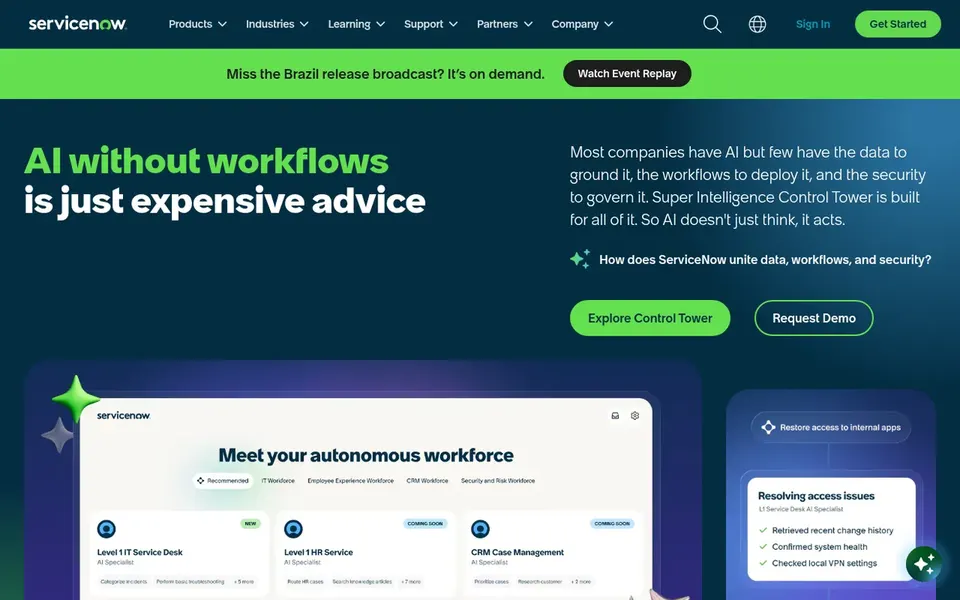
ServiceNow is a good fit for wide AI-driven enterprise workflows. It tends to suit bigger enterprises with complex, cross-functional operations that need a consistent automation layer.
Teams seeking a narrow, single-process tool may find it heavier than needed. From a buyer's view, consider alternatives when your scope is restricted to one workflow or when you want a lighter orchestration layer. Check the vendor site for ServiceNow pricing; none is listed in this comparison. Trial and free access: Not stated.
Honest limits: Configuration effort may be significant.
Ask Nintex, Appian, Pega Platform and others for a written quote, since no starting price is shown.
Test the free plan from UiPath against your real workload before relying on it.
Take the trial from Nintex and Camunda and push a live task through it before you pay.
Before choosing Nintex, weigh its main limit: less emphasis on AI agent orchestration.
Run a one or two week pilot of Camunda with the people who will use it every day.
List the apps you already depend on and check that ServiceNow supports each one on the plan you would buy.
How we picked
We compared the tools on published pricing, free plan or trial availability, feature coverage for digital process automation software for enterprise, and the limits each vendor documents. Treat prices as a snapshot: vendors change plans often, so check the vendor site for the figure that applies today. Order on the page follows fit for the typical buyer first, then price transparency and free access. Your own requirements should decide the final pick.
Every price and plan detail on this page comes from the vendors’ own websites. We did not run hands-on tests unless the text says so, and we do not publish star ratings or review scores. See how we score and our disclosure.
Keep your shortlist in one place
Paste prices, trial dates and notes from this guide into Ainotely, our AI note app. It files them into a topic and pulls out tasks like “cancel trial by Friday”. Free 7-day trial, no card needed.
Is Nintex the right pick for everyone comparing digital process automation software for enterprise?
No single tool suits every team. Nintex comes first because it fits end-to-end process and workflow management, while Appian suits orchestrating AI agents and systems and Pega Platform suits workflow automation and legacy modernization. Match the tool to your own size, budget and workflow before deciding.
Which options for digital process automation software for enterprise have a free plan?
UiPath is the only tool in this list with a free plan. Free plans usually cap users, projects or features, so check the limits on the vendor page. Several others offer a trial instead. Each of the 6 options in this digital process automation software for enterprise guide has its own card above with the price, free plan and limits.
How are the tools for digital process automation software for enterprise ordered?
Nintex sits first and ServiceNow last because the order follows typical fit for digital process automation software for enterprise, then price clarity and free access. It is a judgement call, so read each profile for fit and limits.
What should I check before buying enterprise automation software?
Confirm integration with your current systems, governance and compliance controls, and how human and automatic steps are coordinated. Verifying these details with each vendor helps avoid surprises later.
Can I try these tools before paying?
Often, yes. UiPath has a free plan and Nintex and Camunda offer a free trial. Use your own data and a real task during the test, and check what the free tier or trial limits before you rely on it.
Should I choose an agent-focused product or a workflow system?
Choose an agent-focused product when you need AI agents coordinated with people and systems across complicated processes. Beyond that, choose a workflow product when structured approvals, process visibility and integrated apps are the priority.