Start with IntSights if you need managed external threat coverage. Listed starting prices: IntSights from $1.62 per asset a month. Mandiant Digital Threat Monitoring is better for Threat intelligence backed by frontline expertise, and Palo Alto Networks Cortex Xpanse is better for automatic attack surface management. All 6 tools are compared below on price, free plan and limits.
Choosing digital risk protection platforms for enterprise usually comes down to price, fit and limits. This Ainotely guide sets 6 tools side by side on those three points, with the facts kept short and checkable.
Key takeaways
IntSights takes the first slot, best suited to managed external threat coverage.
IntSights comes with a trade-off: positioning now centers on managed services.
None of the 6 tools, from IntSights to Recorded Future, has a free plan, so budget for a subscription or use a trial.
The cheapest monthly starting price in the list is $1.62 per asset per month, offered by IntSights.
Recorded Future suits real-time threat intelligence.
IntSights works best for managed external threat coverage. IntSights now appears under Rapid7's managed cybersecurity positioning, emphasizing a unified platform and expert-led monitoring and response.
Honest limits: Buyers should confirm current product scope.
Teams wanting a self-managed, narrowly scoped tool may prefer a different choice. The starting price for IntSights: $1.62 per asset per month. Free options: Not stated.
Best for: Threat intelligence backed by frontline expertise
Mandiant Digital Threat Monitoring works best for Threat intelligence backed by frontline expertise. Mandiant Digital Threat Monitoring sits within Mandiant's threat intelligence and consulting portfolio, connecting monitoring with frontline expertise in incident response and cyber risk management.
Organizations wanting a light, product-only deployment should compare more straightforward alternatives before committing. Worth adding: the engagement style may be more than smaller teams need for straightforward monitoring. This comparison lists no price for Mandiant Digital Threat Monitoring; ask the vendor. Free options: Not stated.
What to check first: Service-oriented engagement model.
Palo Alto Networks Cortex Xpanse was built for automatic attack surface management. Since it centers on attack surface discovery, teams looking primarily for brand monitoring, phishing takedowns or dark web intelligence may need complementary coverage.
Watch-outs: Full value relies on broader ecosystem integration.
More specifically, consider other choices if external threat disruption, instead of asset exposure, is your primary driver. Palo Alto Networks Cortex Xpanse shows no starting price here, so confirm the cost on the vendor site. Free plan details: Not stated.
ZeroFox was built for external threat disruption at scale. ZeroFox gives actionable intelligence to discover, validate and disrupt external threats at scale. Its positioning centers on protecting revenue and reputation, which fits enterprises facing brand impersonation, phishing and other externally visible risks.
Since the emphasis is external, internal asset and vulnerability coverage may need separate tooling. As for the details, teams seeking a single system for both internal and external risk should weigh how it plugs into existing security operations. Organizations that want a managed path from detection to disruption tend to find it a natural fit. No starting price is listed for ZeroFox here; confirm pricing on the vendor site. Free options: Not stated.
Trade-offs to know: External focus may leave gaps in internal visibility.
Best for: External threats against people and customers
Rapid7 Threat Command makes the most sense for external threats against people and customers. It fits security teams that want a focused view of externally sourced risks like credential exposure and impersonation, with workflows to act on findings.
What to check first: External intelligence focus.
On top of that, since it concentrates on external intelligence, internal detection and response remain separate concerns. No starting price is listed for Rapid7 Threat Command here; confirm pricing on the vendor site. Free plan details: Not stated.
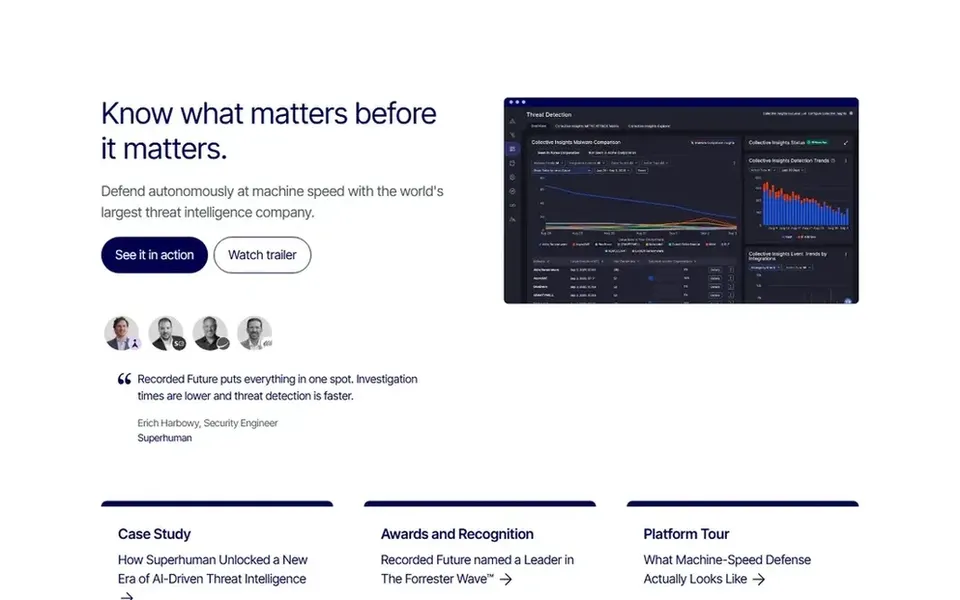
Recorded Future makes the most sense for live threat intelligence. Enterprises with dedicated threat intelligence functions frequently pair it with operational security tooling. The system leans toward intelligence and prioritization instead of full external takedown workflows.
So teams needing disruption services may combine it with another provider. It also rewards organizations with analysts who can turn intelligence into action. It is a solid fit for security teams that want context on emerging threats and a way to direct defensive effort toward what matters most. Pricing for Recorded Future is not stated here, so ask the vendor for current figures. Free options: Not stated.
What to check first: Value relies on analyst capacity to act.
Ask Mandiant Digital Threat Monitoring, Palo Alto Networks Cortex Xpanse, ZeroFox and others for a written quote, since no starting price is shown.
Before choosing IntSights, weigh its main limit: positioning now centers on managed services.
Make sure Rapid7 Threat Command lets you export your data in a format another tool can read.
A short pilot of Mandiant Digital Threat Monitoring with your real workflow tells you more than a feature table.
Ask whether ZeroFox integrates with your current software, and whether that comes standard or as an add-on.
How we picked
We compared the tools on published pricing, free plan or trial availability, feature coverage for digital risk protection platforms for enterprise, and the limits each vendor documents. Figures are shown as the vendors publish them. Billing terms, seat minimums and add-ons can change the real cost. Position on the page reflects fit for a typical buyer first, with price clarity and free access breaking ties. Treat it as a guide, not a ruling.
Every price and plan detail on this page comes from the vendors’ own websites. We did not run hands-on tests unless the text says so, and we do not publish star ratings or review scores. See how we score and our disclosure.
Keep your shortlist in one place
Paste prices, trial dates and notes from this guide into Ainotely, our AI note app. It files them into a topic and pulls out tasks like “cancel trial by Friday”. Free 7-day trial, no card needed.
How are the tools for digital risk protection platforms for enterprise ordered?
The order follows typical fit for digital risk protection platforms for enterprise, with IntSights first and Recorded Future last, then price clarity and free access. It is editorial judgement, not a score, so another team could rank the tools differently.
Do these tools publish their prices?
Not all of them. Mandiant Digital Threat Monitoring, Palo Alto Networks Cortex Xpanse, ZeroFox and others publish no starting price, so expect a quote request for those. The rest, IntSights included, show a starting price, though seats and billing terms still change the final cost.
What does a digital risk protection system do for an enterprise?
It watches external sources for threats like impersonation, exposed credentials and brand abuse, then helps teams validate and act on findings. Numerous systems also support takedown or disruption workflows and feed intelligence into security operations.
Can I try these tools before paying?
Not by default. None of the tools, from IntSights to Recorded Future, lists a free plan or a free trial here, so ask each vendor for a demo before committing.
Is IntSights the right pick for everyone comparing digital risk protection platforms for enterprise?
No single tool suits every team. IntSights comes first because it fits managed external threat coverage, while Mandiant Digital Threat Monitoring suits Threat intelligence backed by frontline expertise and Palo Alto Networks Cortex Xpanse suits automated attack surface management. Match the tool to your own size, budget and workflow before deciding.