Best Discrete ERP Software in 2026: 8 Systems Compared

- 1
 SAP S/4HANAlarge discrete manufacturersVisit
- 2
 Epicor Kineticmid-sized discrete manufacturersVisit
- 3
 Infor CloudSuite Industrialdiscrete manufacturers in the cloudVisit
- 4
 Microsoft Dynamics 365manufacturers on Microsoft toolsVisit
- 5
 IFSasset-heavy discrete manufacturersVisit
- Our pick for most readers is SAP S/4HANA, because it fits large discrete manufacturers and keeps its core pitch easy to understand.
- Prices in this category vary widely, so check the vendor pricing page and confirm what is included before you pay.
- A free plan or free trial is worth testing with your own data, since a demo with sample data can hide daily friction.
- The right choice depends on team size, budget, and how much setup help you need, not on the longest feature list.
- Read the privacy and support terms for best discrete erp software tools carefully, especially if you will store customer or financial data in them.
Quick comparison
| Product | Ideal for | Price from | Free version | |
|---|---|---|---|---|
| SAP S/4HANA | large discrete manufacturers | See website | Free trial | Visit |
| Epicor Kinetic | mid-sized discrete manufacturers | See website | Free trial | Visit |
| Infor CloudSuite Industrial | discrete manufacturers in the cloud | See website | Free trial | Visit |
| Microsoft Dynamics 365 | manufacturers on Microsoft tools | See website | Free trial | Visit |
| IFS | asset-heavy discrete manufacturers | See website | Free trial | Visit |
 QAD | automotive and industrial manufacturers | See website | Free trial | Visit |
 SYSPRO | mid-sized manufacturers and distributors | See website | Free trial | Visit |
 Acumatica | growing manufacturers on cloud ERP | See website | Free trial | Visit |
The best discrete ERP software
We compared official feature pages, pricing pages, app store listings, privacy policies, and public reviews to put this list together for readers looking for best discrete erp software. Each option below is a real product that works in October 2026, with a clear note on who it suits and where it falls short.
SAP S/4HANA
Ideal for: large discrete manufacturers
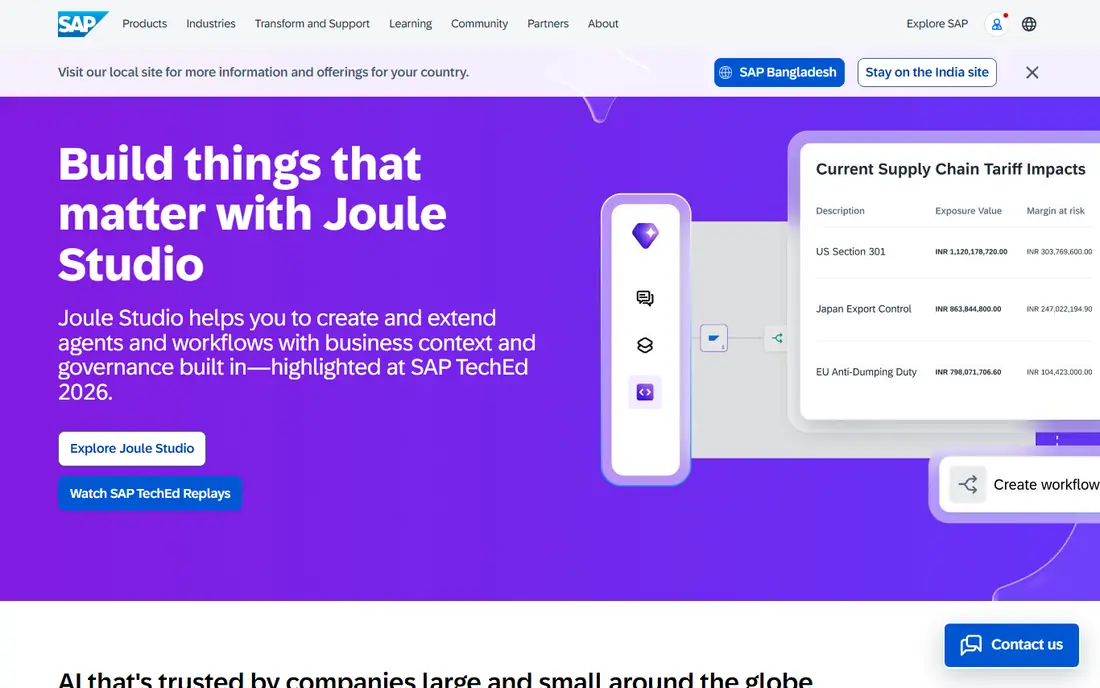
SAP S/4HANA suits large discrete manufacturers that need finance, planning, and production in one system. It handles complex bills of material, global plants, and multi-currency finance at scale. That focus matters most in the first weeks, when a team either settles into a tool or quietly stops opening it.
Its strength is scale. Large manufacturers with many plants and product lines get a single system of record that smaller tools cannot match. It also matters for teams that need to show results to a manager or a client without extra reporting work.
The catch is implementation. Cost and time are high, and success depends on experienced partners, so smaller manufacturers should look at lighter options. It is worth weighing against the strengths above, especially if you plan to use the tool for years.
- Manufacturing and finance in one system
- Global scale
- Deep planning tools
- Implementation cost and time
- Needs experienced partners
Epicor Kinetic
Ideal for: mid-sized discrete manufacturers
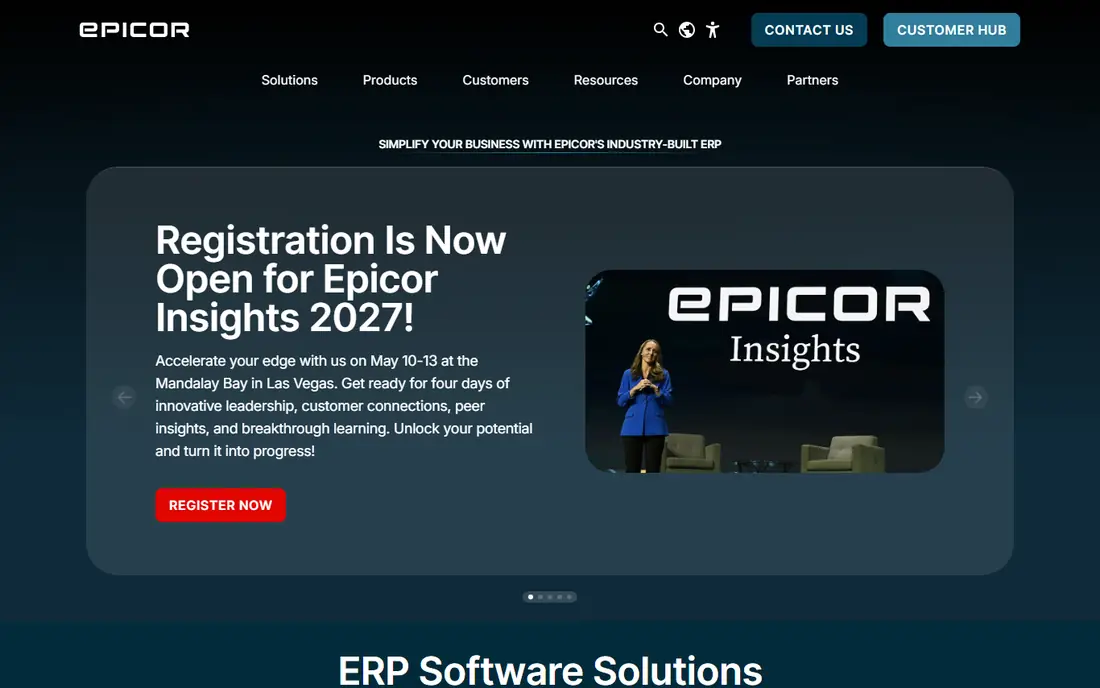
Epicor Kinetic suits mid-sized discrete manufacturers that want strong shop floor and planning tools. It covers quoting, scheduling, production, and inventory in a system built for make-to-order and make-to-stock work. We gave extra weight to tools that explain their limits plainly instead of hiding them behind a sales call.
Its strength is manufacturing focus. Shop floor control and scheduling feel built for real factory work rather than added as an afterthought. We checked this against the vendor's own feature page and public reviews, not just marketing copy.
The drawback is implementation. Rollout still needs planning and training, and pricing needs a quote, so buyers should run a detailed pilot. Teams with strict requirements should test this exact point before signing a contract.
- Manufacturing execution
- Planning and scheduling
- Shop floor control
- Implementation needs planning
- Pricing needs a quote
Infor CloudSuite Industrial
Ideal for: discrete manufacturers in the cloud
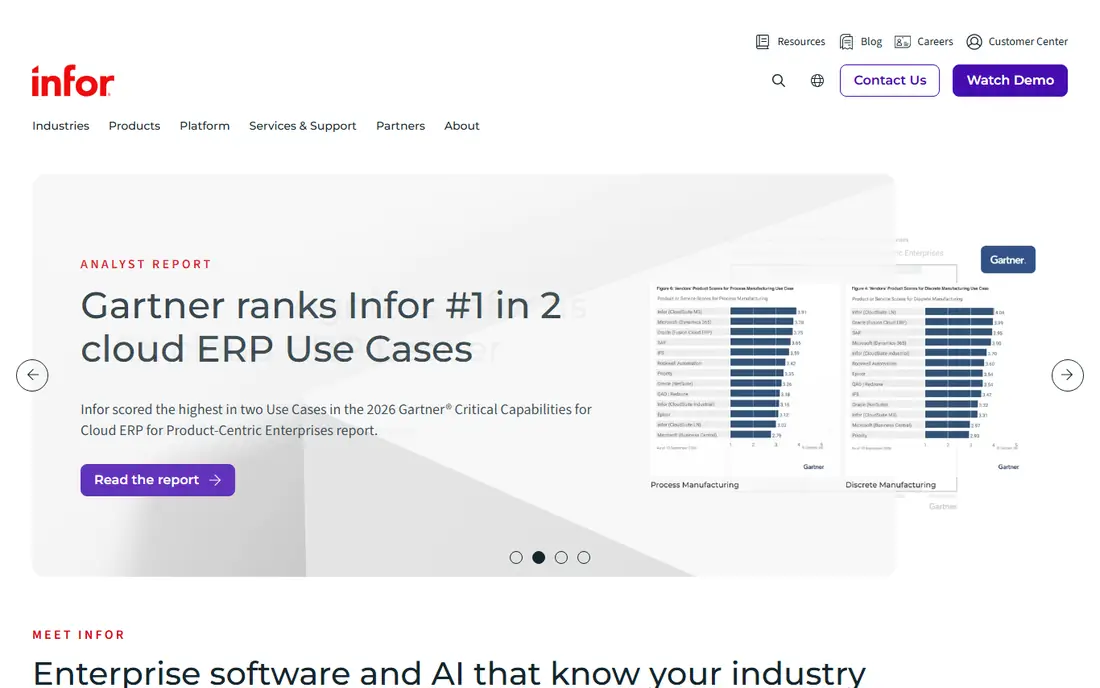
Infor CloudSuite Industrial suits discrete manufacturers that want a cloud ERP with industry-specific features. It covers planning, production, inventory, and finance for manufacturers with complex product structures. The best fit is often the tool your team will actually use every day, not the one with the longest list of features.
Its strength is industry fit. Features for discrete manufacturing reduce the custom work that generic ERP systems often need. Look for this in the trial, and check how it behaves with your own data rather than sample data.
The drawback is rollout effort. Cloud delivery helps, but data migration and training still take time, and partner quality affects the result. If this point is a deal breaker for you, the next options on this list handle it differently.
- Cloud ERP for discrete manufacturing
- Planning and supply tools
- Industry features
- Implementation effort
- Partner dependence
Microsoft Dynamics 365
Ideal for: manufacturers on Microsoft tools
Microsoft Dynamics 365 suits manufacturers already using Microsoft 365 and Azure. Its supply chain and finance apps connect to familiar tools, which can ease adoption for office teams. Setup effort, daily friction, and the clarity of the pricing page shaped how we weighed that fit.
Its strength is Microsoft fit. Outlook, Teams, and Excel integration help office staff adopt the system without learning a wholly separate world. That strength shows up in daily work, not just in a demo, which is why we ranked it highly.
The drawback is licensing. The modular structure can be hard to price without help, and deeper customisation needs partner work. That drawback may not matter for a small team, but it can grow into a real problem as usage grows.
- Supply chain and finance
- Microsoft 365 integration
- Modular apps
- Licensing complexity
- Customisation needs partners
IFS
Ideal for: asset-heavy discrete manufacturers
IFS suits discrete manufacturers that also service what they build, such as industrial equipment makers. It covers manufacturing, service, and asset management in one platform. A short trial with real data tells you more than a feature list, so plan one before you commit.
Its strength is service depth. Companies that sell a product and then maintain it get manufacturing and field service in the same system. This kind of strength tends to save time week after week, which adds up faster than a small price difference.
The drawback is scale. Enterprise pricing and implementation time suit larger firms better than small workshops. Ask about it on a sales call or in the trial, and get the answer in writing if it affects your budget.
- Manufacturing and service management
- Asset management
- Project tools
- Enterprise pricing
- Implementation takes time
QAD
Ideal for: automotive and industrial manufacturers
QAD suits automotive, industrial, and life sciences manufacturers that need focused ERP tools. Its industry editions reflect the planning and compliance needs of those sectors. That focus matters most in the first weeks, when a team either settles into a tool or quietly stops opening it.
Its strength is sector focus. Industry-specific workflows reduce the need for heavy customisation in its core markets. It also matters for teams that need to show results to a manager or a client without extra reporting work.
The drawback is network size. Its partner and community footprint is smaller than the largest vendors, so buyers should check local support. It is worth weighing against the strengths above, especially if you plan to use the tool for years.
- Manufacturing planning
- Supply chain tools
- Industry editions
- Smaller partner network than the largest vendors
- Pricing needs a quote
SYSPRO
Ideal for: mid-sized manufacturers and distributors
SYSPRO suits mid-sized manufacturers and distributors that want a focused ERP without enterprise scale. It covers production, inventory, and finance with tools shaped for smaller operations. We gave extra weight to tools that explain their limits plainly instead of hiding them behind a sales call.
Its strength is fit for the middle market. The system is deep enough for real manufacturing but lighter to run than the largest ERP platforms. We checked this against the vendor's own feature page and public reviews, not just marketing copy.
The drawback is footprint. Its global presence is smaller than SAP or Microsoft, so multinational buyers should check regional support. Teams with strict requirements should test this exact point before signing a contract.
- Manufacturing and distribution
- Inventory control
- Financial management
- Smaller global footprint than SAP
- Customisation needs skill
Acumatica
Ideal for: growing manufacturers on cloud ERP
Acumatica suits growing manufacturers that want cloud ERP with flexible licensing. Its manufacturing edition covers production, inventory, and distribution, and licensing is based on resources rather than per-user seats. The best fit is often the tool your team will actually use every day, not the one with the longest list of features.
Its strength is licensing flexibility. Companies with many occasional users can avoid paying per seat for every worker. Look for this in the trial, and check how it behaves with your own data rather than sample data.
The drawback is depth. Manufacturing features are lighter than specialist rivals, so complex plants should test production workflows carefully. If this point is a deal breaker for you, the next options on this list handle it differently.
- Cloud ERP with manufacturing edition
- Flexible licensing
- Distribution tools
- Manufacturing depth is lighter than specialist rivals
- Partner dependence
How we picked these
We started from the main keyword for this article and checked each candidate against official feature pages, pricing pages, app store listings, privacy policies, and public reviews. We kept only products that exist and work in October 2026 and that truly fit best discrete erp software, and we left out options that did not fit even when they looked popular in a general search.
We did not claim hands-on testing that did not happen. Where a price or a free tier could not be confirmed from the vendor's own site, we wrote See website rather than guessing a number. That approach keeps the list honest, and it means you should still confirm current pricing before you buy.
How to choose discrete ERP software
Start by writing down the one job this tool must do well for you. For best discrete erp software, that job might be daily use by a small team, reporting for a manager, or handling a larger volume without constant manual work. A tool that does that one job well is usually a better buy than a tool that does many jobs in a shallow way.
Next, run a short trial with real data and the people who will use the tool every day. Watch how long setup takes, how clear the billing is, and how fast support answers a real question. If the trial feels confusing, that confusion rarely disappears after you pay, so take it as a useful warning.
Finally, check the terms that matter after the first month: renewal pricing, data export, cancellation, and what happens to your data if you leave. A tool with a clear export path and plain renewal terms is easier to live with, even if a rival looks slightly cheaper on the first invoice.
Frequently asked questions
What is the best option for best discrete erp software?
For most readers, SAP S/4HANA is a strong starting point because it fits large discrete manufacturers. The best choice still depends on your budget and team size, so compare the top three on this list in a trial before you decide.
Is there a free option for best discrete erp software?
Some options on this list offer a free plan, and others offer a free trial, as shown in the comparison table. Free plans usually cover basic use, while paid plans add reporting, integrations, and support, so check the limits before you rely on a free tier.
How much do best discrete erp software tools cost?
Pricing varies widely in this category, and some vendors only quote after a sales call. Where we could confirm a starting price, we listed it in the table, and where we could not, we wrote See website so you can check the vendor page directly.
Can I switch tools later if I pick the wrong one?
In most cases, yes, but switching takes more work than people expect. Before you commit, check how to export your data, whether integrations carry over, and how long a migration would take for your team.
How should I test a tool before buying?
Use a short trial with real data, invite the people who will use it daily, and test support with a genuine question. Keep notes on setup time, billing clarity, and any feature that was promised but hard to find in the product itself.