Comparing 6 Dock Scheduling Software Options in 2026

- 1
 ShiptifyEuropean shippers that want dock management inside a broader transport management productVisit
- 2
 DataDocksFood manufacturers, 3PLs and mid-sized warehouses that want dock plus yard in one viewVisit
- 3
 GoRampLogistics teams that want dock scheduling and yard management as one orchestrated workflowVisit
- 4
 C3 ReservationsEnterprise distribution centers with complicated dock constraints and high appointment volumesVisit
- 5
 OpendockWarehouses that want carriers booking dock appointments online with minimal setupVisit
- The list opens with Shiptify, aimed at European shippers that want dock management inside a broader transport management product.
- One limit worth knowing about Shiptify: the site is French-first, which signals where the customer base sits.
- For operations where the yard itself is the problem: lost trailers, gate backups, spotter chaos, YardView is worth a look.
- None of the 6 tools, from Shiptify to YardView, has a free plan, so budget for a subscription or use a trial.
- Pricing across the list, from Shiptify to YardView, is by quote only.
Direct answer
Shiptify comes first here, mainly for European shippers that want dock management inside a broader transport management product. For a different need, DataDocks covers food manufacturers, 3PLs and mid-sized warehouses and GoRamp covers logistics teams that want dock scheduling and yard management as one orchestrated workflow. Prices, free plans and limits for all 6 tools follow.
Quick comparison
| Product | Ideal for | Price from | Free version | |
|---|---|---|---|---|
| Shiptify | European shippers that want dock management inside a broader transport management product | See website | No | Visit |
| DataDocks | Food manufacturers, 3PLs and mid-sized warehouses that want dock plus yard in one view | See website (quote-based) | No | Visit |
| GoRamp | Logistics teams that want dock scheduling and yard management as one orchestrated workflow | See website | No | Visit |
| C3 Reservations | Enterprise distribution centers with complicated dock constraints and high appointment volumes | See website (custom quote) | No | Visit |
| Opendock | Warehouses that want carriers booking dock appointments online with minimal setup | See website | Free trial (14 days) | Visit |
 YardView | Operations where the yard itself is the problem: lost trailers, gate backups, spotter chaos | See website | No | Visit |
The 6 tools in detail
Choosing dock scheduling software usually comes down to price, fit and limits. This Ainotely guide sets 6 tools side by side on those three points, with the facts kept short and checkable.
Shiptify
Ideal for: European shippers that want dock management inside a broader transport management product
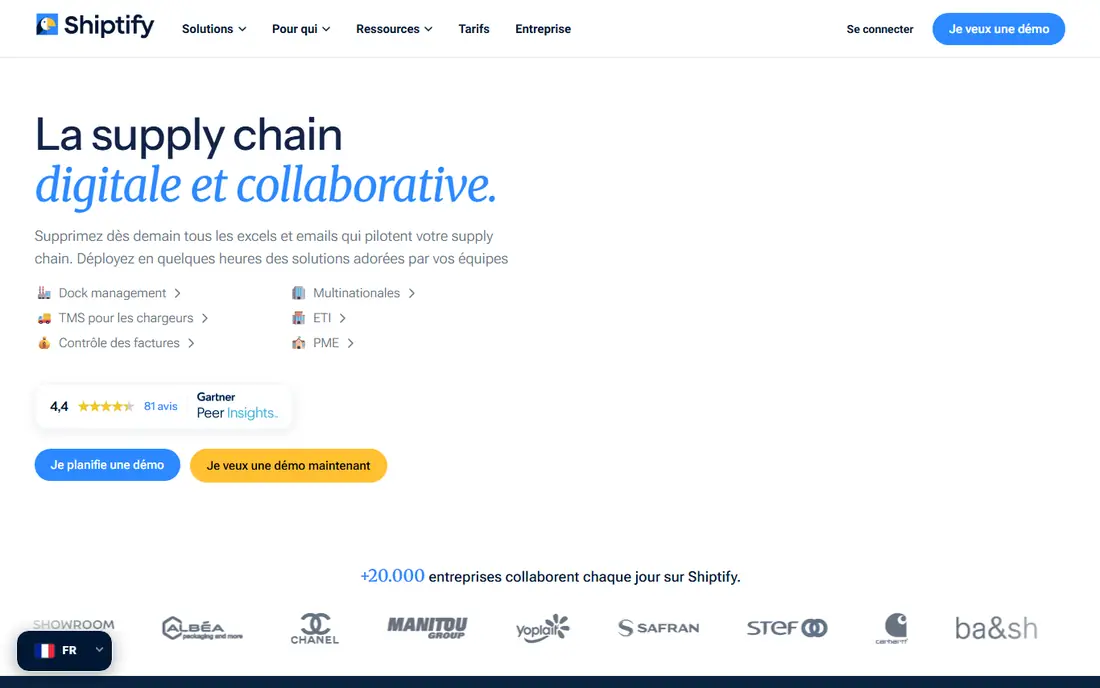
In short, Shiptify is for European shippers that want dock management inside a broader transport management system. The product links teams with carriers and partners for collaboration across the supply chain.
Where it falls short: No published pricing.
The caveat is fit. Pricing for Shiptify is not stated here, so ask the vendor for current figures. There is no free plan with Shiptify.
- Designed for European logistics workflows
- API connections with carriers and partners
- The site is French-first, which signals where the customer base sits
DataDocks
Ideal for: Food manufacturers, 3PLs and mid-sized warehouses that want dock plus yard in one view
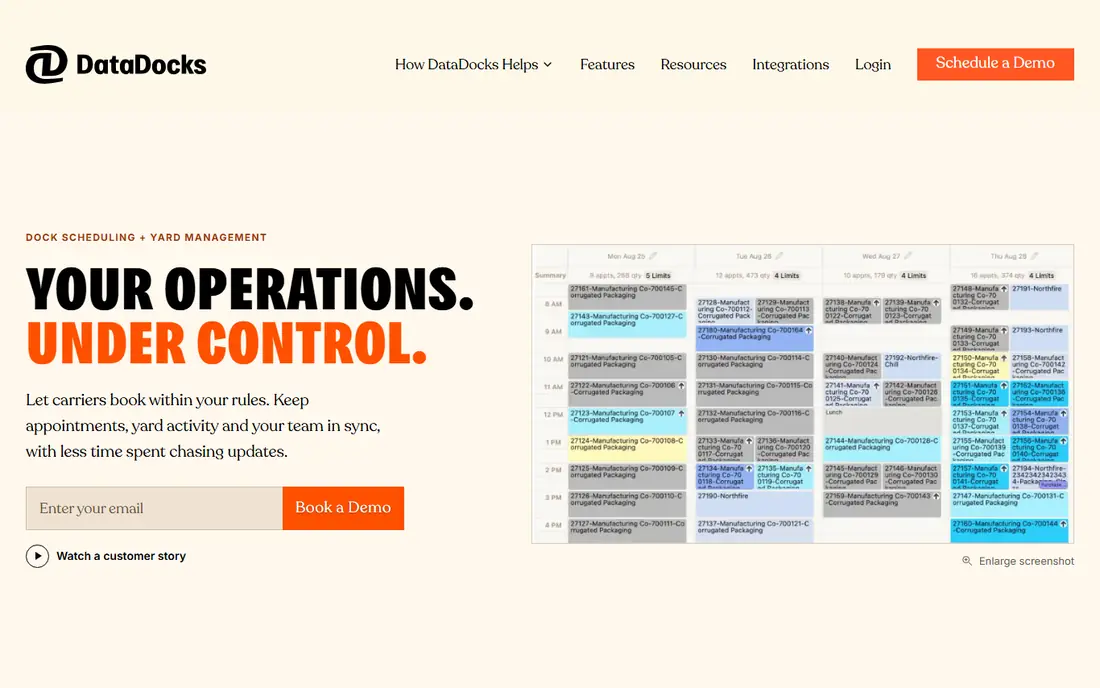
DataDocks was built for food manufacturers, 3PLs and mid-sized warehouses that want dock plus yard in one view. DataDocks positions itself as the working-day tool for warehouses: carriers book within the rules you set, your team sees arrivals, loading progress and trailer locations in one view, and documents and inspection records stay with each load.
Trade-offs to know: Smaller vendor, so check support coverage for your region.
For a mid-sized warehouse or 3PL that wants dock and yard together without enterprise complexity, it deserves a demo alongside Opendock. Check the vendor site for DataDocks pricing; none is listed in this comparison. DataDocks has no free tier.
- TMS and ERP systems
- Merges dock scheduling with yard management and load tracking
- Pricing is quote-based (the vendor's own FAQ says to talk to them for a quote)
GoRamp
Ideal for: Logistics teams that want dock scheduling and yard management as one orchestrated workflow
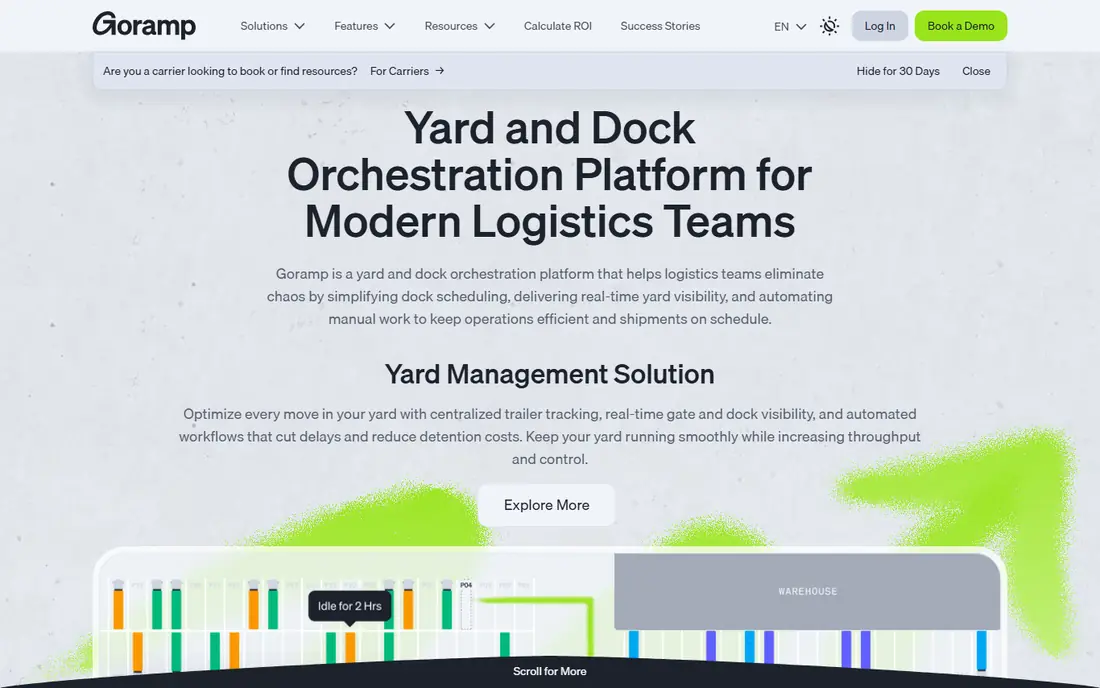
GoRamp is built with logistics teams that want dock scheduling and yard management as one orchestrated workflow in mind. Drivers check in on mobile, the product tracks dock occupancy live, and integrations with ERP and TMS systems keep loads, docks and yard moves in sync.
Limits to weigh: No published pricing.
Strengths: yard and gate operations. On top of that, customer quotes on the site credit it with cutting truck wait times and admin time substantially. This comparison lists no price for GoRamp; ask the vendor. No free plan comes with GoRamp.
- ERP and TMS integrations to keep data in sync
- Driver self-check-in and mobile arrival confirmation
- The all-in-one positioning means less depth in any single module than specialists
C3 Reservations
Ideal for: Enterprise distribution centers with complicated dock constraints and high appointment volumes
Think of C3 Reservations for enterprise distribution centers with complex dock constraints and high appointment volumes. It takes care of the scheduling problems that break more straightforward tools: standing appointments, complicated door and labor constraints, automatic scheduling across plenty of dock doors, and visibility across several sites.
Points against: Likely overkill and overpriced for a single small warehouse.
Pricing is quote-based, deployment is guided, and the buyer profile is a high-throughput distribution center running dozens of dock doors and hundreds of appointments a day. C3 Reservations does not show a starting price in this comparison, so check the vendor site for current pricing. C3 Reservations does not include a free plan.
- Standing appointments and multi-site visibility
- 24/7 carrier portal with live communication
- Enterprise sales process with no published prices
Opendock
Ideal for: Warehouses that want carriers booking dock appointments online with minimal setup
Choose Opendock for warehouses that want carriers booking dock appointments online with minimal setup. The system tracks entry and exit times automatically and rolls them into carrier scorecards handling on-time arrivals, late arrivals, cancellations and no-shows.
Trade-offs to know: Now part of Loadsmart, so the roadmap follows the parent company.
Two-way SMS keeps drivers informed without phone tag, and a TV mode puts the day's schedule on the warehouse floor. Pricing for Opendock is not stated here, so ask the vendor for current figures. Free access: Free trial (14 days).
- Warehouse floor TV mode and two-way SMS for driver communication
- API available for integrations
- Restricted yard management depth next to YMS-first tools
YardView
Ideal for: Operations where the yard itself is the problem: lost trailers, gate backups, spotter chaos
YardView is built with operations where the yard itself is the problem: lost trailers, gate backups, spotter chaos in mind. YardView comes at the problem from the yard side. In daily use, if your costly problem is not appointments but everything around them, trailers lost in the yard, gate congestion, spotters running blind, its digital yard map, gate check-in and live move tracking address that straight.
The company reports over 130,000 dock appointments scheduled in a recent month, so the scheduling side is proven at volume. In practice, dock scheduling and appointments are part of the package, with rules-based scheduling to keep docks busy but not jammed. On top of that, the tradeoff is focus. Buyers whose central pain is carrier appointment booking may find the scheduling workflow less refined than Opendock or DataDocks. The sales process is demo-led with no public prices. This comparison lists no price for YardView; ask the vendor. There is no free plan with YardView.
Where it is weaker: Pricing likely reflects the enterprise YMS positioning.
- Rules-based dock scheduling included
- Purpose-built yard management since 1998 with a drag-and-drop digital yard map
- Yard-first design means the dock scheduling module is more straightforward than standalone tools
Worth knowing about dock scheduling software
Every unscheduled truck that presents up at your gate costs money twice: once in detention fees and driver waiting time, and again in the overtime your receiving team burns catching up. They differ in how much of the yard they include, how they manage exceptions like late trucks, and whether they fit a single warehouse or a hundred-site network.
How we built this list
For each of the 6 tools we noted price, free plan or trial, fit for dock scheduling software and the main limit, using vendor pages and documentation. Seat minimums, billing terms and add-ons can move the real cost, so the starting prices here are a guide and not a quote. Tools are placed by general fit for dock scheduling software, with price clarity and free access as tie-breakers. A different team can reasonably rank them differently.
Before you commit
- Request quotes from Shiptify, YardView and the others; the list shows no fixed prices.
- Use real work to test the free trial from Opendock, rather than a demo project.
- Before choosing Shiptify, weigh its main limit: the site is French-first, which signals where the customer base sits.
- Work out what Opendock costs with your real seat count, add-ons and usage, not just the entry price.
- Run a one or two week pilot of GoRamp with the people who will use it every day.
Frequently asked questions
Do carriers have to pay to use dock scheduling software?
Typically not: the warehouse or shipper buys the product and carriers book at no cost through a portal. Beyond that, confirm this on the sales call, since any friction for carriers cuts adoption and pushes bookings back to phone and email.
Is Shiptify the right pick for everyone comparing dock scheduling software?
No single tool suits every team. Shiptify comes first because it fits European shippers that want dock management inside a broader transport management platform, while DataDocks suits food manufacturers, 3PLs and mid-size warehouses that want dock plus yard in one view and GoRamp suits logistics teams that want dock scheduling and yard management as one orchestrated workflow. Match the tool to your own size, budget and workflow before deciding.
How are the tools for dock scheduling software ordered?
The order follows typical fit for dock scheduling software, with Shiptify first and YardView last, then price clarity and free access. It is editorial judgement, not a score, so another team could rank the tools differently.
Can I try these options before paying?
Often, yes. Opendock offers a free trial. Use your own data and a real task during the test, and check what the free tier or trial limits before you rely on it.
Does any tool for dock scheduling software here have a free plan?
No tool in this list, Shiptify and YardView included, has a permanent free plan. Opendock offer a trial. Trials and quotes are the usual route, so plan a short evaluation period.