Best Drop Shipping Companies in 2026: 7 Companies Compared

- Spocket and Zendrop suit sellers who want faster US and EU shipping than typical overseas suppliers.
- CJ Dropshipping offers sourcing, warehousing and custom packaging for growing sellers.
- AutoDS automates product imports and order handling for high-volume stores.
- Printful is the best print-on-demand option for custom designs without inventory.
Quick comparison
| Product | Ideal for | Price from | Free version | |
|---|---|---|---|---|
 AutoDS | Automated dropshipping for stores | See website | Free trial | Visit |
 Spocket | US and EU suppliers | See website | Free trial | Visit |
 Zendrop | Branded dropshipping and fulfillment | See website | Free trial | Visit |
 CJ Dropshipping | Sourcing and fulfillment service | Free | Yes | Visit |
 SaleHoo | Supplier directory and research | See website | Free trial | Visit |
 AliDropship | AliExpress dropshipping plugin | See website | No | Visit |
 Printful | Print on demand without inventory | Free | Yes | Visit |
The best drop shipping companies
Dropshipping lets you sell products without holding stock: a supplier ships directly to your customer when an order arrives. The companies below supply products, automate orders or handle print on demand, and they differ in product quality, shipping times and fees. We focused on suppliers and platforms that US sellers can actually use, with notes on where quality risks sit.
AutoDS
Ideal for: Automated dropshipping for stores
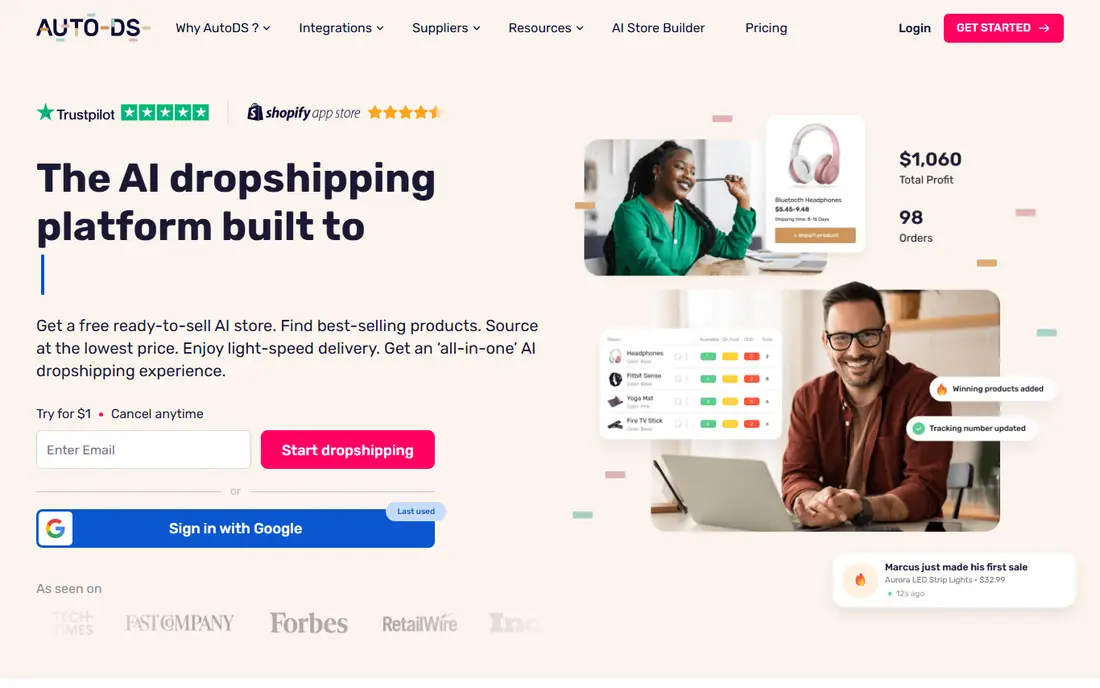
AutoDS automates much of dropshipping: it imports products, updates prices and stock, fulfills orders and tracks performance across suppliers. That automation suits sellers running many listings who cannot update each one by hand, and its analytics help spot winning products.
The subscription costs money, and its automation rules take time to learn and tune. Beginners with a handful of products may not need it yet. For high-volume stores, AutoDS saves hours every week.
For readers focused on automated dropshipping for stores, AutoDS is worth a trial before deciding, since the free tier or trial shows its real feel fast. Check the current plan details on the vendor site, since prices and limits change, and confirm that the version you need works on your devices.
- Automates imports, pricing and orders
- Many supplier sources
- Analytics
- Subscription cost
- Learning curve for automation rules
Spocket
Ideal for: US and EU suppliers
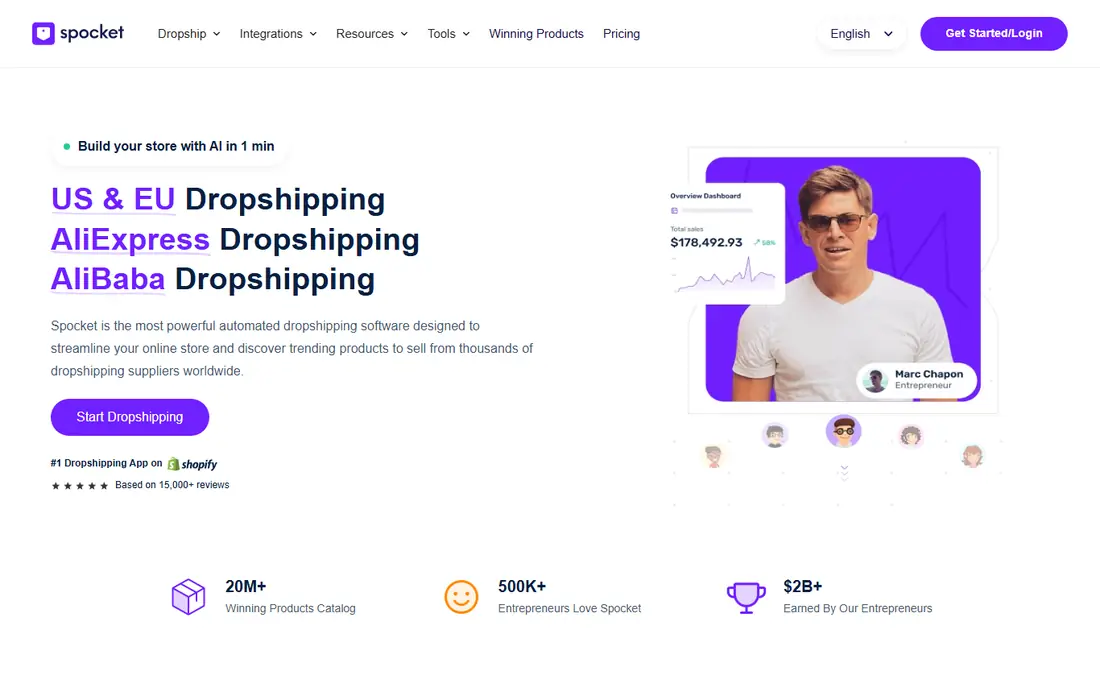
Spocket connects sellers with vetted suppliers, mostly in the US and EU, which means faster shipping and fewer quality surprises than typical overseas sourcing. Its branded invoicing keeps the supplier hidden from customers, and its catalog covers popular categories well.
The subscription costs money, and its product range is narrower than huge global marketplaces. Sellers hunting unusual items may need another source beside it. For beginners who value shipping speed, Spocket is a strong start.
We would shortlist Spocket for uS and EU suppliers, and compare it directly with the two options nearest it in price before paying. Check the current plan details on the vendor site, since prices and limits change, and confirm that the version you need works on your devices.
- Vetted US and EU suppliers
- Faster shipping
- Branded invoicing
- Subscription cost
- Product range is narrower than global marketplaces
Zendrop
Ideal for: Branded dropshipping and fulfillment
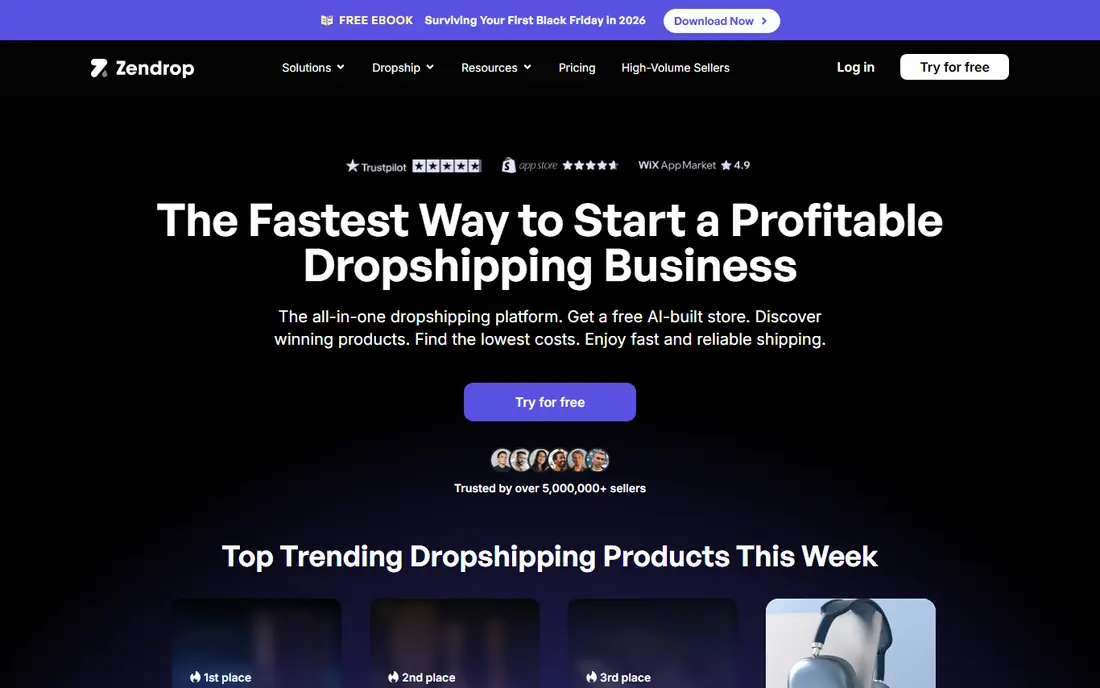
Zendrop focuses on branded dropshipping, with custom packaging, US fulfillment options and auto fulfillment for stores. Its tools help sellers look like a real brand rather than a reseller, and its fulfillment speed suits US customers. Growing sellers use it to improve perceived quality.
The subscription costs money, and product quality still varies by supplier, so samples remain essential. Its catalog is also curated rather than endless. For sellers building a brand around dropshipping, Zendrop is a good fit.
If branded dropshipping and fulfillment is your main need, Zendrop deserves a place on a shortlist, provided you test the catch described above first. Check the current plan details on the vendor site, since prices and limits change, and confirm that the version you need works on your devices.
- Custom branding and packaging
- US fulfillment options
- Auto fulfillment
- Subscription cost
- Product quality varies by supplier
CJ Dropshipping
Ideal for: Sourcing and fulfillment service
CJ Dropshipping is a full sourcing and fulfillment service: it finds products, warehouses stock, checks quality, adds custom packaging and ships orders worldwide. Sellers can request sourcing for items not in its catalog, which suits stores with specific product needs.
Shipping times vary by warehouse and destination, and its platform takes learning. Free to join, it charges per service and product. For sellers who want sourcing help and fulfillment under one roof, CJ is a comprehensive option.
Our view is that CJ Dropshipping earns its place here for sourcing and fulfillment service, even with the limits noted above. Check the current plan details on the vendor site, since prices and limits change, and confirm that the version you need works on your devices.
- Product sourcing and warehousing
- Custom packaging
- Quality checks
- Shipping times vary
- Platform learning curve
SaleHoo
Ideal for: Supplier directory and research
SaleHoo is a directory of vetted wholesale and dropshipping suppliers plus market research tools that help sellers pick products. Its community and guides suit beginners learning the business, and its supplier vetting reduces the risk of unreliable partners.
Directory access is paid, and listed suppliers still need sample orders and vetting. It is a research tool, not a fulfillment service. For sellers who want a curated starting list and product research, SaleHoo is useful.
For readers focused on supplier directory and research, SaleHoo is worth a trial before deciding, since the free tier or trial shows its real feel fast. Check the current plan details on the vendor site, since prices and limits change, and confirm that the version you need works on your devices.
- Vetted supplier directory
- Market research tools
- Community
- Directory access is paid
- Suppliers still need vetting
AliDropship
Ideal for: AliExpress dropshipping plugin
AliDropship is a plugin that turns a WordPress and WooCommerce site into a dropshipping store fed by AliExpress. Its one-time purchase avoids a monthly subscription, and its automation handles imports, pricing and order fulfillment. Sellers who prefer WordPress over Shopify will like it.
AliExpress shipping can be slow, and setup needs WordPress skills. Product quality also varies, so samples matter. For WordPress sellers who want a one-time-cost dropshipping setup, AliDropship is a practical choice.
We would shortlist AliDropship for aliExpress dropshipping plugin, and compare it directly with the two options nearest it in price before paying. Check the current plan details on the vendor site, since prices and limits change, and confirm that the version you need works on your devices.
- One-time plugin for WooCommerce
- AliExpress imports
- Automation
- AliExpress shipping can be slow
- Plugin setup needs WordPress skills
Printful
Ideal for: Print on demand without inventory
Printful is the leading print-on-demand service: upload a design, and it prints and ships custom shirts, mugs, posters and more when orders arrive. There is no upfront stock cost, and integrations cover Shopify, Etsy and other platforms. Designers and niche brands use it to sell custom goods without inventory.
Base product and printing costs are higher than bulk buying, so profit per item is thinner, and shipping times vary. Quality control also depends on the product. For custom design businesses, Printful remains the easiest way to start.
If print on demand without inventory is your main need, Printful deserves a place on a shortlist, provided you test the catch described above first. Check the current plan details on the vendor site, since prices and limits change, and confirm that the version you need works on your devices.
- Custom print products
- No upfront stock
- Integrations with major stores
- Base product costs are higher
- Profit per item is thinner
How we picked these
We compared official feature pages, pricing pages, app store listings, privacy policies and public reviews for each option below. We checked that each product is still available and that its stated plans match what the vendor publishes. We did not run hands-on tests, so our picks rest on documented features, pricing and the fit for the reader described in each section, not on lab results. Where a price could not be confirmed on the vendor site at the time of writing, we wrote See website rather than guessing. We also looked at how each option handles the everyday details that decide whether a tool gets used: setup time, device support, what happens when you cancel or downgrade, and whether help is available when something breaks. A product that looks strong on a feature list but is hard to set up, hard to leave, or poorly supported will cost more in time than it saves, so we weighed those practical points alongside price and features. Where reviewers or users reported a recurring problem, we noted it in the honest catch for that product, rather than leaving it out because the vendor page did not mention it.
How to choose a dropshipping supplier without quality surprises
Order samples before you list anything, because photos hide fabric, sizing and packaging problems. Check shipping times to your customers country, since a three-week delivery creates refunds even when the product is fine. Read the return policy, because you, not the supplier, face the customer when something breaks. Start with a small catalog you can support, and keep a backup supplier for your best sellers. Finally, price with fees, ads and returns included, since thin margins disappear fast.
A final check before you commit
Run a short trial on a real task before you pay for a year or move a whole team. Use the free plan or trial to complete one full job, from setup to export or delivery, and note where you got stuck. Check the cancellation path too: can you leave and keep your data, or does leaving mean starting over? Read the pricing page for renewal rates, not just the first-year offer, and confirm what support you get on the plan you will actually buy. Finally, ask one current user about the worst part of the product, since that answer tells you more than any feature list. If the trial feels good on a real task and the exit path is clear, the choice is much safer.
Frequently asked questions
What is the best dropshipping company for beginners?
Spocket is a friendly starting point, with US and EU suppliers and faster shipping than typical overseas options. AutoDS suits beginners who want automation, while Printful is best for custom print-on-demand products.
Is dropshipping still profitable?
It can be, but margins are thin and advertising costs matter. Sellers who pick quality products, price with all fees included and offer good support do better than those who list hundreds of untested items.
What is the difference between Spocket and CJ Dropshipping?
Spocket is a marketplace of vetted suppliers, mostly in the US and EU, with faster shipping. CJ Dropshipping is a sourcing and fulfillment service that finds products, warehouses stock and ships orders, including custom packaging.
Do I need Shopify for dropshipping?
No, but Shopify is the most common platform for dropshipping stores, with apps for most suppliers here. WooCommerce and other platforms also work, though setup takes more effort.
What are the risks of dropshipping?
Quality control, long shipping times, returns and supplier reliability are the main risks. Order samples, set clear delivery expectations and keep customer support responsive to reduce refunds and complaints.