7 E-Commerce Fraud Protection Software Options Ranked for 2026

- 1
 SiftDigital firms needing fraud coverage from signup through disputeVisit
- 2
 ForterLarge enterprises wanting identity-based fraud preventionVisit
- 3
 Kount (Equifax)High-volume merchants wanting deep data enrichment in the Equifax ecosystemVisit
- 4
 ClearSaleInternational merchants and high-risk verticals wanting human-backed decisionsVisit
- 5
 SignifydMid-market and enterprise merchants wanting guaranteed order decisionsVisit
- Sift takes the first slot, best suited to digital firms needing fraud coverage from signup through dispute.
- NoFraud is the only tool of the 7 with a free plan.
- For mid-market merchants wanting transparent pricing and quick implementation, SEON is worth a look.
- For the cheapest start, look at SEON: From $699/month.
Direct answer
Sift is the first pick on this list for digital firms needing fraud coverage from signup through dispute. Forter fits large enterprises wanting identity-based fraud prevention; Kount (Equifax) fits high-volume merchants wanting deep data enrichment in the Equifax ecosystem. Details, prices and limits for the rest of the 7 tools are below.
Quick comparison
| Product | Ideal for | Price from | Free version | |
|---|---|---|---|---|
| Sift | Digital firms needing fraud coverage from signup through dispute | See website (quote-based) | Free trial | Visit |
| Forter | Large enterprises wanting identity-based fraud prevention | See website (custom enterprise) | Demo available | Visit |
| Kount (Equifax) | High-volume merchants wanting deep data enrichment in the Equifax ecosystem | See website (quote-based) | Demo available | Visit |
| ClearSale | International merchants and high-risk verticals wanting human-backed decisions | Priced per approved order (see website) | Demo available | Visit |
| Signifyd | Mid-market and enterprise merchants wanting guaranteed order decisions | Priced as a percentage of order value (see website) | Demo available | Visit |
 NoFraud | Small and mid-sized merchants wanting guaranteed protection with quick setup | Free tier; premium from $250/month (see website) | Yes | Visit |
 SEON | Mid-market merchants wanting transparent pricing and quick implementation | From $699/month (see website) | Free trial | Visit |
Tool-by-tool breakdown
Choosing E-Commerce fraud protection software usually comes down to price, fit and limits. This Ainotely guide sets 7 tools side by side on those three points, with the facts kept short and checkable.
Sift
Ideal for: Digital firms needing fraud coverage from signup through dispute
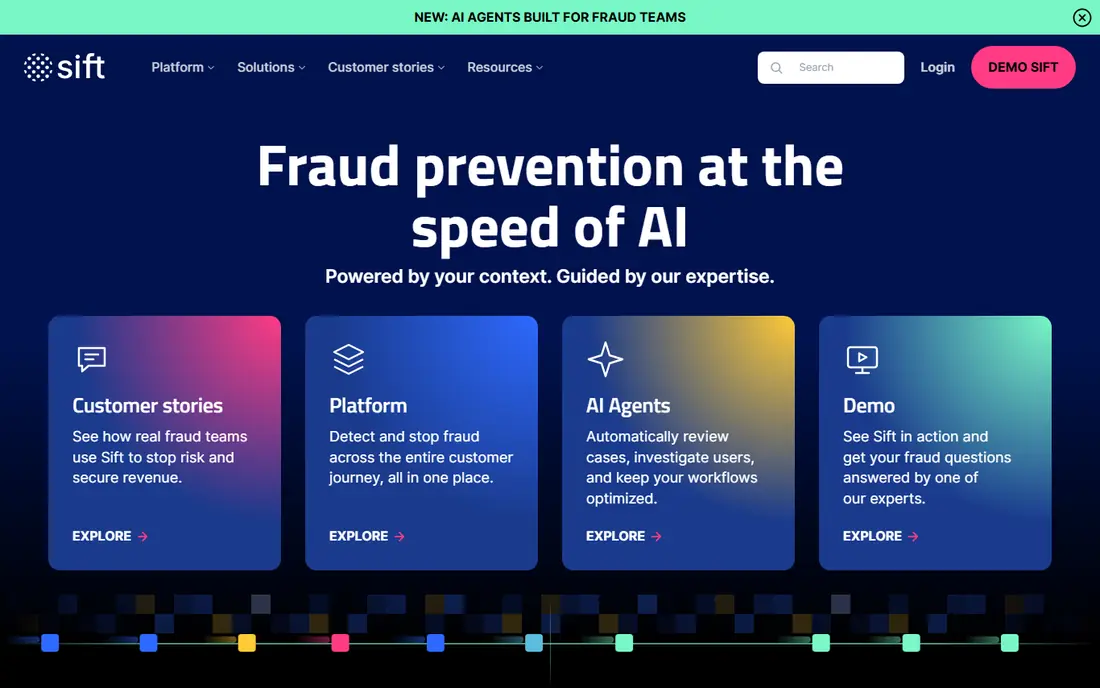
Sift works best for digital companies needing fraud coverage from signup through dispute. The data network processes over a trillion events annually.
Worth adding: marketplaces, fintech and digital goods firms get coverage tuned to their abuse patterns. Also, for digital firms with diverse fraud vectors, Sift is the most complete system. Sift does not show a starting price in this comparison, so check the vendor site for current pricing. As for free access: Free trial.
Where it is weaker: platform breadth needs configuration, guarantee terms vary.
- Adaptable system
- Full-lifecycle coverage: account
- Quote-only pricing
Forter
Ideal for: Large enterprises wanting identity-based fraud prevention
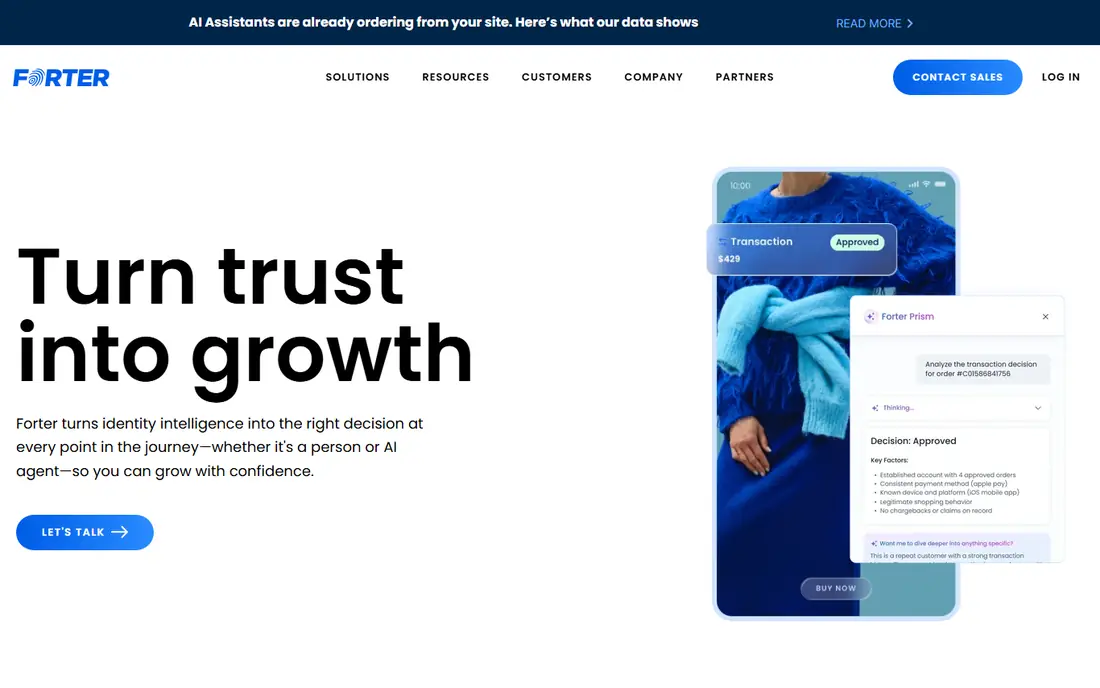
Where Forter fits: large enterprises wanting identity-based fraud prevention. Forter reframes fraud as identity: its graph of known identities means most returning customers are recognized immediately, which lifts approval rates whereas cutting fraud. For everyday use, decisions arrive in milliseconds.
The main drawbacks: smaller merchants priced out.
Everything about the commercial model targets large merchants. In daily use, smaller keeps should look at NoFraud or SEON. Forter shows no starting price here, so confirm the cost on the vendor site. Free access: Demo available.
- Identity graph with 1.8B+ known identities
- Chargeback guarantee
- Custom enterprise pricing
Kount (Equifax)
Ideal for: High-volume merchants wanting deep data enrichment in the Equifax ecosystem
Kount (Equifax) is designed for high-volume merchants wanting deep data enrichment in the Equifax ecosystem. Kount's differentiator is data: Equifax identity, credit and fraud signals enrich every transaction decision. The complete absence of public pricing makes evaluation harder than any competitor.
More specifically, the decisioning engine is adaptable and proven at scale. The value case is most solid for merchants already buying Equifax services. Kount (Equifax) does not show a starting price in this comparison, so check the vendor site for current pricing. Free plan details: Demo available.
Where it is weaker: No public pricing at all, hardest to benchmark.
Best features of Kount (Equifax): trusted enterprise brand.
- Proven at high volume
- Adaptable decisioning
- Best value inside Equifax relationships
ClearSale
Ideal for: International merchants and high-risk verticals wanting human-backed decisions
Choose ClearSale for international merchants and high-risk verticals wanting human-backed decisions. The chargeback guarantee backs the decisions.
Drawbacks to consider: Per-order pricing; human review layers on latency on edge cases.
Merchants with international exposure or tricky product categories get the most from the human-AI combination. As for the details, per-approved-order pricing and occasional review latency are the trade-offs. What you pay to start with ClearSale: Priced per approved order. As for free access: Demo available. Reasons to shortlist it: 1,500+ human analysts backing the AI; a decent match for high-risk verticals.
- Strong international coverage
- Chargeback guarantee
- Less automation-first than rivals
Signifyd
Ideal for: Mid-market and enterprise merchants wanting guaranteed order decisions
Signifyd targets mid-market and enterprise merchants wanting guaranteed order decisions. That shifts fraud from a cost center to a predictable line item. The automation lets merchants approve more legitimate orders with less manual review.
Beyond that, the percentage-of-order-value pricing means high-volume merchants pay substantially. In practice, for merchants losing margin to both fraud and false declines, the math usually works. The starting price for Signifyd: Priced as a percentage of order value. Free access: Demo available.
Where it is weaker: Percentage-of-order pricing brings up at scale.
What works well: decent Shopify and system integrations.
- 100% financial guarantee on approved orders
- Capable automation cuts manual review
- Guarantee terms have exclusions, enterprise sales motion
NoFraud
Ideal for: Small and mid-sized merchants wanting guaranteed protection with quick setup
Choose NoFraud for small and mid-sized merchants wanting guaranteed protection with fast setup. NoFraud democratized the chargeback guarantee: a free level including 100 orders and a five-minute install put guaranteed fraud protection within reach of small keeps.
The automatic screening with financial backing removes the manual review burden that small teams cannot staff. In practice, the data network is smaller than the giants'. The starting price for NoFraud: Free tier. NoFraud offers a free plan.
The main drawbacks: less depth than enterprise products, smaller data network. What works well: five-minute installation.
- Minimal manual review needed
- Financial guarantee included
- Percentage-of-revenue pricing on premium levels
SEON
Ideal for: Mid-market merchants wanting transparent pricing and quick implementation
Where SEON fits: mid-market merchants wanting transparent pricing and quick implementation. Very small merchants may find the entry price steep next to NoFraud's free level.
The digital footprinting approach examines email, phone, IP and device intelligence with transparent rules merchants can understand and tune. SEON starts at: From $699/month. Free plan details: Free trial.
Upsides: Published pricing.
Where it is weaker: may be complicated for very small merchants.
- Fastest implementation in the category
- Capable reviews
- AML depth only on premium level
More on E-Commerce fraud protection software
The chargeback guarantee is what separates the enterprise systems from straightforward scoring tools. Also, the right choice relies on your order volume, risk tolerance and how much fraud cost you currently absorb.
How the list was put together
For each of the 7 tools we noted price, free plan or trial, fit for E-Commerce fraud protection software and the main limit, using vendor pages and documentation. Where a price is missing, the vendor does not list one publicly or ties it to a quote. Always confirm before budgeting. Order on the page follows fit for the typical buyer first, then price transparency and free access. Your own requirements should decide the final pick.
A buyer's checklist
- Get a written quote from Sift, Forter and Kount (Equifax); the list shows no starting price for them.
- Test the free plan from NoFraud against your real workload before relying on it.
- Run a trial of Sift and SEON with real work before paying for a year; your own workflow is the best test.
- Before choosing Sift, weigh its main limit: quote-only pricing, product breadth needs configuration, guarantee terms vary.
- Total up the real monthly cost of NoFraud, including add-ons, extra users and usage-based fees.
- Ask Sift how an export works before you move any records in; an easy exit lowers the risk.
Frequently asked questions
Is Sift the right pick for everyone comparing E-Commerce fraud protection software?
No single tool suits every team. Sift comes first because it fits digital businesses needing fraud coverage from signup through dispute, while Forter suits large enterprises wanting identity-based fraud prevention and Kount (Equifax) suits high-volume merchants wanting deep data enrichment in the Equifax ecosystem. Match the tool to your own size, budget and workflow before deciding.
Can I try these options before paying?
Often, yes. NoFraud has a free plan and Sift and SEON offer a free trial. Use your own data and a real task during the test, and check what the free tier or trial limits before you rely on it.
What is the cheapest option for E-Commerce fraud protection software in this list?
On published monthly entry prices, SEON is the lowest here at $699/month. Entry price is only part of the cost, because seats, add-ons and billing terms can change the total.
Do these tools publish their prices?
Not all of them. Sift, Forter and Kount (Equifax) publish no starting price, so expect a quote request for those. The rest, ClearSale included, show a starting price, though seats and billing terms still change the final cost.