Coveo comes first here, mainly for enterprise AI relevance across channels. For a different need, Adobe Commerce covers Composable B2B and B2C merchandising at scale and Searchspring covers merchandising and search, now under Athos Commerce. All 5 tools are compared below on price, free plan and limits.
Short on time? The summary and table above give the quick view of 5 tools for E-Merchandising software for enterprise, and the profiles that follow give the detail behind each entry.
Key takeaways
Coveo sits first on this list: enterprise AI relevance across channels.
Before buying Searchspring, weigh this: brand transition may affect documentation.
Algolia is the one to check for AI search and retrieval across experiences.
Algolia is the only tool of the 5 with a free plan.
No starting price is shown for any of the 5 tools, Coveo and Algolia included, so plan time for sales calls.
Pick Coveo if this describes you: enterprise AI relevance across channels. It suits large organizations that want one relevance layer across several channels and content sources, not just a product search box on a single storefront.
What works well: Handles commerce.
Choose it when unified relevance across commerce and service matters. This comparison lists no price for Coveo; ask the vendor. Trial and free access: Free trial.
Drawbacks to consider: Configuration effort across use cases.
Best for: Composable B2B and B2C merchandising at scale
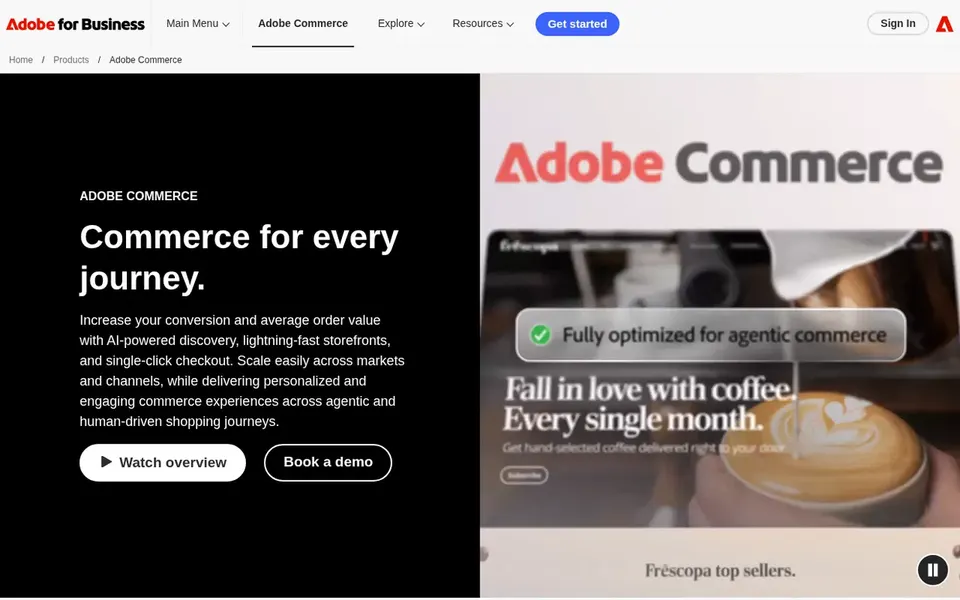
Adobe Commerce targets Composable B2B and B2C merchandising at scale. Adobe Commerce, formerly Magento, is an AI-powered composable ecommerce platform for B2B and B2C companies. It supports personalized experiences at global scale, making it a fit for enterprises that want merchandising, catalog management and content tied into a flexible commerce architecture with room for custom integrations.
Its adaptability includes operational demands, and composable setups mean more integration and maintenance effort. As for the details, choose Adobe Commerce when you need deep customization and a product that spans content and commerce. More specifically, smaller teams or those without engineering support may prefer a more managed choice. Adobe Commerce shows no starting price here, so confirm the cost on the vendor site. Free access: Not stated.
Best for: Merchandising and search, now under Athos Commerce
Searchspring is designed for merchandising and search, now under Athos Commerce. As a discovery-focused tool it does not deal with checkout or catalog backend.
What users get: Part of the combined Athos Commerce group.
Pick it when merchandising control and search are the primary gaps. No starting price is listed for Searchspring here; confirm pricing on the vendor site. Free options: Not stated. Where it is weaker: Discovery focus only, not full commerce.
Best for: Merchandising inside a full commerce suite
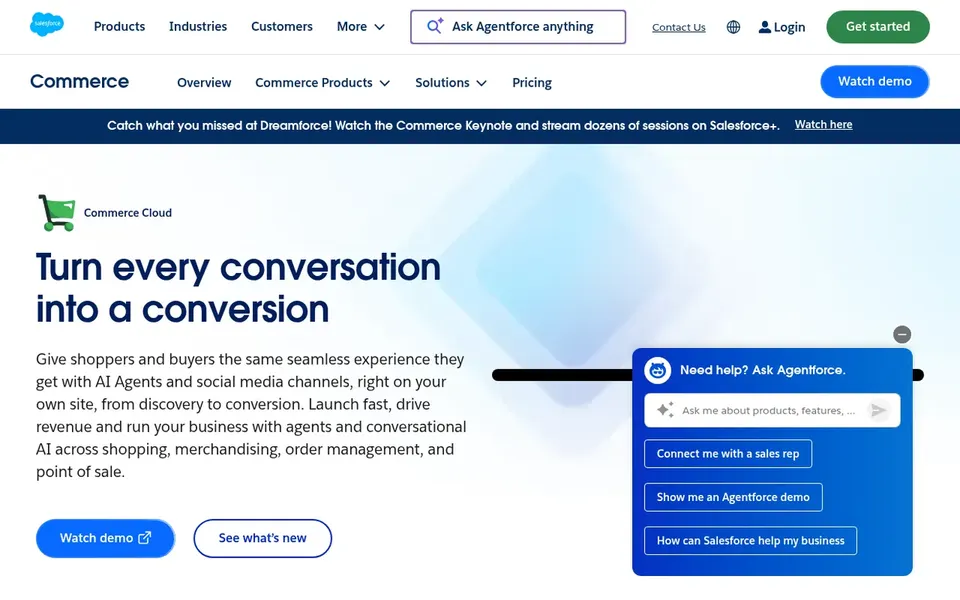
Salesforce Commerce Cloud was built for merchandising inside a full commerce suite. The system is wide, so teams that only need search and product discovery may find it heavier than a focused tool.
Honest limits: Implementation can be heavy.
Setup and continuing administration usually need dedicated resources. Salesforce Commerce Cloud does not show a starting price in this comparison, so check the vendor site for current pricing. As for free access: Not stated.
Best for: AI search and retrieval across experiences
Algolia serves AI search and retrieval across experiences. It suits enterprises that want to add quick, relevant product discovery to an existing storefront or across several digital touchpoints, including agentic and generative search use cases beyond the shopping cart.
Downsides: Not a full commerce system.
What works well: Spans agentic.
Pick it when search quality is the priority. No starting price is listed for Algolia here; confirm pricing on the vendor site. Algolia includes a free tier.
Confirm the entry price with every vendor: no tool from Coveo to Algolia shows a fixed starting price.
Look at the free plan from Algolia closely: its caps decide whether it is usable for real work.
Take the trial from Coveo and push a live task through it before you pay.
Read the limits listed for Coveo first: wide scope may be more than needed.
Check the support hours and onboarding help Algolia offers; smaller vendors vary a lot here.
List the apps you already depend on and check that Searchspring supports each one on the plan you would buy.
How we picked
The comparison looks at four things: starting price, free access, how well the feature set matches E-Merchandising software for enterprise, and the main limit of each tool. Figures are shown as the vendors publish them. Billing terms, seat minimums and add-ons can change the real cost. The order reflects how well each tool fits the most common buying scenario for E-Merchandising software for enterprise, then price clarity, then free plan access. It is a starting point, not a verdict.
Every price and plan detail on this page comes from the vendors’ own websites. We did not run hands-on tests unless the text says so, and we do not publish star ratings or review scores. See how we score and our disclosure.
Keep your shortlist in one place
Paste prices, trial dates and notes from this guide into Ainotely, our AI note app. It files them into a topic and pulls out tasks like “cancel trial by Friday”. Free 7-day trial, no card needed.
Is Coveo the right pick for everyone comparing E-Merchandising software for enterprise?
No single tool suits every team. Coveo comes first because it fits enterprise AI relevance across channels, while Adobe Commerce suits Composable B2B and B2C merchandising at scale and Searchspring suits merchandising and search, now under Athos Commerce. Match the tool to your own size, budget and workflow before deciding.
What should enterprises check before buying merchandising software?
Confirm integrations with your commerce system, the merchandising controls included, data feed handling and regional support. Also assess the internal effort required to implement and maintain the tool before committing.
How are the tools for E-Merchandising software for enterprise ordered?
The order follows typical fit for E-Merchandising software for enterprise, with Coveo first and Algolia last, then price clarity and free access. It is editorial judgement, not a score, so another team could rank the tools differently.
Can I try these tools before paying?
Often, yes. Algolia has a free plan and Coveo offers a free trial. Use your own data and a real task during the test, and check what the free tier or trial limits before you rely on it. Pricing, free plan details and limits for all 5 tools in this E-Merchandising software for enterprise roundup sit on the individual cards above.
Which options for E-Merchandising software for enterprise have a free plan?
Algolia is the only tool in this list with a free plan. Free plans usually cap users, projects or features, so check the limits on the vendor page. One other tool offers a trial instead. The 5 tool cards above repeat this per product for E-Merchandising software for enterprise, with the listed price or "pricing on request".