Best Ecommerce Shipping Software in 2026: 7 Tools Compared

- 1
 ShipStationMulti-channel sellersVisit
- 2
 ShippoFlexible multi-carrier shippingVisit
- 3
 Pirate ShipFree USPS and UPS labelsVisit
- 4
 EasyshipInternational shippingVisit
- 5
 ShipBobFulfillment plus shipping softwareVisit
- Pirate Ship is the best free option for US sellers shipping with USPS and UPS.
- ShipStation suits multi-channel sellers who need automation and many carrier options.
- Shippo balances multi-carrier flexibility with a free starting tier and API access.
- Easyship leads for international shipping, with duties and tax calculations at checkout.
Quick comparison
| Product | Ideal for | Price from | Free version | |
|---|---|---|---|---|
| ShipStation | Multi-channel sellers | $14.99 per month | Free trial | Visit |
| Shippo | Flexible multi-carrier shipping | Free | Yes | Visit |
| Pirate Ship | Free USPS and UPS labels | Free | Yes | Visit |
| Easyship | International shipping | Free | Yes | Visit |
| ShipBob | Fulfillment plus shipping software | See website | No | Visit |
 Ordoro | Shipping plus inventory management | See website | Free trial | Visit |
 Veeqo | Amazon and multi-channel sellers | Free | Yes | Visit |
The best ecommerce shipping software
Shipping software saves money two ways: discounted carrier rates and time saved on labels, tracking and returns. The tools below range from free label printers to platforms that automate rules, branding and international paperwork. We compared them on carrier coverage, discounts, automation and price, since the cheapest subscription is not always the cheapest total cost.
ShipStation
Ideal for: Multi-channel sellers
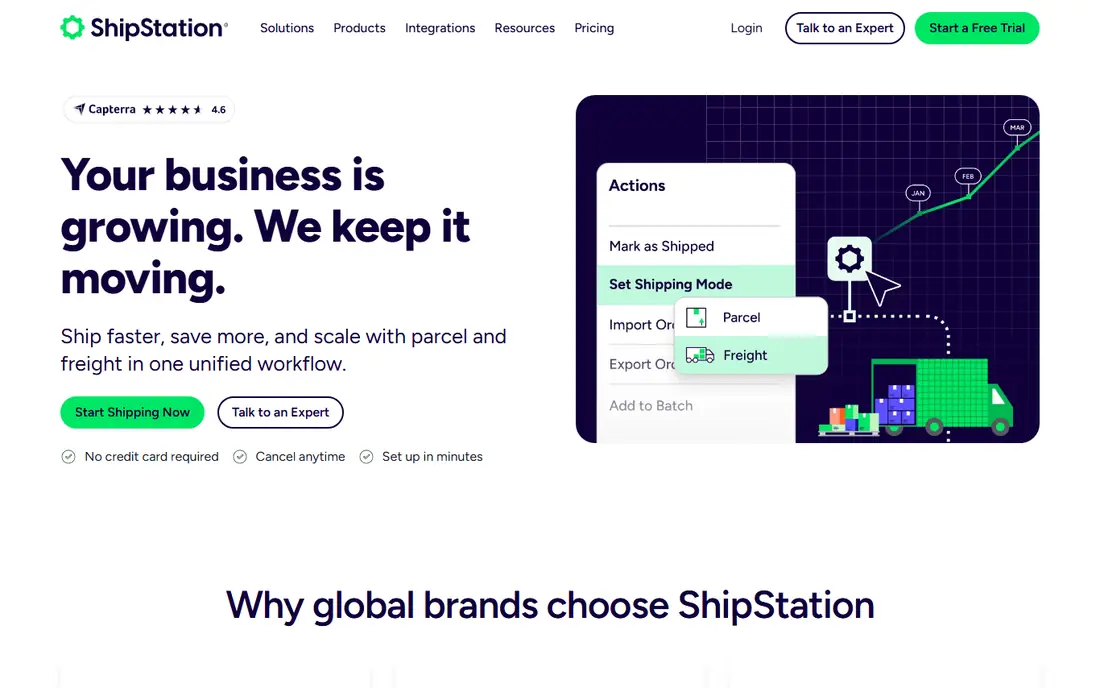
ShipStation is the standard for sellers on several channels. It pulls orders from Shopify, Amazon, Etsy and other stores, applies automation rules, prints labels in bulk and offers branded tracking and returns. Its carrier coverage exceeds 200 options, and its discounts help at volume.
It needs a paid plan from $14.99 per month, and its automation takes time to set up well. Small sellers with one channel may not need its depth. For multi-channel sellers shipping daily, it is the most complete platform here.
For readers focused on multi-channel sellers, ShipStation is worth a trial before deciding, since the free tier or trial shows its real feel fast. Check the current plan details on the vendor site, since prices and limits change, and confirm that the version you need works on your devices.
- 200 plus carriers
- Automation rules
- Branded tracking and returns
- Subscription needed
- Learning curve for automation
Shippo
Ideal for: Flexible multi-carrier shipping
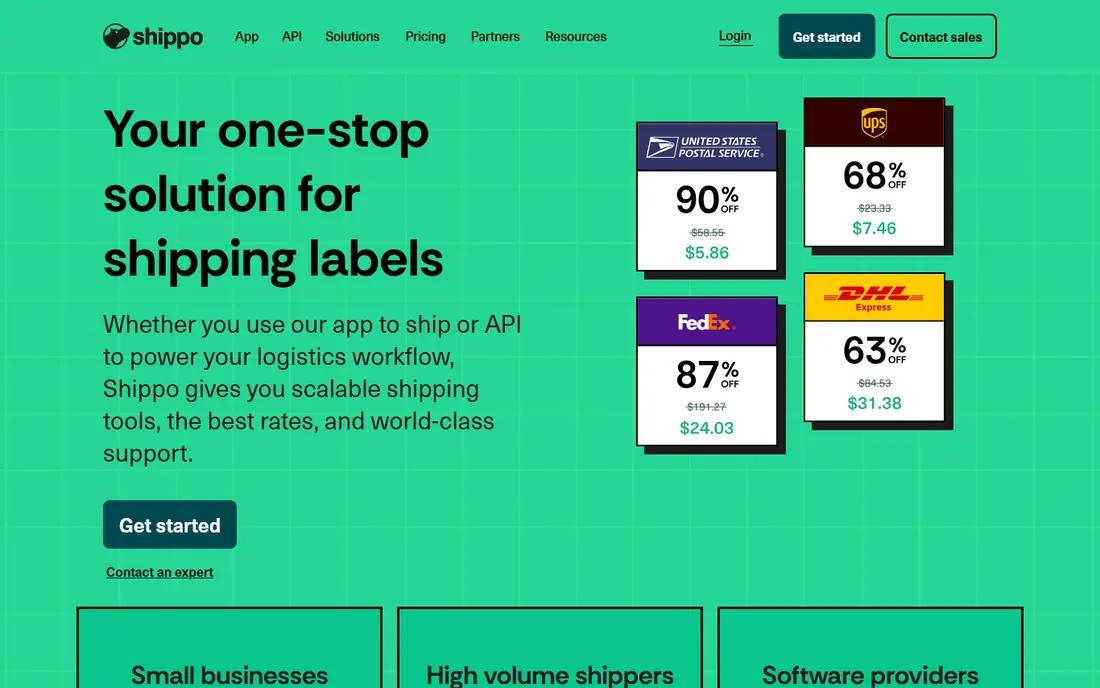
Shippo balances flexibility and price, with over 40 carriers, a free tier for starting sellers and API access on all plans. Its rate comparison helps sellers pick the cheapest option per order, and its integrations cover major store platforms. Growing sellers can scale plans as label volume rises.
The free tier has label limits and per-label fees on some options, and branded tracking needs a paid plan. Very high-volume sellers may prefer ShipStation automation. For sellers who want multi-carrier choice without an upfront subscription, Shippo is strong.
We would shortlist Shippo for flexible multi-carrier shipping, and compare it directly with the two options nearest it in price before paying. Check the current plan details on the vendor site, since prices and limits change, and confirm that the version you need works on your devices.
- 40 plus carriers
- Free tier
- API on all plans
- Rate comparison
- Free tier has label limits
- Branded tracking needs paid plans
Pirate Ship
Ideal for: Free USPS and UPS labels
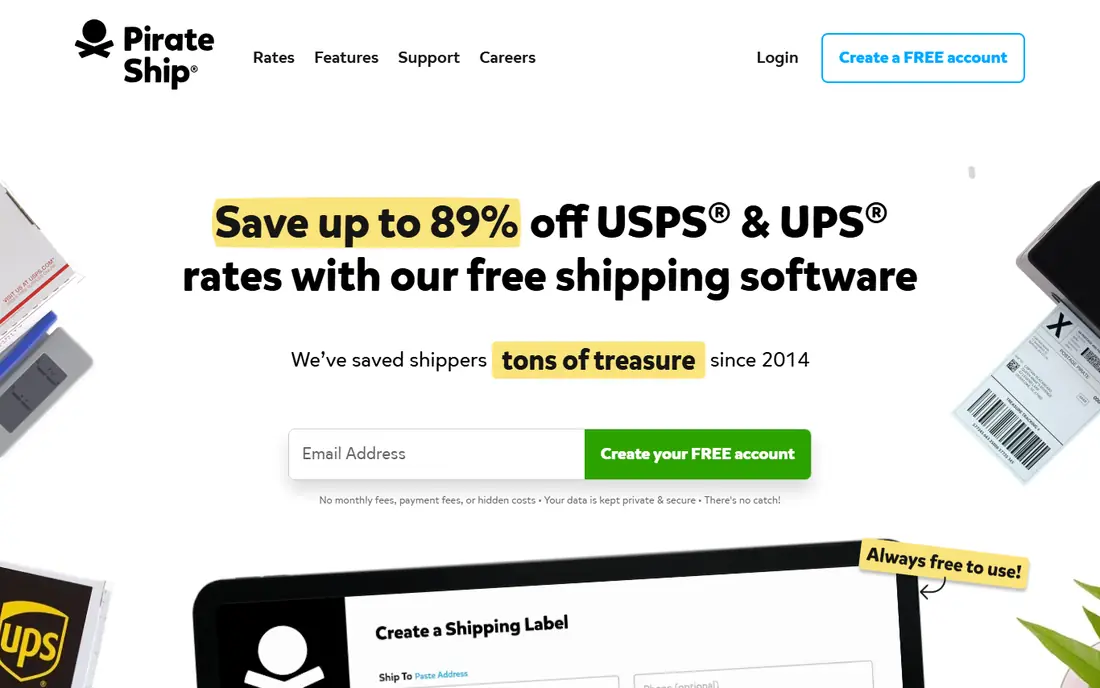
Pirate Ship is free, simple and genuinely useful: no monthly fee, discounted USPS and UPS labels, and an interface anyone can learn in minutes. Small US sellers, Etsy shops and occasional shippers get carrier discounts without a subscription or label limits.
It only supports USPS and UPS, has no API, and its automation is limited, so high-volume or multi-carrier sellers will outgrow it. For low-volume domestic shipping, though, it is the best free option available.
If free USPS and UPS labels is your main need, Pirate Ship deserves a place on a shortlist, provided you test the catch described above first. Check the current plan details on the vendor site, since prices and limits change, and confirm that the version you need works on your devices.
- No monthly fee
- Discounted USPS and UPS rates
- Simple interface
- Only USPS and UPS
- No API
- Limited automation
Easyship
Ideal for: International shipping
Easyship is built for cross-border selling, with many global couriers, duties and tax calculations at checkout and automated customs paperwork. Its rate comparison across couriers helps international sellers avoid overpaying, and its tracking tools keep buyers informed across borders.
The free tier has limits, and its interface takes learning when rules get complex. Domestic-only sellers get less value. For stores where a large share of orders crosses borders, Easyship is the specialist pick.
Our view is that Easyship earns its place here for international shipping, even with the limits noted above. Check the current plan details on the vendor site, since prices and limits change, and confirm that the version you need works on your devices.
- Many global couriers
- Duties and tax at checkout
- Customs paperwork
- Free tier limits
- Interface takes learning for complex rules
ShipBob
Ideal for: Fulfillment plus shipping software
ShipBob combines warehousing and fulfillment with shipping software, so sellers send stock to its network and orders ship from nearby centers. That setup enables faster delivery for US customers and removes packing work, while its software handles orders, tracking and inventory.
Pricing varies by fulfillment volume and storage, and it suits sellers ready to outsource fulfillment rather than ship themselves. Small self-shippers will prefer a label tool. For growing brands that want fulfillment handled, ShipBob is a leading option.
For readers focused on fulfillment plus shipping software, ShipBob is worth a trial before deciding, since the free tier or trial shows its real feel fast. Check the current plan details on the vendor site, since prices and limits change, and confirm that the version you need works on your devices.
- Warehousing and fulfillment network
- Shipping software included
- Fast delivery options
- Fulfillment pricing varies
- Less suited to self-shippers
Ordoro
Ideal for: Shipping plus inventory management
Ordoro combines shipping with inventory management, so sellers track stock, dropship and print labels in one system. Its multi-channel order handling and automation suit sellers whose inventory spans warehouses and suppliers, and its reporting covers both shipping and stock.
Pricing is higher than label-only tools, and setup takes time to connect channels and inventory. Sellers who only need labels will find it more than necessary. For sellers juggling inventory and shipping together, it is a useful combined system.
We would shortlist Ordoro for shipping plus inventory management, and compare it directly with the two options nearest it in price before paying. Check the current plan details on the vendor site, since prices and limits change, and confirm that the version you need works on your devices.
- Combines shipping with inventory
- Multi-channel orders
- Automation
- Pricing is higher than label-only tools
- Setup takes time
Veeqo
Ideal for: Amazon and multi-channel sellers
Veeqo offers free multi-carrier shipping with Amazon integration and inventory tools, aimed at sellers who want carrier discounts without a subscription. Its order management pulls in multi-channel sales, and its shipping tools cover labels, tracking and returns basics.
Its Amazon focus may limit sellers on other channels, and advanced features vary by plan. Support and depth also trail ShipStation for complex automation. For Amazon sellers wanting free shipping tools, Veeqo is worth trying.
If amazon and multi-channel sellers is your main need, Veeqo deserves a place on a shortlist, provided you test the catch described above first. Check the current plan details on the vendor site, since prices and limits change, and confirm that the version you need works on your devices.
- Free multi-carrier shipping
- Amazon integration
- Inventory tools
- Amazon focus may limit others
- Advanced features vary by plan
How we picked these
We compared official feature pages, pricing pages, app store listings, privacy policies and public reviews for each option below. We checked that each product is still available and that its stated plans match what the vendor publishes. We did not run hands-on tests, so our picks rest on documented features, pricing and the fit for the reader described in each section, not on lab results. Where a price could not be confirmed on the vendor site at the time of writing, we wrote See website rather than guessing. We also looked at how each option handles the everyday details that decide whether a tool gets used: setup time, device support, what happens when you cancel or downgrade, and whether help is available when something breaks. A product that looks strong on a feature list but is hard to set up, hard to leave, or poorly supported will cost more in time than it saves, so we weighed those practical points alongside price and features. Where reviewers or users reported a recurring problem, we noted it in the honest catch for that product, rather than leaving it out because the vendor page did not mention it.
How to choose shipping software for your store
Count shipments per month and how many cross a border, since those two numbers decide the winner. Check which carriers you actually use, because a platform with 200 carriers helps little if it lacks your main one. Compare label discounts at your volumes, not headline rates, and test automation rules with real orders before committing. Finally, look at returns and tracking pages, since a branded tracking page cuts support messages and a smooth return flow keeps customers coming back.
A final check before you commit
Run a short trial on a real task before you pay for a year or move a whole team. Use the free plan or trial to complete one full job, from setup to export or delivery, and note where you got stuck. Check the cancellation path too: can you leave and keep your data, or does leaving mean starting over? Read the pricing page for renewal rates, not just the first-year offer, and confirm what support you get on the plan you will actually buy. Finally, ask one current user about the worst part of the product, since that answer tells you more than any feature list. If the trial feels good on a real task and the exit path is clear, the choice is much safer.
Frequently asked questions
What is the best ecommerce shipping software?
ShipStation is the best all-rounder for multi-channel sellers, with automation and broad carrier coverage from $14.99 per month. Pirate Ship is best free for USPS and UPS sellers, while Shippo balances flexibility with a free tier.
Is Pirate Ship really free?
Yes. Pirate Ship charges no monthly fee and lets sellers buy discounted USPS and UPS labels, paying only postage. It lacks some automation and carrier breadth of paid platforms, but for low-volume US sellers it is hard to beat.
How much does ShipStation cost?
ShipStation starts at $14.99 per month, with higher tiers for more shipments and users. Its automation, branded tracking and multi-carrier support suit sellers who ship regularly across several channels.
What is the best shipping software for international orders?
Easyship leads for international shipping, with duties and tax calculations, customs paperwork and many global couriers. ShipStation and Shippo also handle international shipping well for moderate volumes.
Do I need shipping software if I sell on Shopify?
Shopify includes basic label buying, but dedicated software adds carrier discounts, automation, branded tracking and multi-channel orders. High-volume or multi-channel sellers usually save enough time and postage to justify it.