Best elt tools in 2026: 7 Options Compared

- Fivetran and Stitch suit teams that want managed connectors with little pipeline code.
- Airbyte suits teams that want open source flexibility and a large connector catalogue.
- Matillion and Informatica suit larger teams with complex transforms and governance needs.
- Talend and Hevo Data suit teams that want a broad platform or a simpler start.
Quick comparison
| Product | Ideal for | Price from | Free version | |
|---|---|---|---|---|
 Fivetran | teams that want managed connectors | See website | Free trial | Visit |
 Airbyte | teams that want open source ELT | See website | Yes | Visit |
 Talend | teams that want a broad data platform | See website | Free trial | Visit |
 Informatica | enterprises with complex data estates | See website | Free trial | Visit |
 Stitch | teams that want simple managed ELT | See website | Free trial | Visit |
 Matillion | teams that transform inside the warehouse | See website | Free trial | Visit |
 Hevo Data | teams that want a simpler start | See website | Free trial | Visit |
The best elt tools
ELT tools move data from apps and databases into a warehouse, where it can then be transformed and reported on. We compared official product pages, connector lists, pricing pages and public reviews, focusing on connector coverage, setup effort, transform options and pricing model. Pricing is often usage based, so we note the model rather than quoting a figure we could not confirm.
Fivetran
Ideal for: teams that want managed connectors
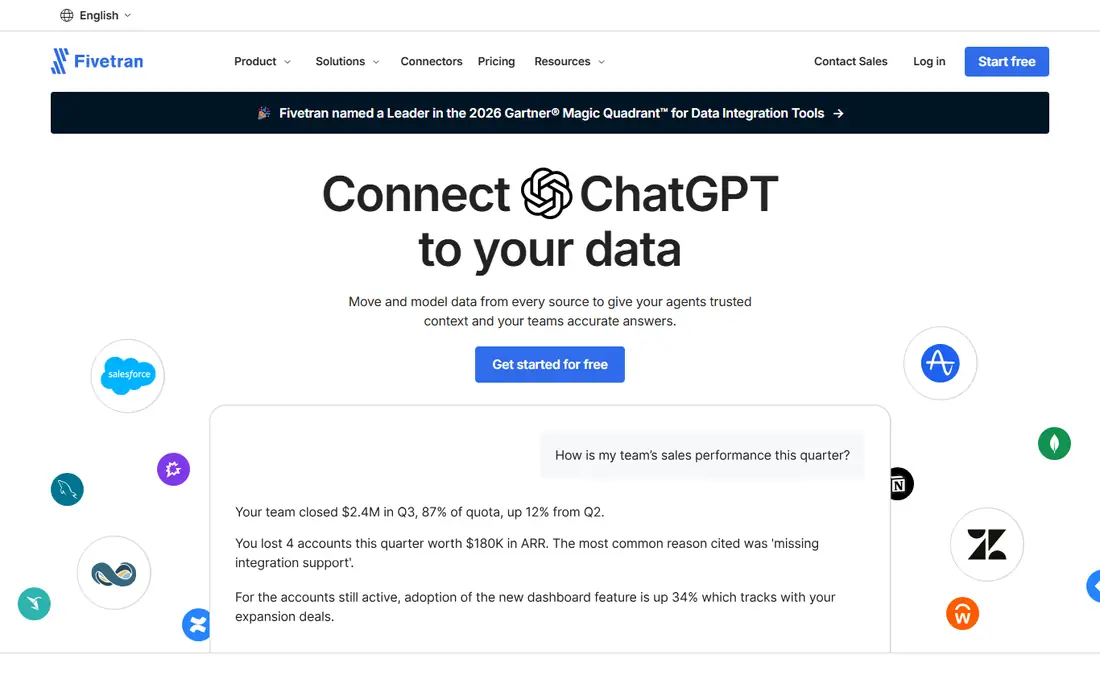
Fivetran is a managed ELT platform that syncs data from apps, databases and files into warehouses with little pipeline code. It handles schema changes automatically, which reduces the maintenance work that hand built pipelines create. Teams that want data flowing without a dedicated pipeline engineer often start here.
Before you pay, check the limits that apply to your own use, including seats, storage, monthly usage and support hours. A plan that looks generous on the headline page can still cap the one feature you rely on most, so read the plan comparison page rather than the marketing summary. A trial or free tier is the safest way to test this, and it also shows whether support answers promptly when you need help.
The catch is usage based pricing, which can grow quickly as data volume and sync frequency rise. Model your monthly volume and sync needs before committing, and check which connectors are included at your tier.
- Many managed connectors
- Automated schema handling
- Reliable syncs
- Usage pricing can grow fast
- Transform options are separate
Airbyte
Ideal for: teams that want open source ELT
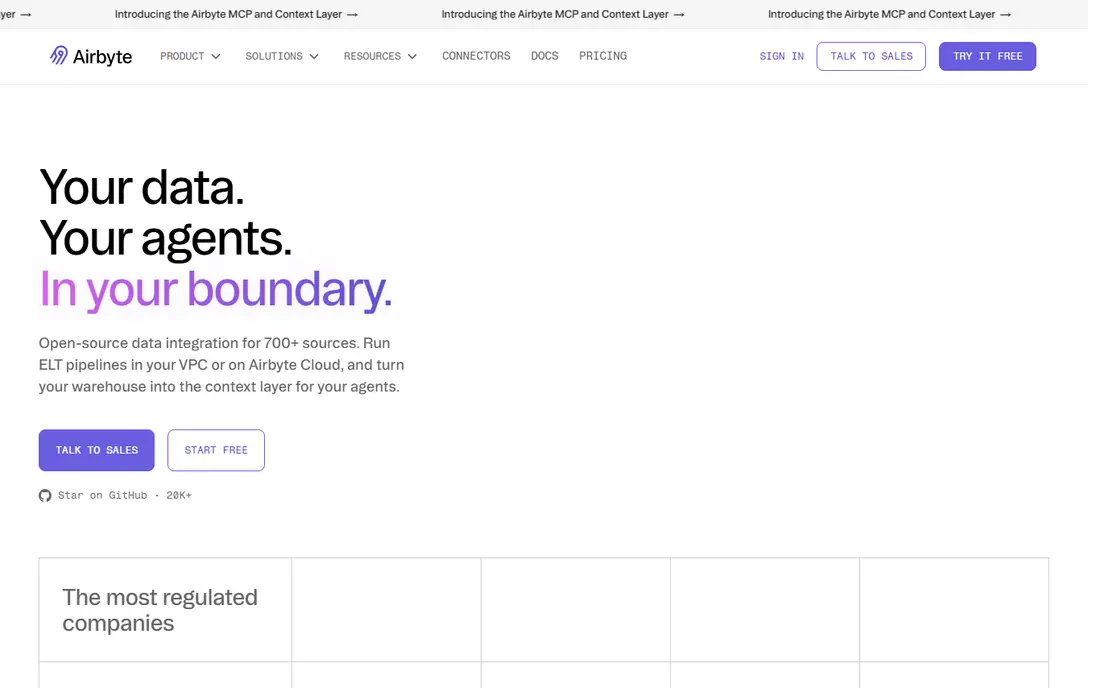
Airbyte offers an open source ELT core with a large catalogue of connectors, plus a cloud version for teams that prefer managed hosting. That flexibility suits teams that want to avoid lock-in or that need a custom connector. Its community and connector builder also help when a source is unusual.
The price on the headline page is only part of the cost, so check renewal pricing, per-seat charges and any paid add-ons before you commit. Free tiers help for light use, but they often cap the features that matter once work grows, and trials end on a fixed date whether you have finished testing or not. Set a reminder before a trial ends, and confirm cancellation steps in advance so you are not locked into a plan you no longer need.
Self hosting needs real effort for upgrades, monitoring and scaling, and connector quality can vary across the catalogue. Test your key sources on a trial, and confirm support terms if you run it in production.
- Open source core
- Large connector catalogue
- Cloud option
- Self hosting needs effort
- Some connectors vary in quality
Talend
Ideal for: teams that want a broad data platform
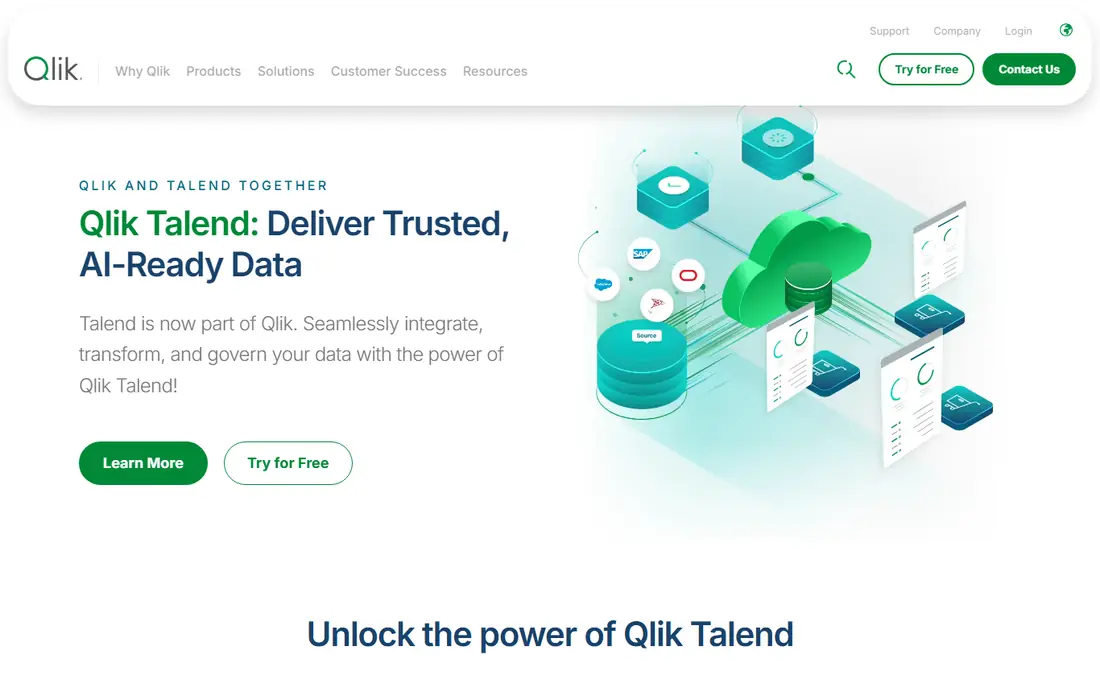
Talend covers data integration, quality and governance in one broad platform, which suits larger teams with complex estates. Its visual design tools and library of components help teams build pipelines that go beyond simple ELT syncs. Enterprises with strict governance needs often value that breadth.
Pricing is where many readers get caught out, so look past the headline figure and check what the plan actually includes for your level of use. Seats, usage limits, add-ons and renewal terms can change the real monthly cost, and a cheaper plan that lacks one feature you need is not a saving. If a free tier or trial is offered, use it for real work before paying, and confirm how cancellation works while you still have time to change your mind.
Breadth brings a learning curve, and pricing is usually quoted rather than listed, so evaluation takes time. Ask for a pilot on your real sources, and confirm which modules sit inside the quoted price.
- Broad integration tools
- Data quality features
- Enterprise scale
- Platform breadth takes learning
- Pricing is quote based
Informatica
Ideal for: enterprises with complex data estates
Informatica is an enterprise data management platform covering integration, quality, governance and master data, with a cloud offering for modern warehouses. Large organisations with many systems and compliance needs benefit from that depth. Its connector range and governance tools suit regulated industries.
Before you pay, check the limits that apply to your own use, including seats, storage, monthly usage and support hours. A plan that looks generous on the headline page can still cap the one feature you rely on most, so read the plan comparison page rather than the marketing summary. A trial or free tier is the safest way to test this, and it also shows whether support answers promptly when you need help.
This is enterprise software in price and complexity, so small teams will find it heavy. Confirm the modules you need, the deployment model and the total cost before a pilot, and compare against a simpler ELT tool for the same sources.
- Enterprise integration
- Governance
- Cloud data management
- Enterprise pricing
- Complexity for small teams
Stitch
Ideal for: teams that want simple managed ELT
Stitch, part of Talend, offers managed ELT with a simpler setup path than enterprise platforms. Teams can connect a source, pick a warehouse and start syncing without building pipeline code. That simplicity suits small data teams and early warehouse projects.
The price on the headline page is only part of the cost, so check renewal pricing, per-seat charges and any paid add-ons before you commit. Free tiers help for light use, but they often cap the features that matter once work grows, and trials end on a fixed date whether you have finished testing or not. Set a reminder before a trial ends, and confirm cancellation steps in advance so you are not locked into a plan you no longer need.
The connector range is narrower than Fivetran or Airbyte, so check your exact sources before you rely on it. Usage pricing also rises with volume, so forecast growth and confirm what happens when you pass a tier.
- Simple setup
- Managed syncs
- Talend backing
- Connector range is narrower than larger rivals
- Scaling costs rise
Matillion
Ideal for: teams that transform inside the warehouse
Matillion focuses on ELT with visual transform jobs that run inside the warehouse, which suits teams that want to keep logic close to the data. Its cloud native design works well with modern warehouses, and its job builder helps analysts who are not full time engineers. Data teams that transform heavily after loading often prefer this model.
Pricing is where many readers get caught out, so look past the headline figure and check what the plan actually includes for your level of use. Seats, usage limits, add-ons and renewal terms can change the real monthly cost, and a cheaper plan that lacks one feature you need is not a saving. If a free tier or trial is offered, use it for real work before paying, and confirm how cancellation works while you still have time to change your mind.
It is a cloud focused tool, so on premises estates need another route, and pricing is usage based. Test a real transform job on your warehouse, and check concurrency and credit use under your normal load.
- Warehouse native transforms
- Visual jobs
- Cloud focus
- Cloud only model
- Pricing is usage based
Hevo Data
Ideal for: teams that want a simpler start
Hevo Data offers a no code ELT platform with automated schema handling and a broad source list, aimed at teams that want to start quickly. Its setup flow suits small and mid sized teams that need reliable syncs without a large engineering effort. Real time and batch options cover common reporting needs.
Before you pay, check the limits that apply to your own use, including seats, storage, monthly usage and support hours. A plan that looks generous on the headline page can still cap the one feature you rely on most, so read the plan comparison page rather than the marketing summary. A trial or free tier is the safest way to test this, and it also shows whether support answers promptly when you need help.
Transform depth is lighter than warehouse native tools, so complex logic may need a separate step. Check event based pricing against your volume, and test your highest volume source before committing.
- Simple setup
- Many sources
- Automated schema handling
- Advanced transform needs are lighter
- Pricing scales with events
How we picked these
We compared official feature pages, pricing pages, app store listings, privacy policies and public reviews for each option in this guide. We kept only products that exist and work in October 2026 and that fit the topic directly, and we checked that each official homepage loads and belongs to the product named. Prices and free tiers are taken from the vendor site where we could verify them, and we wrote See website where a price could not be confirmed, rather than guessing. Our pick in each guide reflects fit for ordinary readers, not a claim of hands-on testing, and we note the honest limits of each option alongside its strengths.
How to pick an ELT tool for your warehouse
List your sources, your warehouse and your sync frequency before you compare tools, since connector coverage decides most choices. A tool that lacks one key source is not a fit, however good its other features are. Test that source first, with real data volume, and check how schema changes and failed syncs are handled.
Compare pricing on your forecast volume, not on a free tier, and confirm how transforms, support and data residency are charged. Check whether the tool is managed, self hosted or warehouse native, and who on your team will own it day to day. A short pilot with a real report at the end tells you more than a feature list.
Frequently asked questions
What is the best ELT platform?
Fivetran suits teams that want managed connectors, Airbyte suits teams that want open source flexibility, and Matillion suits teams that transform inside the warehouse. Informatica and Talend suit larger estates, while Stitch and Hevo Data suit simpler starts. Choose by connector coverage first.
What is the difference between ETL and ELT?
In ETL, data is transformed before loading, while in ELT, data is loaded raw into a warehouse and then transformed there. ELT suits cloud warehouses with cheap storage and strong transform tools. Many modern teams use ELT for analytics workloads.
Is Airbyte free?
Airbyte has an open source core you can self host, while its cloud version is a paid managed service. Self hosting avoids licence fees but needs your time for upgrades and monitoring. Compare total cost, including engineering time, before choosing.
How much does Fivetran cost?
Fivetran prices by usage, based on data volume and sync patterns, so cost depends on your sources and frequency. Use its pricing calculator with real volumes, and ask about trial credits. Watch for growth in volume as new sources are added.
Do I need an ELT tool for a small business?
A small team with one or two sources may manage with direct connections or a spreadsheet export, but an ELT tool pays off once reporting needs regular fresh data. Start with a free tier or trial, and add a tool when manual exports start to eat time or break.