Best Email Newsletter Software in 2026: 8 Tools Compared

- beehiiv is the best pick for newsletters intended to become a business, with growth and ad tools built in.
- Kit suits creators who need real automation and tagging as their list grows.
- Substack is best for writers who want an audience without a monthly fee, in exchange for a 10 percent revenue share.
- MailerLite is the best value pick for growing lists on a tight budget.
Quick comparison
| Product | Ideal for | Price from | Free version | |
|---|---|---|---|---|
 beehiiv | newsletters intended to become a business | $39 per month | Yes | Visit |
 Kit | creators needing automation and tagging | $29 per month | Yes | Visit |
 Substack | writers wanting an audience without a monthly fee | Free | Yes | Visit |
 Mailchimp | small businesses wanting one familiar tool | $13 per month | Yes | Visit |
 MailerLite | growing lists on a tight budget | $10 per month | Yes | Visit |
 Ghost | publications wanting full ownership | $9 per month | Free trial | Visit |
 ActiveCampaign | teams needing advanced automation and CRM | $15 per month | Free trial | Visit |
 Flodesk | design-focused creators wanting flat pricing | $25 per month | No | Visit |
The best email newsletter software
Newsletter software splits into creator platforms built for growth and monetization, and email marketing tools built for campaigns and automation. The best pick depends on list size, whether you charge readers, and how much automation you need.
beehiiv
Ideal for: newsletters intended to become a business
beehiiv works best for newsletters intended to become a business. beehiiv is built around newsletter growth, with referral programs, recommendations, and an ad network alongside paid subscriptions. Pricing starts at $39 per month, and a free plan is available. This is the option to look at first if that description matches your situation.
It is less suited to transactional or ecommerce email, and as a younger platform it has fewer integrations than Mailchimp. That trade-off matters most if you were hoping for a single tool that covers every situation without compromise. Compared with the other options here, beehiiv stands out for newsletters intended to become a business, while asking you to accept that Less suited to transactional email. Weigh that honestly against your budget and your patience for setup before you commit.
- Free up to 2,500 subscribers
- Referral and ad network
- Recommendations
- Less suited to transactional email
- Younger platform
Kit
Ideal for: creators needing automation and tagging
Kit works best for creators needing automation and tagging. Kit, formerly ConvertKit, offers visual automations and tagging that suit creators selling products alongside a newsletter. Pricing starts at $29 per month, and a free plan is available. Put this one near the top of your shortlist when the fit sounds right.
Templates are plain, and the editor prioritizes text over design, so design-led newsletters may prefer beehiiv or Flodesk. That trade-off matters most if you were hoping for a single tool that covers every situation without compromise. Compared with the other options here, Kit stands out for creators needing automation and tagging, while asking you to accept that Templates are plain. Weigh that honestly against your budget and your patience for setup before you commit.
- Visual automations
- Tagging
- Creator network
- Templates are plain
- Editor prioritizes text over design
Substack
Ideal for: writers wanting an audience without a monthly fee
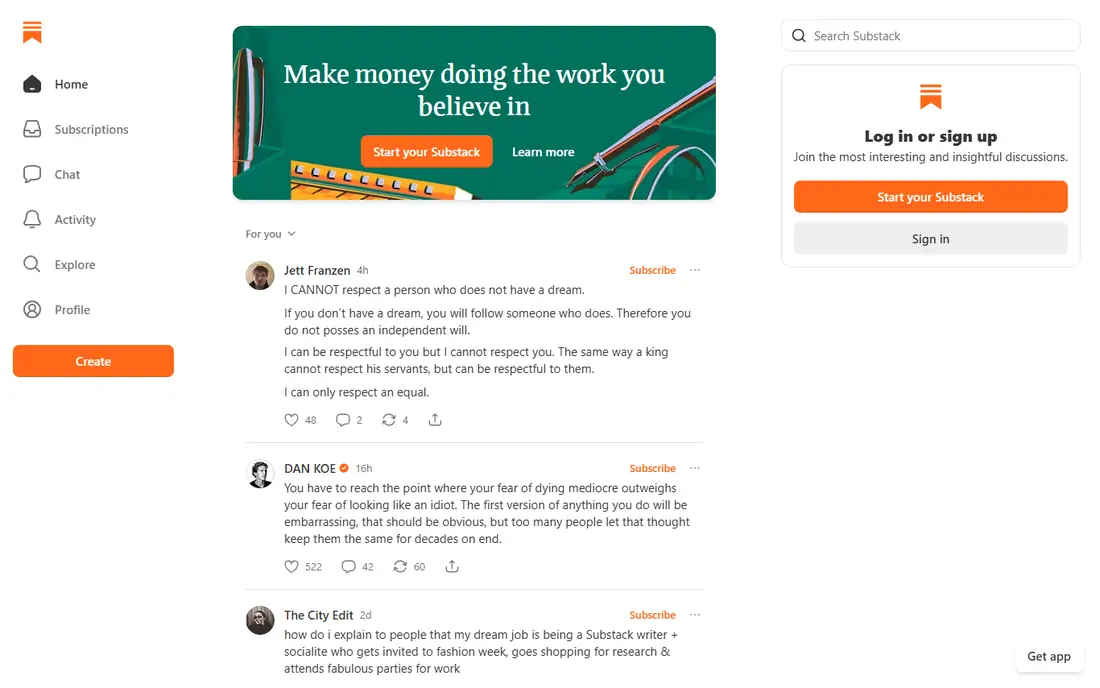
Substack works best for writers wanting an audience without a monthly fee. Substack costs nothing until you charge readers, then takes 10 percent, while its network helps new writers find readers. Pricing starts at Free, and a free plan is available. This choice makes the most sense for readers who match the description above.
The 10 percent share grows painful at scale, and automation, design, and segmentation are minimal. That trade-off matters most if you were hoping for a single tool that covers every situation without compromise. Compared with the other options here, Substack stands out for writers wanting an audience without a monthly fee, while asking you to accept that 10 percent revenue share. Weigh that honestly against your budget and your patience for setup before you commit.
- Free to start
- Built-in discovery
- Paid subscriptions
- 10 percent revenue share
- Almost no automation
Mailchimp
Ideal for: small businesses wanting one familiar tool
Mailchimp works best for small businesses wanting one familiar tool. Mailchimp remains the familiar all-round email tool, with many integrations and campaign features for small businesses. Pricing starts at $13 per month, and a free plan is available. Consider this option closely if you want the balance it offers.
The free tier caps at 500 contacts, and pricing climbs steeply as lists grow, so large newsletters pay more than on beehiiv. That trade-off matters most if you were hoping for a single tool that covers every situation without compromise. Compared with the other options here, Mailchimp stands out for small businesses wanting one familiar tool, while asking you to accept that Free tier caps at 500 contacts. Weigh that honestly against your budget and your patience for setup before you commit.
- Familiar editor
- Many integrations
- SMS add-ons
- Free tier caps at 500 contacts
- Pricing climbs at scale
MailerLite
Ideal for: growing lists on a tight budget
MailerLite works best for growing lists on a tight budget. MailerLite offers the best value for growing lists, with a low price and a simple editor that beginners learn quickly. Pricing starts at $10 per month, and a free plan is available. This is a strong candidate when your priorities line up with its strengths.
Automation is basic compared with Kit or ActiveCampaign, so complex funnels need another tool. That trade-off matters most if you were hoping for a single tool that covers every situation without compromise. Compared with the other options here, MailerLite stands out for growing lists on a tight budget, while asking you to accept that Automation is basic. Weigh that honestly against your budget and your patience for setup before you commit.
- Low price
- Free up to 1,000 subscribers
- Simple editor
- Automation is basic
- Fewer advanced features
Ghost
Ideal for: publications wanting full ownership
Ghost works best for publications wanting full ownership. Ghost gives publications full ownership, with memberships and newsletters and no revenue share on paid subscriptions. Pricing starts at $9 per month, and a free trial is available. Keep this one in mind if the trade-offs below are acceptable to you.
Hosted plans offer only a trial, and marketing automations are fewer than Kit or ActiveCampaign. That trade-off matters most if you were hoping for a single tool that covers every situation without compromise. Compared with the other options here, Ghost stands out for publications wanting full ownership, while asking you to accept that Trial only for hosted. Weigh that honestly against your budget and your patience for setup before you commit.
- Memberships and newsletters
- Self-host option
- No revenue share
- Trial only for hosted
- Fewer marketing automations
ActiveCampaign
Ideal for: teams needing advanced automation and CRM
ActiveCampaign works best for teams needing advanced automation and CRM. ActiveCampaign offers the strongest automation and CRM in this group, with lead scoring and complex multi-step flows. Pricing starts at $15 per month, and a free trial is available. This option earns its place for the specific audience named above.
Costs rise at scale, and the learning curve is steeper than beehiiv or MailerLite, so small newsletters may not need it. That trade-off matters most if you were hoping for a single tool that covers every situation without compromise. Compared with the other options here, ActiveCampaign stands out for teams needing advanced automation and CRM, while asking you to accept that Higher cost at scale. Weigh that honestly against your budget and your patience for setup before you commit.
- Advanced automation
- CRM
- Lead scoring
- Higher cost at scale
- Learning curve
Flodesk
Ideal for: design-focused creators wanting flat pricing
Flodesk works best for design-focused creators wanting flat pricing. Flodesk offers beautiful templates with flat-rate pricing that does not rise with list size, which suits design-led creators. Pricing starts at $25 per month, and there is no free plan. Round out your shortlist with this option if its approach appeals to you.
The free tier covers forms only, and automations are fewer than Kit, so funnel builders should look elsewhere. That trade-off matters most if you were hoping for a single tool that covers every situation without compromise. Compared with the other options here, Flodesk stands out for design-focused creators wanting flat pricing, while asking you to accept that Forms only on free tier. Weigh that honestly against your budget and your patience for setup before you commit.
- Beautiful templates
- Flat-rate unlimited pricing
- Forms
- Forms only on free tier
- Fewer automations
How we picked these
We compared official feature pages, pricing pages, app store listings, privacy policies, and public reviews for each option, and we kept only products that exist and work today and that truly fit the topic. We gave weight to clear pricing, a usable free or trial option where one is offered, and honest limits stated on the vendor site. We did not claim hands-on testing we did not do, and where a price could not be verified on the vendor site we wrote See website instead of guessing. Our pick for most people is usually the option that covers the core job well at a fair price, not the one with the longest feature list. That said, the right answer depends on your situation, so use the comparison table to narrow the list to two or three options, then check the current pricing page before you pay.
How to choose email newsletter software
Start with monetization. Substack suits writers who want discovery without a fee, beehiiv suits newsletters built as businesses, and Kit suits creators selling products.
Next, check pricing at your target list size, not your current size. A tool that is cheap at 500 subscribers can become costly at 10,000, so model both.
Finally, test deliverability and migration. Import a sample list, send a test issue, and confirm signup forms, automations, and analytics work before moving your whole audience.
Frequently asked questions
What is the best email newsletter software?
beehiiv is best for newsletters as a business, Kit is best for automation, Substack is best for writers wanting discovery, and MailerLite is best value.
What is the best platform for email newsletters?
beehiiv leads for growth-focused newsletters, while Kit suits creators with products and Ghost suits publications wanting ownership. Mailchimp suits general small business email.
Is Substack free?
Yes, Substack is free until you charge readers, when it takes 10 percent of paid subscription revenue plus payment processing fees. Free newsletters cost nothing.
Which newsletter platform is cheapest?
MailerLite and Ghost start near $9 to $10 a month, while beehiiv and Substack are free to start. Flodesk flat pricing wins for very large lists.
Can I migrate my newsletter list?
Yes, most platforms support CSV import and some offer direct migration. Check that automations, tags, and subscriber history transfer cleanly before switching.