Best Emailing Services for Ecommerce in 2026: 8 Services Compared

- Our pick for most people is Klaviyo, because it balances price, features and ease of use for the widest group of readers.
- Free plans and trials are real here, but the limits matter: check what Mailchimp and Omnisend actually include before you commit.
- Prices in this guide come from vendor pricing pages and current comparisons checked in October 2026, and they can change, so confirm the plan on the vendor site before you buy.
- The best choice depends on your budget, your experience level and how much support you want, not on which brand is most famous.
Quick comparison
| Product | Ideal for | Price from | Free version | |
|---|---|---|---|---|
 Klaviyo | Email and SMS for ecommerce brands | See website | Free trial | Visit |
 Mailchimp | Email marketing for small ecommerce stores | See website | Free trial | Visit |
 Omnisend | Ecommerce email, SMS and push in one tool | See website | Free trial | Visit |
 ActiveCampaign | Automation-heavy email for growing stores | See website | Free trial | Visit |
 Drip | Ecommerce CRM and email automation | See website | Free trial | Visit |
 Brevo | Affordable email and SMS for stores | See website | Free trial | Visit |
 Constant Contact | Simple email for small business stores | See website | Free trial | Visit |
 Campaign Monitor | Design-led email for ecommerce brands | See website | Free trial | Visit |
The best Emailing Services for Ecommerce in 2026
We compared official feature pages, pricing pages, app store listings, privacy policies and public reviews to build this list for best emailing services for ecommerce. Every option below exists and works today, and each one earns its place for a different kind of reader.
Klaviyo
Ideal for: Email and SMS for ecommerce brands
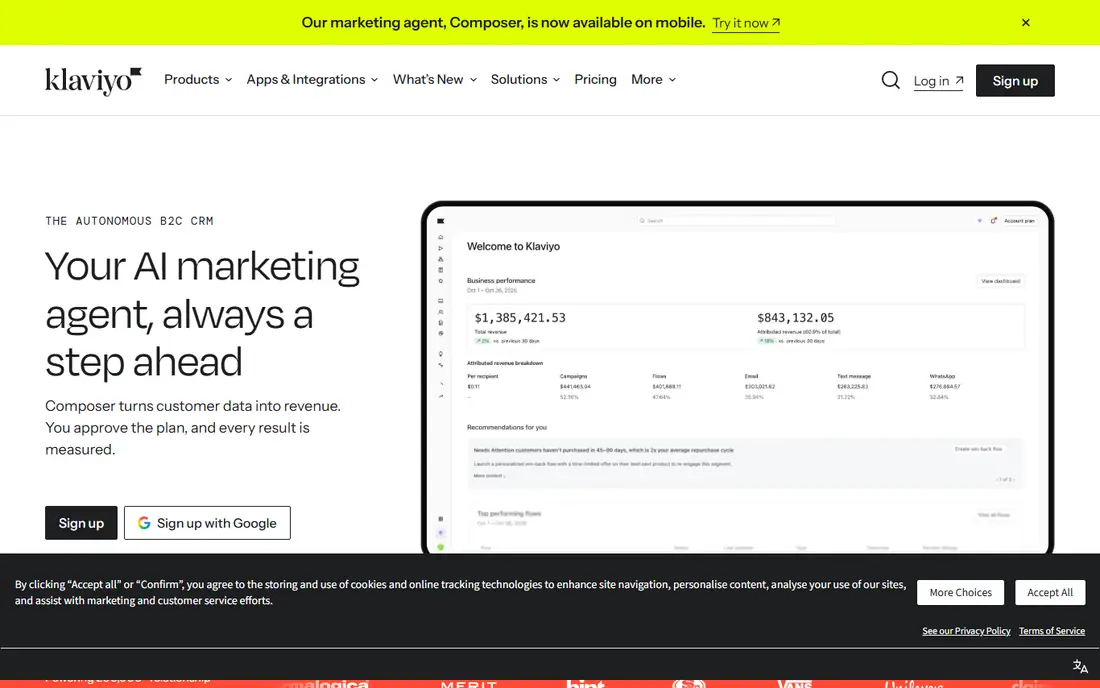
Here is the short version. Klaviyo is built for ecommerce, with deep store integrations, segmentation and automated flows for abandoned carts, post-purchase and win-back campaigns. Brands that live on email revenue get tools designed for that job, not adapted from general marketing. It fits readers who want email and sms for ecommerce brands, and its published feature set matches that promise rather than trying to cover every possible use case at once. The price picture is see website, with a free plan status of free trial. Pricing rises with contact count, so list growth can push costs up quickly, and advanced flows take time to learn well. Before you sign up, check the current plan limits on the official site, because caps on users, usage or features are where most buyers get surprised after the first month. Before you commit, read the current plan page in full and check the limits that apply to your size, your volume and your location. Caps on users, usage, storage or support hours are the details that cause most surprises after the first month, and they vary a lot from one provider to the next.
- Deep Shopify integration
- Segmentation
- Flows for abandoned carts
- Pricing rises with contacts
- Learning curve for advanced flows
Mailchimp
Ideal for: Email marketing for small ecommerce stores
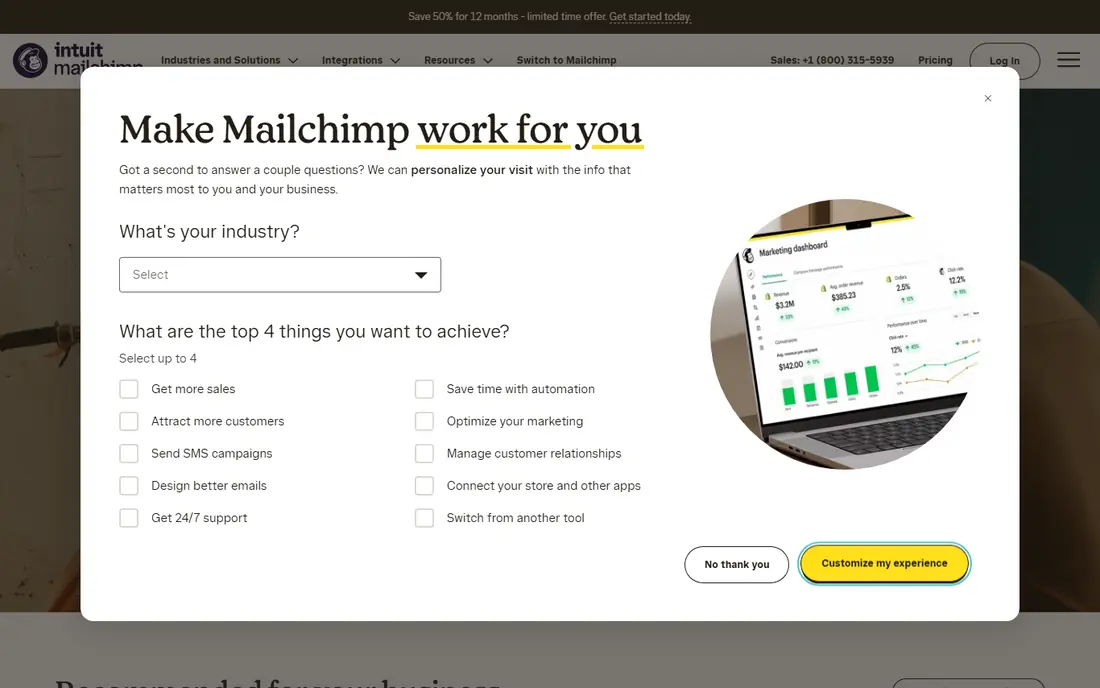
Start here if you want a safe default. Mailchimp offers easy email setup, templates and store integrations that suit small ecommerce stores starting with email. Its builder and audience tools are approachable for teams without a dedicated marketer. It fits readers who want email marketing for small ecommerce stores, and its published feature set matches that promise rather than trying to cover every possible use case at once. The price picture is see website, with a free plan status of free trial. Advanced automation and segmentation sit on higher plans, so growing stores should price the tier they will actually need. Before you sign up, check the current plan limits on the official site, because caps on users, usage or features are where most buyers get surprised after the first month. A short trial or a demo call will tell you more than a feature page can. Use it with a real task from your own work, note where you get stuck, and compare how quickly support answers when you ask a plain question about pricing or limits.
- Easy setup
- Templates
- Store integrations
- Pricing rises with contacts
- Advanced automation needs higher plans
Omnisend
Ideal for: Ecommerce email, SMS and push in one tool
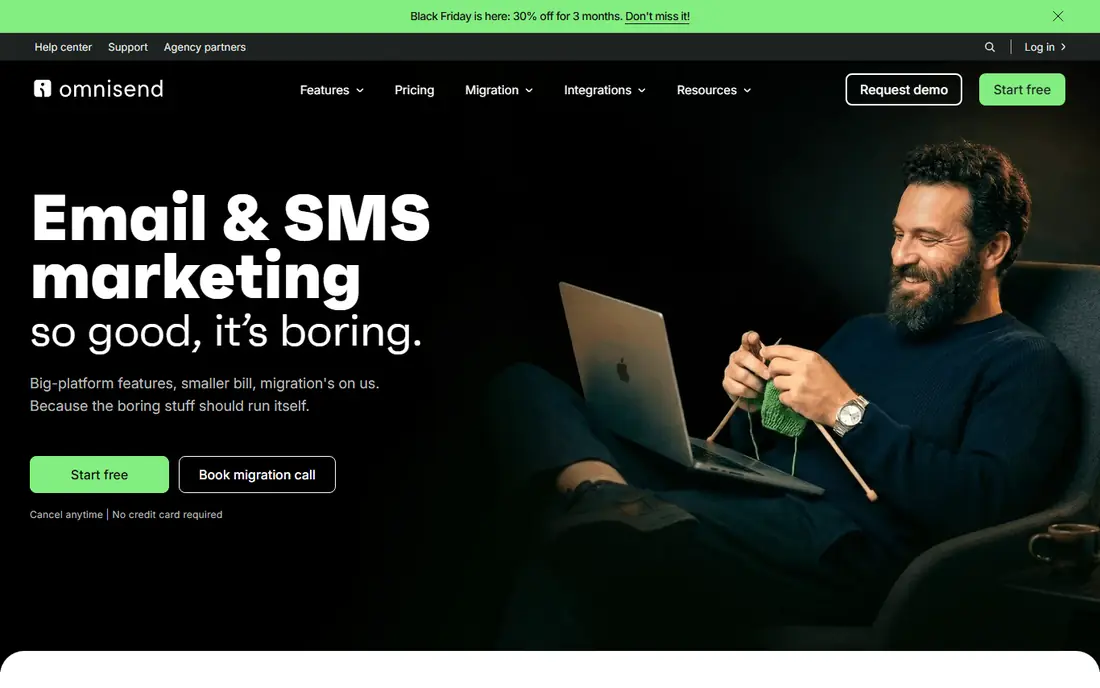
This one suits a specific kind of reader. Omnisend combines email, SMS and push notifications for ecommerce, with pre-built automations for carts, orders and customer journeys. Stores that want several channels in one tool get a simpler stack. It fits readers who want ecommerce email, sms and push in one tool, and its published feature set matches that promise rather than trying to cover every possible use case at once. The price picture is see website, with a free plan status of free trial. The ecosystem is smaller than Klaviyo, so check integrations with your store apps before switching. Before you sign up, check the current plan limits on the official site, because caps on users, usage or features are where most buyers get surprised after the first month. Ask about contract length, renewal terms and what happens if you need to leave. A low starting price can hide a long term, a setup fee or a charge for extra users, so get the full first year cost in writing before you sign anything.
- Ecommerce automations
- SMS and push included
- Shopify integration
- Smaller ecosystem than Klaviyo
- Pricing rises with contacts
ActiveCampaign
Ideal for: Automation-heavy email for growing stores
Consider this if the top picks do not fit your needs. ActiveCampaign offers a strong automation builder plus CRM features, which suits growing stores that want detailed customer journeys. Segmentation and conditional flows go well beyond basic newsletters. It fits readers who want automation-heavy email for growing stores, and its published feature set matches that promise rather than trying to cover every possible use case at once. The price picture is see website, with a free plan status of free trial. Pricing is higher for small stores, and setup takes time, so it fits teams ready to invest in automation rather than quick campaigns. Before you sign up, check the current plan limits on the official site, because caps on users, usage or features are where most buyers get surprised after the first month. Check who actually provides support and how fast they reply on the plan you would buy. Support that is excellent on an enterprise plan can be slow on a starter plan, and that difference matters more than a small price gap when something breaks.
- Strong automation builder
- CRM features
- Segmentation
- Pricing is higher for small stores
- Setup takes time
Drip
Ideal for: Ecommerce CRM and email automation
A strong option for a narrower need. Drip is built as an ecommerce CRM with email automation, using store data to drive campaigns and customer journeys. Its visual automation builder makes complex flows easier to design than a list of rules. It fits readers who want ecommerce crm and email automation, and its published feature set matches that promise rather than trying to cover every possible use case at once. The price picture is see website, with a free plan status of free trial. Pricing rises with contacts, and the template library is smaller than general email tools, so budget for design time. Before you sign up, check the current plan limits on the official site, because caps on users, usage or features are where most buyers get surprised after the first month. Look for recent public reviews that mention your exact use case, not just the overall score. A product can be excellent for one kind of buyer and a poor fit for another, and the complaints usually point to the same limit again and again.
- Ecommerce CRM focus
- Visual automation
- Store integrations
- Pricing rises with contacts
- Smaller template library than rivals
Brevo
Ideal for: Affordable email and SMS for stores
Worth a close look before you decide. Brevo, formerly Sendinblue, prices email by sends rather than contacts, which can suit stores with large lists but modest send volumes. SMS, chat and a generous free tier add value for small teams. It fits readers who want affordable email and sms for stores, and its published feature set matches that promise rather than trying to cover every possible use case at once. The price picture is see website, with a free plan status of free trial. Automation depth is less than ecommerce specialists, so stores with complex journeys should trial the builder first. Before you sign up, check the current plan limits on the official site, because caps on users, usage or features are where most buyers get surprised after the first month. Confirm that the product still covers your region, your language or your compliance needs before you pay. Coverage pages change, and a service that works well in one country or state may offer a thinner version somewhere else.
- Email-based pricing
- SMS and chat
- Generous free tier
- Automation is less deep than specialists
- Interface can feel busy
Constant Contact
Ideal for: Simple email for small business stores
This belongs on the shortlist for a reason. Constant Contact offers simple email tools with templates, event and survey features that suit small business stores without a marketing team. Setup is quick, and support is approachable. It fits readers who want simple email for small business stores, and its published feature set matches that promise rather than trying to cover every possible use case at once. The price picture is see website, with a free plan status of free trial. Ecommerce automation is basic next to specialists, so stores that rely on flows and segmentation will outgrow it sooner. Before you sign up, check the current plan limits on the official site, because caps on users, usage or features are where most buyers get surprised after the first month. Compare the total cost for a full year, including add-ons you will actually use. The cheapest headline price is rarely the cheapest year, once you add seats, storage, support or the tier that removes the limit you hit first.
- Simple builder
- Templates
- Event and survey tools
- Ecommerce automation is basic
- Pricing rises with contacts
Campaign Monitor
Ideal for: Design-led email for ecommerce brands
Do not overlook this one. Campaign Monitor focuses on well-designed email, with a builder, segmentation and analytics that suit brands where design matters. Agencies and design-led stores get polished campaigns without heavy coding. It fits readers who want design-led email for ecommerce brands, and its published feature set matches that promise rather than trying to cover every possible use case at once. The price picture is see website, with a free plan status of free trial. Pricing is higher than budget tools, and automation depth lags the ecommerce leaders, so compare it on design value first. Before you sign up, check the current plan limits on the official site, because caps on users, usage or features are where most buyers get surprised after the first month. Talk to the vendor about onboarding and migration if you are switching from another tool. A clear migration path, a named contact and a realistic timeline will save more time than any single feature on the comparison page.
- Strong email design
- Segmentation
- Analytics
- Pricing is higher than budget tools
- Automation is less deep than leaders
How we picked these
We started from official feature pages and pricing pages, then checked app store listings, privacy policies and public reviews to confirm each product still works and still fits the topic. Products that could not be verified, or that only partly matched the topic, were left out, even when they were well known. We favoured a mix of established leaders and strong smaller options, and we weighted price transparency, a usable free tier or trial, and honest limits more heavily than marketing claims. No product on this list paid for its place, and our pick for most people is the one we would suggest to a friend with ordinary needs and an ordinary budget.
How to pick ecommerce email that fits your store size
Start with the outcome you need from best emailing services for ecommerce, not with the longest feature list. Write down the one result that would make the purchase worth it, the budget you can defend for a full year, and the level of support you expect when something goes wrong. That short list will remove half of this comparison at once, because many strong products are built for a buyer with different needs from yours. Then trial the top two with a real task, not a demo task. Watch how long setup takes, how clear the pricing page is, and how support responds to an awkward question. If a vendor cannot answer a plain question about limits, renewal or cancellation, treat that as a finding, not as a detail to sort out later. The right choice for best emailing services for ecommerce is the one that still looks good after that test, at the price you will actually pay.
Frequently asked questions
What is the best option for best emailing services for ecommerce?
There is no single best option, because the right choice depends on your budget, your experience and the size of the job. Klaviyo is our pick for most people, while Mailchimp and Omnisend suit readers with different priorities. Compare the free plan or trial terms before you decide.
How much do best emailing services for ecommerce cost?
Costs vary widely across this list, from free tiers to enterprise pricing that is quoted on request. The table above shows the starting price for each option, but the full year cost depends on seats, usage and add-ons. Always confirm the current price on the vendor site before you buy.
Is there a free option for best emailing services for ecommerce?
Some options in this list offer a free plan or a free trial, while others are paid from the start. Klaviyo and several others are worth checking first if budget is tight, but read the limits on the free tier, because caps on users or usage are common.
How do I choose between these options for best emailing services for ecommerce?
Start from your must-have features, then filter by price, support and the limits that matter to you. Trial the top two with a real task, check contract and renewal terms, and pick the option that still fits after a week of real use.