How to Pick Embedded Integration Platforms: 7 Tools Compared

- The list opens with Merge, aimed at unified category APIs.
- Nango is the one to check for code first embedding.
- A fair warning about Workato Embedded: high level enterprise pricing.
- Just one of the 7 tools, Nango, has a free plan.
Direct answer
If you need unified category APIs, Merge is the first tool to look at here. For a different need, Paragon covers quick Connect Portal and Workato Embedded covers enterprise embedding. Prices, free plans and limits for all 7 tools follow.
Quick comparison
| Product | Ideal for | Price from | Free version | |
|---|---|---|---|---|
 Merge | Unified category APIs | See website | No | Visit |
 Paragon | Quick Connect Portal | See website | No | Visit |
 Workato Embedded | Enterprise embedding | See website | No | Visit |
 Cyclr | White label embedding | See website | No | Visit |
 Prismatic | All round embedded iPaaS | See website | No | Visit |
 Tray Embedded | Workflow automation embedding | See website | No | Visit |
 Nango | Code first embedding | Free | Yes | Visit |
The full embedded integration platforms list
Choosing embedded integration platforms usually comes down to price, fit and limits. This Ainotely guide sets 7 tools side by side on those three points, with the facts kept short and checkable.
Merge
Ideal for: Unified category APIs
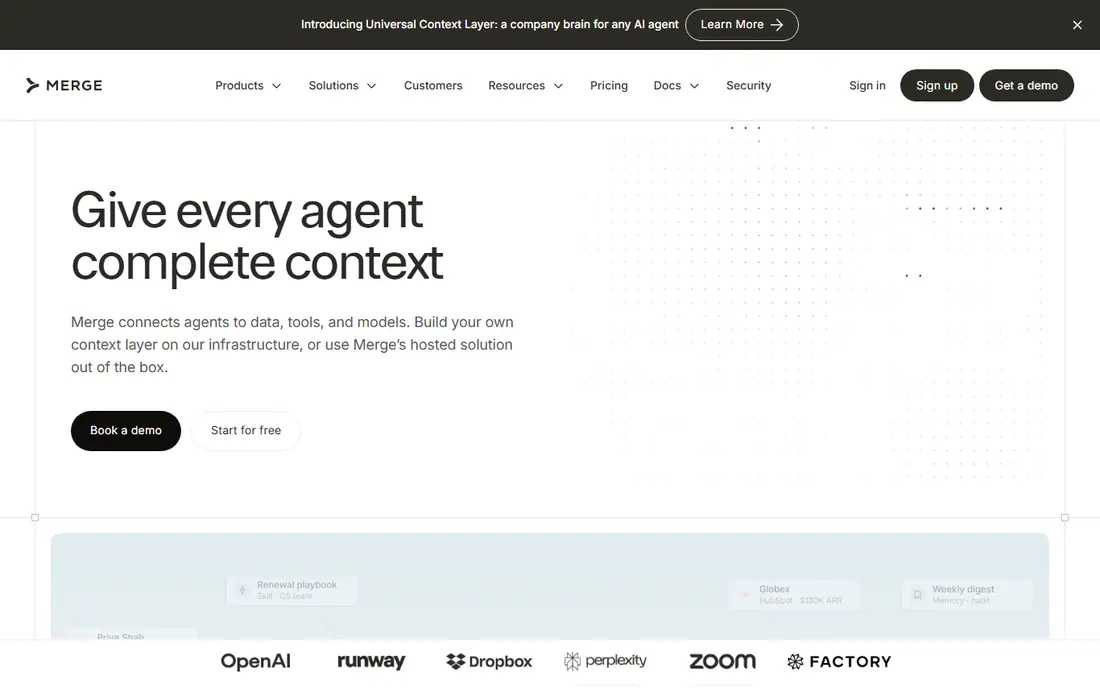
Choose Merge for unified category APIs. Merge is a unified API instead of a workflow product, giving teams one normalized API per category like HRIS, ATS, accounting, or CRM.
Watch-outs: Category coverage varies.
So a single integration spans plenty of apps in that category. Merge shows no starting price here, so confirm the cost on the vendor site. There is no free plan with Merge.
- Fast wide coverage
- Usage based category pricing
- Not a workflow system
Paragon
Ideal for: Quick Connect Portal

Paragon works best for quick Connect Portal. That combination fits product teams that want quick time to market with a refined customer facing integration experience.
Drawbacks to consider: Less code first depth than Nango.
Its connector count sits around 100, pricing is usage based on connected users and workflow volume, and code first depth trails Nango. Paragon does not show a starting price in this comparison, so check the vendor site for current pricing. Paragon has no free tier.
- Native MCP server
- Automatic OAuth refresh
- Connector count around 100
Workato Embedded
Ideal for: Enterprise embedding

Workato Embedded makes the most sense for enterprise embedding. Pricing is high level enterprise with annual contracts based on recipe usage, the architecture is heavy for standard SaaS products, and complexity exceeds purpose built embedded systems.
From a buyer's view, for enterprises already on Workato, Workato Embedded is the natural choice. This comparison lists no price for Workato Embedded; ask the vendor. No free plan comes with Workato Embedded.
Drawbacks to consider: Heavy for standard SaaS products; High level enterprise pricing.
Where it shines: Enterprise MCP and copilots.
- Branded access and completely embedded choices
- 1200 plus enterprise connectors
- Complex architecture
Cyclr
Ideal for: White label embedding
Cyclr targets white label embedding. Cyclr offers white labeled embedded integrations with over 600 completely managed connectors, per client branded consoles, deployment across shared, private, or self hosted cloud, and a multi tenant MCP PaaS with OAuth 2.1 support.
Its security posture comes with SOC 2 Type II and GDPR compliance, which fits regulated and enterprise SaaS. No starting price is listed for Cyclr here; confirm pricing on the vendor site. Cyclr has no permanent free option.
Where it is weaker: Connector based costs.
- White label consoles
- Private cloud and self hosted choices
- Tiered pricing complexity
Prismatic
Ideal for: All round embedded iPaaS
Prismatic makes the most sense for all round embedded iPaaS. Prismatic is a natively embedded integration system designed for B2B SaaS, offering a visual workflow builder, per customer deployment with tenant keys, a TypeScript SDK for custom workflows and connectors beyond its prebuilt catalog, and MCP support for AI agent workflows.
No starting price is listed for Prismatic here; confirm pricing on the vendor site. Prismatic has no free plan.
Limits to weigh: Ramp-up time for custom connectors.
- Per customer deployment
- TypeScript SDK
- Enterprise pricing
Tray Embedded
Ideal for: Workflow automation embedding
Tray Embedded is built with workflow automation embedding in mind. Its strength is general automation depth for mid to enterprise apps that require both internal and customer facing workflows.
Where it shines: Agent gateway for MCP.
From a buyer's view, for teams that prioritize low code automation breadth, Tray Embedded is a solid choice. This comparison lists no price for Tray Embedded; ask the vendor. Tray Embedded has no permanent free option.
Where it is weaker: No automatic OAuth refresh.
- Regional hosting
- Low code workflow builder
- Enterprise oriented cost
Nango
Ideal for: Code first embedding
In short, Nango is for code first embedding. Nango is a developer first, code first embedded integration product with a self hostable Connect UI, a catalog including over 1000 APIs, webhooks, data syncs, and code level customization for customer facing SaaS and agent integrations.
Trade-offs to know: Code first means more engineering work.
The starting price for Nango: Free. A free plan is available with Nango. What Nango does well: 1000 plus APIs.
- Code first with open source components
- Self hosting on Enterprise
- Pricing scales with usage
How we chose
The comparison looks at four things: starting price, free access, how well the feature set matches embedded integration platforms, and the main limit of each tool. Figures are shown as the vendors publish them. Billing terms, seat minimums and add-ons can change the real cost. The sequence is a judgement call: typical use case first, then pricing transparency, then free access. Use the profiles to check fit.
Pre-purchase checklist
- Ask Merge, Paragon, Workato Embedded and others for a written quote, since no starting price is shown.
- Test the free plan from Nango against your real workload before relying on it.
- Before choosing Merge, weigh its main limit: not a workflow system.
- Read the plan comparison for Merge carefully; key features often start on a higher tier.
- Check the integration list for Workato Embedded against the tools you run today, and note which ones need a higher plan.
Frequently asked questions
What is a unified API and how does it differ?
Embedded iPaaS hands you a builder and runtime for deep custom workflows per customer. Numerous teams use both.
Why does automatic OAuth refresh matter?
OAuth tokens expire, and without automatic refresh, customers must reconnect manually, which builds support tickets and broken integrations. Systems like Paragon and Nango refresh automatically, whereas Tray sends expiry warnings instead.
Can I try these options before paying?
Often, yes. Nango has a free plan. Use your own data and a real task during the test, and check what the free tier or trial limits before you rely on it.
Which options for embedded integration platforms have a free plan?
Nango is the only tool in this list with a free plan. Free plans usually cap users, projects or features, so check the limits on the vendor page.
What is an embedded integration product?
An embedded integration system lets you build native API integrations straight into your SaaS product, so customers link their tools through your UI under your brand, instead of through a third party account.
Do these tools publish their prices?
Not all of them. Merge, Paragon, Workato Embedded and others publish no starting price, so expect a quote request for those. The rest, Nango included, show a starting price, though seats and billing terms still change the final cost.