Best Employee Recognition Software in 2026: 8 Platforms Compared

- Bonusly is our pick for most small and midsize teams, with a free tier up to 8 users and paid plans from 3 dollars per user per month.
- Matter is the cheapest path to a real programme, with a free plan and paid tiers from 1 dollar per user per month for chat-first teams.
- Awardco and Workhuman suit larger employers that need global reward catalogs, service awards and tighter budget controls.
- The points economy matters more than the catalog: check monthly allowances, expiry rules and who controls the reward budget before you buy.
Quick comparison
| Product | Ideal for | Price from | Free version | |
|---|---|---|---|---|
 Bonusly | Everyday peer recognition | $3 per user per month | Yes | Visit |
 Awardco | Global rewards at scale | See website | No | Visit |
 Nectar | Recognition plus communications | See website | No | Visit |
 Motivosity | Modular culture tools | See website | No | Visit |
 Workhuman | Enterprise programmes | See website | No | Visit |
 O.C. Tanner | Service awards and milestones | See website | No | Visit |
 Achievers | Global enterprise recognition | See website | No | Visit |
 Matter | Chat-first low-cost recognition | $1 per user per month | Yes | Visit |
The best employee recognition software
Recognition software fails when nobody uses it, so ease of giving matters as much as the reward catalog. The platforms below differ in where recognition happens: inside chat, in a web feed, or through formal award programmes. We compared official pricing pages, free tiers, reward options and admin controls.
Bonusly
Ideal for: Everyday peer recognition
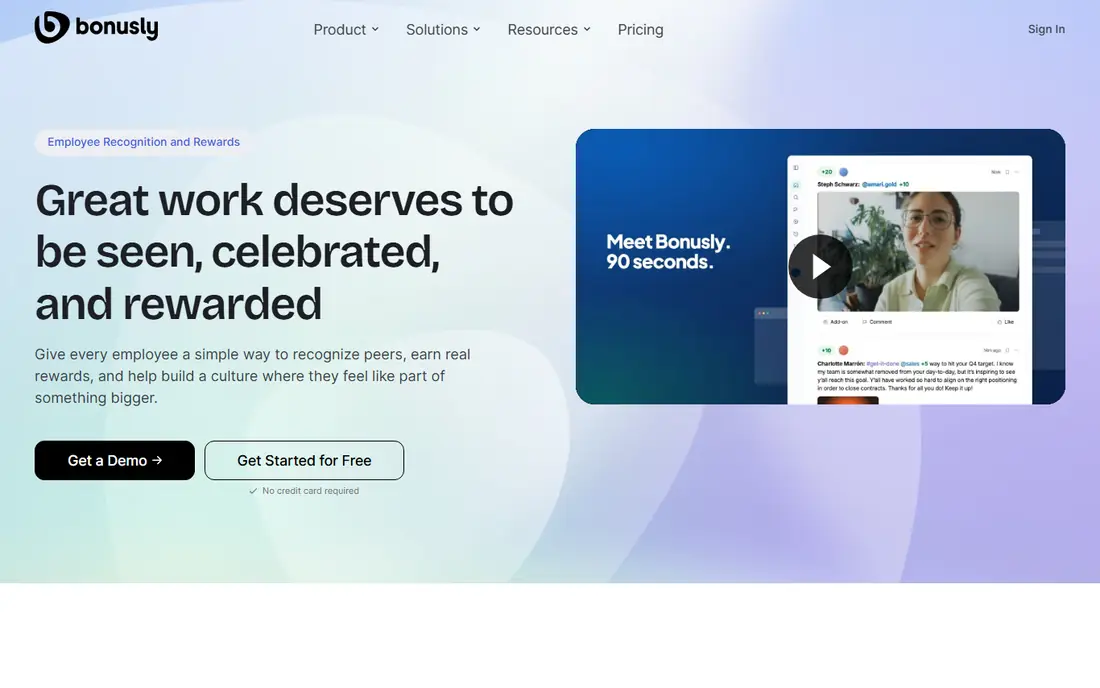
Bonusly is the everyday habit tool. Staff give small point bonuses with a public note tied to a company value, and the feed makes good work visible across teams. Published summaries list a free plan for up to 8 users, with Team pricing from 3 dollars per user per month on annual billing, and a higher tier that adds an AI assistant for writing recognition notes.
The limit is depth. Bonusly covers peer recognition, milestones and rewards well, but large employers that need complex approval chains or deep people analytics may need Workhuman or Achievers. For most teams under a few hundred people, the simplicity is the point: a tool staff use daily beats a powerful tool they ignore.
- Free for up to 8 users
- Points feed that staff actually open
- Budget controls and milestone automation
- Analytics are lighter than enterprise rivals
- Reward funding sits on top of the platform fee
Awardco
Ideal for: Global rewards at scale
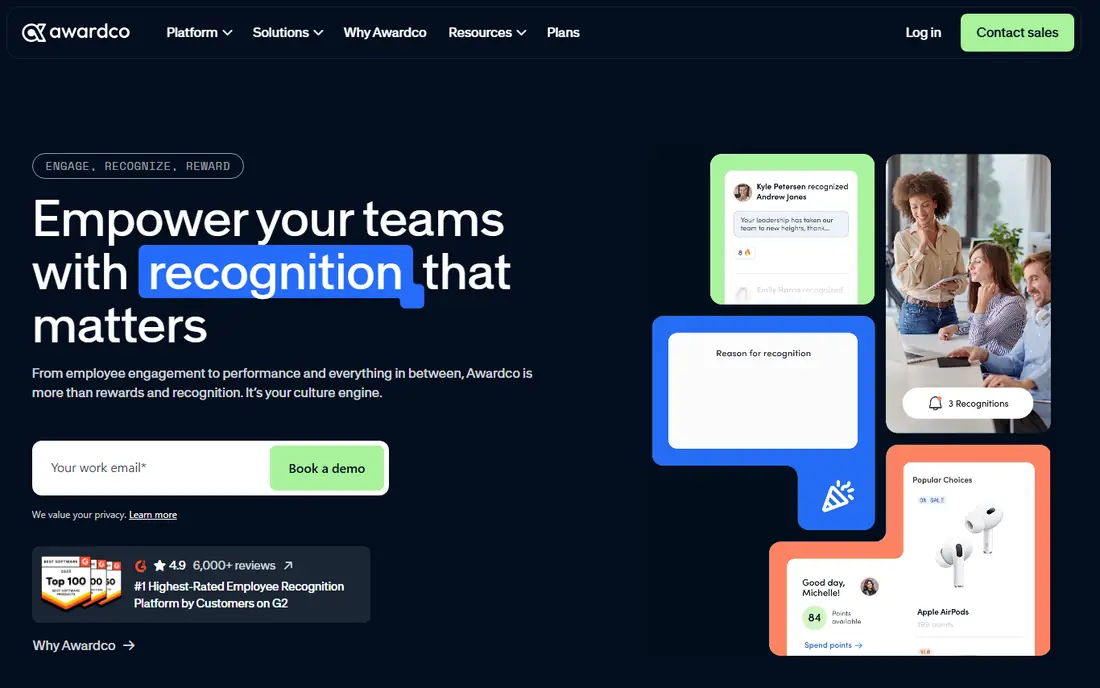
Awardco suits employers that run formal programmes across countries. Its catalog draws on Amazon Business with no added markup on many items, which gives staff real choice without the employer stocking rewards. Published summaries list starter packages from about 3,000 dollars for employers with up to 100 staff, with custom pricing above that size.
The drawback is cost and effort for small teams. If you have 20 people and just want peer shout-outs, Awardco is more programme than you need. It earns its place when rewards must work in many regions, when service anniversaries need automation, and when finance wants tight control over reward spend.
- Very large reward catalog through Amazon Business
- Strong budget controls
- Service award programmes
- Pricing is quote based, with starter packages from 3,000 dollars for smaller employers
- Setup is heavier than Bonusly
Nectar
Ideal for: Recognition plus communications
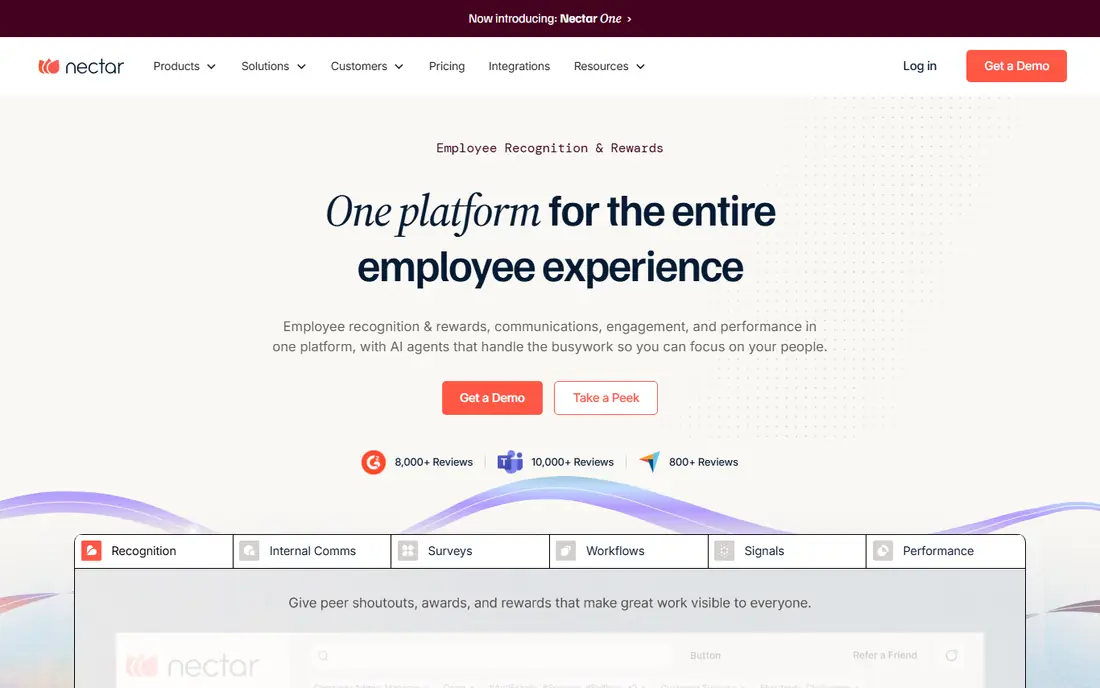
Nectar pairs recognition with internal communications, so the same platform carries shout-outs, company news and team challenges. That combination suits midsize employers that want one culture hub rather than three separate tools. Integrations with Slack and Teams put giving inside chat, while redemption and admin live in the web app.
The honest weakness is pricing clarity. With quote-based bundles, you must talk to sales to learn the cost for your headcount and reward budget, which slows comparison. Ask for a written quote that separates platform fees from reward funding, and confirm whether communications and survey features are included or added on.
- Points recognition with global rewards
- Internal communications and challenges alongside recognition
- Strong chat integrations
- Pricing moved to quote-based bundles in 2026, so small teams cannot see a public price
- Analytics are basic
Motivosity
Ideal for: Modular culture tools
Motivosity lets employers buy recognition first and add tools such as surveys, milestones or manager coaching later. That modular path suits companies that want to start small and grow the programme over time. Social profiles and community spaces give recognition a home beyond a feed, which helps remote teams feel connected.
The catch is total cost. Modules look cheap alone, but a full stack can pass the price of a bundled rival, so price the whole set you will actually use in year one. Also confirm which features sit in each module before signing, since the split changes what managers can do without an upgrade.
- Buy recognition alone or add modules
- Social profiles and community spaces
- Flexible reward options
- Modular pricing is quote based, with a small-business minimum around 3,000 dollars per year
- Modules can add up
Workhuman
Ideal for: Enterprise programmes
Workhuman is the enterprise choice. It runs large social recognition and service award programmes across regions, with governance, analytics and fulfilment that smaller tools cannot match. Integrations with Microsoft 365 and chat tools keep recognition visible, while its analytics link recognition patterns to retention and engagement questions.
The trade-off is scale and cost. Pricing is custom, implementation needs planning, and a small team will not use most of the depth. Workhuman fits employers with thousands of staff, multiple countries and a dedicated owner for the programme, not a team looking for a quick pilot.
- Global enterprise scale
- Service milestone programmes
- Recognition data and analytics for people teams
- Custom pricing only
- Implementation effort is high
- Too heavy for small teams
O.C. Tanner
Ideal for: Service awards and milestones
O.C. Tanner specialises in the moments that mark a career: work anniversaries, retirements and major milestones. Its physical awards, personalised yearbooks and curated fulfilment feel more substantial than a gift card, which matters when the award is meant to be kept. Large employers use it beside or instead of a peer tool for milestone years.
The limit is daily use. O.C. Tanner is not built as a quick peer shout-out feed, so teams that want both daily recognition and milestones often pair it with a tool such as Bonusly or Matter. Price it as a milestone programme, not as a cheap peer tool.
- Premium physical awards and yearbooks
- Long history with service milestones
- Global fulfilment
- Custom pricing only
- Focus on milestones means everyday peer recognition is lighter
Achievers
Ideal for: Global enterprise recognition
Achievers serves distributed employers that need recognition to work in many languages and regions, with a global catalog and integrations into HR systems. It combines social recognition with feedback and reward tools, so managers can link praise to performance conversations without switching apps.
The drawback is the same as Workhuman: custom pricing and a heavier rollout. Midsize teams may find the sales process slow and the platform more than they need. Achievers earns its place when global reach, language support and HR integration are hard requirements.
- Global redemption and multilingual support
- Enterprise integrations
- Recognition plus feedback tools
- Custom pricing only
- Implementation is heavier than mid-market tools
Matter
Ideal for: Chat-first low-cost recognition
Matter is the budget pick that still feels like a real programme. It lives inside Slack and Teams, so staff give kudos without opening another app, and coins can be redeemed for rewards. Published summaries list a free plan, with paid tiers from about 1 dollar per user per month on annual billing, which makes it the cheapest credible start for a small team.
The limit is scale. The catalog and analytics will not match Awardco or Workhuman, and very large employers may outgrow it. For a team that wants recognition inside chat this month, with almost no budget risk, Matter is the easiest yes in this list.
- Free plan with unlimited users
- Works inside Slack and Teams
- Coin-based rewards and pulse surveys
- Reward catalog is smaller than Awardco
- Reporting is lighter than enterprise platforms
How we picked these
We compared official pricing pages, free tiers, reward catalogs, chat integrations and admin controls for platforms still operating in October 2026. We kept a mix of low-cost chat tools, mid-market platforms and enterprise programmes, since a 20-person startup and a 5,000-person employer do not buy the same product. We did not run pilot programmes ourselves, and we did not repeat vendor claims about engagement gains as facts.
What to check before you buy
Start with where your staff already work. If the team lives in Slack or Teams, a chat-first tool such as Matter or Bonusly will see far more use than a web-only portal. If most staff are frontline workers without daily chat access, check mobile access, kiosk options and how managers can recognise people who rarely open a laptop.
Next, price the whole programme, not just the platform fee. Reward funding is usually separate, and a generous points allowance can cost more than the software itself. Set a monthly allowance per person, decide whether unused points expire, and confirm who approves large awards. A clear budget rule prevents the awkward moment when a popular programme runs out of money in quarter three.
Finally, pilot with one team for a month. Measure how many people give and receive recognition, not just total points spent, and ask staff whether the notes feel genuine. A programme that only managers use is a top-down award scheme, not peer recognition, and a different tool or a simpler design may fix that faster than a bigger catalog.
Frequently asked questions
What is the best employee recognition software for small teams?
Bonusly is our pick for most small teams, with a free tier up to 8 users and clear paid pricing from 3 dollars per user per month. Matter is the cheaper alternative if your team lives in Slack or Teams and you want to start free with unlimited users.
How much does employee recognition software cost?
Low-cost tools start at 1 to 3 dollars per user per month, while enterprise platforms are quote based and often start with packages around 3,000 dollars for smaller employers. Reward funding is usually extra, so ask for a quote that separates platform fees from the reward budget.
Do these tools work with Slack and Microsoft Teams?
Yes, most tools in this list integrate with Slack, Teams or both, though the depth varies. Matter and Bonusly put giving inside chat, while enterprise tools may use chat mainly for announcements and keep redemption in a web portal. Check the exact chat features on your plan before buying.
What is the difference between points and direct gift cards?
Points systems let staff earn and save toward rewards, which encourages ongoing recognition, while direct gift tools such as Guusto send a gift card at once. Points need budget rules for expiry and allowances, while direct gifts are simpler but give managers less control over totals.
Can recognition software help remote teams?
Yes, when it is easy to use and visible to everyone. A public feed, chat integration and milestone automation help remote staff feel seen across time zones. The tool alone will not fix a culture problem, but regular, specific peer recognition is one of the cheapest ways to close distance.