Comparing 6 Enterprise Contract Management Tools in 2026

- Agiloft sits first on this list: extreme configurability, no-code platform.
- None of the 6 tools, from Agiloft to LinkSquares, has a free plan, so budget for a subscription or use a trial.
- Before buying Sirion, weigh this: premium positioning and enterprise sales motion, AI capability is only as decent as the contract data migrated into it.
- No starting price is shown for any of the 6 tools, Agiloft and LinkSquares included, so plan time for sales calls.
Direct answer
Agiloft leads the list, best for extreme configurability, no-code product. Look at Conga for Salesforce-native revenue contracting, and at Sirion for AI contract intelligence and obligations. The remaining 3 options are covered below with prices and limits.
Quick comparison
| Product | Ideal for | Price from | Free version | |
|---|---|---|---|---|
 Agiloft | Extreme configurability, no-code product | See website | No | Visit |
 Conga | Salesforce-native revenue contracting | See website | No | Visit |
 Sirion | AI contract intelligence and obligations | See website | No | Visit |
 Icertis | Global governance and compliance at scale | See website | No | Visit |
 Ironclad | Pre-signature workflow and adoption | See website | No | Visit |
 LinkSquares | Repository, search and post-signature analysis | See website | No | Visit |
The 6 tools in detail
Ainotely put together this guide to enterprise contract management tools for readers who want a clear shortlist without reading every vendor page. It compares 6 tools on starting price, free plans, who each one suits and where each one falls short.
Agiloft
Ideal for: Extreme configurability, no-code product
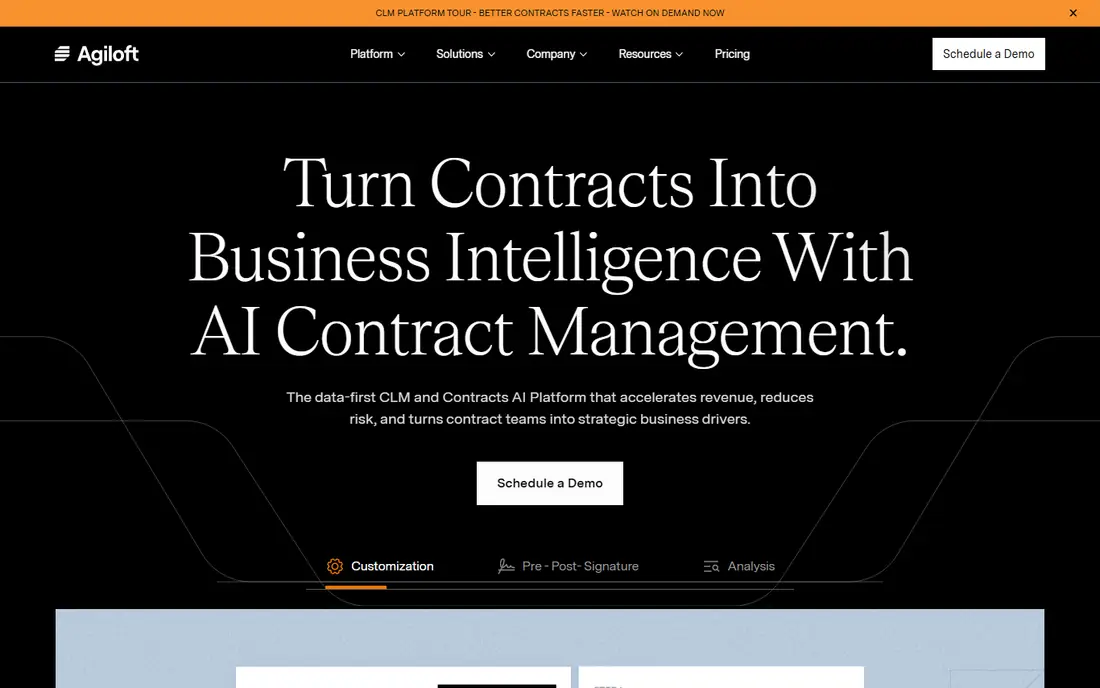
Agiloft serves extreme configurability, no-code product. Agiloft is the system for the enterprise whose contracting does not fit the templates: unusual approval chains, mixed buy and sell side, regulated workflows, legacy processes with legal force behind them.
For everyday use, if your contracting is standard, Agiloft's power is an expense, not an asset. A workflow-led tool will be live sooner. This comparison lists no price for Agiloft; ask the vendor. Agiloft has no free tier.
The main drawbacks: the adaptability premium is wasted on standard contracting that a more straightforward tool handles; interface polish trails Ironclad and Juro. Main advantages: consistently praised for adaptability across contracting types beyond sales and procurement; capable audit.
- Leader in Gartner's 2025 CLM evaluation per market comparisons
- No-code system that legal operations teams configure into their exact process without developers
- Building takes skilled admin time
Conga
Ideal for: Salesforce-native revenue contracting
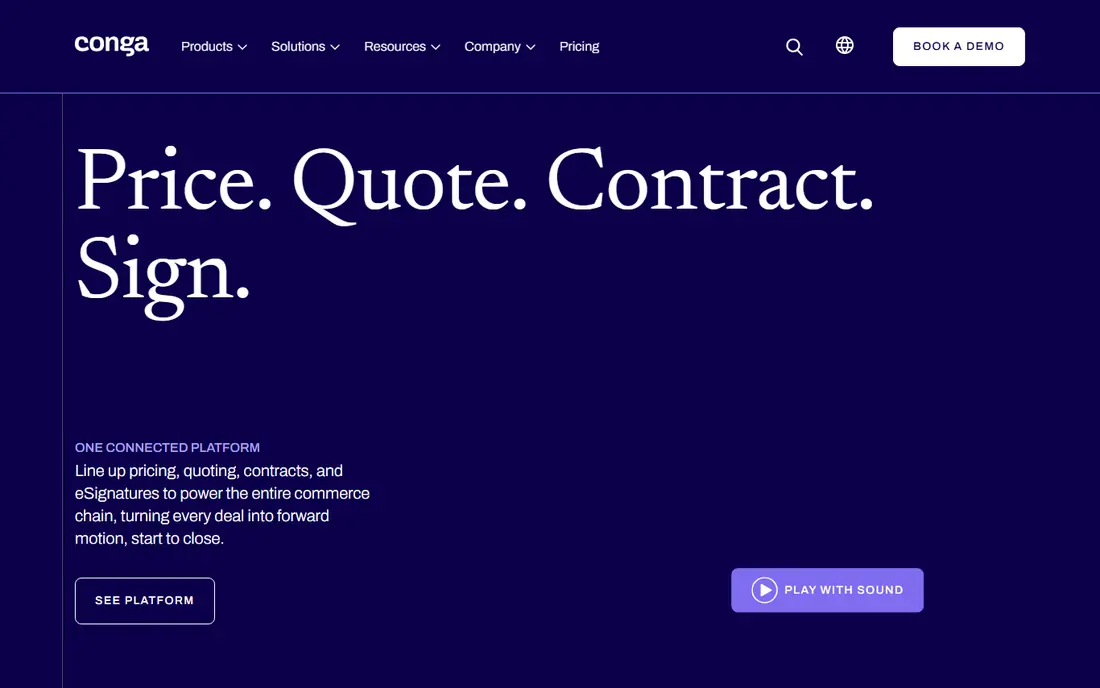
Pick Conga if this describes you: Salesforce-native revenue contracting. Conga answers a specific architecture: if revenue runs through Salesforce and CPQ, the contract should be born there too, populated from the quote, negotiated against account data and stored against the record.
In practice, the diligence point is packaging: Conga's suite has been recombined under its current ownership, so pin the exact products, entitlements and renewal terms in the contract instead of the brochure. From a buyer's view, outside that architecture its case is ordinary, and it should be evaluated as such. Conga shows no starting price here, so confirm the cost on the vendor site. Conga has no free tier.
The main drawbacks: Its centre is the Salesforce estate; post-signature analytics trail the intelligence-led leaders.
- Data-driven templates are its home ground
- Document generation heritage is deep
- Confirm current bundles in diligence
Sirion
Ideal for: AI contract intelligence and obligations
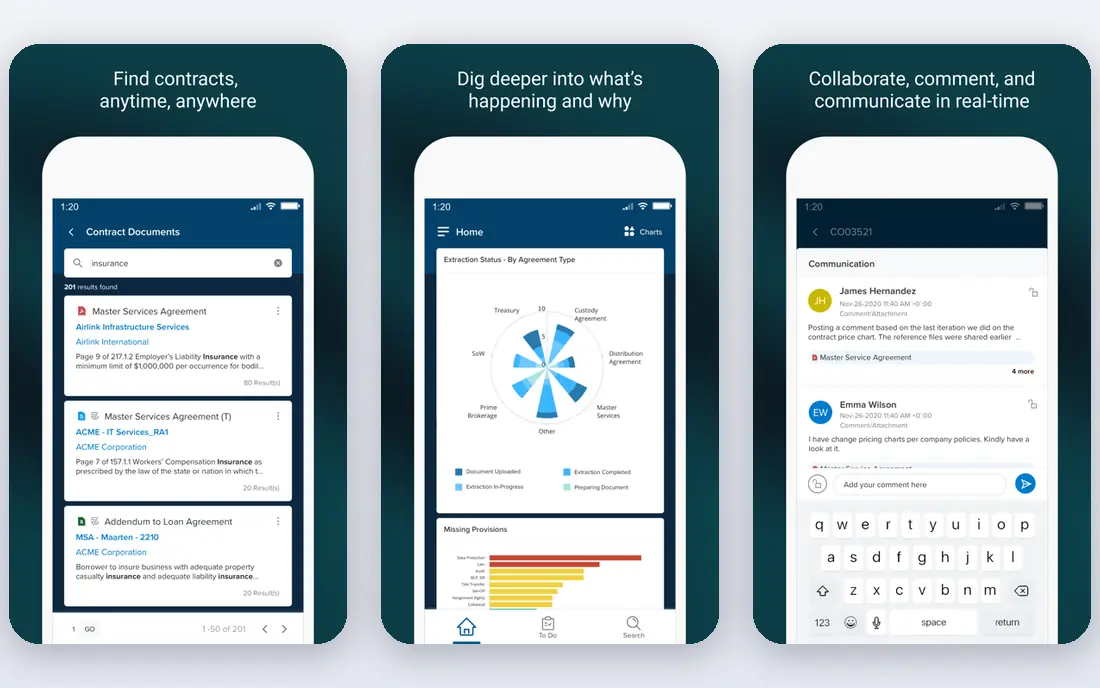
Sirion makes the most sense for AI contract intelligence and obligations. Procurement organisations managing supplier performance are its natural constituency.
Downsides: Premium positioning and enterprise sales motion; Validate with reference customers.
More specifically, reference calls with enterprises of your contract volume will confirm or temper the claims better than any quadrant. Pricing for Sirion is not stated here, so ask the vendor for current figures. Sirion has no permanent free option.
- Handles the core features described above
- Newer brand in some regions than Icertis or DocuSign
Icertis
Ideal for: Global governance and compliance at scale
Pick Icertis if this describes you: global governance and compliance at scale. If your contracting is global and regulated, it belongs at the top of the shortlist; if it is domestic and sales-led, Ironclad will make your users happier, quicker. Also, Icertis is what a multinational buys when contracts are a compliance surface: tens of thousands of agreements across subsidiaries, regulators in multiple jurisdictions.
A board that wants to know its total exposure to a clause. Its strength is the governance layer, rules, obligations and analytics enforced consistently across a global estate. The cost is the programme around it. Icertis shows no starting price here, so confirm the cost on the vendor site. Icertis has no free tier.
The main drawbacks: the system's depth is overkill below true enterprise complexity; pricing is fully custom and at the top of the market.
- Obligation tracking and analytics across entities and jurisdictions
- Recognised in analyst evaluations for contract intelligence at global scale
- User experience is capable instead of loved
Ironclad
Ideal for: Pre-signature workflow and adoption
Ironclad was built for pre-signature workflow and adoption. Ironclad won the pre-signature war by treating contracts as a workflow problem with a legal team inside it, instead of a document problem. Worth adding: sales submits an intake form, the product drafts from approved language, approvals route themselves, and legal touches only the exceptions.
Trade-offs to know: Post-signature depth (obligations, performance analytics) trails Sirion and Icertis; enterprise-scale repository and AI analysis have been built out more recently than its workflow core.
For everyday use, adoption, the graveyard of enterprise CLM, is its documented strength among legal operations teams. Also, choose it when cycle time is the metric. Ironclad shows no starting price here, so confirm the cost on the vendor site. Ironclad does not include a free plan.
- Capable clause library and approval automation that shortens time to signature
- The workflow benchmark: intake, drafting
- Per the wider market
LinkSquares
Ideal for: Repository, search and post-signature analysis
LinkSquares is designed for repository, search and post-signature analysis. Its AI reads that history into structured data, and the first portfolio-wide answer it produces (a renewal exposure, a clause census) is normally the moment the CLM budget justifies itself.
Beyond that, evaluate it where it is capable and be honest about the rest. This comparison lists no price for LinkSquares; ask the vendor. LinkSquares does not include a free plan.
Drawbacks to consider: AI extraction quality must be validated on your own legacy documents in the pilot; enterprise governance depth trails Icertis for global regulated estates.
- Built AI-first for the repository problem: ingesting legacy contracts and extracting clauses
- Pre-signature tools have rounded out the product
- Its founding strength is analysis
Selection criteria
The comparison looks at four things: starting price, free access, how well the feature set matches enterprise contract management tools, and the main limit of each tool. Prices and plan limits come from vendor pages and can change, so confirm them on the vendor site before you buy. We ordered the tools by general fit, then by how clearly pricing is shown, then by free access. A buyer with unusual needs may reorder them.
What to confirm before you sign up
- Request quotes from Agiloft, LinkSquares and the others; the list shows no fixed prices.
- Involve the people who will use Conga daily; a short pilot beats a long feature checklist.
- Ask Ironclad whether prices are locked for the first term and what happens at renewal.
- Compare total cost, not headline price: for Sirion, add extra seats, add-ons and any usage-based charges.
- See whether Agiloft offers onboarding or training, and whether it is included in the price.
Frequently asked questions
What is the difference between pre-signature and post-signature CLM?
Pre-signature handles intake, drafting, negotiation, approval and signing: the workflow Ironclad leads. Most enterprises hurt in one direction more than the other, and choosing the system that leads on your painful end matters more than total feature counts.
Can I try these options before paying?
Not by default. None of the tools, from Agiloft to LinkSquares, lists a free plan or a free trial here, so ask each vendor for a demo before committing.
Does any tool for enterprise contract management tools here have a free plan?
No tool in this list, Agiloft and LinkSquares included, has a permanent free plan. Trials and quotes are the usual route, so plan a short evaluation period.
Is Agiloft the right pick for everyone comparing enterprise contract management tools?
No single tool suits every team. Agiloft comes first because it fits extreme configurability, no-code platform, while Conga suits Salesforce-native revenue contracting and Sirion suits AI contract intelligence and obligations. Match the tool to your own size, budget and workflow before deciding.
How are the tools for enterprise contract management tools ordered?
The order follows typical fit for enterprise contract management tools, with Agiloft first and LinkSquares last, then price clarity and free access. It is editorial judgement, not a score, so another team could rank the tools differently.
Which product suits a Salesforce-centred company?
Conga, architecturally: it creates and handles contracts inside Salesforce and CPQ. Ironclad is the other typical answer, with a capable Salesforce integration around a standalone workflow system.