6 Strong Enterprise Conversational AI Platforms in 2026

- 1
 Microsoft Copilot StudioMicrosoft 365 and Dynamics 365 organizationsVisit
- 2
 Cognigy (NICE)Contact centers needing deep voice and telephony integrationsVisit
- 3
 AvaamoTurning back-office workflows in HR, IT and procurement into conversational interfacesVisit
- 4
 Kore.aiEnterprises running conversational AI across customer, employee and developer agents on one systemVisit
- 5
 Yellow.aiGlobal brands with high-volume CX automation across plenty of channelsVisit
- The list opens with Microsoft Copilot Studio, aimed at Microsoft 365 and Dynamics 365 organizations.
- Microsoft Copilot Studio is the lowest-priced starter here at $200 per tenant per month for 25,000 credits.
- Salesforce Agentforce is the one to check for service teams whose data and workflows live in Salesforce.
- Check the limits for Avaamo before you commit: smaller brand and ecosystem than leaders, quote-only pricing, less voice depth than contact center specialists.
- None of the 6 tools, from Microsoft Copilot Studio to Salesforce Agentforce, has a free plan, so budget for a subscription or use a trial.
Direct answer
Microsoft Copilot Studio is the first pick on this list for Microsoft 365 and Dynamics 365 organizations. Cognigy (NICE) is the stronger choice for contact centers needing deep voice and telephony integrations, while Avaamo suits turning back-office workflows in HR, IT and procurement into conversational interfaces. The other 3 tools in the list cover narrower or pricier cases.
Quick comparison
| Product | Ideal for | Price from | Free version | |
|---|---|---|---|---|
| Microsoft Copilot Studio | Microsoft 365 and Dynamics 365 organizations | $200 per tenant a month for 25,000 credits | Free trial | Visit |
| Cognigy (NICE) | Contact centers needing deep voice and telephony integrations | See website (quote-based; enterprise deals often start above $100K/year) | No | Visit |
| Avaamo | Turning back-office workflows in HR, IT and procurement into conversational interfaces | See website (quote-based) | No | Visit |
| Kore.ai | Enterprises running conversational AI across customer, employee and developer agents on one system | See website (quote-based enterprise pricing) | Free trial | Visit |
| Yellow.ai | Global brands with high-volume CX automation across plenty of channels | See website (quote-based) | Limited free tier | Visit |
 Salesforce Agentforce | Service teams whose data and workflows live in Salesforce | $2 per conversation | Free trial | Visit |
Tool-by-tool breakdown
This Ainotely guide covers 6 enterprise conversational AI platforms. Each profile lists a starting price, free plan details, strengths and drawbacks, so you can drop poor fits quickly.
Microsoft Copilot Studio
Ideal for: Microsoft 365 and Dynamics 365 organizations
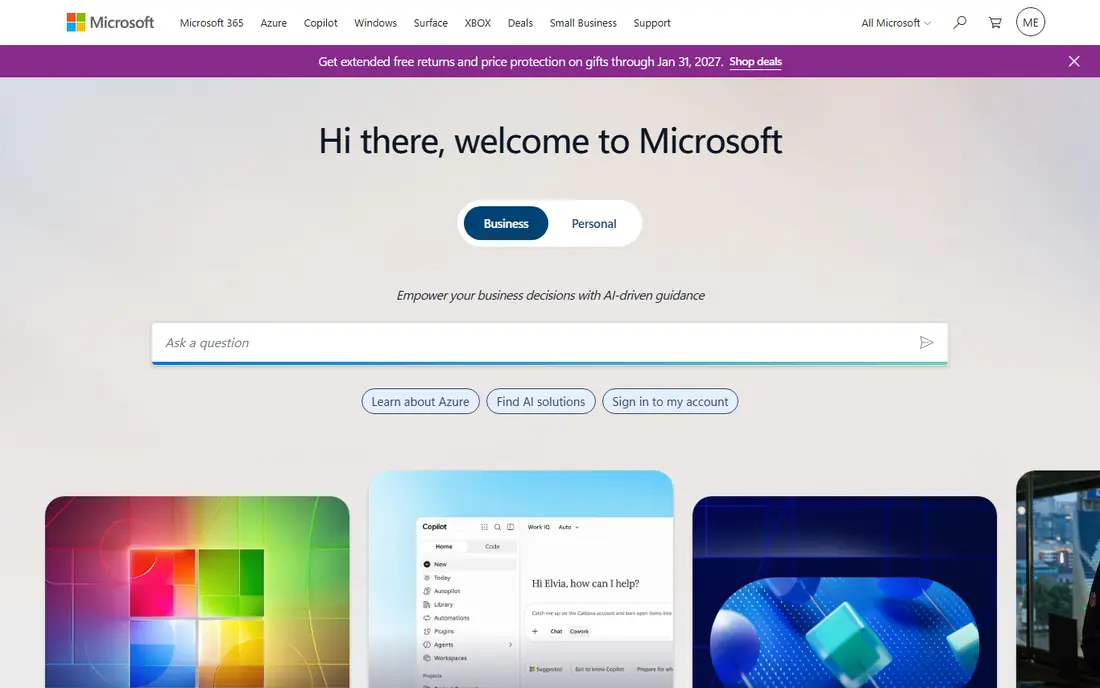
Think of Microsoft Copilot Studio for Microsoft 365 and Dynamics 365 organizations. For the Microsoft-committed enterprise, though, nothing else deploys this quick.
Watch-outs: Cloud-only on Azure.
Where it shines: M365 and Dynamics integration.
Beyond that, the main limit is the walls of the garden. Price to start with Microsoft Copilot Studio: $200 per tenant per month for 25,000 credits. Free access: Free trial.
- Native Teams
- Credit-based pricing is transparent
- Advanced scenarios still need pro developers
Cognigy (NICE)
Ideal for: Contact centers needing deep voice and telephony integrations
Think of Cognigy (NICE) for contact centers needing deep voice and telephony integrations. Its strength is the telephony layer: native voice AI, integrations with the major CCaaS systems and deployment choices that satisfy European data residency requirements. Worth adding: everyone else should budget for a serious enterprise procurement cycle.
Watch-outs: Enterprise pricing is opaque and high.
In practice, pricing is the friction. Entry contracts are large, and the product assumes a professional services engagement to get live. In daily use, teams already standardized on NICE CXone get the smoothest path. Cognigy (NICE) does not show a starting price in this comparison, so check the vendor site for current pricing. Cognigy (NICE) has no permanent free option.
- On-premises deployment choice
- Avaya and Amazon Connect integrations
- Voice-first heritage means chat UX lags specialists
Avaamo
Ideal for: Turning back-office workflows in HR, IT and procurement into conversational interfaces
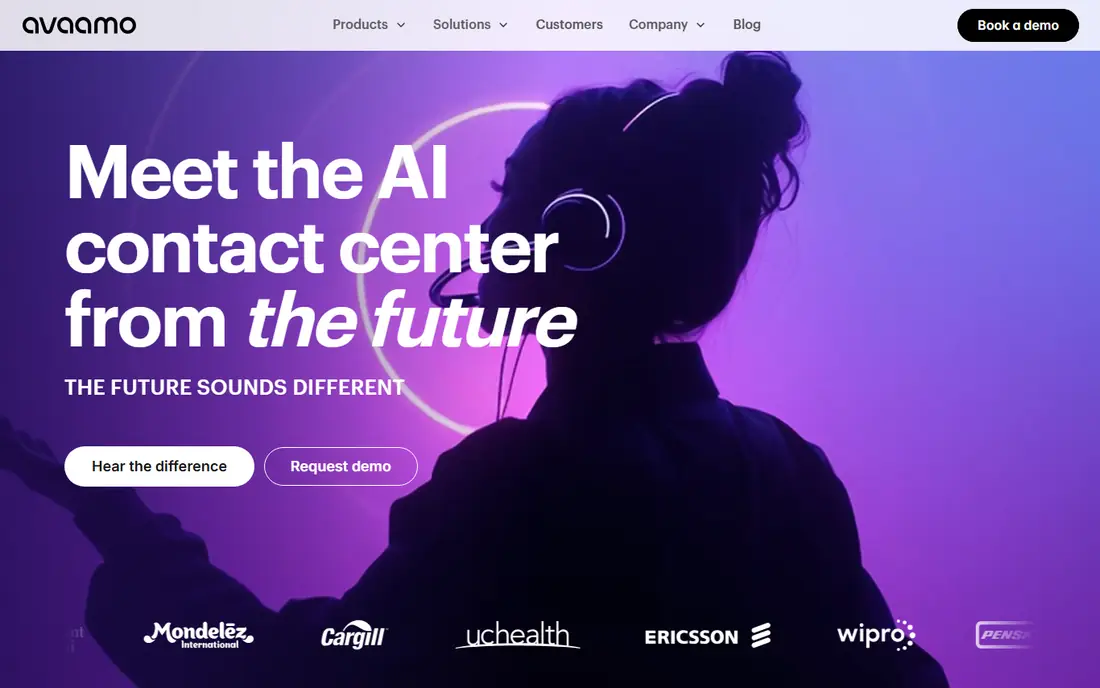
Choose Avaamo for turning back-office workflows in HR, IT and procurement into conversational interfaces. Avaamo aims at the unglamorous half of enterprise AI: the HR policy questions, IT tickets and procurement requests that eat thousands of employee hours.
Trade-offs to know: Smaller brand and ecosystem than leaders, quote-only pricing.
Upsides: Workflow-centric design beyond Q&A chatbots.
It is a smaller vendor than Kore.ai or IBM, which matters for procurement risk reviews. No starting price is listed for Avaamo here; confirm pricing on the vendor site. Avaamo does not include a free plan.
- Capable in employee-facing automation
- Decent analytics on containment
- Less voice depth than contact center specialists
Kore.ai
Ideal for: Enterprises running conversational AI across customer, employee and developer agents on one system
Kore.ai is aimed squarely at enterprises running conversational AI across customer, employee and developer agents on one system. Kore.ai positions itself as the agent product for the entire enterprise instead of a chatbot builder for one department. On top of that, Kore.ai makes most sense when you have a product team and several use cases to consolidate.
Watch-outs: Quote-only pricing makes budgeting hard.
The cost of that breadth is complexity. From a buyer's view, if you need one chatbot for one website, it is more than you need. In practice, for regulated industries, the compliance story is one of the strongest in the category. As for the details, the XO Platform merges conversational agents, voice AI, agent assist for human reps and enterprise search, which lets one team standardize how agents are built and governed. Kore.ai does not show a starting price in this comparison, so check the vendor site for current pricing. Free plan details: Free trial.
- Chat plus voice plus agent assist in one product
- Multi-agent orchestration across use cases
- Steeper ramp-up time than no-code tools
Yellow.ai
Ideal for: Global brands with high-volume CX automation across plenty of channels
Yellow.ai targets global brands with high-volume CX automation across plenty of channels. Implementation tends to be lighter than the contact center incumbents. If your roadmap comes with HR, IT and procurement agents alongside CX, the enterprise-wide products pull ahead.
Highlights: Capable multilingual support across 35+ channels.
From a buyer's view, the trade-off is depth outside customer service. The product deals with chat, voice, email and messaging from one agent definition. Its language coverage is genuinely broad, which is why it wins deals with global consumer brands. Yellow.ai shows no starting price here, so confirm the cost on the vendor site. Free plan details: Limited free tier.
What to check first: Quote-based enterprise pricing.
- Dynamic AI agents for chat, voice
- Large APAC and Middle East presence
- Less depth for employee-facing use cases
Salesforce Agentforce
Ideal for: Service teams whose data and workflows live in Salesforce
Choose Salesforce Agentforce for service teams whose data and workflows live in Salesforce. Agentforce turns Salesforce from a system of record into a system of action.
From a buyer's view, agents read cases, orders and customer history straight from the CRM and act inside Service Cloud workflows, which removes the integration tax that slows every other system in a Salesforce shop. Worth adding: the $2-per-conversation pricing is straightforward to model. What you pay to start with Salesforce Agentforce: $2 per conversation. Free plan details: Free trial.
Limits to weigh: Restricted value outside the Salesforce ecosystem.
- Service Cloud Voice integration
- Agents grounded directly in CRM data
- Newer system with evolving best practices
A closer look at enterprise conversational AI platforms
Every enterprise chatbot project eventually hits the same question: build on a system or assemble components. There are CX-first platforms made for contact centers, agent products that span customer and employee use cases, and ecosystem plays from Microsoft, Salesforce, IBM and Google that are easiest when you already live in their stack.
How we built this list
Ainotely looked at what each vendor publishes: pricing, plan limits, feature coverage for enterprise conversational AI platforms and stated drawbacks. No hands-on testing is claimed. Prices and plan limits come from vendor pages and can change, so confirm them on the vendor site before you buy. The sequence is a judgement call: typical use case first, then pricing transparency, then free access. Use the profiles to check fit.
What to confirm before you sign up
- Get a written quote from Cognigy (NICE), Avaamo, Kore.ai and Yellow.ai; the list shows no starting price for them.
- Run a trial of Microsoft Copilot Studio, Kore.ai and Salesforce Agentforce with real work before paying for a year; your own workflow is the best test.
- Read the limits listed for Microsoft Copilot Studio first: cloud-only on Azure, restricted portability outside Microsoft, advanced scenarios still need pro developers.
- Confirm that Microsoft Copilot Studio connects to the apps your team already uses, on the plan you would actually buy.
- See whether Cognigy (NICE) offers onboarding or training, and whether it is included in the price.
Frequently asked questions
Do these tools publish their prices?
Not all of them. Cognigy (NICE), Avaamo, Kore.ai and Yellow.ai publish no starting price, so expect a quote request for those. The rest, Microsoft Copilot Studio included, show a starting price, though seats and billing terms still change the final cost.
Is Microsoft Copilot Studio the right pick for everyone comparing enterprise conversational AI platforms?
No single tool suits every team. Microsoft Copilot Studio comes first because it fits Microsoft 365 and Dynamics 365 organizations, while Cognigy (NICE) suits contact centers needing deep voice and telephony integrations and Avaamo suits turning back-office workflows in HR, IT and procurement into conversational interfaces. Match the tool to your own size, budget and workflow before deciding.
What is the cheapest option for enterprise conversational AI platforms in this list?
On published monthly entry prices, Microsoft Copilot Studio is the lowest here at $200 per tenant per month for 25,000 credits. Entry price is only part of the cost, because seats, add-ons and billing terms can change the total.
Can I try these options before paying?
Often, yes. Microsoft Copilot Studio, Kore.ai and Salesforce Agentforce offer a free trial. Use your own data and a real task during the test, and check what the free tier or trial limits before you rely on it.