commercetools is the first pick on this list for Composable, API-first commerce infrastructure. Salesforce Commerce Cloud is better for Commerce inside the Salesforce ecosystem, and Shopify Plus is better for managed enterprise commerce at scale. All 5 tools are compared below on price, free plan and limits.
If you are comparing enterprise E-Commerce platforms, this page covers 5 tools in one place: what each is best for, what it costs to start, whether it has a free plan, and the main limit to know about.
Key takeaways
Commercetools is the opening pick, best for Composable, API-first commerce infrastructure.
No starting price is shown for any of the 5 tools, commercetools and BigCommerce Enterprise included, so plan time for sales calls.
None of the 5 tools, from commercetools to BigCommerce Enterprise, has a free plan, so budget for a subscription or use a trial.
Salesforce Commerce Cloud comes with a trade-off: best value primarily for Salesforce-centric stacks.
Best for: Composable, API-first commerce infrastructure
commercetools was built for Composable, API-first commerce infrastructure. Since it is infrastructure instead of a finished storefront, teams need engineering capacity to build and operate experiences. commercetools describes itself as a digital commerce AI company offering enterprise commerce infrastructure for AI agents.
Strengths: Unified engine for agent-driven commerce.
Downsides: Needs engineering to assemble experiences.
Pricing for commercetools is not stated here, so ask the vendor for current figures. On free options: Free trial.
Best for: Commerce inside the Salesforce ecosystem
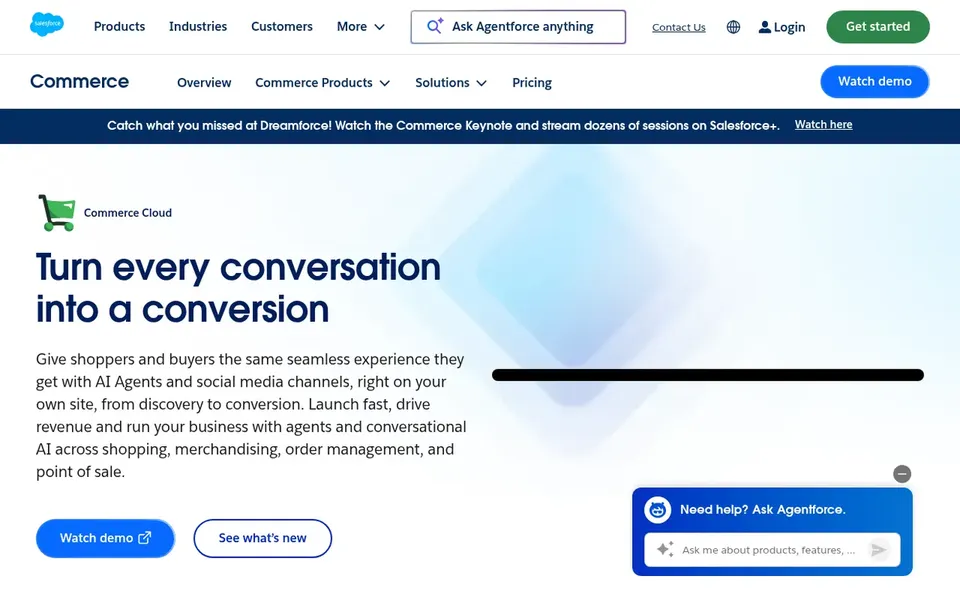
Salesforce Commerce Cloud makes the most sense for Commerce inside the Salesforce ecosystem. Commerce Cloud is Salesforce's commerce offering, targeted at organizations that want shopping experiences connected to customer data across sales, service and marketing.
Trade-offs to know: Implementation can be involved.
For everyday use, teams outside the Salesforce ecosystem may find the value proposition less compelling and integration effort higher. From a buyer's view, the system is generally chosen as part of a broader customer product strategy. No starting price is listed for Salesforce Commerce Cloud here; confirm pricing on the vendor site. Trial and free access: Not stated.
Shopify Plus works best for managed enterprise commerce at scale. It fits merchants that want a managed core, fast storefront launches and a large partner and app ecosystem instead of building infrastructure themselves.
What to check first: Less deep native B2B complexity than some rivals.
Shopify Plus shows no starting price here, so confirm the cost on the vendor site. Free options: Not stated.
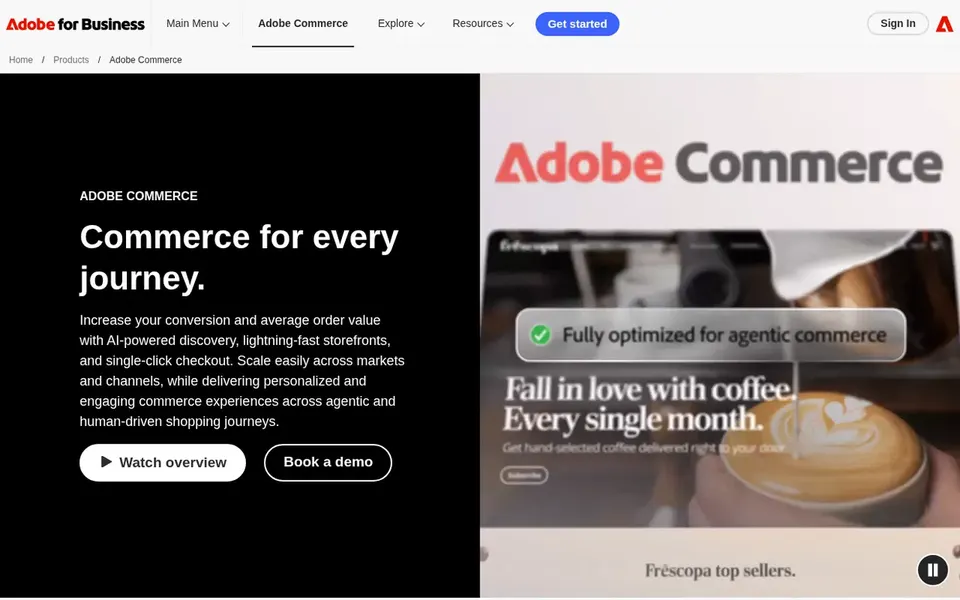
In short, Adobe Commerce is for complicated B2B and B2C personalization. Adobe Commerce, formerly Magento Commerce, is described by Adobe as an AI-powered composable e-commerce system for B2B and B2C that delivers personalized experiences at global scale.
Trade-offs to know: Needs significant technical resources.
Its adaptability includes operational weight: implementations usually demand specialist developers and continuing maintenance. More specifically, organizations without that capacity may prefer a more managed system such as Shopify Plus or BigCommerce Enterprise. Adobe Commerce shows no starting price here, so confirm the cost on the vendor site. Free plan details: Not stated.
BigCommerce Enterprise targets adaptable SaaS commerce on your terms. BigCommerce Enterprise is the enterprise edition of BigCommerce, which frames its system as capable e-commerce on your terms and argues a modern SaaS system should fit the business instead of the reverse.
BigCommerce Enterprise fits best when adaptability within a managed model is the priority. No starting price is listed for BigCommerce Enterprise here; confirm pricing on the vendor site. On free options: Not stated.
The main drawbacks: Complicated needs may still need integrations.
Reasons to shortlist it: SaaS model with enterprise features.
Request quotes from commercetools, BigCommerce Enterprise and the others; the list shows no fixed prices.
Take the trial from commercetools and push a live task through it before you pay.
Before choosing commercetools, weigh its main limit: needs engineering to assemble experiences.
Check the integration list for Salesforce Commerce Cloud against the tools you run today, and note which ones need a higher plan.
Run a one or two week pilot of BigCommerce Enterprise with the people who will use it every day.
How we picked
Ainotely used vendor pricing pages and product documentation as the base, then compared plans, free access and documented limits for 5 tools. Seat minimums, billing terms and add-ons can move the real cost, so the starting prices here are a guide and not a quote. Position on the page reflects fit for a typical buyer first, with price clarity and free access breaking ties. Treat it as a guide, not a ruling. The same method was used for each of the 5 enterprise E-Commerce platforms picks on this page.
Every price and plan detail on this page comes from the vendors’ own websites. We did not run hands-on tests unless the text says so, and we do not publish star ratings or review scores. See how we score and our disclosure.
Keep your shortlist in one place
Paste prices, trial dates and notes from this guide into Ainotely, our AI note app. It files them into a topic and pulls out tasks like “cancel trial by Friday”. Free 7-day trial, no card needed.
How are the tools for enterprise E-Commerce platforms ordered?
commercetools sits first and BigCommerce Enterprise last because the order follows typical fit for enterprise E-Commerce platforms, then price clarity and free access. It is a judgement call, so read each profile for fit and limits.
Can I try these options before paying?
Often, yes. commercetools offers a free trial. Use your own data and a real task during the test, and check what the free tier or trial limits before you rely on it. The 5 tool cards above repeat this per product for enterprise E-Commerce platforms, with the listed price or "pricing on request".
Does any tool for enterprise E-Commerce platforms here have a free plan?
No tool in this list, commercetools and BigCommerce Enterprise included, has a permanent free plan. commercetools offer a trial. Trials and quotes are the usual route, so plan a short evaluation period.
Do these tools publish their prices?
No. None of the tools, from commercetools to BigCommerce Enterprise, shows a fixed starting price here, so budget time for quotes.
What makes a product enterprise-grade?
Enterprise products usually support large catalogs, several storefronts and channels, B2B and B2C models, and integration with business systems like ERP and CRM.