7 Best Enterprise ETL Tools for Data Integration Options for 2026

- Boomi sits first on this list: application and data integration together.
- Matillion suits ELT inside cloud data warehouses.
- A fair warning about Stitch: fewer connectors than Fivetran.
- Only 2 of the 7 tools have a free plan (Fivetran, Hevo Data), so check the caps.
Direct answer
Start with Boomi if you need application and data integration together. For a different need, Stitch covers straightforward, low-cost ELT replication and Fivetran covers managed ELT with 700+ connectors. The other 4 tools in the list cover narrower or pricier cases.
Quick comparison
| Product | Ideal for | Price from | Free version | |
|---|---|---|---|---|
 Boomi | Application and data integration together | See website | Free trial | Visit |
 Stitch | Straightforward, low-cost ELT replication | $100 a month (Standard) | Free trial (14 days) | Visit |
 Fivetran | Managed ELT with 700+ connectors | Free tier; usage-based from ~$500/month (Standard) | Yes | Visit |
 Azure Data Factory | ETL inside the Microsoft ecosystem | Pay as you go | Free trial | Visit |
 Hevo Data | Value ELT with near live sync | $239 a month (Starter, billed yearly) | Yes | Visit |
 Informatica | Enterprise data governance and integration | See website | No | Visit |
 Matillion | ELT inside cloud data warehouses | Usage-based (credits) | Free trial | Visit |
Every option for enterprise ETL tools for data integration explained
Ainotely compared 7 tools for enterprise ETL tools for data integration. The goal is a practical shortlist: published prices, free plan facts, best-fit use cases and honest limits for every entry.
Boomi
Ideal for: Application and data integration together
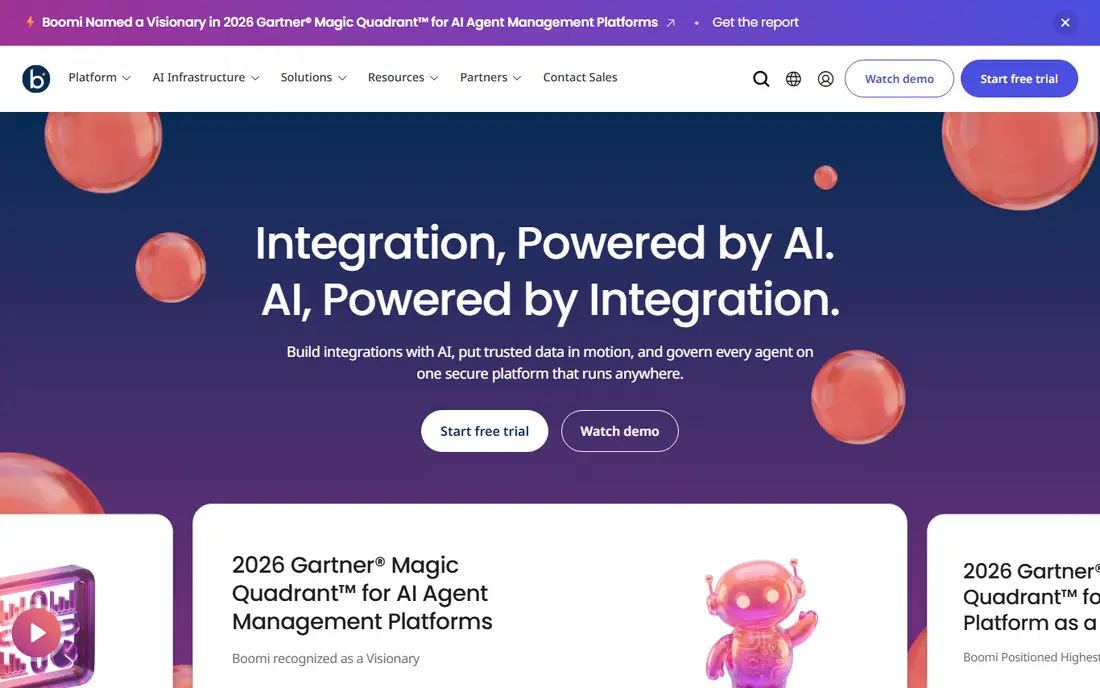
Choose Boomi for application and data integration together. Boomi started in application integration and grew into data movement from that direction. For enterprises with hybrid estates and B2B/EDI needs, that breadth is the point.
Worth adding: the system links SaaS apps, on-premise systems and trading partners, with ETL-style data pipelines as part of a broader integration suite. Beyond that, Boomi suits enterprises consolidating integration around a single vendor. Pricing for Boomi is not stated here, so ask the vendor for current figures. On free options: Free trial.
The main drawbacks: Quote-based pricing.
- Capable in application and B2B/EDI integration
- Large connector library
- ETL is one capability among plenty
Stitch
Ideal for: Straightforward, low-cost ELT replication
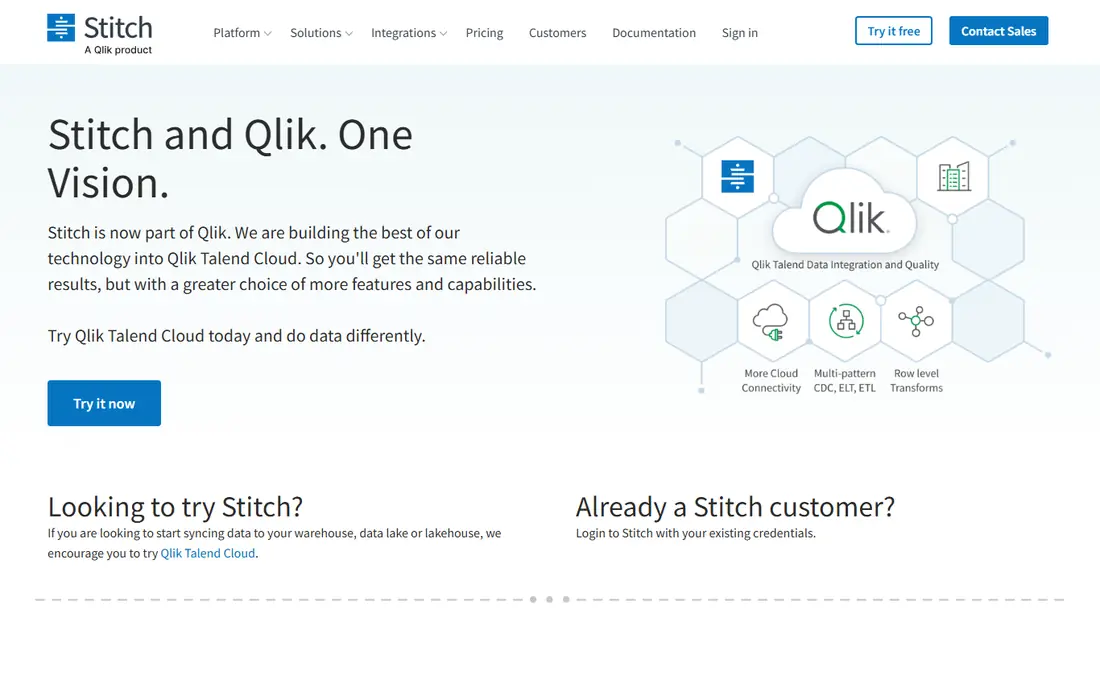
For straightforward, low-cost ELT replication, Stitch is a natural candidate. You get a clean interface, row-based pricing beginning at $100 per month for 5 million rows, and completely managed pipelines with no infrastructure to babysit.
Points against: Single destination on the Standard plan.
Price to start with Stitch: $100 per month. Trial and free access: Free trial (14 days).
- Completely managed with no infrastructure
- Transparent row-based pricing from $100/month
- Fewer connectors than Fivetran
Fivetran
Ideal for: Managed ELT with 700+ connectors
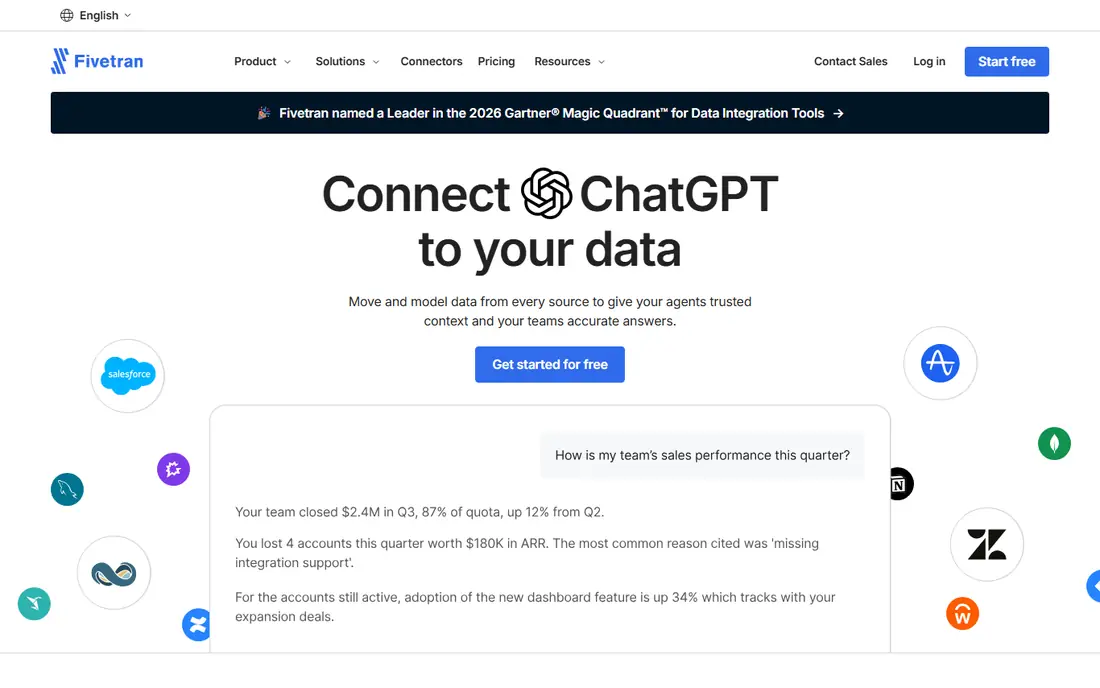
For managed ELT with 700+ connectors, Fivetran is a natural candidate. You link a source, pick a destination, and Fivetran deals with extraction, schema drift and incremental syncs without continuing care. In daily use, the honest catch is the pricing model.
Downsides: Per-connection billing replaced account-level levels; 1-minute syncs need Enterprise.
In practice, you pay per Monthly Active Row per connection, deletes now count toward the total, and costs climb steeply once marketing or product data with high churn enters the picture. Teams on a regular basis find Fivetran 3 to 5 times more pricey than alternatives at 10M+ rows per month. Fivetran pricing: Free tier. Fivetran has a free plan. What Fivetran does well: Free level includes pilots.
- 700+ completely managed connectors with automatic schema handling
- Dependable syncs with minimal maintenance
- Monthly Active Row pricing escalates quick with volume
Azure Data Factory
Ideal for: ETL inside the Microsoft ecosystem
Azure Data Factory is designed for ETL inside the Microsoft ecosystem. If your company already lives in Azure, Data Factory is the path of least resistance.
Watch-outs: Ramp-up time for the expression language.
For everyday use, the limitation is ecosystem gravity. Azure Data Factory starts at: Pay as you go. Free access: Free trial.
- Visual pipeline designer plus code choices
- Pay-as-you-go with no subscription
- Monitoring and debugging lag dedicated tools
Hevo Data
Ideal for: Value ELT with near live sync
Hevo Data is a good fit for value ELT with near live sync. The free level processes a million events per month, premium plans start at $239, and pipelines can run near live. In daily use, Hevo suits startups and mid-sized teams that want managed ELT at a lower entry price and can model their event volumes.
Trade-offs to know: Event-based pricing punishes high-churn tables.
The catch mirrors Fivetran's: event-based pricing means high-churn tables get costly, and there is no automatic throttle, so bills grow with success. Hevo Data is the value alternative teams reach for when Fivetran's row-based bill stings. The starting price for Hevo Data: $239 per month. Free access exists with Hevo Data.
- Near live pipelines on higher plans
- Ample free level with 1M events per month
- Advanced features need higher levels
Informatica
Ideal for: Enterprise data governance and integration
Informatica was built for enterprise data governance and integration. Informatica has been doing data integration since before the category had a name. As for the details, the main limit is weight.
This is enterprise software with enterprise sales cycles, quoted pricing and implementations that require experienced partners. Worth adding: the Intelligent Data Management Cloud merges ETL/ELT with data quality, cataloging, lineage and governance, which is why banks, insurers and healthcare businesses standardize on it. When auditors ask where a number came from, Informatica has the answer. No starting price is listed for Informatica here; confirm pricing on the vendor site. Informatica has no permanent free option.
Downsides: Overkill for straightforward replication jobs.
- Massive connector and transformation library
- Lineage and data quality tooling
- Complicated system with real ramp-up time
Matillion
Ideal for: ELT inside cloud data warehouses
Matillion is built with ELT inside cloud data warehouses in mind. Matillion suits data teams that require serious in-warehouse transformation alongside ingestion.
The main drawbacks: Tied to specific cloud warehouses.
It shines brightest for teams already standardized on one cloud warehouse. On cost, Matillion starts like this: Usage-based. Trial and free access: Free trial.
- Adaptable pay-as-you-go via cloud marketplaces
- Solid transformation designer
- Credit pricing is hard to forecast
How the list was put together
Selection started from tools commonly considered for enterprise ETL tools for data integration, then narrowed to 7 that have clear pricing information or a clear quote process. Seat minimums, billing terms and add-ons can move the real cost, so the starting prices here are a guide and not a quote. The sequence is a judgement call: typical use case first, then pricing transparency, then free access. Use the profiles to check fit.
What to check before you buy
- Get a written quote from Boomi and Informatica; the list shows no starting price for them.
- Look at free plan limits closely: Fivetran and Hevo Data have one, and the caps decide whether it is usable for real work.
- Take the trial from Boomi, Stitch, Azure Data Factory and Matillion and push a live task through it before you pay.
- Before choosing Boomi, weigh its main limit: quote-based pricing.
- Check the support hours and onboarding help Matillion offers; smaller vendors vary a lot here.
- List the apps you already depend on and check that Stitch supports each one on the plan you would buy.
Frequently asked questions
What is the difference between ETL and ELT?
ELT has become the standard for cloud warehouses since cheap storage and compute make it practical to keep raw data and transform on demand.
How are the tools for enterprise ETL tools for data integration ordered?
The order follows typical fit for enterprise ETL tools for data integration, with Boomi first and Matillion last, then price clarity and free access. It is editorial judgement, not a score, so another team could rank the tools differently.
Which options for enterprise ETL tools for data integration have a free plan?
On this list, Fivetran and Hevo Data include a free plan. Caps on seats, usage or features are common, so test the free plan against your real workload. Several others offer a trial instead.
Can I try these tools before paying?
Often, yes. Fivetran and Hevo Data have a free plan and Boomi, Stitch, Azure Data Factory and Matillion offer a free trial. Use your own data and a real task during the test, and check what the free tier or trial limits before you rely on it.
How do I avoid surprise bills with usage-based pricing?
Model your volumes before signing, including deletes, re-syncs and schema changes, since all of them count toward row or event totals. Prefer vendors that let you cap spend or throttle pipelines.
What is the cheapest option for enterprise ETL tools for data integration in this list?
On published monthly entry prices, Stitch is the lowest here at $100 per month. Entry price is only part of the cost, because seats, add-ons and billing terms can change the total.