Best ERP for Professional Services in 2026: 8 Systems Compared

- 1
 NetSuiteAll-in-one cloud ERPVisit
- 2
 Sage IntacctProject accountingVisit
- 3
 WorkdayLarge services firmsVisit
- 4
 DeltekProject-based firmsVisit
- 5
 Microsoft Dynamics 365Microsoft-centered firmsVisit
- NetSuite is our pick for most professional services firms because it covers financials, projects, and resource planning in one cloud system.
- Sage Intacct suits firms that want strong project accounting and multi-entity financials.
- Deltek suits architecture, engineering, and consulting firms with project-heavy work.
-
Project profitability, utilization, and billing models differ by firm, so match the system to how you actually charge clients.
-
Utilization reporting by person and project is the report most services firms check weekly, so test it in every demo.
Quick comparison
| Product | Ideal for | Price from | Free version | |
|---|---|---|---|---|
| NetSuite | All-in-one cloud ERP | See website | Free trial | Visit |
| Sage Intacct | Project accounting | See website | Free trial | Visit |
| Workday | Large services firms | See website | No | Visit |
| Deltek | Project-based firms | See website | Free trial | Visit |
| Microsoft Dynamics 365 | Microsoft-centered firms | See website | Free trial | Visit |
 Acumatica | Growing mid-size firms | See website | Free trial | Visit |
 Odoo | Flexible, modular ERP | See website | Yes | Visit |
 Certinia | Services on Salesforce | See website | Free trial | Visit |
The best erp for professional services
An ERP for professional services must handle what product ERPs often miss: people, projects, and time. Project accounting, utilization, billing, and resource planning decide whether a system fits. We compared official feature pages, pricing pages, and public reviews for the options below.
NetSuite
Ideal for: All-in-one cloud ERP
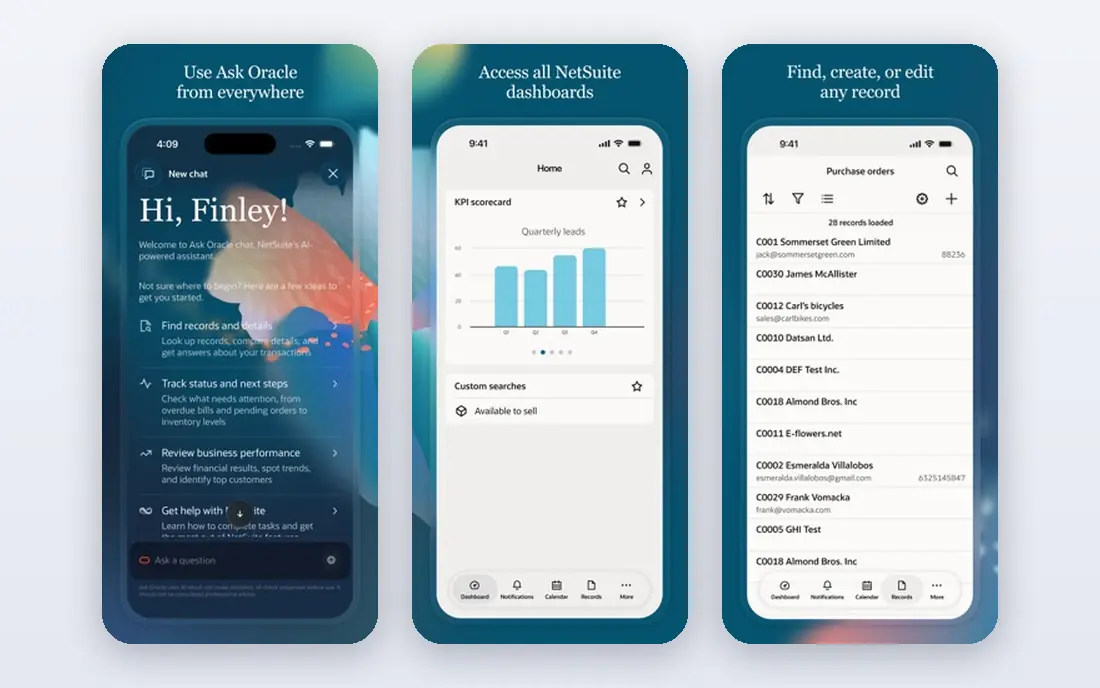
NetSuite, from Oracle, is a cloud ERP that covers financials, project management, resource planning, and customer records in one system. Professional services firms use it to track project costs, bill clients, manage resources, and report profitability by project, client, or practice. Reporting depth is a major strength.
Implementation takes time and money, and small firms may find NetSuite heavy. For a mid-size or growing services firm that wants one system for finance and delivery, NetSuite is the most complete pick here.
- Financials, projects, and CRM in one system
- Strong reporting
- Broad integrations
- Implementation cost and time
- Complexity for small firms
Sage Intacct
Ideal for: Project accounting
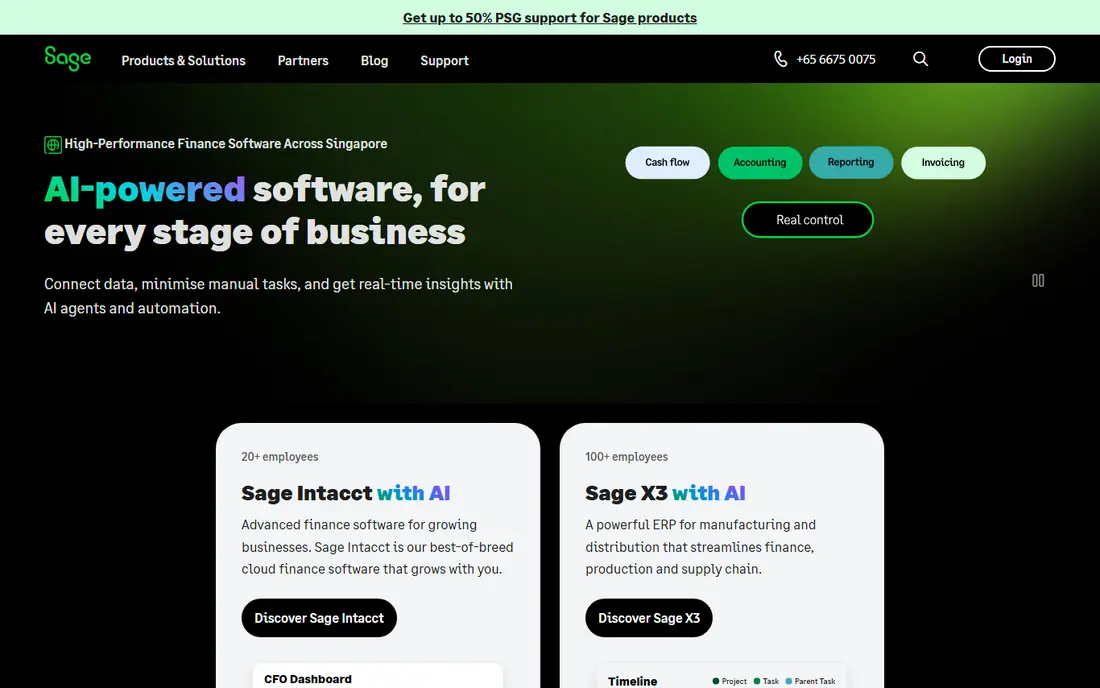
Sage Intacct is a cloud financial system with strong project accounting and multi-entity support. Services firms can track project costs, revenue recognition, and profitability, and consolidate entities with different currencies or structures. Dashboards give finance leaders a clear view of margins.
Native project management tools are lighter than Deltek or NetSuite, so delivery teams may pair Intacct with a project tool. Pricing is quote-based. For finance-led services firms that rank accounting depth first, Sage Intacct is an excellent choice.
- Strong project and multi-entity accounting
- Good dashboards
- Broad integrations
- Project management tools are lighter
- Pricing is quote-based
Workday
Ideal for: Large services firms

Workday combines financial management with human capital tools, which suits large professional services firms where people are the main asset. Workforce planning, project accounting, and financial reporting sit in one system, and the interface is modern for an enterprise platform.
Pricing is enterprise-level, and implementation is a major project with partner help. Small and mid-size firms will find better value elsewhere. For a large services firm that wants finance and HR together, Workday is a strong pick.
- Strong financials and HR in one system
- Good for large firms
- Modern interface
- Enterprise pricing
- Implementation is a major project
Deltek
Ideal for: Project-based firms
Deltek builds software for project-based businesses, including architecture, engineering, and consulting firms. Its tools cover project planning, resource management, time and expense, billing, and project accounting in a way that fits project-heavy work. Firms that live project to project will find the fit natural.
The learning curve is real, and product lines vary by firm type, so buyers must pick the right Deltek product. For project-based firms that want depth in delivery and accounting, Deltek is a leading specialist choice.
- Deep project management and accounting
- Built for A and E and consulting
- Resource planning
- Learning curve
- Product lines vary by firm type
Microsoft Dynamics 365
Ideal for: Microsoft-centered firms
Microsoft Dynamics 365 combines finance, project operations, and customer tools in a modular cloud system. Firms already using Microsoft 365, Teams, and Outlook gain from native integration, and the partner network offers many industry add-ons. Project accounting and billing tools cover common services models.
Configuration complexity is the catch, and licensing needs careful planning across modules. For a Microsoft-centered firm that wants ERP plus familiar productivity tools, Dynamics 365 is a strong, flexible pick.
- Finance and project tools
- Strong Microsoft 365 integration
- Broad partner network
- Configuration complexity
- Licensing needs careful planning
Acumatica
Ideal for: Growing mid-size firms
Acumatica is a cloud ERP with project accounting, financials, and distribution tools, priced by computing resources rather than per user in many plans. That model suits growing firms that add users without wanting per-seat costs to spike. Project tracking and reporting cover services needs well.
The partner ecosystem is smaller than NetSuite or Microsoft, and partner quality varies, so vet implementers carefully. For a growing mid-size services firm that wants flexible cloud ERP value, Acumatica is a smart option.
- Flexible cloud ERP
- Project accounting
- Pricing by resources, not per user
- Smaller ecosystem than NetSuite
- Partner quality varies
Odoo
Ideal for: Flexible, modular ERP
Odoo offers a modular ERP with apps for CRM, projects, timesheets, invoicing, and accounting. Firms can start small and add modules as they grow, and open-source roots keep entry costs low. The project and timesheet apps suit services firms that want a flexible, affordable system.
Setup and customization take effort, and module quality varies, so plan implementation carefully. For a small or cost-conscious services firm that wants modular flexibility, Odoo is a practical, low-cost starting point.
- Modular apps from CRM to accounting
- Open-source roots
- Low entry cost
- Setup and customization effort
- Quality varies by module
Certinia
Ideal for: Services on Salesforce
Certinia, formerly FinancialForce, builds professional services automation on the Salesforce platform. Firms already using Salesforce gain project management, resource planning, billing, and accounting in the same environment as their CRM. That unity helps services firms that sell and deliver through Salesforce.
Certinia needs Salesforce, so it is not a fit for firms outside that ecosystem. Pricing is quote-based. For a Salesforce-centered services firm, Certinia is the most natural ERP-style choice here.
- Built on Salesforce
- Project and resource tools
- Strong services automation
- Needs Salesforce
- Pricing is quote-based
How we picked these
We compared official feature pages, pricing pages, and public reviews, and we kept only ERP and services-automation systems serving professional services firms in October 2026. We favored systems with project accounting, time and billing tools, and resource planning. We left out product-only ERPs with no services features and small tools with no real accounting depth.
We also compared implementation partner quality, since ERP success depends heavily on the team configuring it. Firms with services experience and reference clients in your industry scored higher in our review than generalist implementers.
What to check before you choose an ERP
Start with your billing model. Time-and-materials, fixed-fee, and retainer work need different revenue and billing handling, and a system that fits one model may struggle with another. Map your project lifecycle, from proposal to invoice to closeout, before you compare vendors.
Next, check utilization and profitability reporting. The best systems show margin by project, client, and person without spreadsheet work. Finally, plan implementation honestly: data migration, training, and process change take months for larger systems. Run a pilot with one practice area, and confirm integration with your CRM, time tools, and accounting before a full rollout.
Change management decides ERP success more than software choice. Partners and staff need training, new processes need owners, and old spreadsheets need a retirement date, or teams will run two systems forever. Plan a phased rollout by practice area, celebrate early wins, and keep executive support visible through the first two quarters.
Questions to ask before you commit
Ask vendors how their system handles multi-currency and multi-entity work if your firm operates across borders. Confirm consolidation, intercompany billing, and tax handling for each entity type you run, since retrofitting these features later is painful. A demo with your actual entity structure reveals gaps fast.
Ask about time entry ease, since consultants resist systems that make timesheets slow or confusing. Confirm mobile time entry, timers, and approval flows, and test them with real consultants during a pilot. Low time-entry adoption corrupts utilization and billing data for the whole firm.
Ask how project margin reports handle work in progress and write-offs, since services profitability depends on honest work-in-progress accounting. Confirm that reports show margin by project, client, and person without spreadsheet fixes, and that write-offs are visible rather than buried. Clear margin reporting drives better pricing decisions.
Frequently asked questions
What is the best ERP for professional services?
NetSuite is our pick for most firms because it covers financials, projects, and resources in one cloud system. Sage Intacct suits finance-led firms, while Deltek suits project-heavy architecture, engineering, and consulting firms.
Is there a best ERP for service companies that is affordable?
Odoo offers the lowest entry cost with modular apps, while Acumatica offers flexible pricing for growing firms. Affordable depends on user count, modules, and implementation help, so compare total cost, not just license fees.
What is the difference between ERP and professional services automation?
ERP covers finance, projects, and operations broadly, while professional services automation focuses on projects, resources, time, and billing. Many firms use both, or choose a system such as NetSuite or Certinia that covers both areas.
Do professional services firms need an ERP?
Small firms can run on accounting plus project tools, but growing firms with many projects, entities, or billing models benefit from one system for margin visibility. If spreadsheet reporting takes days each month, an ERP or services platform is worth evaluating.
How long does ERP implementation take for a services firm?
Timelines range from weeks for small modular systems to many months for enterprise platforms such as Workday or NetSuite. Scope, data quality, and process change drive the timeline more than software choice alone. Plan training and a phased rollout.
How do services firms handle revenue recognition in an ERP?
Services ERPs track revenue by project milestones, time delivered, or percentage complete, depending on contract terms and accounting rules. The system should support your contract types without manual spreadsheet adjustments. Confirm with your accountant that the ERP revenue reports match your reporting requirements before implementation.