If you need discrete manufacturers serving healthcare supply needs, Epicor Kinetic is the first tool to look at here. If your case is different, Microsoft Dynamics 365 Finance suits organizations wanting financial reporting and embedded analytics and Workday Financial Management suits Finance teams prioritizing control and transactional efficiency.
Choosing ERP suites for healthcare usually comes down to price, fit and limits. This Ainotely guide sets 6 tools side by side on those three points, with the facts kept short and checkable.
Key takeaways
Epicor Kinetic takes the first slot, best suited to discrete manufacturers serving healthcare supply needs.
Microsoft Dynamics 365 Finance comes with a trade-off: Finance scope instead of full clinical ERP.
NetSuite suits cloud financials, accounting, and inventory in one system.
Epicor Kinetic, NetSuite and the 4 others all sell by quote; expect sales conversations before you see a price.
Best for: Discrete manufacturers serving healthcare supply needs
Epicor Kinetic works best for discrete manufacturers serving healthcare supply needs. Buyers should choose it when manufacturing and supply chain execution are the core need, and look to healthcare-packaged suites for provider-side requirements.
Check the vendor site for Epicor Kinetic pricing; none is listed in this comparison. Trial and free access: Not stated.
Drawbacks to consider: Not aimed at provider operations.
Best for: Organizations wanting financial reporting and embedded analytics
Where Microsoft Dynamics 365 Finance fits: organizations wanting financial reporting and embedded analytics. Microsoft Dynamics 365 Finance is presented as software to boost profitability with financial reporting, embedded analytics, and AI-driven insights.
The product centers on finance instead of a complete healthcare ERP, so supply chain, scheduling, and clinical integration needs must be addressed through extra options. This comparison lists no price for Microsoft Dynamics 365 Finance; ask the vendor. Free access: Not stated.
Drawbacks to consider: Healthcare additions may need partners.
Best for: Finance teams prioritizing control and transactional efficiency
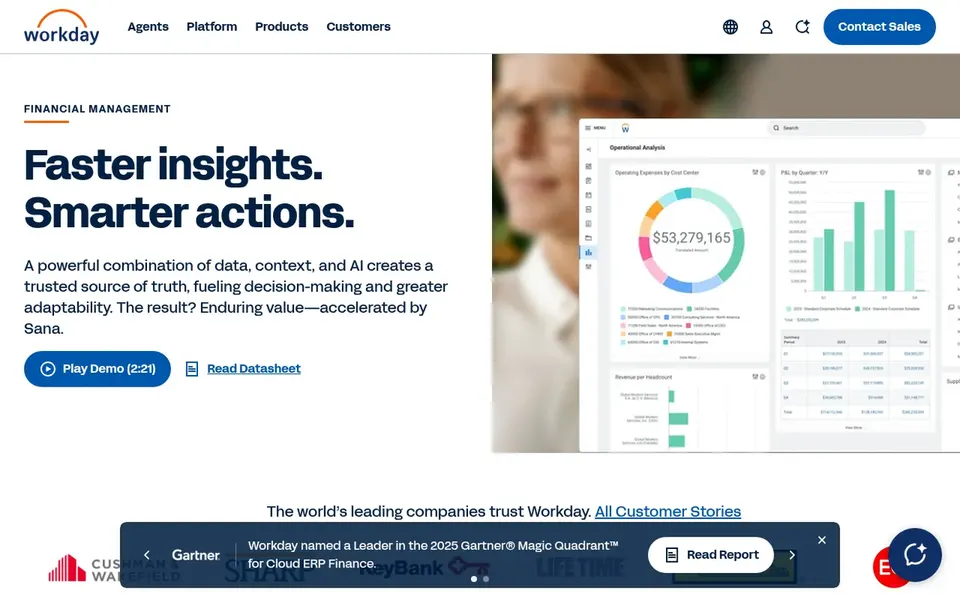
Workday Financial Management targets Finance teams prioritizing control and transactional efficiency. Workday Financial Management is described as giving unparalleled insight and an innovative foundation for transactional efficiency and control.
In practice, the product is framed around financial management, so clinical integration and deep healthcare supply chain needs should be confirmed separately. Pricing for Workday Financial Management is not stated here, so ask the vendor for current figures. Trial and free access: Not stated.
The main drawbacks: Finance-centric instead of clinical.
Best for: Health systems wanting integrated clinical and financial data
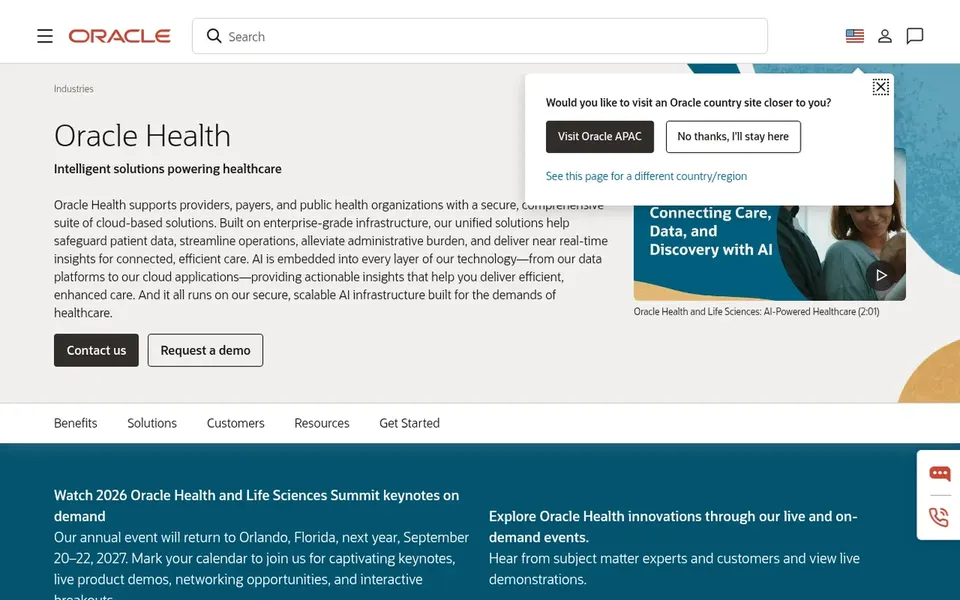
Oracle Health ERP targets Health systems wanting integrated clinical and financial data. Teams with purely financial requirements and no clinical connection may find a finance-led suite more straightforward, whereas organizations prioritizing healthcare-specific interoperability should confirm those details straight with the vendor.
Since the offering spans plenty of capabilities, implementation scope and module fit deserve close review before committing. Oracle Health ERP is positioned around advancing how health happens, with secure and reliable options intended to deliver better healthcare insights and people-centric experiences. Check the vendor site for Oracle Health ERP pricing; none is listed in this comparison. As for free access: Not stated.
Drawbacks to consider: Healthcare depth varies by module.
Best for: Large organizations needing modular cloud ERP with built-in AI
SAP S/4HANA serves large organizations needing modular cloud ERP with built-in AI. Smaller providers or teams wanting a ready-made healthcare bundle may prefer a suite explicitly packaged for the industry.
SAP S/4HANA does not show a starting price in this comparison, so check the vendor site for current pricing. Trial and free access: Not stated.
Points against: Healthcare tailoring comes through partners.
Best for: Cloud financials, accounting, and inventory in one system
NetSuite is a good fit for cloud financials, accounting, and inventory in one system. NetSuite is described as an AI cloud ERP combining financials, CRM, accounting, inventory management, and more, with built-in AI intended to ease work and turn data into action.
Honest limits: Healthcare-specific features are restricted.
Also, NetSuite is not positioned as a healthcare-specific suite, so clinical, interoperability, and care scheduling requirements would need separate systems. From a buyer's view, Hospitals seeking deep healthcare functionality should weigh industry-focused choices, whereas smaller or ancillary organizations may find the consolidated cloud model appealing. This comparison lists no price for NetSuite; ask the vendor. On free options: Not stated.
Request quotes from Epicor Kinetic, NetSuite and the others; the list shows no fixed prices.
Before choosing Epicor Kinetic, weigh its main limit: not designed for provider operations.
See whether NetSuite offers onboarding or training, and whether it is included in the price.
Confirm minimum seats and billing terms with Microsoft Dynamics 365 Finance before you commit to an annual plan.
Confirm you can export your data from SAP S/4HANA, so leaving later does not mean losing records.
How we picked
We compared the tools on published pricing, free plan or trial availability, feature coverage for ERP suites for healthcare, and the limits each vendor documents. Where a vendor does not publish a price, the entry says quote. Where a price depends on seats or billing term, the entry says so. Position on the page reflects fit for a typical buyer first, with price clarity and free access breaking ties. Treat it as a guide, not a ruling.
Every price and plan detail on this page comes from the vendors’ own websites. We did not run hands-on tests unless the text says so, and we do not publish star ratings or review scores. See how we score and our disclosure.
Keep your shortlist in one place
Paste prices, trial dates and notes from this guide into Ainotely, our AI note app. It files them into a topic and pulls out tasks like “cancel trial by Friday”. Free 7-day trial, no card needed.
Is Epicor Kinetic the right pick for everyone comparing ERP suites for healthcare?
No single tool suits every team. Epicor Kinetic comes first because it fits discrete manufacturers serving healthcare supply needs, while Microsoft Dynamics 365 Finance suits organizations wanting financial reporting and embedded analytics and Workday Financial Management suits Finance teams prioritizing control and transactional efficiency. Match the tool to your own size, budget and workflow before deciding.
How are the tools for ERP suites for healthcare ordered?
The order follows typical fit for ERP suites for healthcare, with Epicor Kinetic first and NetSuite last, then price clarity and free access. It is editorial judgement, not a score, so another team could rank the tools differently.
Do these tools publish their prices?
No. None of the tools, from Epicor Kinetic to NetSuite, shows a fixed starting price here, so budget time for quotes. All 6 picks in this ERP suites for healthcare comparison show their pricing, free plan details and main limits on the cards above.
Does any tool for ERP suites for healthcare here have a free plan?
A permanent free plan is not offered by Epicor Kinetic, NetSuite or the other tools here. Plan a short evaluation period instead.
Which ERP suite is a good match for hospitals compared with suppliers?
Start with Epicor Kinetic if you need discrete manufacturers serving healthcare supply needs. Microsoft Dynamics 365 Finance is the better match for organizations wanting financial reporting and embedded analytics, and Workday Financial Management for Finance teams prioritizing control and transactional efficiency. The best choice depends on budget, team size and workflow.