Best eSIM App for International Travel in 2026: 7 Apps Compared

- Airalo is our pick for most travelers, thanks to broad country coverage and a simple app for buying and installing eSIMs.
- Holafly suits travelers who want unlimited data plans for heavy use abroad.
- Nomad suits travelers who want flexible regional and global plans at fair prices.
- Saily, Ubigi, GigSky, and Maya Mobile cover security-focused, multi-device, cruise, and US-based travel needs.
- Always check phone compatibility, plan validity, and whether your plan includes calls, texts, or data only.
Quick comparison
| Product | Ideal for | Price from | Free version | |
|---|---|---|---|---|
 Airalo | Broad country coverage | See website | See website | Visit |
 Holafly | Unlimited data plans | See website | See website | Visit |
 Nomad | Flexible regional plans | See website | See website | Visit |
 Saily | Security-focused travel data | See website | See website | Visit |
 Ubigi | Multi-device travel data | See website | See website | Visit |
 GigSky | Cruise and global travel | See website | See website | Visit |
 Maya Mobile | US-based travel plans | See website | See website | Visit |
The best eSIM app for international travel
An eSIM lets you buy mobile data for another country without swapping physical SIM cards, which makes landing and getting online far easier. We compared official plan pages, app store listings, and public reviews, focusing on country coverage, plan types, prices, installation ease, and support for travelers.
Airalo
Ideal for: Broad country coverage
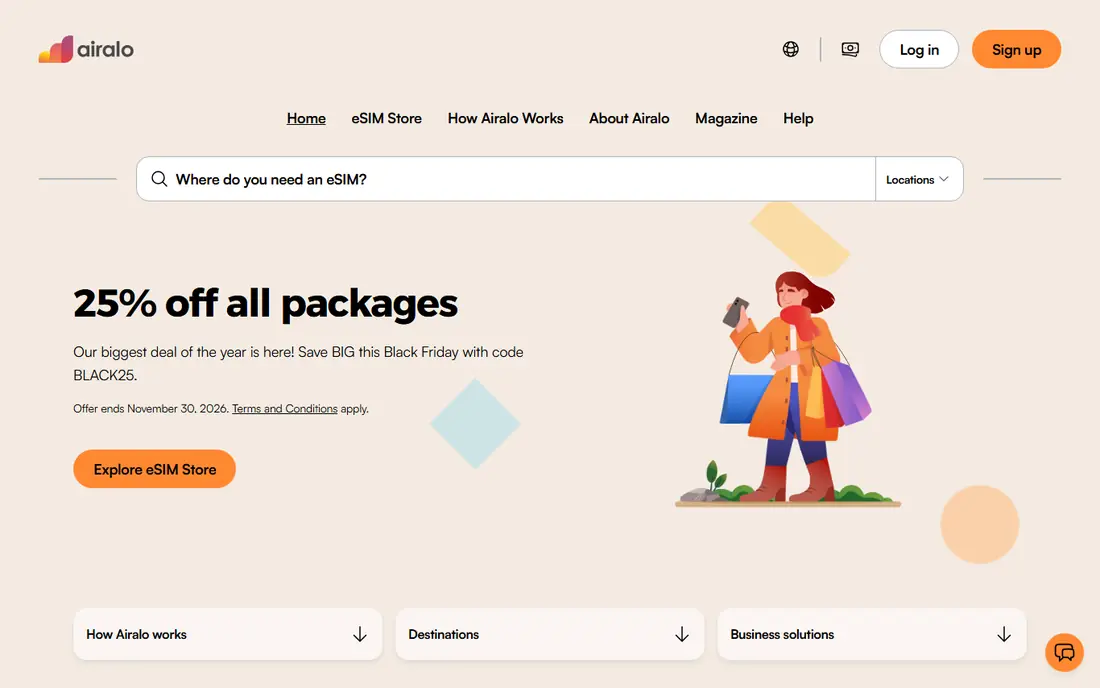
Airalo is the largest eSIM marketplace on this list, with local, regional, and global plans covering a very broad set of countries. Its app makes buying, installing, and topping up an eSIM simple, which matters when you land and need data fast. Travelers who visit many countries benefit most from its regional and global options.
Most Airalo plans are data-only, so calls and texts need apps such as WhatsApp or FaceTime. Support quality can also vary by plan and provider. For broad coverage and easy setup, Airalo is our top pick for international travel.
- Very broad country and regional coverage
- Simple app and installation
- Local, regional, and global plans
- Most plans are data-only
- Support quality varies by plan
Holafly
Ideal for: Unlimited data plans
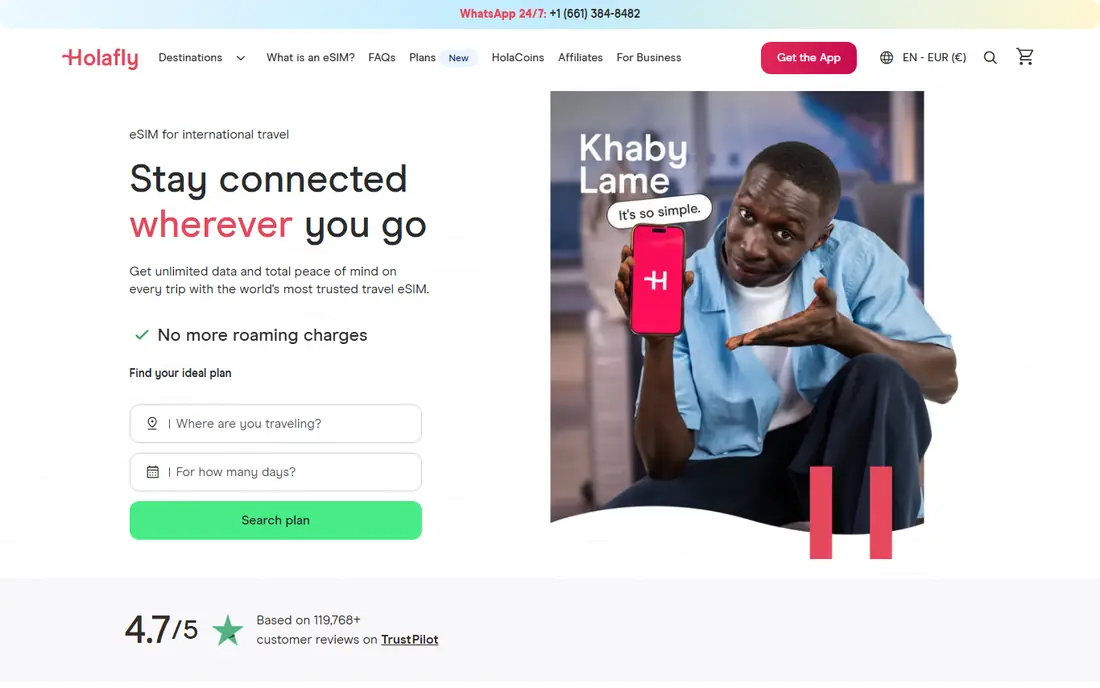
Holafly suits travelers who use a lot of data abroad, with unlimited data plans for many destinations and a simple setup process. Heavy users who stream, navigate, work remotely, or hotspot to a laptop will appreciate not counting gigabytes. Its app and support aim to get travelers online quickly after landing.
Unlimited plans cost more than limited data plans, and fair-use limits may apply at very high usage. For travelers who want worry-free data without tracking usage, Holafly is a strong pick.
- Unlimited data plans for many destinations
- Easy setup
- Good for heavy data users
- Higher price than limited plans
- Fair-use limits may apply
Nomad
Ideal for: Flexible regional plans
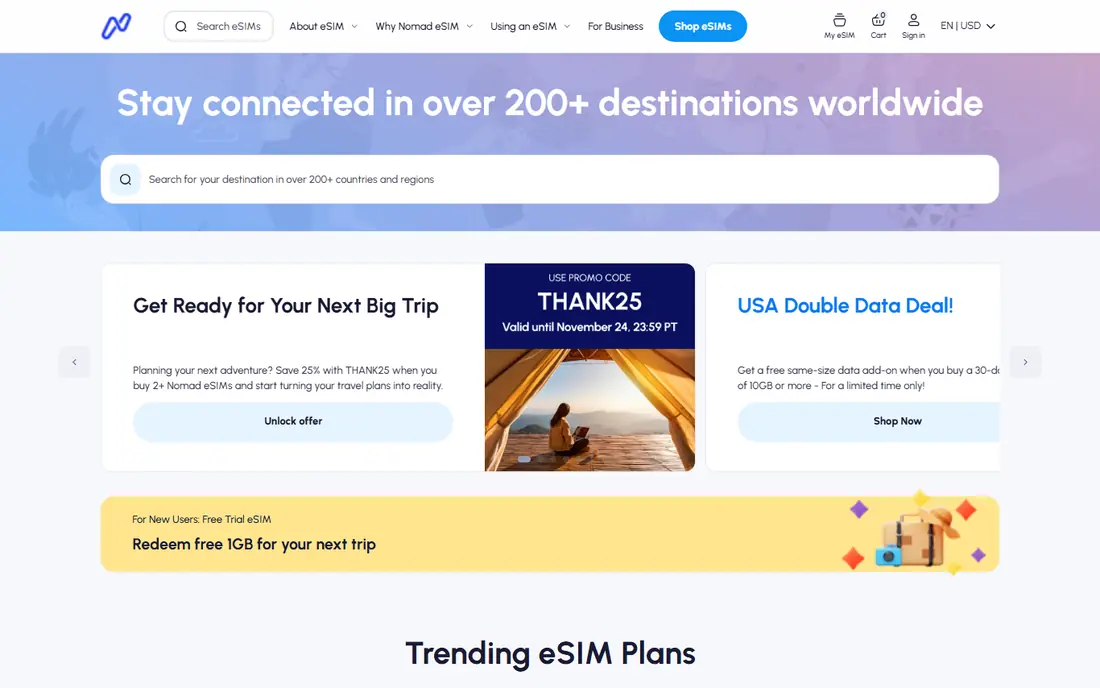
Nomad offers local, regional, and global eSIM plans with flexible data amounts and validity periods, at prices that compete well with larger marketplaces. Its app makes buying and topping up simple, and regional plans suit multi-country trips in Europe, Asia, and the Americas.
Coverage is broad but not universal, so check your exact destinations before buying. Most plans are data-only, so calls need internet apps. For flexible plans at fair prices, Nomad is an excellent Airalo alternative.
- Flexible local, regional, and global plans
- Fair prices
- Easy app and top-ups
- Coverage is broad but not universal
- Most plans are data-only
Saily
Ideal for: Security-focused travel data
Saily, from the team behind NordVPN, pairs travel eSIMs with security-minded features, appealing to travelers who also care about safe connections abroad. Its app is simple to use, with plans for many popular destinations and straightforward installation.
Coverage is newer and smaller than Airalo, and plan choice varies by destination. For privacy-minded travelers who want an eSIM from a security-focused company, Saily is a compelling pick.
- Travel eSIMs plus security features
- Simple app
- Good for privacy-minded travelers
- Newer and smaller coverage than Airalo
- Plan choice varies by destination
Ubigi
Ideal for: Multi-device travel data
Ubigi stands out for multi-device support, offering eSIM data for phones, tablets, laptops, and connected cars, not just phones. That breadth suits travelers with several devices, families sharing data, and drivers with connected cars. Pay-as-you-go options add flexibility for uneven use.
The app experience varies by device type, and some plans are better suited to residents or long stays than short tourist trips. For multi-device travelers, Ubigi offers coverage and flexibility that phone-only apps cannot match.
- ESIMs for phones, tablets, and cars
- Broad coverage
- Pay-as-you-go options
- App experience varies by device
- Some plans need a closer look for tourists
GigSky
Ideal for: Cruise and global travel
GigSky offers eSIM data for international travel, including cruise ship coverage that many rivals lack. Its regional and global plans suit travelers who move between countries, ships, and ports, where normal roaming can be costly and unreliable.
Consumer marketing is smaller than Airalo, and pricing varies by plan. For cruisers and global travelers who need data at sea as well as on land, GigSky is a distinctive and useful pick.
- Cruise ship and global coverage
- Data plans for many regions
- Simple app
- Smaller consumer focus than Airalo
- Pricing varies by plan
Maya Mobile
Ideal for: US-based travel plans
Maya Mobile is a US-based eSIM provider with global and regional plans, clear pricing pages, and a support reputation that appeals to first-time eSIM users. Its app covers buying, installation, and top-ups simply, which helps travelers who want guidance rather than a huge marketplace to browse.
Coverage is broad but smaller than Airalo, and most plans are data-only. For US travelers who want a straightforward provider with responsive support, Maya Mobile is a solid pick.
- US-based company with clear plans
- Global and regional options
- Good support reputation
- Coverage is broad but smaller than Airalo
- Most plans are data-only
How we picked these
We compared official plan pages, app store listings, and public reviews, and we checked that the homepages listed here belong to the products named. We favored eSIM apps with broad coverage, clear plan details, easy installation, and support for travelers. We left out carrier roaming plans with no eSIM app, and we focused on data plans for international travel, since calls and texts often need separate options.
We also weighed how each vendor treats new users, including trial length, onboarding help, and the quality of its public documentation. A tool with clear guides and responsive support earns trust faster than a tool with a thin help center, even when feature lists look similar. We gave extra weight to vendors that publish pricing openly and explain limits plainly, since hidden costs and surprise caps cause most buyer regret. Where pricing was only available on request, we said so rather than guessing, and we treated a missing free tier as a real drawback for small teams testing on a budget.
What to check before you buy
Start with compatibility. Confirm your phone supports eSIM, is not carrier-locked, and matches the plan network bands for your destination. An incompatible or locked phone cannot use an eSIM, no matter how good the plan looks.
Next, check plan details carefully. Confirm data amount, validity days, coverage countries, hotspot permission, and whether calls and texts are included. A regional plan that excludes one country on your trip can leave you offline at the worst moment.
Finally, install before you fly. Buy and install the eSIM at home on Wi-Fi, test activation steps, and keep your home SIM active for bank codes and calls if needed. Arriving with data ready saves stress at the airport and avoids expensive roaming.
Plan your exit before you enter. Check how your data exports, which formats are supported, and whether you can leave without losing history, templates, or customer records. A tool with clean exports gives you freedom to change later if pricing, features, or support disappoint you, while a tool with weak exports locks you in quietly. Ask the vendor directly about export limits and migration help, and test an export with a sample of your own data during the trial. That single test often reveals more about a vendor than any sales call, and it protects you if your needs change next year.
Frequently asked questions
What is the best eSIM app for international travel?
Airalo is our pick for most travelers, thanks to broad coverage and a simple app. Holafly suits heavy data users who want unlimited plans, while Nomad suits travelers who want flexible regional plans at fair prices.
Is there a free eSIM app for travel?
Most eSIM apps here charge per plan rather than offering free data, though some offer small trial or welcome data in certain regions. Check each app for current offers, since free data is usually limited and short-lived.
Do eSIM plans include calls and texts?
Most plans here are data-only, so calls and texts need internet apps such as WhatsApp, FaceTime, or Skype. Some providers offer plans with a phone number, so check plan details if you need traditional calls.
Will an eSIM work on my phone?
Most recent iPhones, Samsung Galaxy, and Google Pixel phones support eSIM, but older models and carrier-locked phones may not. Check your phone settings for eSIM support and confirm with your carrier that the phone is not carrier-locked before buying.
Can I keep my home number while using an eSIM?
Yes, most dual-SIM phones let you keep your home SIM active for calls and texts while using the eSIM for data. Set the eSIM as the data line and keep your home line for verification codes, then check roaming charges for home SIM use abroad.
How often should I review my choice?
Review your main tools at least once a year, and sooner if pricing, team size, or needs change sharply. A quick review covers cost per user, feature use, support quality, and whether the team still likes the tool day to day. If a cheaper or better-fitting option has appeared, run a small pilot before switching, since migration costs can outweigh modest savings. Regular reviews keep you from paying for seats nobody uses or sticking with a tool that no longer fits how your team actually works.