Best Event Apps for Conferences in 2026: 8 Apps Compared

- Whova is our pick for most conferences, with agendas, networking, live polls and attendee engagement in one app at a fair price.
- Cvent suits large enterprise events that need registration, venue and event management beside the attendee app.
- EventMobi and Bizzabo suit midsize and hybrid events, with strong agenda, networking and analytics tools for organisers.
- The best conference app is the one attendees actually open, so test agenda, networking and notifications with real attendees before event day.
Quick comparison
| Product | Ideal for | Price from | Free version | |
|---|---|---|---|---|
 Whova | All-round conferences | See website | No | Visit |
 Cvent | Large enterprise events | See website | No | Visit |
 EventMobi | Midsize and hybrid events | See website | No | Visit |
 Bizzabo | Hybrid event management | See website | No | Visit |
 RingCentral Events | Virtual and hybrid events | See website | No | Visit |
 Airmeet | Virtual networking events | See website | Yes | Visit |
 vFairs | Virtual and hybrid expos | See website | No | Visit |
 Brella | AI networking and meetings | See website | No | Visit |
The best event apps for conferences
A conference app must do three jobs: help attendees find sessions, help them meet the right people, and help organisers see what is working. Agendas, maps, networking, polls and push alerts all matter, but adoption matters most. We compared agenda tools, networking, engagement features, analytics and pricing.
Whova
Ideal for: All-round conferences
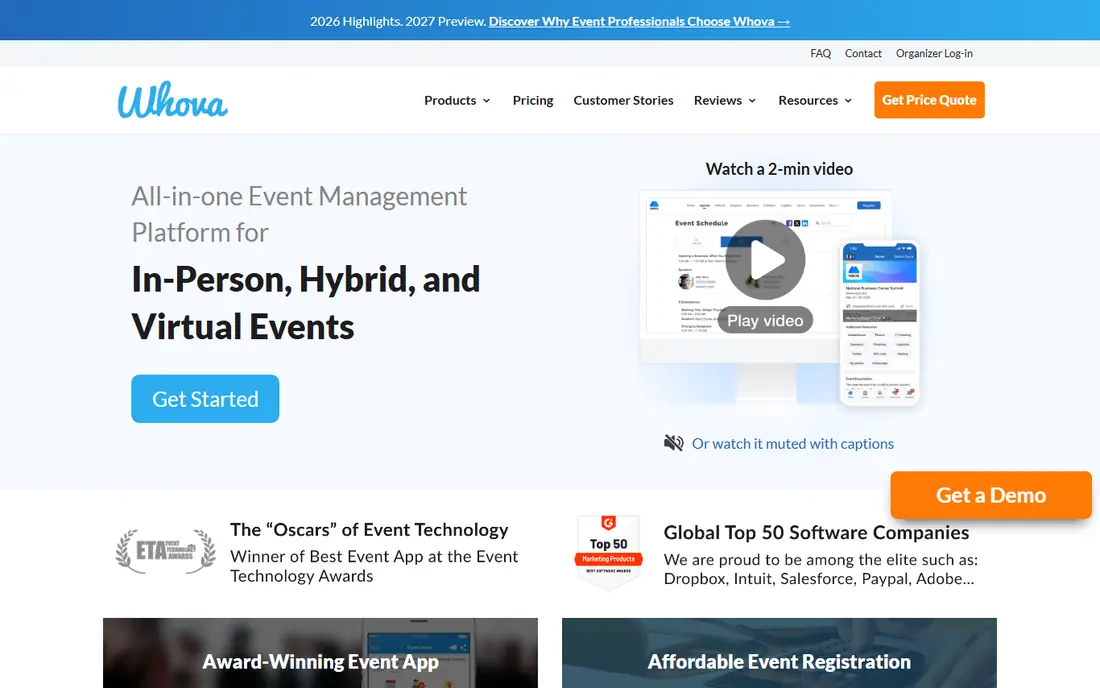
Whova is the all-round conference pick. Attendees build personal agendas, find sessions and maps, message other attendees, join live polls and Q&A, and receive push alerts when rooms or times change. Organisers get engagement tools, exhibitor listings and post-event analytics without stitching several tools together.
The catch is pricing clarity. Whova pricing is quote based and varies by attendee count and features, so small conferences must request a quote to compare fairly. For a midsize conference that needs one app attendees will actually use, Whova remains the safest choice.
- Agendas, networking, live polls and Q&A in one app
- Attendee engagement tools
- Good fit for midsize conferences
- Pricing is quote based
- Advanced branding and analytics sit on higher tiers
Cvent
Ideal for: Large enterprise events
Cvent suits large enterprise conferences where the app is one part of a bigger event platform. Registration, venue sourcing, housing, exhibitor management and the attendee app share one system, which helps a large team keep data consistent across a multi-day event. Reporting and analytics cover attendance, engagement and exhibitor performance in detail.
The weakness is weight. Cvent pricing is enterprise and quote based, and setup needs planning and staff time, so a small conference will find it heavy. It earns its place when scale, compliance and enterprise reporting matter more than a quick app launch.
- Registration, venue sourcing and event management beside the app
- Enterprise scale and reporting
- Strong exhibitor tools
- Enterprise pricing and setup effort
- Too heavy for small conferences
EventMobi
Ideal for: Midsize and hybrid events
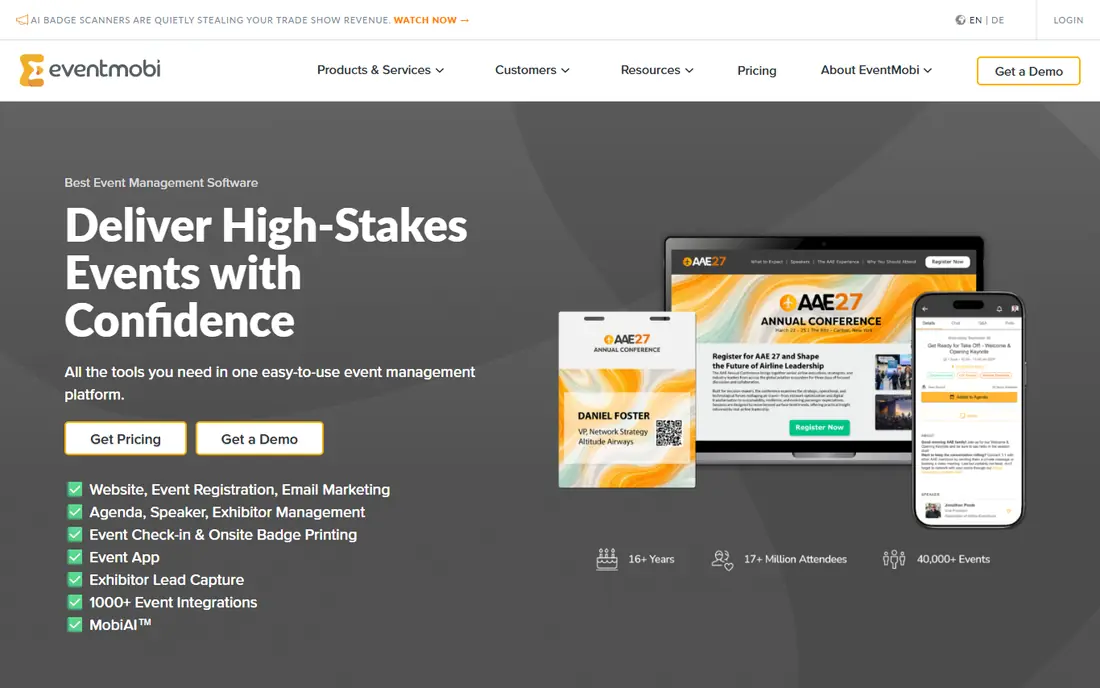
EventMobi suits midsize conferences and hybrid events that need a polished attendee experience. Its app covers agendas, speaker profiles, maps, networking, live polls and session feedback, with branding that makes the app feel like part of the event, not a generic tool. Hybrid features let remote attendees join sessions and network alongside in-person guests.
The limit is plan clarity. Feature depth varies by tier, so organisers must confirm which networking, branding and analytics features sit on their plan before signing. For a midsize event that wants a professional hybrid app, EventMobi is a strong pick.
- Agendas, networking and live engagement for in-person and hybrid events
- Custom branding
- Analytics for organisers
- Pricing is quote based
- Feature depth varies by plan, so confirm agenda and networking tiers
Bizzabo
Ideal for: Hybrid event management
Bizzabo suits organisations running a programme of events, not just one conference. It combines registration, marketing, event management and the attendee app, with analytics that track attendance and engagement across in-person and virtual formats. That breadth helps teams that repeat events and want consistent data year to year.
The drawback is cost and effort. Bizzabo pricing is quote based and enterprise leaning, so small single-event organisers may find it heavy. It fits larger teams that run many events and need one platform for the whole programme.
- Event management plus attendee app
- Registration and marketing tools
- Analytics across in-person and virtual attendance
- Quote-based enterprise pricing
- Setup effort suits larger teams
RingCentral Events
Ideal for: Virtual and hybrid events
RingCentral Events, formerly Hopin, suits virtual and hybrid conferences where remote attendance matters as much as in-person presence. It offers stages, breakout sessions, networking rooms, expo areas and sponsor tools, with an attendee experience built for online participation. Hybrid events can run in-person sessions beside virtual stages in one platform.
The limit is focus. A purely in-person conference with no virtual audience may find Whova or EventMobi simpler, since RingCentral Events shines brightest for online and hybrid formats. For a hybrid conference with a large remote audience, it is a leading choice.
- Strong virtual and hybrid event platform, formerly Hopin
- Stages, sessions and networking
- Expo and sponsor areas
- Virtual-first design means in-person-only events may prefer Whova
- Pricing is quote based
Airmeet
Ideal for: Virtual networking events
Airmeet suits virtual conferences and networking-led events. Its social lounge with virtual tables lets attendees move between conversations naturally, while sessions, polls and Q&A keep content interactive. A free tier covers small events, which makes Airmeet easy to test before paying for a larger conference.
The weakness is in-person depth. Airmeet is virtual-first, so organisers running a large in-person conference with complex venue needs may prefer Whova or Cvent. For a virtual event where networking matters most, Airmeet is a strong and affordable pick.
- Virtual tables and networking rooms
- Sessions, polls and Q&A
- Free tier for small events
- Virtual-first, so in-person agenda features are lighter
- Larger event pricing is quote based
vFairs
Ideal for: Virtual and hybrid expos
vFairs suits conferences with a large expo or sponsor hall, whether virtual or hybrid. Its virtual booths, expo halls, sponsor branding and attendee networking tools recreate the exhibition floor online, while hybrid features connect in-person and remote visitors. That expo strength sets vFairs apart from agenda-first apps.
The catch is fit. A simple single-track conference without an expo may find vFairs heavier than Whova, and pricing is quote based. For an expo-led conference where sponsors pay for visibility, vFairs gives sponsors more to show for their money.
- Virtual expo halls and booths
- Hybrid event support
- Strong sponsor and exhibitor tools
- Quote-based pricing
- Expo focus means simple conferences may find it heavy
Brella
Ideal for: AI networking and meetings
Brella suits B2B conferences where meetings are the main value. Its AI matchmaking suggests relevant attendees, helps book one-to-one meetings and tracks meeting outcomes, which turns a large conference into a diary of useful conversations. Agenda, profiles and messaging support that meeting flow.
The limit is breadth. Brella leads on networking, but registration, expo and venue depth trail full platforms such as Cvent and Bizzabo. For a conference where attendees come to meet buyers, partners or peers, Brella is the networking-first pick.
- AI-powered matchmaking for meetings
- Agenda and networking in one app
- Strong fit for B2B conferences
- Quote-based pricing
- Networking focus means expo and registration depth trail Cvent
How we picked these
We compared agenda tools, networking, live engagement, hybrid support, analytics and pricing for apps still operating in October 2026. We kept in-person, hybrid and virtual-first options in the list, since conferences now span all three formats. We did not run live events on each platform, and we did not repeat vendor engagement claims as measured facts.
What to check before you buy
Start with attendee adoption. The best features mean nothing if attendees never open the app, so promote the app in registration emails, show a two-minute demo at the opening session, and put agenda changes and networking prompts only in the app. A single source of truth for agenda changes prevents confusion across email, signs and word of mouth.
Next, test networking with real data. Load speaker and attendee profiles, test matchmaking or messaging, and check that one-to-one meeting booking works on phones, not just on desktop. For hybrid events, test remote session quality, chat moderation and time-zone display, since those details decide whether remote attendees stay engaged.
Finally, confirm pricing by attendee count and features. Most conference apps price by attendees, event days or feature tiers, so get a written quote for your exact headcount and must-have features, including branding, analytics and post-event data export. Ask who owns attendee data after the event, and confirm you can export contacts and engagement data for next year.
Frequently asked questions
What is the best event app for conferences?
Whova is our pick for most conferences because it covers agendas, networking, polls and engagement in one app. Cvent suits large enterprise events, EventMobi and Bizzabo suit midsize and hybrid events, and Brella suits networking-led B2B conferences.
Is there a free event app for conferences?
Airmeet offers a free tier for small virtual events, while most conference apps are quote based or paid. Free tiers suit small meetups and tests, but branding, analytics and large attendee counts usually need a paid plan.
How much does a conference app cost?
Most pricing is quote based and varies by attendee count, event days and features, so vendors require a quote for current pricing. Budget for the app beside registration, venue and AV costs, and confirm whether attendee count overages add fees.
Do conference apps work for hybrid events?
Yes. EventMobi, Bizzabo, RingCentral Events, Airmeet and vFairs all support hybrid formats with virtual sessions, networking and expo features. Test remote quality and time-zone handling before event day, since hybrid success depends on the remote experience, not just the in-person one.
How do I get attendees to use the event app?
Promote the app from registration onward, make it the only place for live agenda changes, and seed networking before the event with profiles and meeting booking. A short demo at the opening session and push alerts for key sessions lift adoption more than any feature list.