Best Event Ticketing Software in 2026: 8 Platforms Compared

- 1
 EventbriteAll-round discoveryVisit
- 2
 TicketmasterLarge venues and toursVisit
- 3
 SeatGeekSports and concert fansVisit
- 4
 DICEMusic discoveryVisit
- 5
 HumanitixCharities and communityVisit
- Eventbrite suits most independent organizers who want discovery plus simple setup.
- Ticketmaster suits large venues and major tours that need scale and verified resale.
- Ticket Tailor suits small organizers who want low flat fees and full control of buyer data.
- Humanitix suits charities and community events that want booking profits to fund good causes.
- Always compare total fees, payout timing, and refund rules before you publish an event.
Quick comparison
| Product | Ideal for | Price from | Free version | |
|---|---|---|---|---|
| Eventbrite | All-round discovery | See website | Yes | Visit |
| Ticketmaster | Large venues and tours | See website | No | Visit |
| SeatGeek | Sports and concert fans | See website | No | Visit |
| DICE | Music discovery | See website | No | Visit |
| Humanitix | Charities and community | See website | Yes | Visit |
 Ticket Tailor | Low flat fees | See website | Yes | Visit |
 Universe | Ticketmaster distribution | See website | No | Visit |
 Tixr | Festivals and live events | See website | No | Visit |
The best event ticketing software
Event ticketing software covers two different jobs: helping organizers sell tickets, and helping fans find and buy them. Some platforms do both, while others focus on one side. We compared official product pages, pricing, and public reviews for the platforms below, looking at fees, event discovery, checkout quality, check-in tools, payout timing, resale rules, and data ownership. Where we could not verify a current fee on the vendor's own page, we list See website rather than guessing.
Eventbrite
Ideal for: All-round discovery
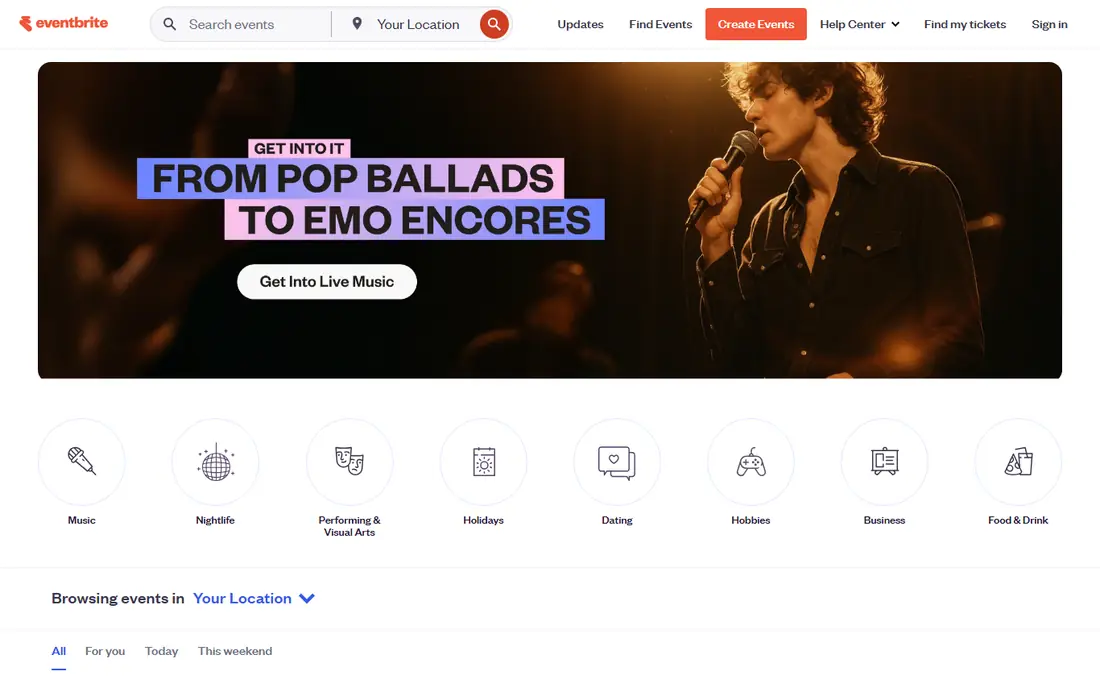
Eventbrite is the default choice for independent organizers, covering concerts, classes, conferences, food events, and community gatherings. Organizers can publish an event page in minutes, sell multiple ticket types, and reach people browsing Eventbrite for things to do nearby. Free events can be listed at no cost, while paid events carry service fees that vary by plan and region.
The trade-off is branding and fees. Your event lives on Eventbrite's marketplace, which helps discovery but gives you less control than a white-label box office. Eventbrite suits organizers who value reach and simplicity over full brand control.
- Huge event discovery marketplace
- Easy setup for many event types
- Free events cost nothing to list
- Marketing tools included
- Fees apply to paid tickets
- Brand is Eventbrite's, not fully your own
Ticketmaster
Ideal for: Large venues and tours
Ticketmaster is the biggest ticketing platform in North America, selling verified tickets for concerts, sports, theater, and family shows, with an official resale marketplace for fans who cannot attend. All-in prices show fees before checkout, which answers a long-standing complaint about surprise charges. Its partnerships with leagues, teams, and major venues mean many of the biggest events only sell here.
Small organizers will find Ticketmaster less accessible than Eventbrite or Ticket Tailor, and fee levels draw regular criticism from fans. Ticketmaster suits large venues, promoters, and tours that need maximum reach and verified resale.
- Largest event marketplace
- Verified tickets and resale
- All-in pricing shown upfront
- Deep venue and league partnerships
- Fees are a frequent complaint
- Not built for small independent organizers
SeatGeek
Ideal for: Sports and concert fans
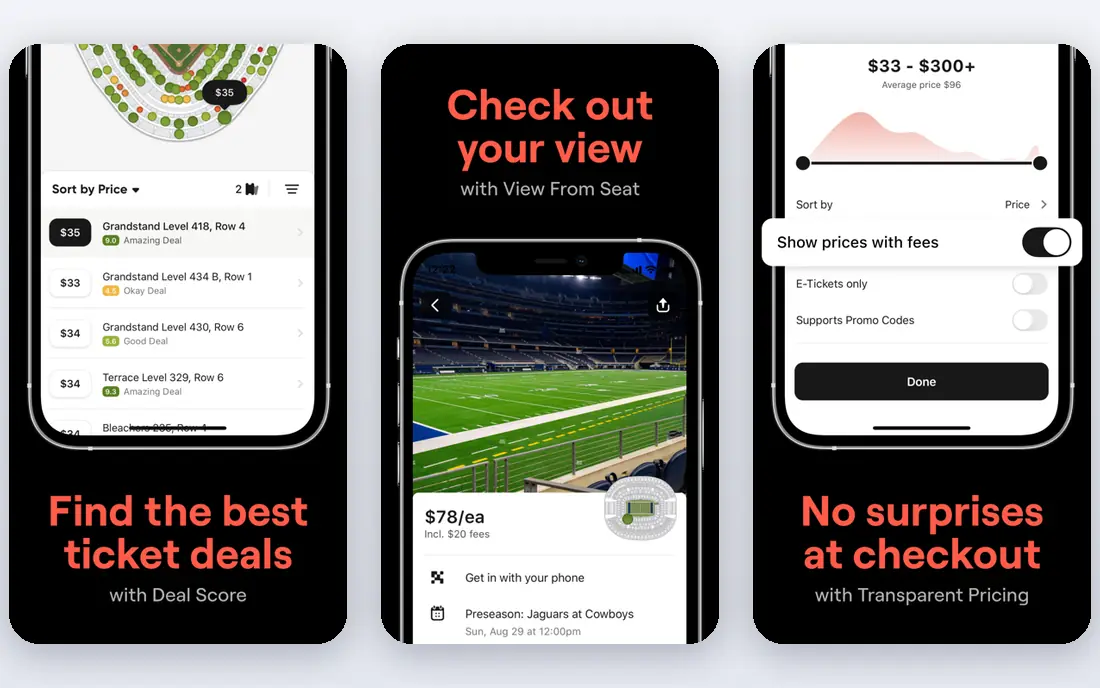
SeatGeek is a ticket marketplace for sports, concerts, and live shows that rates each deal so fans can judge whether a seat is a good value. It aggregates primary and resale tickets in one search, shows seat maps, and lets fans follow artists through a Spotify connection for alerts when they play nearby. The mobile app is the main way most fans buy.
Prices move with demand and resale supply, so the same seat can cost very different amounts on different days. SeatGeek suits fans who want a quick value read on seats and a simple mobile purchase.
- Deal scores rate ticket value
- Broad sports and concert coverage
- Mobile-first buying
- Spotify integration for artist alerts
- Prices vary with resale supply
- Fees added at checkout
DICE
Ideal for: Music discovery
DICE focuses on live music, club nights, comedy, and gigs, with upfront pricing that shows the full cost before checkout. Tickets are tied to your phone and account, which cuts touting and makes entry smoother, and the app recommends shows based on artists you follow. Fans can also find tickets to sold-out shows through its waiting list and resale features.
Coverage is strongest in major music cities and thinner elsewhere, and non-music events are limited. DICE suits music fans who want honest pricing and discovery without resale markups.
- Full price shown upfront
- Personalized recommendations
- Tickets locked to your phone to fight touting
- Sold-out show access
- Focused on music and club events
- Coverage varies by city
Humanitix
Ideal for: Charities and community
Humanitix is a ticketing platform with a social mission: 100 percent of its booking fee profits go to charity projects, including education and food justice programs. Organizers get standard ticketing tools for events of many kinds, from galas and festivals to classes and community gatherings, and free events can be listed without fees. The platform has grown steadily in Australia, New Zealand, and the US.
Its discovery audience is smaller than Eventbrite's, and enterprise features are less deep than Ticketmaster's. Humanitix suits charities, schools, and community organizers who want their ticketing spend to do good as well as sell tickets.
- Booking fee profits fund charity projects
- Free events supported
- Broad event categories
- Simple organizer tools
- Smaller discovery audience than Eventbrite
- Fewer advanced enterprise features
Ticket Tailor
Ideal for: Low flat fees
Ticket Tailor sells tickets through a box office you brand as your own, with a simple flat fee per ticket and no contracts, setup fees, or monthly charges. Free events are free to run, charities get a fee discount, and a free check-in app handles door entry. Crucially, buyer data belongs to the organizer, and Ticket Tailor does not market other events to your customers.
The trade-off is discovery. Without a big consumer marketplace, you bring your own audience through your site, email list, and social channels. Ticket Tailor suits small and mid-size organizers who want low fees, brand control, and data ownership.
- Simple flat fee per ticket sold
- Free for free events
- Your buyer data stays yours
- Free check-in app
- No contracts or setup fees
- No large consumer marketplace for discovery
- Organizers drive their own traffic
Universe
Ideal for: Ticketmaster distribution
Universe, part of Ticketmaster, lets organizers sell tickets directly on their own website through an embedded checkout, while keeping full control of customer data and branding. Events can also be listed on Ticketmaster's marketplace for extra reach, and the platform handles general admission and timed-entry events such as attractions and exhibitions. Integrations through Zapier and an open API connect Universe to common marketing and CRM tools.
Universe suits venues and attractions that want their own branded checkout plus optional access to Ticketmaster's audience. Organizers who want full independence from Ticketmaster should look at Ticket Tailor or Eventbrite instead.
- Sell on your own site with embedded checkout
- Optional Ticketmaster listing
- Timed-entry and general admission tools
- Large integration range
- Part of Ticketmaster, so independence is limited
- Pricing needs a sales conversation for larger events
Tixr
Ideal for: Festivals and live events
Tixr focuses on concerts, festivals, sports, and live experiences, with support for multi-day passes, exclusive presales, and fan discovery. Organizers can sell tiered tickets and packages for large events, while fans get mobile tickets and a straightforward buying flow. Tixr has grown through festival partnerships and genre events that need flexible ticketing for complex schedules.
Its catalog is smaller than the biggest marketplaces, so fans may not find every show here. Tixr suits festival organizers and fans of large live events who want flexible passes and presale access.
- Festival and multi-day event support
- Exclusive presales
- Mobile tickets and entry tools
- Fan-focused discovery
- Smaller catalog than Ticketmaster or SeatGeek
- Organizer pricing varies by event
How we picked these
We compared official product pages, pricing, and public reviews, checking fees, event discovery, checkout quality, check-in tools, payout timing, resale rules, and data ownership. We favored platforms that are active in October 2026 and publish clear feature and pricing information. Where we could not verify a current fee on the vendor's own page, we list See website rather than guessing.
How to choose event ticketing software
Start with your role. Organizers should weigh fees, payout timing, and data ownership first, while fans should weigh total price, refund rules, and ticket authenticity. Next, test the full flow: publish a test event or buy a cheap ticket, check the checkout on a phone, and confirm how check-in works at the door, since a smooth door matters as much as a smooth sale.
Then read the fee and refund terms closely. Compare the total cost per ticket across platforms, including service fees and payment processing, and confirm when payouts arrive and what happens if an event is cancelled or postponed. Finally, check resale rules if they matter to your audience, since some platforms lock tickets to phones while others run open resale markets with their own fees.
Frequently asked questions
What is the best ticketing platform for small events?
Eventbrite and Ticket Tailor are the most common picks for small events. Eventbrite adds discovery through its marketplace, while Ticket Tailor offers lower flat fees and full control of buyer data, so the better choice depends on whether you need an audience or already have one.
How much do ticketing platforms charge?
Fees vary widely and usually combine a per-ticket service fee with payment processing. Some platforms charge organizers, some charge buyers, and some split the cost, so always compare the total per-ticket cost for your ticket price and volume before choosing.
Can I sell free tickets without fees?
Yes, on several platforms. Eventbrite, Humanitix, and Ticket Tailor all let you run free events without ticketing fees, though payment processing does not apply since no money changes hands.
What happens if my event is cancelled?
Refund rules depend on the platform and the organizer's policy. Most platforms refund ticket buyers when an organizer cancels, but fees may or may not be refunded, so state your refund policy clearly on the event page before sales open.
How do I stop ticket touting?
Platforms such as DICE tie tickets to the buyer's phone and account, which makes resale harder, while others run official resale markets at capped prices. Choose a platform whose resale rules match your stance, and set ticket limits per buyer for high-demand events.