Best Face Yoga App in 2026: 7 Apps Compared

- 1
 LuvlyPersonalized face yoga programsVisit
- 2
 GlowbeDaily face yoga routinesVisit
- 3
 FaceYogiGuided face exercisesVisit
- 4
 Face Yoga MethodTeacher-led methodVisit
- 5
 Danielle CollinsExpert-led face yoga coursesVisit
- Luvly is the best all-round face yoga app, with personalized programs, guided routines, and progress tracking in one place.
- Glowbe and FaceYogi suit app-first routines, with daily exercises and video guidance for beginners.
- Face Yoga Method, Danielle Collins, and Koko Face Yoga suit learners who want teacher-led methods with books, courses, and videos.
- Daily Yoga adds face yoga content inside a wider yoga app, which suits people who already practice yoga.
- Face yoga is gentle exercise and relaxation, not a medical treatment. Results vary, and anyone with jaw, skin, or medical concerns should check with a professional first.
Quick comparison
| Product | Ideal for | Price from | Free version | |
|---|---|---|---|---|
| Luvly | Personalized face yoga programs | See website | Free trial | Visit |
| Glowbe | Daily face yoga routines | See website | Free trial | Visit |
| FaceYogi | Guided face exercises | See website | Free trial | Visit |
| Face Yoga Method | Teacher-led method | See website | Free trial | Visit |
| Danielle Collins | Expert-led face yoga courses | See website | Free trial | Visit |
 Koko Face Yoga | Signature face yoga method | See website | Free trial | Visit |
 Daily Yoga | Face yoga inside a yoga app | Free | Yes | Visit |
The best face yoga apps
We compared official feature pages, pricing pages, app store listings, and public reviews for the apps below. Our pick for most people is Luvly, because it builds a personalized face yoga program around your goals and guides daily practice with video and tracking.
Luvly
Ideal for: Personalized face yoga programs
Luvly starts with a short assessment of your goals and face areas, then builds a daily program of guided video exercises for toning, relaxation, and skin care routines. Reminders and progress tracking help keep the habit going, which matters since face yoga only shows effects with regular practice.
The full program needs a paid subscription after a trial, and results vary by person and consistency. For a structured, personalized face yoga routine in an app, Luvly is our pick.
- Personalized programs based on goals and face areas
- Guided video routines
- Progress tracking and reminders
- Full programs need a subscription
- Results take consistent practice
- App experience varies by device
Glowbe
Ideal for: Daily face yoga routines
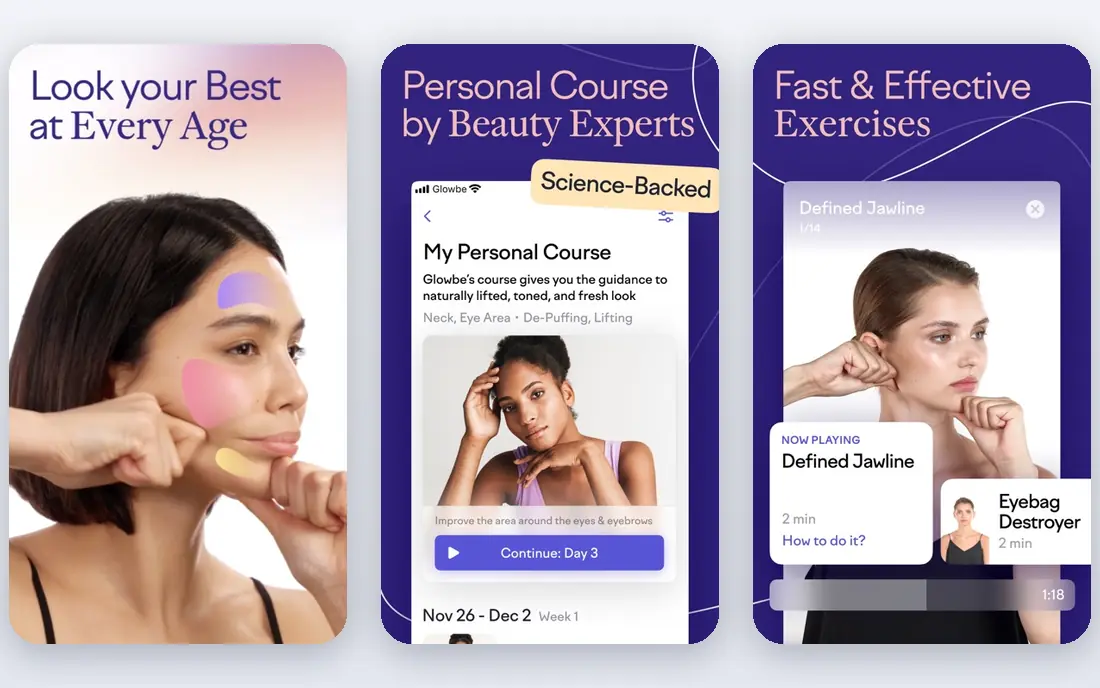
Glowbe offers daily face yoga routines with video guidance, organized by face area and goal, from jawline and cheeks to forehead relaxation. The interface is simple and friendly, which suits beginners who want to press play and follow along.
Full access sits behind a subscription, and program depth varies. For a straightforward daily face yoga habit, Glowbe is an easy and pleasant choice.
- Daily routines with video guidance
- Programs for different face areas
- Simple, friendly interface
- Full access needs a subscription
- Content depth varies by program
- Newer app with a smaller community
FaceYogi
Ideal for: Guided face exercises
FaceYogi guides users through face exercises with clear instructions and routines aimed at toning and relaxation. The beginner-friendly approach makes it a good first face yoga app for people who have never tried facial exercises.
The content library is smaller than larger rivals, and full features need a paid plan. For simple, guided face yoga without complexity, FaceYogi is a solid pick.
- Guided exercises with clear instructions
- Routines for toning and relaxation
- Suitable for beginners
- Smaller content library than Luvly
- Full features need a subscription
- App polish varies
Face Yoga Method
Ideal for: Teacher-led method
The Face Yoga Method is a teacher-led approach to facial exercise, with structured courses and videos that emphasize correct technique, breathing, and relaxation alongside toning. That teaching depth suits learners who want to understand what they are doing, not just follow a video.
The experience is more course-based than app-based, so it feels less like a daily habit app. For learners who value method and technique, it is a strong choice.
- Structured method from an experienced teacher
- Courses and videos
- Focus on technique and safety
- Less app polish than Luvly
- Some content is course-based rather than app-based
- Pricing varies by course
Danielle Collins
Ideal for: Expert-led face yoga courses
Danielle Collins, known as the Face Yoga Expert, teaches face yoga through courses, books, and videos focused on natural wellbeing, relaxation, and toning. Her method is widely taught and easy to follow, with an emphasis on gentle, regular practice.
The experience is spread across courses and platforms rather than a single polished app, and full courses cost extra. For learners who want a trusted teacher's method, Danielle Collins is a respected name in face yoga.
- Well-known face yoga teacher with courses and books
- Video guidance
- Focus on natural wellbeing
- App experience is lighter than dedicated apps
- Courses cost extra
- Content is spread across platforms
Koko Face Yoga
Ideal for: Signature face yoga method
Koko Face Yoga teaches a distinctive method focused on training facial muscles through specific exercises and techniques, with video lessons and courses. Its large online following reflects years of teaching and a clear, structured approach.
The style is distinctive, so it may not suit every learner, and the app experience is lighter than Luvly or Glowbe. For people drawn to a strong, signature method, Koko Face Yoga is worth trying.
- Distinctive face yoga method with a large following
- Video lessons and courses
- Focus on muscle training
- Method style is distinctive and may not suit everyone
- App features are lighter
- Courses vary in price
Daily Yoga
Ideal for: Face yoga inside a yoga app
Daily Yoga is a full yoga app with guided sessions for strength, flexibility, and relaxation, including face yoga content among its classes. That breadth suits people who already practice yoga and want to add facial exercises to an existing routine.
Face yoga is not the focus, so dedicated routines are thinner than in specialist apps. For yoga practitioners who want face yoga as part of a wider practice, Daily Yoga is a convenient all-in-one option.
- Full yoga app with face yoga content included
- Guided sessions for body and face
- Large class library
- Face yoga is one part of a wider app, not the focus
- Full access needs a subscription
- Navigation takes learning
How we picked these
We compared official feature pages, pricing pages, app store listings, and public reviews for each app, and we favored products still operating in October 2026 that teach face yoga or facial exercises with guided routines. We left out general beauty apps with no face yoga content and single-video courses with no app or program structure. Note that homepage checks for this article were limited by a browser rate-limit error during our work, so readers should confirm current pricing and features on each vendor site and app store page.
Practicing face yoga safely
Start gently and briefly. Short daily sessions with clean hands, a relaxed jaw, and no pulling or tugging at skin are safer than intense, long routines. Stop if you feel jaw pain, dizziness, or skin irritation, and avoid aggressive exercises after recent facial procedures, injections, or skin conditions unless a professional advises otherwise.
Set realistic expectations. Face yoga is gentle exercise and relaxation, and any visible changes take weeks of consistent practice and vary widely. It does not replace skincare, sleep, or medical care, and claims about dramatic anti-aging results should be treated with caution.
Building a face yoga routine starts small. Pick three to five exercises that target your main goal, practice them for five minutes a day, and add more only when the habit feels automatic. Morning practice suits many people, since the face is relaxed after sleep and the routine pairs naturally with skincare, but the best time is the time you will actually keep. Use a mirror at first to check form, since exercises done with the wrong muscles can create tension instead of easing it, and breathe normally rather than holding your breath through each move.
Pairing face yoga with skincare needs a light touch. Clean hands and a clean face prevent transferring oils and dirt, and a small amount of facial oil or moisturizer can reduce friction during massage-style moves. Avoid pulling skin downward or stretching it aggressively, and skip exercises that hurt or cause redness that lasts. Track your practice in your app, note how your face feels rather than chasing daily visible change, and review progress monthly with photos taken in the same light. Consistency over weeks matters far more than intensity on any single day, and a gentle routine you enjoy will outlast an ambitious one you dread. Combining face yoga with overall wellbeing habits supports better results than facial exercise alone. Sleep, hydration, and stress all show on the face, so a short face yoga routine pairs well with good sleep habits, regular water intake, and stress relief such as walking or breathing exercises. Posture matters too: hours spent looking down at a phone create neck and jaw tension that facial exercises alone cannot fix, so check your screen height, stretch your neck and shoulders, and notice whether you clench your jaw during the day. A relaxed jaw during daily life helps more than a tense practice session.
Photographing progress honestly helps you judge whether a routine works. Take photos in the same light, at the same angle, with a neutral expression, once a month, and compare them side by side rather than relying on memory, which exaggerates both improvement and decline. Give any routine at least eight weeks of consistent practice before judging it, and change one variable at a time if you adjust exercises, so you know what helped. If a routine causes pain, swelling, or skin problems, stop and seek advice, since no beauty habit is worth harming your health.
Frequently asked questions
What is the best face yoga app?
Luvly is our pick for most people, with personalized programs, guided video routines, and progress tracking. Glowbe and FaceYogi suit simpler daily routines, while teacher-led methods suit deeper learning.
Does face yoga actually work?
Face yoga may help with muscle tone, relaxation, and awareness of facial tension, but evidence is limited and results vary. Treat it as gentle exercise and self-care, not a proven medical or anti-aging treatment.
How often should I do face yoga?
Most programs suggest short daily sessions, often 5 to 15 minutes. Consistency matters more than long sessions, so pick a routine you can actually keep.
Is face yoga safe?
Face yoga is generally gentle, but stop if you feel pain, and avoid aggressive exercises with jaw problems, recent facial procedures, or skin conditions. Check with a professional if you have concerns.
Can face yoga replace Botox or fillers?
No. Face yoga is exercise and relaxation, while Botox and fillers are medical procedures with different effects and risks. Do not expect face yoga to reproduce medical results.