Best Financial Advisor Companies in 2026: 8 Companies Compared

- 1
 Vanguard Personal AdvisorLow-cost advisor portfoliosVisit
- 2
 Schwab Intelligent PortfoliosDigital advice with humansVisit
- 3
 Fidelity GoSimple robo adviceVisit
- 4
 FacetFlat-fee planningVisit
- 5
 EmpowerRetirement-focused adviceVisit
- Vanguard Personal Advisor suits long-term investors who want low-cost, advisor-guided portfolios.
- Facet is our pick for flat-fee planning, since you pay a set fee rather than a percentage of assets.
- Schwab and Fidelity suit investors who want digital advice with the option to talk to a human.
- Edward Jones and Ameriprise suit people who prefer a local advisor and face-to-face meetings.
- This is not financial advice; investing involves risk, and advisor fees vary, so confirm current fees before signing.
Quick comparison
| Product | Ideal for | Price from | Free version | |
|---|---|---|---|---|
| Vanguard Personal Advisor | Low-cost advisor portfolios | See website | No | Visit |
| Schwab Intelligent Portfolios | Digital advice with humans | See website | No | Visit |
| Fidelity Go | Simple robo advice | See website | No | Visit |
| Facet | Flat-fee planning | See website | No | Visit |
| Empower | Retirement-focused advice | See website | No | Visit |
 Merrill | Bank-linked wealth advice | See website | No | Visit |
 Edward Jones | Local branch advisors | See website | No | Visit |
 Ameriprise | Full-service planning | See website | No | Visit |
The best financial advisor companies
Choosing an advisor company means choosing how you want advice delivered: fully digital, hybrid, or face-to-face, and how you want to pay for it. We compared official company pages, advisory disclosures, and public reviews for the firms below, looking at advice style, fees, minimums, human access, and retirement planning strength. Fees and minimums change, so we list pricing as See website and urge you to confirm current terms. This article is not financial advice, and all investing carries risk of loss.
Vanguard Personal Advisor
Ideal for: Low-cost advisor portfolios
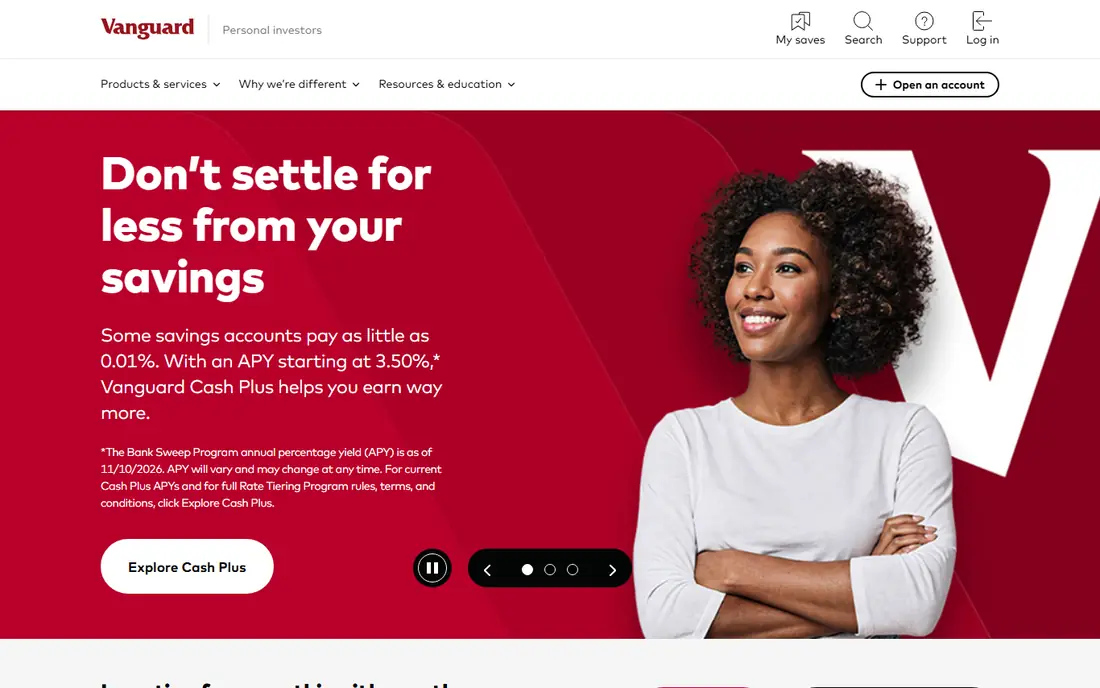
Vanguard Personal Advisor pairs low-cost index portfolios with access to human advisors who help with retirement and goal planning. The approach is deliberately simple: diversified funds, regular rebalancing, and a plan built around your timeline rather than stock picks. Long-term investors who value low costs will feel at home here.
The service is less suited to someone who wants detailed tax, estate, or business planning from their advisor, since the focus stays on the portfolio. Check the current minimum and advisory fee on Vanguard's site before applying.
- Low-cost index-based portfolios
- Access to human advisors
- Strong retirement planning tools
- Advice is portfolio-focused
- Minimum investment applies for advisor service
Schwab Intelligent Portfolios
Ideal for: Digital advice with humans
Schwab Intelligent Portfolios builds and rebalances a diversified ETF portfolio automatically, based on your goals and risk tolerance. Investors who want human help can step up to a premium tier that adds access to certified financial planners. The combination suits people who want automation with a human safety net.
Some investors note that portfolios hold a cash portion that earns less than invested assets, which can drag returns in strong markets. Read the current program details on Schwab's site to see how cash is handled before enrolling.
- Automated portfolios with optional human advice
- Broad account options
- Strong research access
- Portfolios hold a cash allocation some investors dislike
- Premium advice needs a higher balance
Fidelity Go
Ideal for: Simple robo advice
Fidelity Go is the simplest robo advisor on this list. Answer a few questions about goals and risk, and Fidelity builds and manages a diversified portfolio for you, with coaching available through digital tools. Its fee structure has historically waived advisory fees on smaller balances, though you should confirm current terms.
Human advice is limited compared with Vanguard or Schwab's premium tiers, and the portfolios are intentionally simple. For a hands-off investor who already banks or invests with Fidelity, Go is an easy starting point.
- Simple automated investing
- No advisory fee on smaller balances under current terms
- Fidelity account breadth
- Limited human advice
- Portfolio options are simpler than full-service advice
Facet
Ideal for: Flat-fee planning
Facet is our pick for people who want planning, not just a portfolio. For one flat membership fee, you get a dedicated team of planners who build a roadmap covering retirement, taxes, college, debt, and insurance, with investment management included as an option. The flat fee makes costs predictable and removes the conflict of paying more as your balance grows.
On a very small portfolio, a flat fee can cost more than a low percentage fee elsewhere, so compare totals for your balance. If you want a planner who answers life questions, not only market questions, Facet's model is refreshing.
- Flat membership fee instead of asset percentage
- Dedicated planning team
- Covers whole financial life
- Membership fee may exceed a percentage fee on very small portfolios
- Investment management is optional
Empower
Ideal for: Retirement-focused advice
Empower grew from retirement plan administration, and that heritage shows in its planning tools. Its dashboard pulls outside accounts into one view, and its advisory tiers add human planners for retirement income, tax, and estate topics. People approaching retirement often value that focus.
Personal advisory tiers require a meaningful balance, so smaller investors may only use the free dashboard tools. If retirement planning is your main concern and your balance qualifies, Empower is a strong contender.
- Strong retirement planning heritage
- Dashboard that aggregates outside accounts
- Human advisor tiers
- Higher-tier advice needs a larger balance
- Dashboard upsells advisory services
Merrill
Ideal for: Bank-linked wealth advice
Merrill, part of Bank of America, suits clients who want investing and banking under one roof. You can choose guided digital investing or work with a dedicated advisor on a full plan, and your banking relationship can simplify cash movement and lending. Research and planning tools are broad.
Full-service advice carries higher fees than robo options, and the quality of the experience depends on your individual advisor, as with any large firm. Interview a prospective advisor before committing, and confirm fees in writing.
- Advisor access plus Bank of America banking
- Guided investing options
- Broad research
- Full-service advice fees run higher
- Experience varies by advisor
Edward Jones
Ideal for: Local branch advisors
Edward Jones is the pick for investors who want to sit across a desk from their advisor. With thousands of local offices, it serves clients in nearly every US county, and its advisors build long-term relationships around retirement and family goals. That personal contact matters to many investors, especially near retirement.
Costs run higher than digital advice, and the investment menu is more guided than open-ended. If in-person advice and a local relationship matter most to you, Edward Jones delivers that experience at scale.
- Local offices across the US
- Face-to-face advisor relationships
- Long company history
- Fees can be higher than digital rivals
- Investment menus may be narrower
Ameriprise
Ideal for: Full-service planning
Ameriprise offers full-service financial planning through a large network of advisors, with a strong focus on retirement income and goal-based plans. Clients get a written plan, regular reviews, and access to banking, insurance, and investment products through the firm. The initial consultation helps you judge fit before committing.
Fees and service details vary by advisor, so ask for a clear fee schedule and a sample plan outline. For investors who want one firm handling most of their financial life, Ameriprise is a serious option.
- Comprehensive planning with dedicated advisors
- Strong retirement income focus
- Large advisor network
- Fees vary by advisor and plan
- Complexity can overwhelm simple investors
How we picked these
We compared official company pages, advisory disclosures, and public reviews, checking advice style, fee structure, minimums, human access, and planning breadth. We favored firms that are open to US clients in October 2026, publish advisory disclosures, and offer a clear path to speak with a human. Where fees depend on balance or service tier, we list pricing as See website rather than quoting a figure that may not apply to you.
How to choose a financial advisor company
Start by deciding how much human contact you want. A robo advisor suits investors comfortable with digital-only guidance, while a hybrid or full-service firm suits people who want to discuss taxes, retirement timing, or family decisions with a person. Be honest about which style you will actually use, since an unused advisor adds cost without value.
Next, compare total costs for your balance. A percentage fee, a flat fee, and fund expenses add up differently at different balances, so ask each firm for an all-in estimate for your situation. Check whether the advisor acts as a fiduciary, ask how they are paid, and interview at least two firms before deciding. A good advisor welcomes those questions and answers them plainly.
Frequently asked questions
What is the best financial advisor company for beginners?
Fidelity Go and Schwab Intelligent Portfolios are good starting points for beginners because they automate investing at a low cost. Facet suits beginners who want a human planner for a flat fee. Vanguard Personal Advisor fits beginners focused on low-cost retirement investing.
How much do financial advisors charge?
Fees vary by model. Robo advisors often charge a low percentage of assets, full-service firms charge a higher percentage or hourly and flat fees, and Facet charges a flat membership fee. Always ask for an all-in estimate that includes fund expenses.
Do I need a financial advisor?
Not everyone does. Investors with simple goals and a steady index strategy may do fine alone. An advisor adds value for complex taxes, retirement income planning, business ownership, or anyone who wants accountability and a second opinion on big decisions.
What is the difference between a robo advisor and a human advisor?
A robo advisor builds and manages a portfolio automatically from your answers to a questionnaire. A human advisor adds personalized planning for taxes, retirement, estate, and life events. Hybrid services combine both, with automation plus access to human planners.
Is my money safe with an advisor company?
Reputable advisor firms hold client assets with separate custodians and are regulated, with SIPC coverage for brokerage accounts up to legal limits. That coverage does not protect against market losses. Check a firm's regulatory record before signing.