Best financial close automation software in 2026: 7 Options Compared

- 1
 BlackLineenterprises automating the closeVisit
- 2
 FloQastaccounting teams wanting a faster closeVisit
- 3
 Trintech Cadencyenterprises needing close and reconciliationVisit
- 4
 Oracle Account Reconciliationcompanies already using Oracle systemsVisit
- 5
 Workivateams needing close plus reportingVisit
- BlackLine and Trintech Cadency lead for enterprise close automation.
- FloQast is a strong fit for midsize accounting teams.
- Numeric offers a modern, lighter rollout for growing teams.
- ERP integration and audit trails matter as much as automation speed.
Quick comparison
| Product | Ideal for | Price from | Free version | |
|---|---|---|---|---|
| BlackLine | enterprises automating the close | See website | Free trial | Visit |
| FloQast | accounting teams wanting a faster close | See website | Free trial | Visit |
| Trintech Cadency | enterprises needing close and reconciliation | See website | Free trial | Visit |
| Oracle Account Reconciliation | companies already using Oracle systems | See website | Free trial | Visit |
| Workiva | teams needing close plus reporting | See website | Free trial | Visit |
 Numeric | modern accounting teams wanting automation | See website | Free trial | Visit |
 SkyStem ART | teams needing reconciliation automation | See website | Free trial | Visit |
The best financial close automation software
Our team compared official feature pages, pricing pages, app store listings, privacy policies, and public reviews to build this list. Every option below is a real product that works in October 2026, and each one fits financial close automation software in a different way. Read the quick comparison first, then use the write-ups to narrow the list to two or three options worth a trial. Disclaimer: This article is for general information only and is not financial advice. Consult a qualified accountant or financial professional for your specific situation.
BlackLine
Ideal for: enterprises automating the close
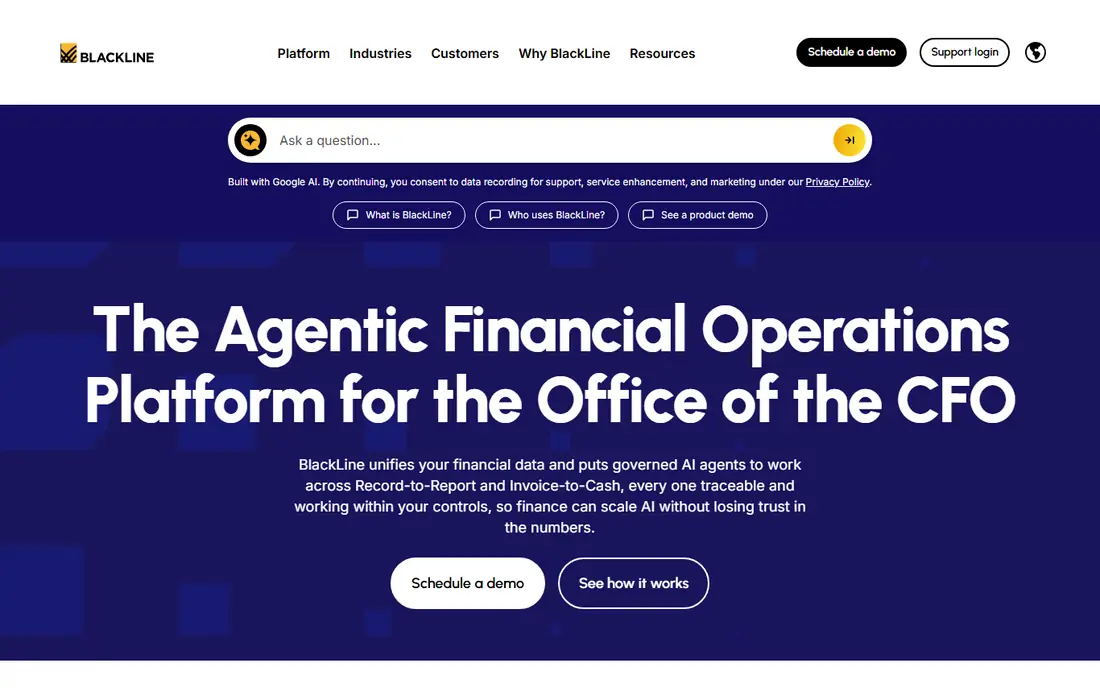
For teams that want a clear starting point, BlackLine. BlackLine is a leading close platform for enterprises, covering reconciliations, tasks, and controls. It fits enterprises automating the close, and it is a practical pick for buyers who want a tool that covers the core job without forcing a change to every other system they use. In daily use, the strengths come down to account reconciliations; close task management; controls That combination matters because most buyers in this category end up paying for breadth they never use, or they pick a narrow tool and outgrow it in a year. BlackLine sits in the middle ground for many teams: capable enough for regular work, and clear enough about what it does well that you can judge the fit before you pay. The honest catch is that enterprise pricing; implementation takes planning Before you commit, run a trial with real data from your own work, check the pricing page for the plan that matches your team size, and confirm that support and onboarding match what your team will actually need. For many buyers, that trial tells you more than any feature list can.
- Account reconciliations
- Close task management
- Controls
- Enterprise pricing
- Implementation takes planning
FloQast
Ideal for: accounting teams wanting a faster close
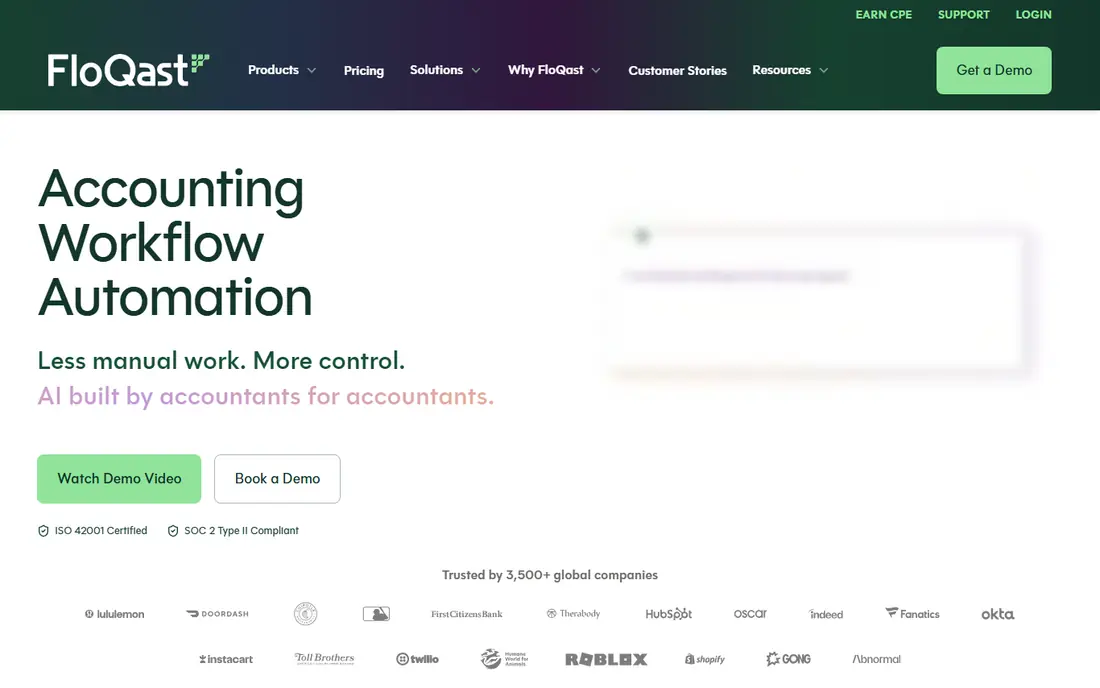
One option that earns a close look is FloQast. FloQast helps accounting teams run a structured close with checklists and reconciliations. It fits accounting teams wanting a faster close, and it is a practical pick for buyers who want a tool that covers the core job without forcing a change to every other system they use. In daily use, the strengths come down to close checklist; reconciliations; erp integrations That combination matters because most buyers in this category end up paying for breadth they never use, or they pick a narrow tool and outgrow it in a year. FloQast sits in the middle ground for many teams: capable enough for regular work, and clear enough about what it does well that you can judge the fit before you pay. The honest catch is that pricing is quote based; best for midsize and larger teams Before you commit, run a trial with real data from your own work, check the pricing page for the plan that matches your team size, and confirm that support and onboarding match what your team will actually need. For many buyers, that trial tells you more than any feature list can.
- Close checklist
- Reconciliations
- ERP integrations
- Pricing is quote based
- Best for midsize and larger teams
Trintech Cadency
Ideal for: enterprises needing close and reconciliation

If your shortlist is still wide open, consider Trintech Cadency. Trintech Cadency gives enterprises close management, reconciliations, and compliance tools in one platform. It fits enterprises needing close and reconciliation, and it is a practical pick for buyers who want a tool that covers the core job without forcing a change to every other system they use. In daily use, the strengths come down to close management; reconciliations; compliance controls That combination matters because most buyers in this category end up paying for breadth they never use, or they pick a narrow tool and outgrow it in a year. Trintech Cadency sits in the middle ground for many teams: capable enough for regular work, and clear enough about what it does well that you can judge the fit before you pay. The honest catch is that enterprise scope means longer setup; pricing is quote based Before you commit, run a trial with real data from your own work, check the pricing page for the plan that matches your team size, and confirm that support and onboarding match what your team will actually need. For many buyers, that trial tells you more than any feature list can.
- Close management
- Reconciliations
- Compliance controls
- Enterprise scope means longer setup
- Pricing is quote based
Oracle Account Reconciliation
Ideal for: companies already using Oracle systems
A different kind of choice on this list is Oracle Account Reconciliation. Oracle Account Reconciliation suits companies already on Oracle, with reconciliation tools that fit that stack. It fits companies already using Oracle systems, and it is a practical pick for buyers who want a tool that covers the core job without forcing a change to every other system they use. In daily use, the strengths come down to reconciliation automation; oracle integration; controls That combination matters because most buyers in this category end up paying for breadth they never use, or they pick a narrow tool and outgrow it in a year. Oracle Account Reconciliation sits in the middle ground for many teams: capable enough for regular work, and clear enough about what it does well that you can judge the fit before you pay. The honest catch is that best inside oracle environments; standalone value is lower Before you commit, run a trial with real data from your own work, check the pricing page for the plan that matches your team size, and confirm that support and onboarding match what your team will actually need. For many buyers, that trial tells you more than any feature list can.
- Reconciliation automation
- Oracle integration
- Controls
- Best inside Oracle environments
- Standalone value is lower
Workiva
Ideal for: teams needing close plus reporting
For buyers who value depth over simplicity, Workiva. Workiva pairs close collaboration with financial reporting for teams that need both. It fits teams needing close plus reporting, and it is a practical pick for buyers who want a tool that covers the core job without forcing a change to every other system they use. In daily use, the strengths come down to close collaboration; financial reporting; controls That combination matters because most buyers in this category end up paying for breadth they never use, or they pick a narrow tool and outgrow it in a year. Workiva sits in the middle ground for many teams: capable enough for regular work, and clear enough about what it does well that you can judge the fit before you pay. The honest catch is that enterprise pricing; reporting focus means close depth varies by module Before you commit, run a trial with real data from your own work, check the pricing page for the plan that matches your team size, and confirm that support and onboarding match what your team will actually need. For many buyers, that trial tells you more than any feature list can.
- Close collaboration
- Financial reporting
- Controls
- Enterprise pricing
- Reporting focus means close depth varies by module
Numeric
Ideal for: modern accounting teams wanting automation
Another strong candidate is Numeric. Numeric is a modern close tool for accounting teams that want automation without a heavy enterprise rollout. It fits modern accounting teams wanting automation, and it is a practical pick for buyers who want a tool that covers the core job without forcing a change to every other system they use. In daily use, the strengths come down to close automation; ai assisted workflows; erp integrations That combination matters because most buyers in this category end up paying for breadth they never use, or they pick a narrow tool and outgrow it in a year. Numeric sits in the middle ground for many teams: capable enough for regular work, and clear enough about what it does well that you can judge the fit before you pay. The honest catch is that newer vendor; enterprise depth is still growing Before you commit, run a trial with real data from your own work, check the pricing page for the plan that matches your team size, and confirm that support and onboarding match what your team will actually need. For many buyers, that trial tells you more than any feature list can.
- Close automation
- AI assisted workflows
- ERP integrations
- Newer vendor
- Enterprise depth is still growing
SkyStem ART
Ideal for: teams needing reconciliation automation
Rounding out the list is SkyStem ART. SkyStem ART focuses on automated reconciliations and close tracking for accounting teams. It fits teams needing reconciliation automation, and it is a practical pick for buyers who want a tool that covers the core job without forcing a change to every other system they use. In daily use, the strengths come down to automated reconciliations; close calendar; reporting That combination matters because most buyers in this category end up paying for breadth they never use, or they pick a narrow tool and outgrow it in a year. SkyStem ART sits in the middle ground for many teams: capable enough for regular work, and clear enough about what it does well that you can judge the fit before you pay. The honest catch is that smaller vendor footprint; pricing is quote based Before you commit, run a trial with real data from your own work, check the pricing page for the plan that matches your team size, and confirm that support and onboarding match what your team will actually need. For many buyers, that trial tells you more than any feature list can.
- Automated reconciliations
- Close calendar
- Reporting
- Smaller vendor footprint
- Pricing is quote based
How we picked these
We started from the official product pages and pricing pages for each option, then checked app store listings, privacy policies, and public reviews to confirm that each product exists, works in October 2026, and truly fits this topic. We compared who each product is built for, what its free plan or trial covers, and where its limits show up in everyday use. We did not claim hands-on testing we did not do, and we did not invent prices, ratings, or user counts. Where a price could not be verified from the vendor, we wrote See website so you can check the current figure before you buy. Our pick for most people is the option that covers the core job well at a fair price, with a trial that lets you test it on your own work.
How to pick financial close automation software
Start with your close pain points: reconciliations, task tracking, approvals, or reporting. A tool that fixes your biggest bottleneck will deliver value faster than a broad platform you only partly use. Check ERP integration and reconciliation matching rules carefully. The system should connect to your general ledger and handle your account types without manual workarounds. Finally, confirm controls and audit trails. Close software should record who did what and when, since auditors will ask. Test those reports during a trial with a real prior month close.
Frequently asked questions
What is financial close automation software?
It helps accounting teams run the month end close faster and with fewer errors, covering reconciliations, task checklists, approvals, and reporting in one system.
What is the best financial close software?
BlackLine and Trintech Cadency lead for enterprises, while FloQast fits midsize teams well. Numeric is a modern option for teams wanting a lighter rollout.
How much does close automation software cost?
Most vendors price by quote, based on company size, users, and modules. Ask for a written quote that includes implementation and support.
Can close software integrate with my ERP?
Most options here integrate with common ERP systems. Confirm the exact integration for your ERP and test reconciliation matching during a trial.
How long does implementation take?
Implementation varies from weeks for smaller tools to months for enterprise platforms. Ask for a clear timeline and what your team must provide.