Best Financial Research Software in 2026: 8 Tools Compared

- 1
 Bloomberg Terminalprofessional investors and tradersVisit
- 2
 FactSetinvestment research teamsVisit
- 3
 S&P Capital IQequity research and corporate finance teamsVisit
- 4
 Morningstarfund and stock research for investorsVisit
- 5
 LSEG Workspacemarket data for professional teamsVisit
- Our pick for most readers is Bloomberg Terminal, because it fits professional investors and traders and keeps its core pitch easy to understand.
- Prices in this category vary widely, so check the vendor pricing page and confirm what is included before you pay.
- A free plan or free trial is worth testing with your own data, since a demo with sample data can hide daily friction.
- The right choice depends on team size, budget, and how much setup help you need, not on the longest feature list.
- Read the privacy and support terms for best financial research software tools carefully, especially if you will store customer or financial data in them.
Quick comparison
| Product | Ideal for | Price from | Free version | |
|---|---|---|---|---|
| Bloomberg Terminal | professional investors and traders | See website | Free trial | Visit |
| FactSet | investment research teams | See website | Free trial | Visit |
| S&P Capital IQ | equity research and corporate finance teams | See website | Free trial | Visit |
| Morningstar | fund and stock research for investors | See website | Free trial | Visit |
| LSEG Workspace | market data for professional teams | See website | Free trial | Visit |
 AlphaSense | AI search across company documents | See website | Free trial | Visit |
 YCharts | advisors and investors who need charts and data | See website | Free trial | Visit |
 Koyfin | investors who want a modern research dashboard | Free | Yes | Visit |
The best financial research software
We compared official feature pages, pricing pages, app store listings, privacy policies, and public reviews to put this list together for readers looking for best financial research software. Each option below is a real product that works in October 2026, with a clear note on who it suits and where it falls short.
Bloomberg Terminal
Ideal for: professional investors and traders
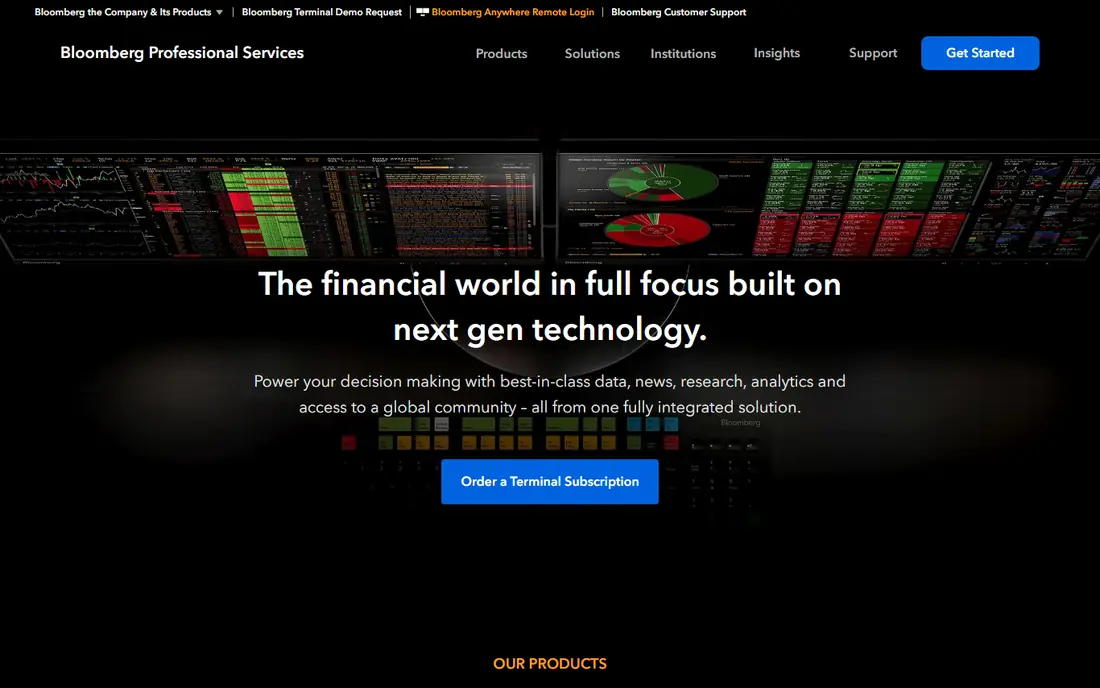
Bloomberg Terminal suits professional investors, traders, and analysts who need deep market data and news in one terminal. Its data, analytics, and messaging network are industry standards in many finance teams. That focus matters most in the first weeks, when a team either settles into a tool or quietly stops opening it.
Its strength is depth and network. Market data, news, and peer messaging sit together, which is hard to match in a cheaper tool. It also matters for teams that need to show results to a manager or a client without extra reporting work.
The drawback is cost. It is very expensive, and the learning curve is steep, so it suits professionals whose work justifies the price. It is worth weighing against the strengths above, especially if you plan to use the tool for years.
- Deep market data
- News and analytics
- Messaging network
- Very high cost
- Steep learning curve
FactSet
Ideal for: investment research teams
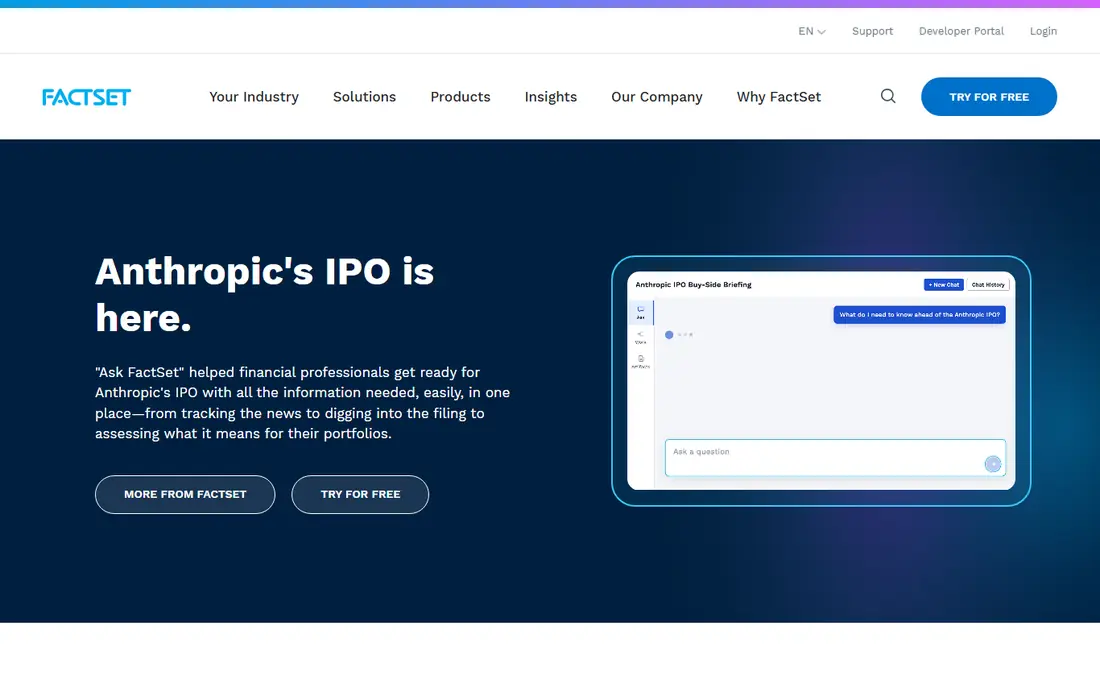
FactSet suits investment research teams that need company, market, and portfolio data in one platform. Its screening, analytics, and Excel integration support deep research workflows. We gave extra weight to tools that explain their limits plainly instead of hiding them behind a sales call.
Its strength is research workflow. Analysts can move from screening to valuation to portfolio review without switching systems. We checked this against the vendor's own feature page and public reviews, not just marketing copy.
The drawback is cost and effort. Enterprise pricing and setup suit professional teams, not casual investors. Teams with strict requirements should test this exact point before signing a contract.
- Company and market data
- Screening
- Portfolio analytics
- Enterprise pricing
- Implementation effort
S&P Capital IQ
Ideal for: equity research and corporate finance teams
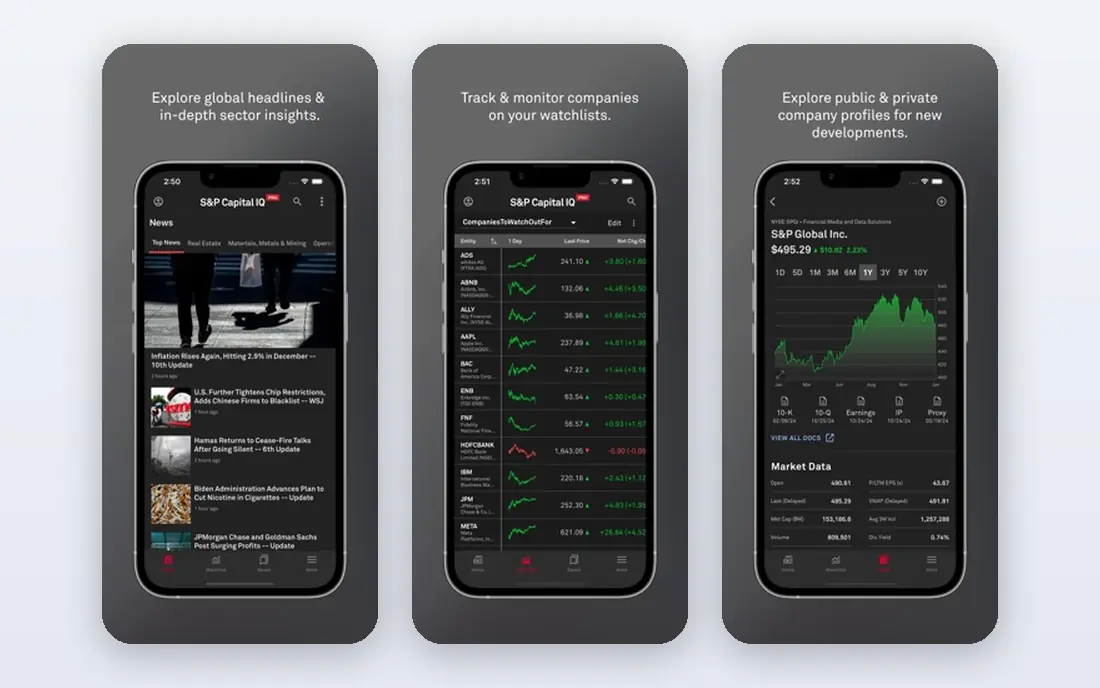
S&P Capital IQ suits equity research and corporate finance teams that need detailed company financials and deal data. Its screening and valuation tools support professional research. The best fit is often the tool your team will actually use every day, not the one with the longest list of features.
Its strength is company data depth. Financials, filings, and deal history are detailed and well structured. Look for this in the trial, and check how it behaves with your own data rather than sample data.
The drawback is learning curve. The interface takes time to master, and enterprise pricing needs a quote. If this point is a deal breaker for you, the next options on this list handle it differently.
- Company financials
- Screening
- Deal and market data
- Enterprise pricing
- Interface takes learning
Morningstar
Ideal for: fund and stock research for investors
Morningstar suits investors who research funds and stocks with ratings and reports. Its fund data, portfolio tools, and analyst research help long-term investors compare options. Setup effort, daily friction, and the clarity of the pricing page shaped how we weighed that fit.
Its strength is fund research. Ratings, fees, and holdings data make fund comparison clearer than raw price charts alone. That strength shows up in daily work, not just in a demo, which is why we ranked it highly.
The drawback is paid depth. The fuller research set needs a paid plan, and some data leans US-focused. That drawback may not matter for a small team, but it can grow into a real problem as usage grows.
- Fund and stock ratings
- Portfolio tools
- Research reports
- Premium features need a paid plan
- US focus in some data
LSEG Workspace
Ideal for: market data for professional teams
LSEG Workspace suits professional teams that need market data, news, and analytics from the London Stock Exchange Group. It carries the Refinitiv data heritage into a modern workspace. A short trial with real data tells you more than a feature list, so plan one before you commit.
Its strength is market data breadth. Equities, fixed income, and news sit in one workspace for research teams. This kind of strength tends to save time week after week, which adds up faster than a small price difference.
The drawback is migration. Teams moving from older Refinitiv tools should plan the switch, and pricing needs a quote. Ask about it on a sales call or in the trial, and get the answer in writing if it affects your budget.
- Market data and news
- Analytics
- Refinitiv data heritage
- Enterprise pricing
- Migration from older Refinitiv tools
AlphaSense
Ideal for: AI search across company documents
AlphaSense suits research teams that search company filings, transcripts, and reports with AI. Its search finds answers inside documents, not just titles, and summaries speed up review. That focus matters most in the first weeks, when a team either settles into a tool or quietly stops opening it.
Its strength is document search. Finding a specific disclosure inside thousands of filings is far faster than manual reading. It also matters for teams that need to show results to a manager or a client without extra reporting work.
The drawback is coverage. Document sets vary by plan, so buyers should confirm coverage for their sectors. It is worth weighing against the strengths above, especially if you plan to use the tool for years.
- AI search across filings and transcripts
- Smart summaries
- Alerts
- Enterprise pricing
- Document coverage varies by plan
YCharts
Ideal for: advisors and investors who need charts and data
YCharts suits advisors and investors who want clear charts, screening, and portfolio tools without terminal cost. Its visual data helps explain investments to clients. We gave extra weight to tools that explain their limits plainly instead of hiding them behind a sales call.
Its strength is visual clarity. Charts and reports make complex data readable for clients and teams. We checked this against the vendor's own feature page and public reviews, not just marketing copy.
The drawback is depth. Data and analytics are lighter than professional terminals, so deep research teams may need more. Teams with strict requirements should test this exact point before signing a contract.
- Financial charts
- Screening
- Portfolio and report tools
- Pricing needs a quote for professional plans
- Data depth is lighter than terminals
Koyfin
Ideal for: investors who want a modern research dashboard
Koyfin suits investors who want a modern dashboard for screening, charts, and watchlists. Its free tier covers core research, and paid plans add deeper data and tools. The best fit is often the tool your team will actually use every day, not the one with the longest list of features.
Its strength is dashboard design. A clean workspace makes screening and tracking feel fast for daily research. Look for this in the trial, and check how it behaves with your own data rather than sample data.
The drawback is paid depth. Advanced data and tools need a paid plan, and coverage varies by market. If this point is a deal breaker for you, the next options on this list handle it differently.
- Dashboards and screening
- Market data
- Watchlists
- Advanced features need a paid plan
- Coverage varies
How we picked these
We started from the main keyword for this article and checked each candidate against official feature pages, pricing pages, app store listings, privacy policies, and public reviews. We kept only products that exist and work in October 2026 and that truly fit best financial research software, and we left out options that did not fit even when they looked popular in a general search.
We did not claim hands-on testing that did not happen. Where a price or a free tier could not be confirmed from the vendor's own site, we wrote See website rather than guessing a number. That approach keeps the list honest, and it means you should still confirm current pricing before you buy.
How to choose financial research software
Start by writing down the one job this tool must do well for you. For best financial research software, that job might be daily use by a small team, reporting for a manager, or handling a larger volume without constant manual work. A tool that does that one job well is usually a better buy than a tool that does many jobs in a shallow way.
Next, run a short trial with real data and the people who will use the tool every day. Watch how long setup takes, how clear the billing is, and how fast support answers a real question. If the trial feels confusing, that confusion rarely disappears after you pay, so take it as a useful warning.
Finally, check the terms that matter after the first month: renewal pricing, data export, cancellation, and what happens to your data if you leave. A tool with a clear export path and plain renewal terms is easier to live with, even if a rival looks slightly cheaper on the first invoice.
Frequently asked questions
What is the best option for best financial research software?
For most readers, Bloomberg Terminal is a strong starting point because it fits professional investors and traders. The best choice still depends on your budget and team size, so compare the top three on this list in a trial before you decide.
Is there a free option for best financial research software?
Some options on this list offer a free plan, and others offer a free trial, as shown in the comparison table. Free plans usually cover basic use, while paid plans add reporting, integrations, and support, so check the limits before you rely on a free tier.
How much do best financial research software tools cost?
Pricing varies widely in this category, and some vendors only quote after a sales call. Where we could confirm a starting price, we listed it in the table, and where we could not, we wrote See website so you can check the vendor page directly.
Can I switch tools later if I pick the wrong one?
In most cases, yes, but switching takes more work than people expect. Before you commit, check how to export your data, whether integrations carry over, and how long a migration would take for your team.
How should I test a tool before buying?
Use a short trial with real data, invite the people who will use it daily, and test support with a genuine question. Keep notes on setup time, billing clarity, and any feature that was promised but hard to find in the product itself.