Best fintech app developers in 2026: 8 Options Compared

- 1
 Appinventivlarge fintech buildsVisit
- 2
 Fueledproduct focused fintech startupsVisit
- 3
 WillowTreeenterprise finance appsVisit
- 4
 Intellectsoftbanking and payment platformsVisit
- 5
 Cubixmobile first fintech productsVisit
- Our pick for most people is Appinventiv, because it covers large fintech builds with a clear feature set and a free option to try first.
- 0 of the 8 options on this list offer a free plan, so you can test the core features before you pay for anything.
- Prices and free tier limits change often, so check the official pricing page linked for each product before you buy or sign up.
- The best choice depends on your main use case, not on the longest feature list, so start with the best for note in the comparison table.
Quick comparison
| Product | Ideal for | Price from | Free version | |
|---|---|---|---|---|
| Appinventiv | large fintech builds | See website | No | Visit |
| Fueled | product focused fintech startups | See website | No | Visit |
| WillowTree | enterprise finance apps | See website | No | Visit |
| Intellectsoft | banking and payment platforms | See website | No | Visit |
| Cubix | mobile first fintech products | See website | No | Visit |
 Hyperlink InfoSystem | budget aware fintech builds | See website | No | Visit |
 OpenXcell | startup fintech apps | See website | No | Visit |
 Konstant Infosolutions | e-commerce and finance apps | See website | No | Visit |
The best fintech app developers
Choosing among fintech app developers is easier when you compare what each option actually does, what it costs, and where it falls short. We reviewed official feature pages, pricing pages, app store listings, privacy policies, and public reviews for the options below, and we did not claim hands-on testing that did not happen. The result is a shortlist that mixes well known names with smaller options that serve a specific need well. Our pick for most people is Appinventiv. It fits large fintech builds, and it gives new users a clear way to start without a confusing setup. The other seven options each suit a different priority, from lower cost to a narrower focus, so read the best for line for each one and match it to the job you need done.
Appinventiv
Ideal for: large fintech builds

Appinventiv stands out for large fintech builds. In our review of its official feature pages, pricing, and app store listing, strong portfolio across banking and payments came across as the main draw, while end to end product teams adds practical value for everyday use. Readers who want large fintech builds will find a clear starting point here, and the setup is straightforward enough for most people to try without a long learning period. The honest catch is large project pricing, and smaller teams may find the process formal may also matter depending on how you use it. That does not rule Appinventiv out. It simply means you should check the current plan page and the free tier limits before you commit, and compare it with one or two others on this list if price or a specific feature is your top priority.
- Strong portfolio across banking and payments
- End to end product teams
- Design and engineering in one place
- Large project pricing
- Smaller teams may find the process formal
Fueled
Ideal for: product focused fintech startups
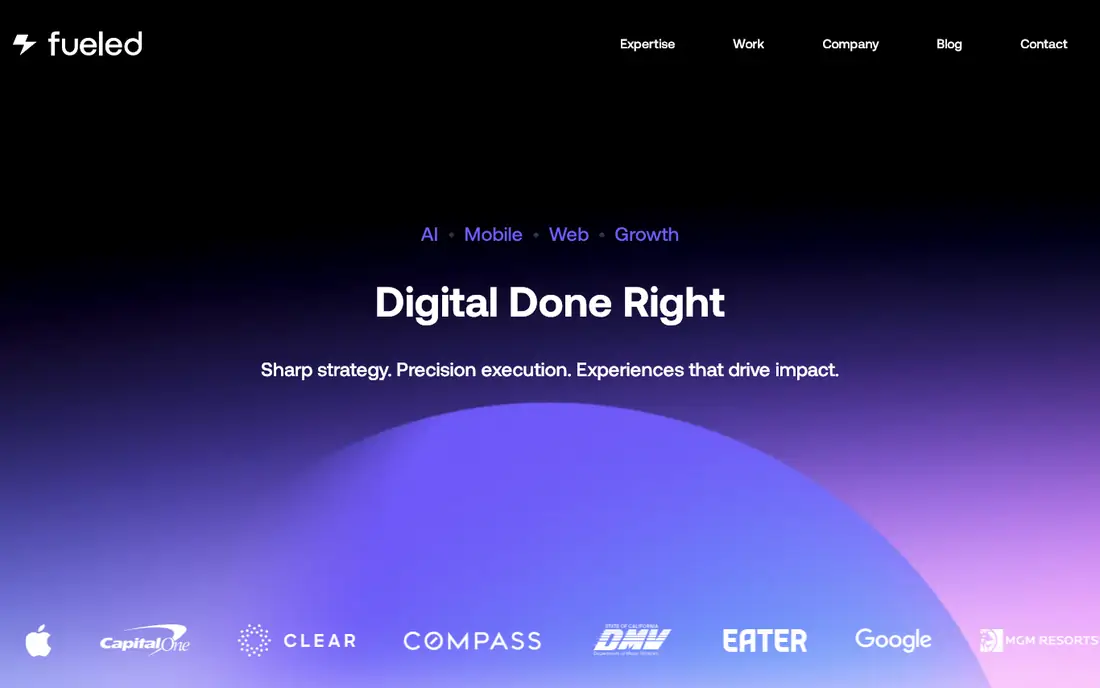
For readers focused on product focused fintech startups, Fueled deserves a close look. Its official pages point to product strategy plus design as a central strength, and experience with consumer finance apps helps explain why it keeps appearing in this category. It is not the right fit for every reader, but for the use case in its best for line, it covers the basics well and leaves room to grow. No product on this list is perfect, and Fueled is no exception. premium rates is the main drawback we noted, with availability can be limited as a second point to check. If neither point blocks your main use case, the strengths above still make it worth trying, starting with the free tier or trial where one is offered.
- Product strategy plus design
- Experience with consumer finance apps
- Clear project process
- Premium rates
- Availability can be limited
WillowTree
Ideal for: enterprise finance apps

We included WillowTree because it fits enterprise finance apps in a direct way. The standout detail from its official material is enterprise delivery experience, supported by accessibility focus. That combination makes it a practical choice for readers who want a tool that does its main job well, without asking them to learn a large set of extra features first. Before you choose WillowTree, weigh enterprise pricing against what you actually need. less suited to very small budgets is worth a second look too, especially if you plan to use the product daily. Readers who accept those limits will likely be happy, while readers who need the missing piece should look at the next options on this list.
- Enterprise delivery experience
- Accessibility focus
- Long term support options
- Enterprise pricing
- Less suited to very small budgets
Intellectsoft
Ideal for: banking and payment platforms
Intellectsoft is a useful option for banking and payment platforms, and its official feature pages make the case clearly. finance and banking project history is the first thing most readers will notice, and dedicated teams adds depth once you start using it regularly. It belongs on a shortlist for this topic, even if the final choice depends on price and personal preference. The trade off with Intellectsoft is clear: strong value for banking and payment platforms, balanced by engagement models need careful scoping. time zones vary by team adds a further limit to check. Our advice is to test the free version or the trial first, read the current pricing page, and only upgrade once you know the product fits your routine.
- Finance and banking project history
- Dedicated teams
- Security aware delivery
- Engagement models need careful scoping
- Time zones vary by team
Cubix
Ideal for: mobile first fintech products
Cubix stands out for mobile first fintech products. In our review of its official feature pages, pricing, and app store listing, mobile app focus came across as the main draw, while blockchain and payment work adds practical value for everyday use. Readers who want mobile first fintech products will find a clear starting point here, and the setup is straightforward enough for most people to try without a long learning period. The honest catch is smaller agency, so check capacity for large launches, and portfolio varies by sector may also matter depending on how you use it. That does not rule Cubix out. It simply means you should check the current plan page and the free tier limits before you commit, and compare it with one or two others on this list if price or a specific feature is your top priority.
- Mobile app focus
- Blockchain and payment work
- Flexible team sizes
- Smaller agency, so check capacity for large launches
- Portfolio varies by sector
Hyperlink InfoSystem
Ideal for: budget aware fintech builds
For readers focused on budget aware fintech builds, Hyperlink InfoSystem deserves a close look. Its official pages point to wide service range as a central strength, and competitive pricing helps explain why it keeps appearing in this category. It is not the right fit for every reader, but for the use case in its best for line, it covers the basics well and leaves room to grow. No product on this list is perfect, and Hyperlink InfoSystem is no exception. quality can vary by team, so review past work closely is the main drawback we noted, with communication needs clear briefs as a second point to check. If neither point blocks your main use case, the strengths above still make it worth trying, starting with the free tier or trial where one is offered.
- Wide service range
- Competitive pricing
- Apps across finance categories
- Quality can vary by team, so review past work closely
- Communication needs clear briefs
OpenXcell
Ideal for: startup fintech apps
We included OpenXcell because it fits startup fintech apps in a direct way. The standout detail from its official material is startup friendly process, supported by design and development together. That combination makes it a practical choice for readers who want a tool that does its main job well, without asking them to learn a large set of extra features first. Before you choose OpenXcell, weigh smaller scale than enterprise firms against what you actually need. check references for regulated work is worth a second look too, especially if you plan to use the product daily. Readers who accept those limits will likely be happy, while readers who need the missing piece should look at the next options on this list.
- Startup friendly process
- Design and development together
- Post launch support
- Smaller scale than enterprise firms
- Check references for regulated work
Konstant Infosolutions
Ideal for: e-commerce and finance apps
Konstant Infosolutions is a useful option for e-commerce and finance apps, and its official feature pages make the case clearly. long track record in mobile apps is the first thing most readers will notice, and cross platform skills adds depth once you start using it regularly. It belongs on a shortlist for this topic, even if the final choice depends on price and personal preference. The trade off with Konstant Infosolutions is clear: strong value for e-commerce and finance apps, balanced by large service catalogue can make scoping slow. pricing depends on project size adds a further limit to check. Our advice is to test the free version or the trial first, read the current pricing page, and only upgrade once you know the product fits your routine.
- Long track record in mobile apps
- Cross platform skills
- Maintenance plans
- Large service catalogue can make scoping slow
- Pricing depends on project size
How we picked these
We started with products that exist and work in October 2026 and that truly fit the topic, then we compared their official feature pages, pricing pages, app store listings, privacy policies, and public reviews. We favoured options with clear pricing, a usable free tier or trial where one is offered, and a clear statement of who the product is for. We left out products that did not fit the topic, even when they were popular in a nearby category. We also weighed honest drawbacks, because a list that only praises products is not useful. Where a price could not be verified from the vendor site or app store listing, we wrote See website rather than guessing. Readers should still check the linked official site before buying, since plans, limits, and availability change over time.
What to check before you choose
Start with your main job
The fastest way to narrow this list is to name the one job you need done most often. For fintech app developers, that job might be daily use, occasional use, or a single project. Match that job to the best for line in the table, then shortlist two or three options. A product with a longer feature list is not automatically better if its core job does not match yours, and a simpler product can be the better buy when it does the main task well.
Price, free tier, and limits
Check three price details before you pay: the starting price, what the free plan actually includes, and what happens when you hit a limit. Some free plans are generous for light use and tight for heavy use, while some paid plans only make sense when you use the product every week. Look for per user pricing, per month billing, and any add on fees, and compare the total cost for a full year rather than the first month alone.
Fit, support, and privacy
Fit covers device support, ease of use, and how well the product works with tools you already use. Support matters when something goes wrong, so check whether help is by email, chat, or phone, and whether guides are clear. Privacy matters too, so read the privacy policy for data collection, sharing, and deletion options, especially for products that handle personal, financial, or health information.
Mistakes to avoid
A common mistake is paying for the top plan before testing the free tier, which can lock you into features you never use. Another mistake is trusting a single review or a single price claim without checking the official site. Take a short trial, test the feature you care about most, check cancellation terms, and only then commit. If a product promises results that sound too good to be true, treat that promise with care and look for independent evidence.
Frequently asked questions
What is the best best fintech app developers?
For most people, Appinventiv is a strong starting point because it fits large fintech builds and offers a way to try it before paying. The right answer still depends on your budget, your device, and how often you plan to use it, so compare the best for notes in the table before you decide.
Is there a free best fintech app developers?
Yes, 0 of the options on this list offer a free plan, though free tiers usually limit features, storage, or usage. Check the free plan line for each product and the official pricing page to see whether the free tier covers your main use case.
How much does a best fintech app developers cost?
Costs vary widely across this list, from free plans to quote based business pricing. Where we could not verify a current price from the vendor site, we wrote See website, and we recommend comparing the yearly total, not just the monthly headline price.
Which best fintech app developers is best for beginners?
Beginners should start with an option that has a clear interface and a free tier, and Appinventiv is a good first test for that reason. Try the free version for a week, test the feature you need most, and only upgrade if the limits start to get in your way.
How did you choose these fintech app developers?
We compared official feature pages, pricing pages, app store listings, privacy policies, and public reviews, and we favoured products that truly fit the topic with clear pricing. We did not claim hands-on testing that did not happen, and we noted honest drawbacks for each product.