Best Fitness Apps for Men in 2026: 7 Apps Compared

- Fitbod builds adaptive strength workouts from your equipment, goals and recovery.
- Nike Training Club offers the best free guided workouts for general fitness.
- Jefit suits lifters who want detailed tracking and a large exercise library.
- Strong and Hevy are the cleanest workout loggers for gym training.
Quick comparison
| Product | Ideal for | Price from | Free version | |
|---|---|---|---|---|
 Nike Training Club | Best free guided workouts | Free | Yes | Visit |
 Fitbod | Adaptive strength programs | See website | Free trial | Visit |
 Jefit | Detailed lifting tracking | Free | Yes | Visit |
 Strong | Clean gym workout logger | Free | Yes | Visit |
 Centr | Guided training plus nutrition | See website | Free trial | Visit |
 Alpha Progression | Progressive strength tracking | Free | Yes | Visit |
 Hevy | Social workout tracking | Free | Yes | Visit |
The best fitness apps for men
Fitness apps for men cover strength training, general conditioning and guided workouts, with programs that adapt to equipment, experience and goals. The apps below include free options and paid programs, with notes on who each suits, since a powerlifting program and a beginner home workout need different tools. Check with a clinician before starting a new intense program, especially with existing health conditions.
Nike Training Club
Ideal for: Best free guided workouts
Nike Training Club is the best free fitness app, with guided workouts for strength, cardio, mobility and yoga, plus plans for different levels. Its video guidance and trainer cues help beginners, and its free price removes the barrier to starting. Men who want general fitness without a gym program will like it.
It lacks adaptive barbell programming for serious lifters, and its nutrition tools are limited. Strength athletes will outgrow it. For free, well-guided general training, Nike Training Club is hard to beat.
For readers focused on best free guided workouts, Nike Training Club is worth a trial before deciding, since the free tier or trial shows its real feel fast. Check the current plan details on the vendor site, since prices and limits change, and confirm that the version you need works on your devices.
- Free guided workouts
- Strength, cardio and mobility
- Plans for levels
- No adaptive barbell programming
- Nutrition tools are limited
Fitbod
Ideal for: Adaptive strength programs
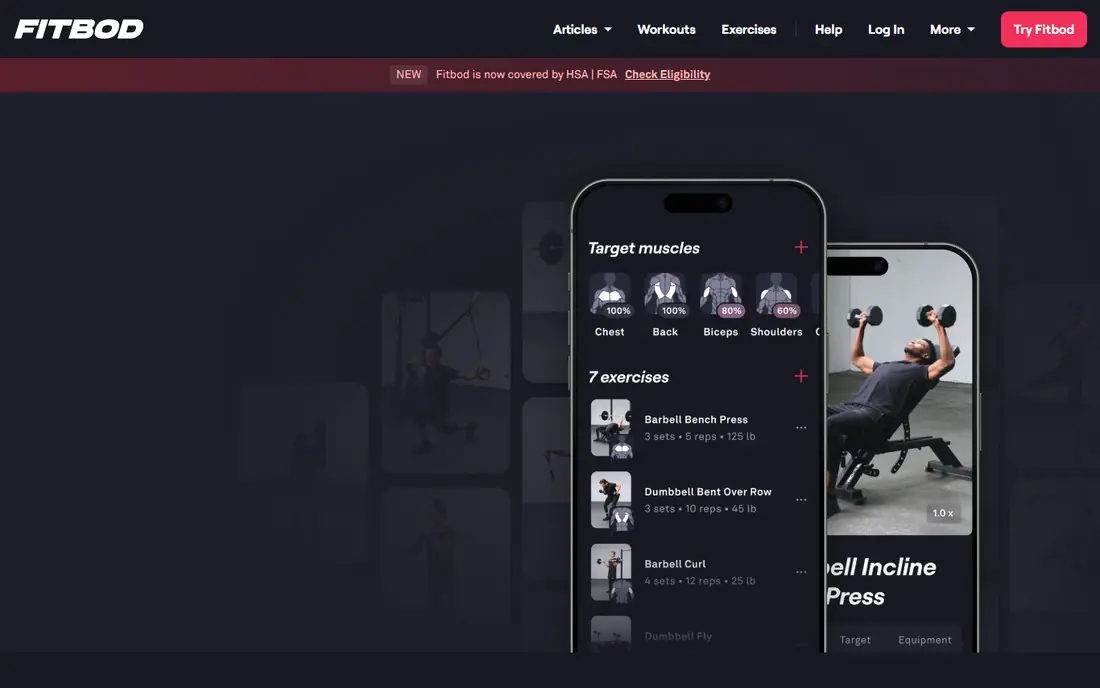
Fitbod builds strength workouts from your equipment, goals, available time and muscle recovery, adjusting each session as you log results. That adaptivity suits men training at home or in a gym who want a program that evolves, and its tracking shows strength progress clearly.
The subscription costs money, and its exercise videos vary in depth for complex lifts. Beginners learning barbell form may still want coaching. For adaptive strength programming, Fitbod is the leading app here.
We would shortlist Fitbod for adaptive strength programs, and compare it directly with the two options nearest it in price before paying. Check the current plan details on the vendor site, since prices and limits change, and confirm that the version you need works on your devices.
- Builds workouts from equipment and recovery
- Tracks progress
- Gym and home plans
- Subscription cost
- Exercise videos vary in depth
Jefit
Ideal for: Detailed lifting tracking
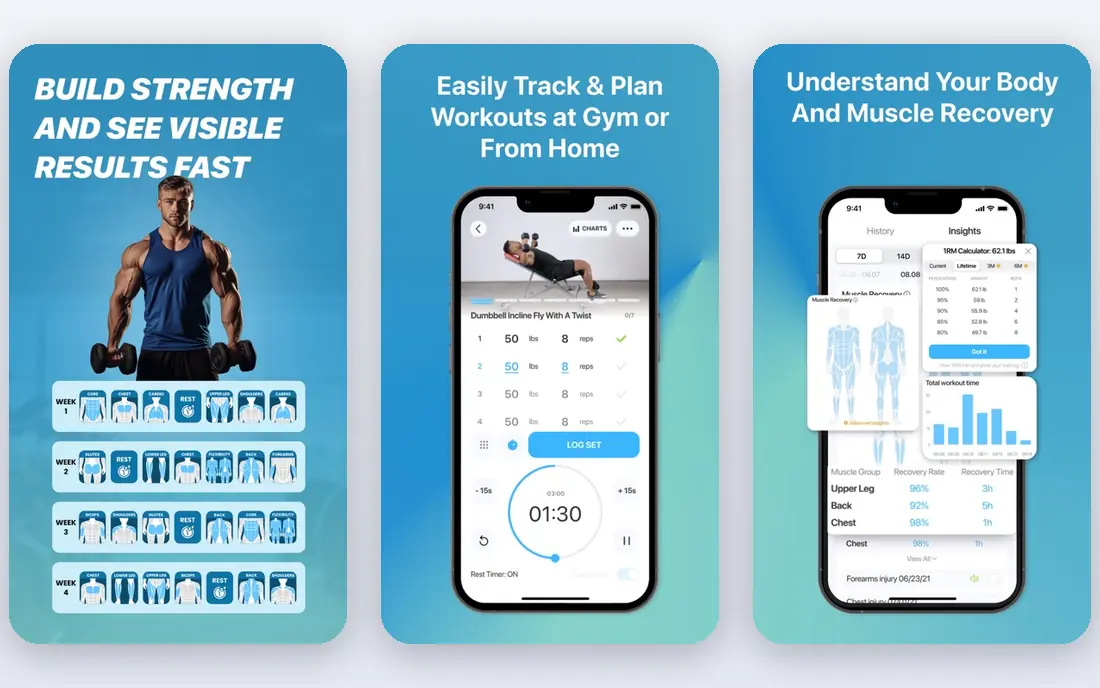
Jefit is a long-running lifting app with a large exercise library, detailed workout tracking, pre-made routines and community programs. Lifters who want to log every set, track volume and follow structured plans will find its depth useful, and its free tier covers core tracking.
The interface is busy, and advanced features such as detailed analytics need the Elite plan. Beginners may find its options overwhelming. For lifters who love data, Jefit is a strong choice.
If detailed lifting tracking is your main need, Jefit deserves a place on a shortlist, provided you test the catch described above first. Check the current plan details on the vendor site, since prices and limits change, and confirm that the version you need works on your devices.
- Large exercise library
- Detailed tracking and plans
- Community routines
- Interface is busy
- Advanced features need Elite plan
Strong
Ideal for: Clean gym workout logger
Strong is the cleanest gym workout logger, with fast set logging, rest timers, templates and progress charts that stay out of the way during a session. Lifters who know their program and just want reliable tracking prefer its speed to feature-heavy apps. Its design is calm and quick.
The free tier limits saved routines, and it offers no guided programs for beginners. Users who want coaching or adaptive plans should look at Fitbod. For pure, fast gym logging, Strong is excellent.
Our view is that Strong earns its place here for clean gym workout logger, even with the limits noted above. Check the current plan details on the vendor site, since prices and limits change, and confirm that the version you need works on your devices.
- Simple fast logging
- Progress charts
- Templates and rest timer
- Free tier limits routines
- No guided programs
Centr
Ideal for: Guided training plus nutrition
Centr, founded by Chris Hemsworth team, combines guided workouts, meal plans and mindfulness in one app, with trainer-led programs for strength, cardio and functional training. Its polished production and structured plans suit men who want a complete health routine, not just a workout log.
The subscription costs money, and its strength depth trails Fitbod and Jefit for serious lifters. Its meal plans also need adaptation for individual diets. For guided, all-round training with nutrition, Centr is a polished option.
For readers focused on guided training plus nutrition, Centr is worth a trial before deciding, since the free tier or trial shows its real feel fast. Check the current plan details on the vendor site, since prices and limits change, and confirm that the version you need works on your devices.
- Guided workouts, meals and mindfulness
- Trainer-led programs
- Subscription cost
- Strength depth trails Fitbod and Jefit
Alpha Progression
Ideal for: Progressive strength tracking
Alpha Progression is a gym-focused strength app with adaptive progression, detailed statistics and plate calculators that help lifters follow structured programs. Its progression logic adjusts weights based on performance, which suits intermediate lifters who want steady gains without manual planning.
Its community is smaller than Jefit, and advanced features need a paid plan. Beginners may find its program setup technical. For lifters who want smart progression tracking, Alpha Progression is a refined tool.
We would shortlist Alpha Progression for progressive strength tracking, and compare it directly with the two options nearest it in price before paying. Check the current plan details on the vendor site, since prices and limits change, and confirm that the version you need works on your devices.
- Adaptive progression
- Detailed stats
- Gym-focused design
- Smaller community
- Advanced features need paid plan
Hevy
Ideal for: Social workout tracking
Hevy combines clean workout logging with a social feed where friends share routines and progress, which motivates consistent training. Its routines, progress stats and rest timers cover gym logging well, and its free tier suits most lifters. The social layer sets it apart from Strong.
The free tier limits some features, and it offers no adaptive programming like Fitbod. Lifters who dislike social features can ignore the feed. For social, clean gym tracking, Hevy is a friendly choice.
If social workout tracking is your main need, Hevy deserves a place on a shortlist, provided you test the catch described above first. Check the current plan details on the vendor site, since prices and limits change, and confirm that the version you need works on your devices.
- Clean logging
- Social feed
- Routines and progress stats
- Free tier limits
- No adaptive programming
How we picked these
We compared official feature pages, pricing pages, app store listings, privacy policies and public reviews for each option below. We checked that each product is still available and that its stated plans match what the vendor publishes. We did not run hands-on tests, so our picks rest on documented features, pricing and the fit for the reader described in each section, not on lab results. Where a price could not be confirmed on the vendor site at the time of writing, we wrote See website rather than guessing. We also looked at how each option handles the everyday details that decide whether a tool gets used: setup time, device support, what happens when you cancel or downgrade, and whether help is available when something breaks. A product that looks strong on a feature list but is hard to set up, hard to leave, or poorly supported will cost more in time than it saves, so we weighed those practical points alongside price and features. Where reviewers or users reported a recurring problem, we noted it in the honest catch for that product, rather than leaving it out because the vendor page did not mention it.
How to choose a fitness app that you will stick with
Pick a program that matches your equipment and schedule, not an ideal you cannot keep. If you train at home with little gear, a bodyweight or dumbbell program beats a barbell plan you cannot follow. Check progression: does the app increase weight, reps or difficulty sensibly, or just repeat the same workout? Look at tracking, since seeing progress keeps motivation up. Finally, give any app three weeks before judging it, because the first week always feels awkward.
A final check before you commit
Run a short trial on a real task before you pay for a year or move a whole team. Use the free plan or trial to complete one full job, from setup to export or delivery, and note where you got stuck. Check the cancellation path too: can you leave and keep your data, or does leaving mean starting over? Read the pricing page for renewal rates, not just the first-year offer, and confirm what support you get on the plan you will actually buy. Finally, ask one current user about the worst part of the product, since that answer tells you more than any feature list. If the trial feels good on a real task and the exit path is clear, the choice is much safer.
Frequently asked questions
What is the best fitness app for men?
Fitbod is the best adaptive strength app, while Nike Training Club is the best free general fitness app. Jefit suits detailed lifters, Strong suits clean gym logging, and Centr suits guided training with nutrition.
Are there free workout apps for men?
Yes. Nike Training Club is free with many guided workouts, Jefit and Hevy offer free tiers, and Strong has a free version. Paid apps add adaptive programs, coaching and advanced tracking.
What is the best workout app for men over 50?
Apps with scalable programs, joint-friendly options and clear form guidance suit men over 50 best. Nike Training Club and Fitbod both scale difficulty, but check with a clinician before intense training and favor programs with warm-ups and mobility work.
Do fitness apps work for beginners?
Yes, when programs start light and progress gradually. Nike Training Club and Fitbod both offer beginner paths, while Jefit and Strong suit lifters who already know exercises and want tracking.
Can fitness apps replace a personal trainer?
Apps provide programs and tracking, but they cannot watch form or adapt to injuries like a trainer. Beginners learning barbell lifts benefit from at least some in-person coaching, even when using an app for programming.