Best Fitness Apps in 2026: 8 Apps Compared

- 1
 Nike Training ClubFree workoutsVisit
- 2
 StravaRunning and cyclingVisit
- 3
 FitbodPersonalised strengthVisit
- 4
 StrongSimple strength loggingVisit
- 5
 MyFitnessPalNutrition plus fitnessVisit
- Nike Training Club is our pick for free workouts, while Strava is best for runners and cyclists who love community.
- Fitbod and Strong suit strength training, with Fitbod for personalised plans and Strong for simple logging.
- MyFitnessPal pairs well with a workout app if nutrition tracking matters to you.
- Free plans cover many workouts, but personalised plans, advanced tracking and offline content often need paid plans.
- Fitness apps support exercise, but they are not medical advice, so talk to a clinician before starting a new programme if you have health conditions.
Quick comparison
| Product | Ideal for | Price from | Free version | |
|---|---|---|---|---|
| Nike Training Club | Free workouts | Free | Yes | Visit |
| Strava | Running and cycling | Free | Yes | Visit |
| Fitbod | Personalised strength | See website | Free trial | Visit |
| Strong | Simple strength logging | Free | Yes | Visit |
| MyFitnessPal | Nutrition plus fitness | Free | Yes | Visit |
 Peloton App | Guided classes | See website | Free trial | Visit |
 Apple Fitness+ | Apple device workouts | See website | Free trial | Visit |
 Couch to 5K | Beginner running | Free | Yes | Visit |
The best fitness apps
Fitness apps cover workouts, running, strength, nutrition and guided classes, and the best app depends on how you like to exercise. We compared official feature pages, pricing, app listings and public reviews to find apps that still serve exercisers well in October 2026, with attention to free plans, workout variety and tracking for beginners and experienced users alike.
Nike Training Club
Ideal for: Free workouts
Nike Training Club offers a huge library of free workouts, including strength, HIIT, yoga, mobility and running, with guided programmes for beginners through advanced athletes. That completely free model makes it the best fitness app for most people, since you get quality workouts, video guidance and training plans without a subscription. Workouts range from five minutes to an hour, so they fit busy schedules.
Live classes are not included, and nutrition tracking is limited, so pair Nike Training Club with MyFitnessPal if food tracking matters. For free, high quality guided workouts at home or in the gym, no other app on this list matches Nike Training Club's combination of breadth and price.
- Completely free workouts
- Huge library
- Guided programmes for all levels
- No live classes
- Nutrition features limited
- Nike branding throughout
Strava
Ideal for: Running and cycling
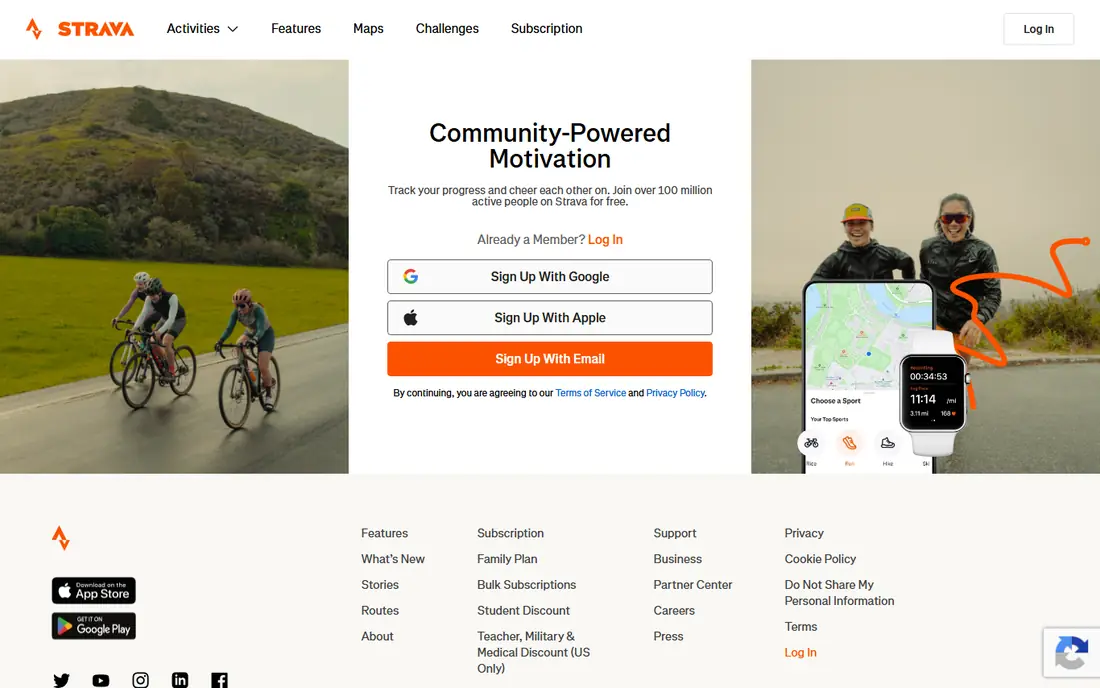
Strava is the social network for runners and cyclists, with GPS tracking, route mapping, segments where you compete on specific stretches, and challenges that motivate regular training. Its community features, including kudos, comments and clubs, make solo training feel social, which helps many people stay consistent. The free plan covers core tracking and social features, while Summit adds advanced training analysis.
Summit, Strava's paid tier, is needed for deeper training metrics, route planning and beacon safety features, so serious athletes should consider it. Social comparison can demotivate some users, so focus on your own progress rather than leaderboards, but for runners and cyclists, Strava is the default app for tracking and community.
- Best community for runners and cyclists
- GPS tracking
- Segments and challenges
- Advanced training features need Summit
- Social pressure can demotivate some users
Fitbod
Ideal for: Personalised strength
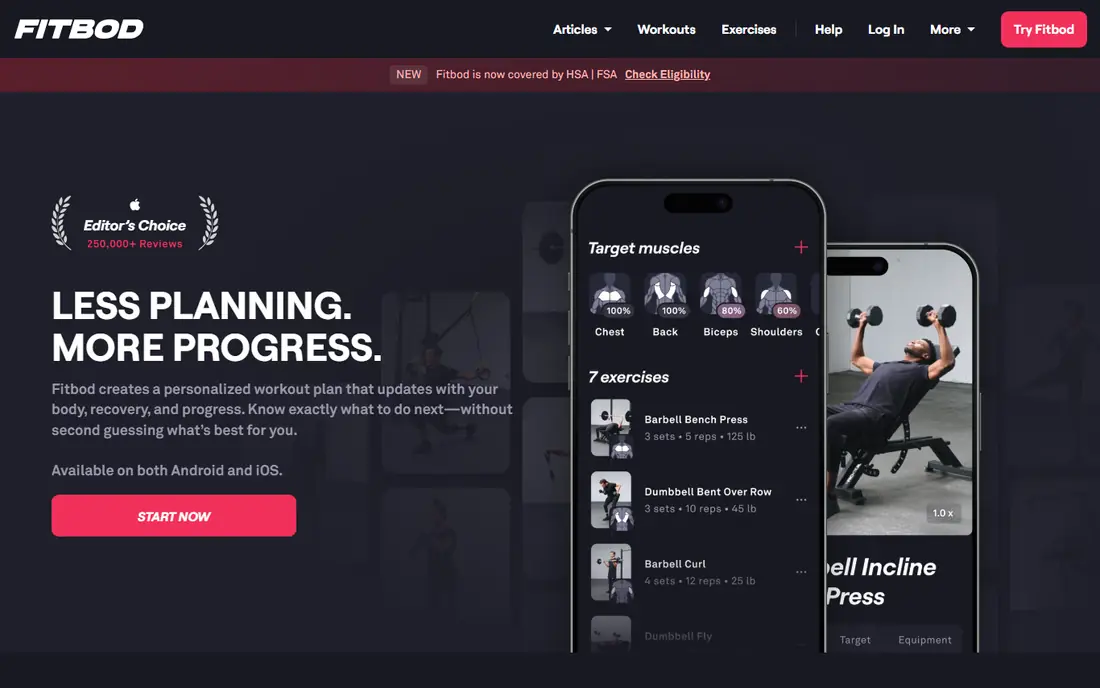
Fitbod builds personalised strength workouts based on your goals, available equipment, muscle recovery and past performance, adapting each session as you progress. That personalisation suits gym goers who want a plan without hiring a trainer, with exercise videos showing proper form for each movement. It tracks sets, reps, weights and muscle groups, giving a clear picture of training balance.
A subscription is needed after the trial, and Fitbod focuses on strength, so runners and class lovers need another app. If strength training is your main goal and you want a plan that adapts to your equipment and recovery, Fitbod is the best personalised option on this list.
- Personalised strength plans
- Adapts to equipment and recovery
- Exercise videos
- Subscription needed after trial
- Strength only
- Gym focused for best results
Strong
Ideal for: Simple strength logging
Strong is the simplest strength logging app, letting you build routines, log sets, reps and weights quickly, and view progress charts over time. Its speed matters in the gym, since logging should not interrupt your workout, and its clean interface makes it easy to follow a routine without distraction. The free plan covers core logging, while Pro adds unlimited routines and advanced charts.
Strong does not generate personalised plans like Fitbod, so you need to know what routine to follow, whether from a coach, a programme or your own experience. For lifters who already have a routine and want fast, reliable logging, Strong is excellent and free to start.
- Simple, fast workout logging
- Custom routines
- Progress charts
- No personalised plans
- Free plan limits routines
- Strength only
MyFitnessPal
Ideal for: Nutrition plus fitness
MyFitnessPal is best known for nutrition, but it also logs workouts and integrates with fitness apps, wearables and Strava, making it a useful companion to a workout app. Its food database is the largest available, which makes calorie and macro tracking easier, and its daily totals help users balance eating and exercise for weight loss or muscle gain. The free plan covers core logging, while Premium adds macro goals and ad removal.
Workout plans themselves are thinner than Nike Training Club or Peloton, so use MyFitnessPal for nutrition and tracking, not as your main workout source. This is not medical advice, so discuss nutrition and weight goals with a clinician or dietitian if you have health conditions.
- Largest food database
- Calorie and macro tracking
- Workout logging and integrations
- Workout plans thinner than Nike Training Club
- Premium needed for advanced features
- Ads on free plan
Peloton App
Ideal for: Guided classes
Peloton App offers thousands of live and on demand classes in cycling, running, strength, yoga, meditation and more, with motivating instructors and a strong community. You do not need Peloton hardware to use the app, since many classes work with any bike, treadmill or no equipment, but the full experience is best with Peloton equipment. That class variety suits users who need structure and motivation to exercise regularly.
A subscription is needed after the trial, and prices are higher than free apps, so Peloton is best for users who thrive on guided classes and community motivation. If you prefer self directed workouts, Nike Training Club free offers similar variety without the cost.
- Huge live and on demand classes
- Motivating instructors
- Strength, yoga and cardio
- Subscription needed
- Best with Peloton hardware for full experience
- Price higher than free apps
Apple Fitness+
Ideal for: Apple device workouts
Apple Fitness+ offers guided workouts in strength, HIIT, yoga, dance, cycling and more, with new workouts weekly and integration with Apple Watch for live metrics on screen. That integration is its main advantage, since heart rate, calories and Activity rings appear during workouts on iPhone, iPad or Apple TV. Production quality is high, with motivating trainers and music.
Full experience needs Apple devices, and there is no Android app, so Android users should choose Nike Training Club or Peloton instead. A subscription is needed after the trial, though new Apple device purchases often include months free, so check for a trial with your device before paying.
- High quality guided workouts
- Integrates with Apple Watch
- New workouts weekly
- Needs Apple devices for full experience
- Subscription needed
- No Android app
Couch to 5K
Ideal for: Beginner running
Couch to 5K is a free, gradual nine week programme that takes absolute beginners from walking to running 5 kilometres, with audio coaching for each session. Its slow progression, alternating walk and run intervals, makes running accessible to people who have never run before, and its simplicity is its strength. The NHS Couch to 5K app is free and widely used, with a supportive community of new runners.
It covers running only, with no strength or cross training, so pair it with Nike Training Club or Strong for overall fitness. Pace may not suit everyone, so repeat weeks if needed rather than pushing through pain, and talk to a clinician before starting if you have health conditions or have been inactive for a long time.
- Free beginner running plan
- Gradual nine week programme
- Audio coaching
- Running only
- No strength or cross training
- Programme pace may not suit everyone
How we picked these
We compared official feature pages, pricing pages, app listings and public reviews, and we only included apps that still offer fitness workouts or tracking in October 2026. We favoured apps with clear free or trial options, workout variety and tracking that suits different exercise styles, from free home workouts to running, strength and guided classes.
How to start exercising with an app without burning out
Choose an app that matches how you like to move, not the most popular app, since enjoyment predicts consistency better than any feature. Start with two to three short workouts per week, such as Nike Training Club sessions or Couch to 5K runs, and increase gradually, rather than starting with daily hour long workouts that lead to soreness and dropout. Track progress simply, with workout frequency and how you feel, rather than obsessing over every metric.
Rest and recovery matter as much as workouts, so include rest days, sleep well and listen to pain, which is different from normal muscle soreness. If you have a health condition, injury or have been inactive, talk to a clinician before starting a new programme, and consider a trainer or physiotherapist for form and safety on strength exercises.
Frequently asked questions
What is the best fitness app?
Nike Training Club is best for free workouts, Strava is best for runners and cyclists, and Fitbod is best for personalised strength plans. Choose based on how you like to exercise.
Is Nike Training Club really free?
Yes, Nike Training Club workouts and programmes are free, with no subscription needed for its library. That makes it the best value fitness app for most people.
Which fitness app is best for beginners?
Nike Training Club for general workouts and Couch to 5K for beginner running are both excellent free starting points. Start short and gradual, then build up.
Do I need a wearable for fitness apps?
No, most apps work with a phone alone for tracking and workouts, though Apple Fitness+ works best with an Apple Watch and Strava benefits from a GPS watch for accurate running data. Start with your phone and add a wearable later if you want it.
Can fitness apps help with weight loss?
Yes, when combined with nutrition tracking in an app like MyFitnessPal and consistent exercise, fitness apps support weight loss. This is not medical advice, so discuss weight loss plans with a clinician or dietitian for personalised guidance.