Best Fleet Management Software for Small Businesses in 2026: 8 Options Compared

- Fleetio is the clearest value pick when maintenance, not live tracking, is the main pain.
- Samsara and Motive lead for all-in-one telematics with AI dashcams.
- Quartix and GPS Trackit suit small fleets that want simple tracking and published pricing.
- Hardware and contract terms matter as much as the monthly software price.
Quick comparison
| Product | Ideal for | Price from | Free version | |
|---|---|---|---|---|
 Samsara | all-in-one telematics and AI safety | See website | Free trial | Visit |
 Motive | trucking fleets and ELD compliance | See website | No | Visit |
 Fleetio | maintenance and cost control without hardware lock-in | $4 per vehicle per month | Free trial | Visit |
 Geotab | data-driven fleets and customization | See website | No | Visit |
 Verizon Connect | established GPS tracking and reporting | See website | No | Visit |
 Azuga | driver behavior and coaching for small fleets | See website | No | Visit |
 GPS Trackit | simple tracking for small fleets | See website | No | Visit |
 Fleet Complete | modular tracking from small to large fleets | See website | No | Visit |
The best fleet management software for small businesses
Small fleets need tracking, maintenance reminders, and driver safety without an enterprise price tag or a long contract. The tools below range from simple GPS tracking to full telematics with dashcams and compliance. We focused on options that work for fleets under about fifty vehicles.
Samsara
Ideal for: all-in-one telematics and AI safety
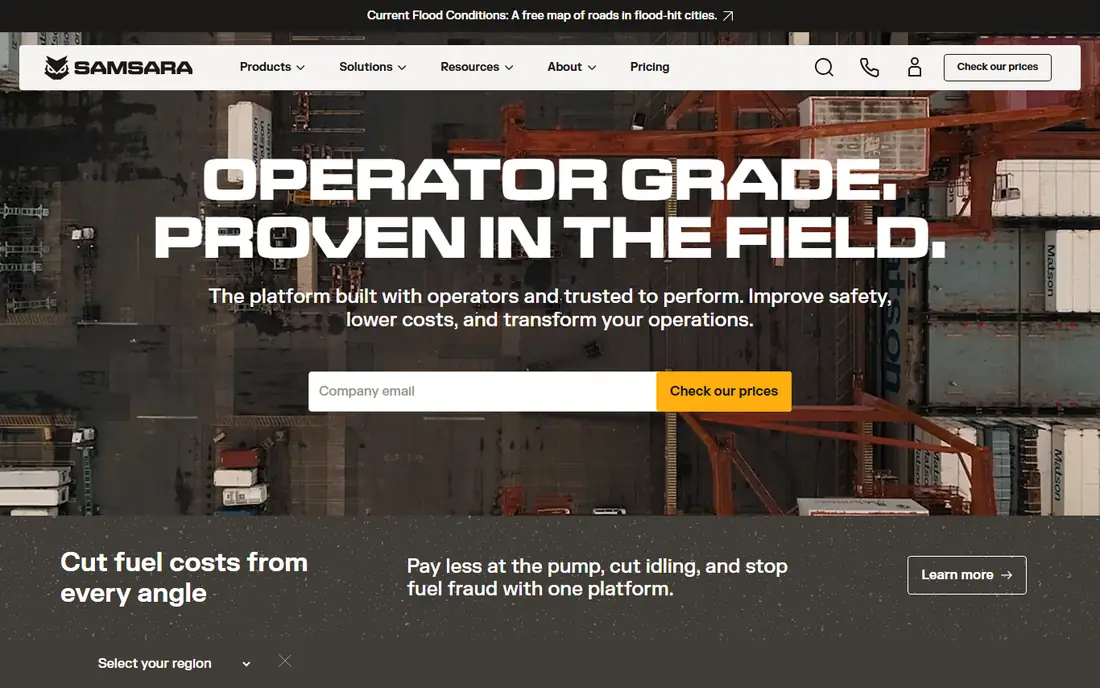
Samsara combines GPS tracking, dashcams, driver safety scoring, and maintenance in one platform, with AI alerts for risky behavior and incidents. Managers get a single dashboard for location, safety, and compliance, and drivers get an app for inspections and messaging. The price is quoted, so small fleets should request a full quote early. That focus makes it a practical match for all-in-one telematics and AI safety. On pricing, the starting point is see website, and the free plan status is free trial. Its strengths include live tracking plus ai dashcams; strong safety coaching; broad integrations. The trade-off to weigh is quote-based pricing; hardware adds cost. We suggest checking the current plan limits on the vendor site before you commit, since tiers and trial terms change, and confirming that the plan you pick covers the seats, storage, or usage your team actually needs.
- Live tracking plus AI dashcams
- Strong safety coaching
- Broad integrations
- Quote-based pricing
- Hardware adds cost
Motive
Ideal for: trucking fleets and ELD compliance
Motive, formerly KeepTruckin, is built around trucking compliance, with electronic logging, hours-of-service tracking, and AI dashcams in one system. Dispatch, fuel, and maintenance tools round out the platform for carriers. Small carriers should confirm contract length and hardware costs before signing. That focus makes it a practical match for trucking fleets and ELD compliance. On pricing, the starting point is see website, and the free plan status is no. Its strengths include fmcsa-registered eld workflows; ai dashcam; fleet card and fuel tools. The trade-off to weigh is quote-based pricing; longer contracts are common. We suggest checking the current plan limits on the vendor site before you commit, since tiers and trial terms change, and confirming that the plan you pick covers the seats, storage, or usage your team actually needs.
- FMCSA-registered ELD workflows
- AI dashcam
- Fleet card and fuel tools
- Quote-based pricing
- Longer contracts are common
Fleetio
Ideal for: maintenance and cost control without hardware lock-in
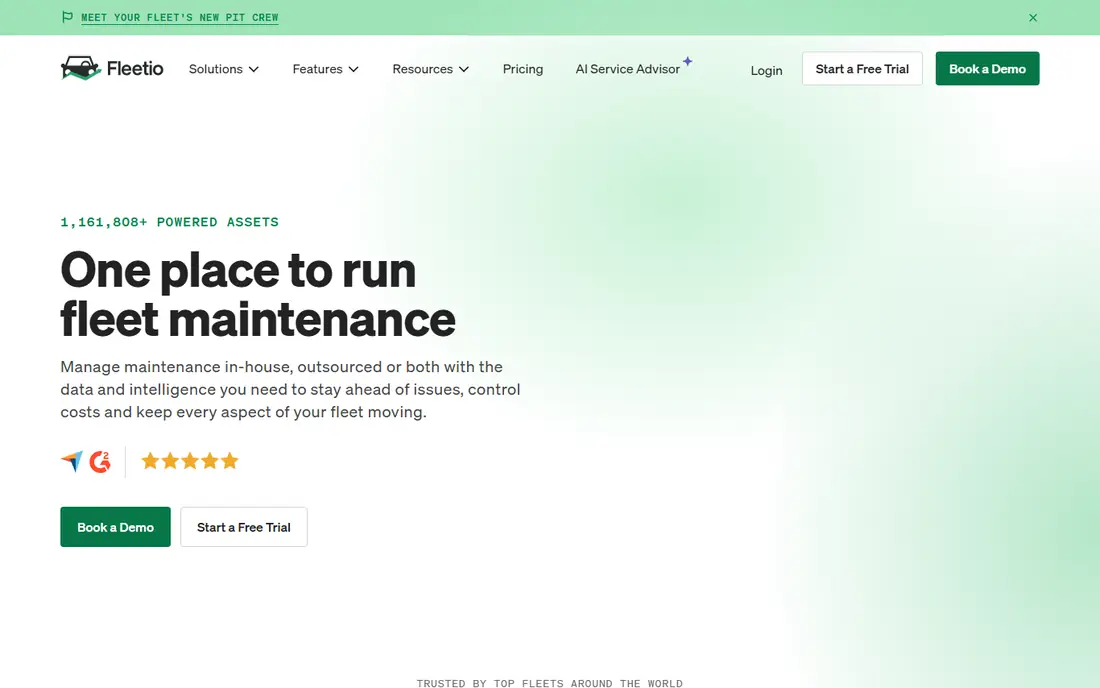
Fleetio focuses on maintenance scheduling, inspections, work orders, fuel, and cost-per-mile analytics, and it imports telematics data from devices you already run. Published pricing starts at $4 per vehicle per month billed annually, which makes budgeting simple. Fleets that need live tracking must pair it with a telematics provider. That focus makes it a practical match for maintenance and cost control without hardware lock-in. On pricing, the starting point is $4 per vehicle per month, and the free plan status is free trial. Its strengths include transparent published pricing; strong maintenance and work orders; hardware-agnostic. The trade-off to weigh is no live gps tracking on its own; subscription minimums apply. We suggest checking the current plan limits on the vendor site before you commit, since tiers and trial terms change, and confirming that the plan you pick covers the seats, storage, or usage your team actually needs.
- Transparent published pricing
- Strong maintenance and work orders
- Hardware-agnostic
- No live GPS tracking on its own
- Subscription minimums apply
Geotab
Ideal for: data-driven fleets and customization
Geotab pairs a plug-in device with a deep analytics platform and a marketplace of add-ons for everything from routing to EV management. It suits fleets that want custom reports and integrations rather than a fixed workflow. Buying through resellers means quotes and support quality vary by partner. That focus makes it a practical match for data-driven fleets and customization. On pricing, the starting point is see website, and the free plan status is no. Its strengths include open platform with a large marketplace; strong reporting; ev support. The trade-off to weigh is sold through resellers, so pricing and support vary; depth can overwhelm small fleets. We suggest checking the current plan limits on the vendor site before you commit, since tiers and trial terms change, and confirming that the plan you pick covers the seats, storage, or usage your team actually needs.
- Open platform with a large marketplace
- Strong reporting
- EV support
- Sold through resellers, so pricing and support vary
- Depth can overwhelm small fleets
Verizon Connect
Ideal for: established GPS tracking and reporting
Verizon Connect offers GPS tracking, route replay, geofences, and driver behavior reports from a long-established platform. Reveal, its main product, suits fleets that want proven tracking and reporting without experimental features. Expect a sales quote and hardware costs on top of the subscription. That focus makes it a practical match for established GPS tracking and reporting. On pricing, the starting point is see website, and the free plan status is no. Its strengths include mature tracking and reporting; large install base; compliance options. The trade-off to weigh is quote-based pricing; hardware and add-ons add cost. We suggest checking the current plan limits on the vendor site before you commit, since tiers and trial terms change, and confirming that the plan you pick covers the seats, storage, or usage your team actually needs.
- Mature tracking and reporting
- Large install base
- Compliance options
- Quote-based pricing
- Hardware and add-ons add cost
Azuga
Ideal for: driver behavior and coaching for small fleets
Azuga combines GPS tracking with driver scoring and rewards that turn safe driving into a visible, friendly competition. Managers can coach from trip data and reward improvement, which helps small fleets that struggle with driver buy-in. Pricing is by quote, so ask for the full per-vehicle cost. That focus makes it a practical match for driver behavior and coaching for small fleets. On pricing, the starting point is see website, and the free plan status is no. Its strengths include gamified safety scoring; driver rewards; simple tracking. The trade-off to weigh is quote-based pricing; feature depth varies by plan. We suggest checking the current plan limits on the vendor site before you commit, since tiers and trial terms change, and confirming that the plan you pick covers the seats, storage, or usage your team actually needs.
- Gamified safety scoring
- Driver rewards
- Simple tracking
- Quote-based pricing
- Feature depth varies by plan
GPS Trackit
Ideal for: simple tracking for small fleets
GPS Trackit keeps the focus on live location, geofences, alerts, and trip history, which is exactly what many small fleets need. Setup is simpler than a full telematics rollout, and the service suits fleets that do not need AI cameras or deep compliance tools. Larger fleets may outgrow its feature set. That focus makes it a practical match for simple tracking for small fleets. On pricing, the starting point is see website, and the free plan status is no. Its strengths include straightforward tracking and alerts; no long enterprise sales process; us support. The trade-off to weigh is fewer advanced safety and maintenance features than full telematics platforms. We suggest checking the current plan limits on the vendor site before you commit, since tiers and trial terms change, and confirming that the plan you pick covers the seats, storage, or usage your team actually needs.
- Straightforward tracking and alerts
- No long enterprise sales process
- US support
- Fewer advanced safety and maintenance features than full telematics platforms
Fleet Complete
Ideal for: modular tracking from small to large fleets
Fleet Complete sells tracking in modules, so a small fleet can start with vehicle tracking and add asset tracking, dispatch, or maintenance later. It covers cars, trailers, and equipment, which helps mixed fleets. Since pricing is by quote, compare the module bundle you actually need, not the headline list. That focus makes it a practical match for modular tracking from small to large fleets. On pricing, the starting point is see website, and the free plan status is no. Its strengths include modular pricing; asset and trailer tracking; broad coverage. The trade-off to weigh is pricing is quote-based; modules can add up. We suggest checking the current plan limits on the vendor site before you commit, since tiers and trial terms change, and confirming that the plan you pick covers the seats, storage, or usage your team actually needs.
- Modular pricing
- Asset and trailer tracking
- Broad coverage
- Pricing is quote-based
- Modules can add up
How we picked these
We compared official feature pages, pricing pages, app store listings, privacy policies, and public reviews for each option, and we kept only products that exist, work in October 2026, and fit the topic directly. We did not claim hands-on testing we did not do, and we left out products whose fit was weak even when they are well known in a nearby category. Price and plan details change often, so where a vendor does not publish a clear price we write See website rather than guessing. The notes below reflect what each vendor publishes about its own product, not a promise about results for any single team.
How to choose fleet software for a small business
Decide whether you need dots on a map, maintenance control, compliance, or all three. A delivery fleet may care most about live location and route history, while a trades fleet may care more about service reminders and cost per vehicle. Buying a full telematics platform for simple tracking wastes money, while a tracker alone will not fix missed services. Get the full three-year cost in writing, including hardware, installation, cameras, and any per-vehicle fees, and ask about contract length and exit terms. Check device compatibility with your vehicles, especially for older models, and confirm whether the app works well for drivers on the road. A short pilot on a few vehicles will reveal coverage gaps and driver reactions before a full rollout. Start with geofences around depots and customer sites, maintenance schedules, and driver alerts for speeding and harsh braking. Review the data weekly at first, coach drivers on patterns rather than single events, and keep the focus on safety and downtime, not constant surveillance.
Frequently asked questions
What is fleet management software?
It tracks vehicles, drivers, maintenance, fuel, and safety in one system, using GPS devices, apps, and dashboards. For small fleets it usually means live location, service reminders, and reports on driving behavior and costs.
Do small fleets need ELD compliance?
Only if your vehicles and routes fall under the federal ELD mandate, which covers many commercial trucking operations. Local service vans under the weight threshold often do not need ELDs, but check the current rules for your operation.
How much does fleet software cost per vehicle?
Simple tracking can start in the low teens per vehicle per month, while full telematics with cameras often runs higher and is frequently quoted. Fleetio publishes maintenance pricing from $4 per vehicle per month, which shows how wide the range is.
Do I need hardware for every vehicle?
Most tracking and telematics tools need a plug-in or wired device per vehicle, plus cameras if you want video. Maintenance-only tools such as Fleetio can work without tracking hardware by importing data from devices you already run.
Can I use fleet software with fewer than ten vehicles?
Yes. Several vendors serve small fleets, though some quoted platforms price less keenly at small scale. Look for published pricing, short contracts, and no minimum fleet size before signing.