Best Food Costing Software in 2026: 8 Tools Compared

- 1
 MarginEdgeRestaurant costing and inventoryVisit
- 2
 xtraCHEFInvoice processing and recipe costingVisit
- 3
 MarketManMulti unit purchasing and costingVisit
- 4
 Food Cost ProRecipe costing for independent restaurantsVisit
- 5
 ChefModRecipe and menu costingVisit
- MarginEdge and xtraCHEF are our top picks for restaurants that want recipe costs tied to real invoices and inventory.
- MarketMan suits multi unit operators who need purchasing, inventory and costing in one system.
- Food Cost Pro, ChefMod, Plate IQ and Aptean offer strong alternatives for different sizes and budgets.
- Pricing is often quote based, so request a demo with your real menu and invoices before committing.
- Accurate costing starts with accurate recipes and current prices, so no software fixes bad data on its own.
Quick comparison
| Product | Ideal for | Price from | Free version | |
|---|---|---|---|---|
| MarginEdge | Restaurant costing and inventory | See website | No | Visit |
| xtraCHEF | Invoice processing and recipe costing | See website | No | Visit |
| MarketMan | Multi unit purchasing and costing | See website | No | Visit |
| Food Cost Pro | Recipe costing for independent restaurants | See website | Free trial | Visit |
| ChefMod | Recipe and menu costing | See website | No | Visit |
 Plate IQ | Invoice automation and costing | See website | No | Visit |
 Aptean | Food production and manufacturing costing | See website | No | Visit |
 Orca | Restaurant inventory and costing | See website | No | Visit |
The best food costing software
Food costing software calculates what each dish costs to make, using recipe quantities and current ingredient prices, then compares that cost to menu price. For restaurants, that margin math decides which dishes make money and which quietly lose it.
MarginEdge
Ideal for: Restaurant costing and inventory
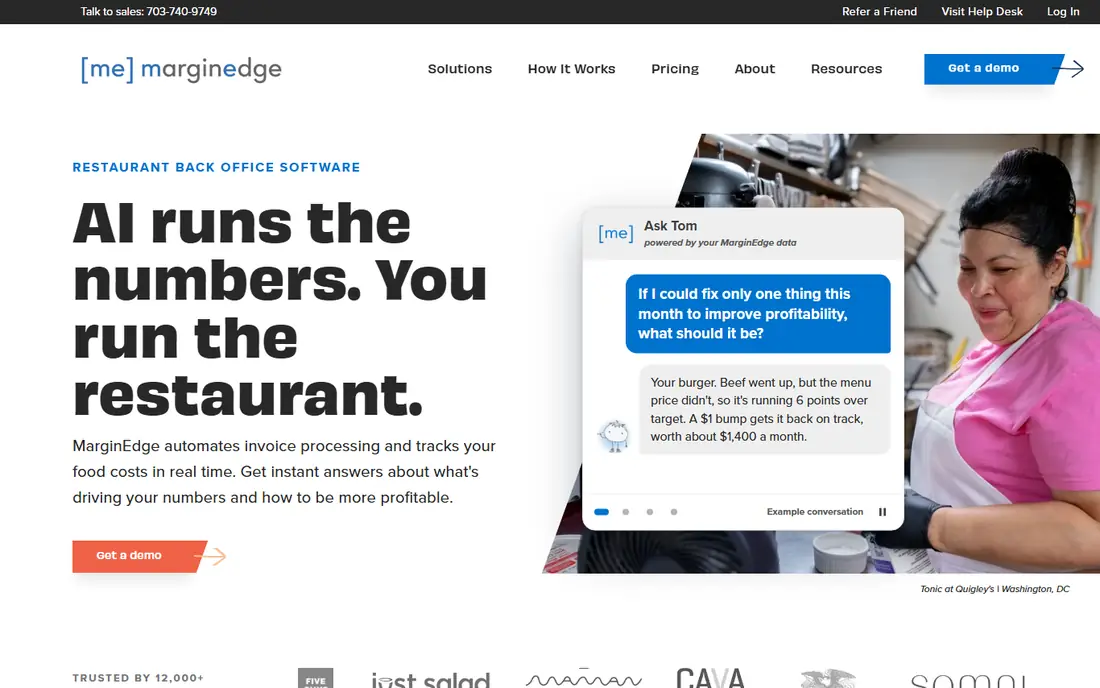
MarginEdge connects recipe costs to actual invoice prices, so your food cost reflects what you really paid, not a price from months ago. It also handles inventory counts and reporting, giving operators a clear view of cost percentage by dish and by category. That live link between invoices and recipes is its main strength.
Setup needs accurate recipes with correct quantities, and pricing is quote based. For a restaurant that wants trustworthy food costs without manual spreadsheet updates, MarginEdge is our first pick. Run a demo with your real menu to see the value before signing.
- Ties recipes to real invoice prices
- Inventory counts
- Good reporting
- Pricing is quote based
- Setup needs accurate recipes
xtraCHEF
Ideal for: Invoice processing and recipe costing
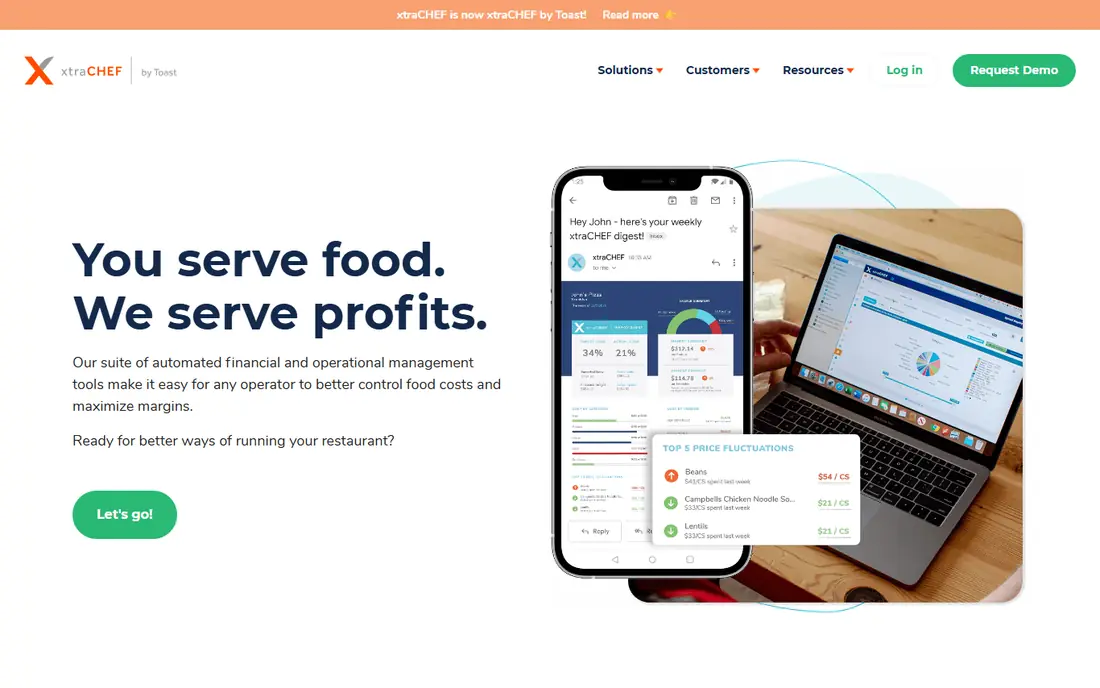
xtraCHEF, part of Toast, automates invoice entry by scanning supplier invoices, then ties those prices to recipes for accurate food costing. That automation saves hours of manual entry and keeps costs current as prices change. Integration with Toast point of sale and accounting tools helps operators see costs alongside sales.
It works best inside the Toast ecosystem, so non Toast restaurants should check integration fit. Pricing is quote based. For a Toast restaurant that wants costing without manual invoice work, xtraCHEF is a natural and strong choice.
- Automates invoice entry
- Recipe costing
- Integrates with Toast and accounting
- Best with Toast ecosystem
- Pricing is quote based
MarketMan
Ideal for: Multi unit purchasing and costing
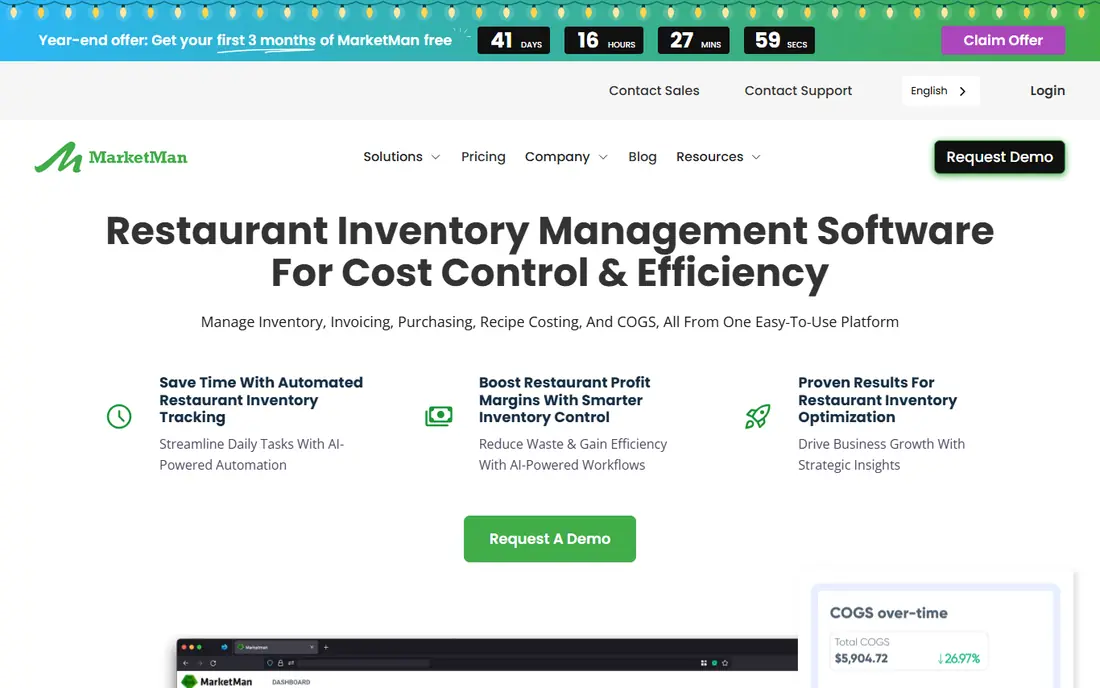
MarketMan combines purchasing, inventory and recipe costing in one system, which suits restaurant groups managing several locations. Operators can compare supplier prices, manage orders, track inventory and see food costs by location, all from one dashboard.
Pricing is quote based and implementation takes time for a group, since suppliers and recipes must be set up per location. For a multi unit operator that needs purchasing control plus costing, MarketMan is the most complete option in this list.
- Purchasing, inventory and costing together
- Good for multi unit groups
- Supplier tools
- Pricing is quote based
- Implementation takes time for groups
Food Cost Pro
Ideal for: Recipe costing for independent restaurants
Food Cost Pro focuses on recipe costing for independent restaurants, with tools to build recipes, enter ingredient prices, and see cost per dish and margin. Its focus makes it easy to learn, and the trial lets you test it with your real menu before paying.
Inventory features are fewer than MarginEdge or MarketMan, so it suits restaurants that mainly need costing rather than full inventory control. For an independent restaurant that wants clear dish costs without enterprise complexity, Food Cost Pro is a practical choice.
- Focused recipe costing
- Easy to learn
- Trial to test
- Fewer inventory features than rivals
- Smaller company
ChefMod
Ideal for: Recipe and menu costing
ChefMod offers recipe costing and menu engineering, helping chefs see which dishes earn well and which need a price change or recipe tweak. Supplier price data keeps costs current, and the interface stays simple for kitchen teams.
Inventory tools are lighter than full platforms, so it fits restaurants that need costing and menu decisions more than stock control. Pricing is quote based. For a chef led restaurant focused on menu profitability, ChefMod is a useful tool.
- Recipe costing and menu engineering
- Supplier price data
- Simple interface
- Pricing is quote based
- Inventory tools are lighter
Plate IQ
Ideal for: Invoice automation and costing
Plate IQ, now part of Ottimate, automates invoice data entry for restaurants, capturing line item prices that feed into costing and accounting. That automation reduces manual entry errors and keeps ingredient prices current, which is the foundation of accurate food costing.
Costing features vary by plan, so check what your plan includes. Pricing is quote based. For a restaurant that already struggles with invoice entry, Plate IQ solves the data problem first, and costing improves as a result.
- Automates invoice data entry
- Integrates with accounting
- Good reporting
- Pricing is quote based
- Costing features vary by plan
Aptean
Ideal for: Food production and manufacturing costing
Aptean offers food and beverage software for manufacturers, with recipe, batch and production costing plus compliance tools. It suits food producers who need to cost batches, track lots and meet regulatory requirements, rather than a single restaurant costing a dinner menu.
Enterprise pricing makes it overkill for a small restaurant. For a food manufacturer or a large commissary kitchen, Aptean gives production costing depth that restaurant tools cannot match.
- Strong for food manufacturers
- Recipe and batch costing
- Compliance tools
- Enterprise pricing
- Overkill for a single restaurant
Orca
Ideal for: Restaurant inventory and costing
Orca combines inventory management with recipe costing, giving growing restaurants a clear view of stock and dish margins in one dashboard. Its focus on usability suits operators who want costing without a steep learning curve.
As a newer entrant than MarginEdge or MarketMan, its track record is shorter, so ask for references from restaurants like yours. Pricing is quote based. For a growing restaurant that wants inventory plus costing in one tool, Orca is worth a demo.
- Inventory and costing together
- Good for growing restaurants
- Clear dashboards
- Pricing is quote based
- Newer than some rivals
How we picked these
We compared official feature pages, pricing pages and public reviews for each tool, focusing on software that is still maintained and works in October 2026. We favored tools with accurate recipe costing, real invoice or supplier price data, and a track record with restaurants or food businesses. We left out generic accounting tools with no recipe costing, discontinued products, and tools with no verifiable restaurant customers. Prices are often quote based, so request a demo with your real menu.
How to get accurate food costs
Start with accurate recipes. Weigh ingredients, record quantities in consistent units, and include every item, including oil, garnish and packaging. A recipe missing small items will understate cost, and those small items add up across hundreds of covers.
Next, keep prices current. Update ingredient prices when invoices change, and review costs monthly at minimum. A dish that was profitable in spring may lose money by autumn if a key ingredient price rose and the menu price did not.
Finally, act on the numbers. Review your lowest margin dishes each month, and decide whether to adjust price, change a recipe, renegotiate supply, or remove the dish. Costing software shows you the problem, but menu decisions fix it. Pair costing reviews with inventory counts to catch waste and theft early.
Waste tracking is the hidden companion to recipe costing, since a dish can look profitable on paper while spoilage and over portioning quietly erase the margin. Record waste daily, even briefly, and compare it with your theoretical food cost each week to find the gap. If the gap is large, check portioning, storage, and prep practices before blaming suppliers or menu prices. Software shows you the numbers, but a weekly waste review is what turns those numbers into profit. Also review your supplier contracts alongside your costing data every quarter. A costing tool that links to invoices will show price drift on key ingredients, and that evidence strengthens a renegotiation or a switch to an alternative supplier. Small price changes on high volume items, such as cooking oil, chicken, or dairy, move your overall food cost more than dramatic changes on a rarely used garnish. Focus negotiation effort where the volume is.
Menu engineering pairs naturally with food costing, since knowing a dish cost is only half the decision. Plot each dish by margin and popularity, then promote high margin favorites, rework or reprice low margin slow sellers, and consider removing dishes that are both unpopular and unprofitable. Review this picture monthly, since seasons, supplier prices, and customer tastes all shift. A costing tool gives you the numbers, but menu engineering turns them into decisions that protect profit.
Frequently asked questions
What is the best food costing software?
MarginEdge and xtraCHEF lead for restaurants, with MarketMan best for multi unit groups. Food Cost Pro suits independent restaurants that mainly need recipe costing. Demo each with your real menu before choosing.
How does food costing software work?
You enter recipes with ingredient quantities, and the software multiplies those quantities by current ingredient prices to give a cost per dish. Tools that link to invoices keep prices current automatically, which improves accuracy.
How much does food costing software cost?
Most tools use quote based pricing tied to locations, users and features. Independent restaurant tools cost less than multi unit or manufacturing platforms. Request a quote for your exact setup.
Can food costing software integrate with my POS?
Many tools integrate with point of sale and accounting systems, notably xtraCHEF with Toast. Check integration with your specific POS and accounting tools before signing, since integration quality varies.
What is a good food cost percentage?
Targets vary by concept, location and menu, but many full service restaurants aim for roughly 28 to 35 percent food cost. Your target depends on labor, rent and other costs, so judge food cost alongside total margins, not alone.