Best Food Journal App in 2026: 8 Apps Compared

- 1
 MyFitnessPalLarge food databaseVisit
- 2
 Lose ItSimple calorie trackingVisit
- 3
 CronometerDetailed nutrientsVisit
- 4
 YazioFasting plus trackingVisit
- 5
 LifesumMeal plans and habitsVisit
- MyFitnessPal and Lose It suit most users, with large food databases and easy logging.
- Cronometer suits users who want detailed nutrient tracking beyond calories.
- Yazio, Lifesum, and MyNetDiary cover fasting, meal plans, and diabetes-friendly tracking.
- FatSecret and Carb Manager suit budget-conscious and low-carb users.
Quick comparison
| Product | Ideal for | Price from | Free version | |
|---|---|---|---|---|
| MyFitnessPal | Large food database | Free | Yes | Visit |
| Lose It | Simple calorie tracking | Free | Yes | Visit |
| Cronometer | Detailed nutrients | Free | Yes | Visit |
| Yazio | Fasting plus tracking | Free | Yes | Visit |
| Lifesum | Meal plans and habits | Free | Yes | Visit |
 MyNetDiary | Diabetes-friendly tracking | Free | Yes | Visit |
 FatSecret | Free community tracking | Free | Yes | Visit |
 Carb Manager | Low-carb tracking | Free | Yes | Visit |
The best food journal app
We compared official feature pages, pricing pages, and app-store listings for food journal apps available in October 2026. The list covers calorie tracking, nutrient tracking, fasting, and low-carb options, since food journaling serves different goals.
This is not medical advice. Talk to a qualified health professional before changing your diet, especially if you have diabetes, an eating disorder history, kidney disease, or another health condition.
MyFitnessPal
Ideal for: Large food database
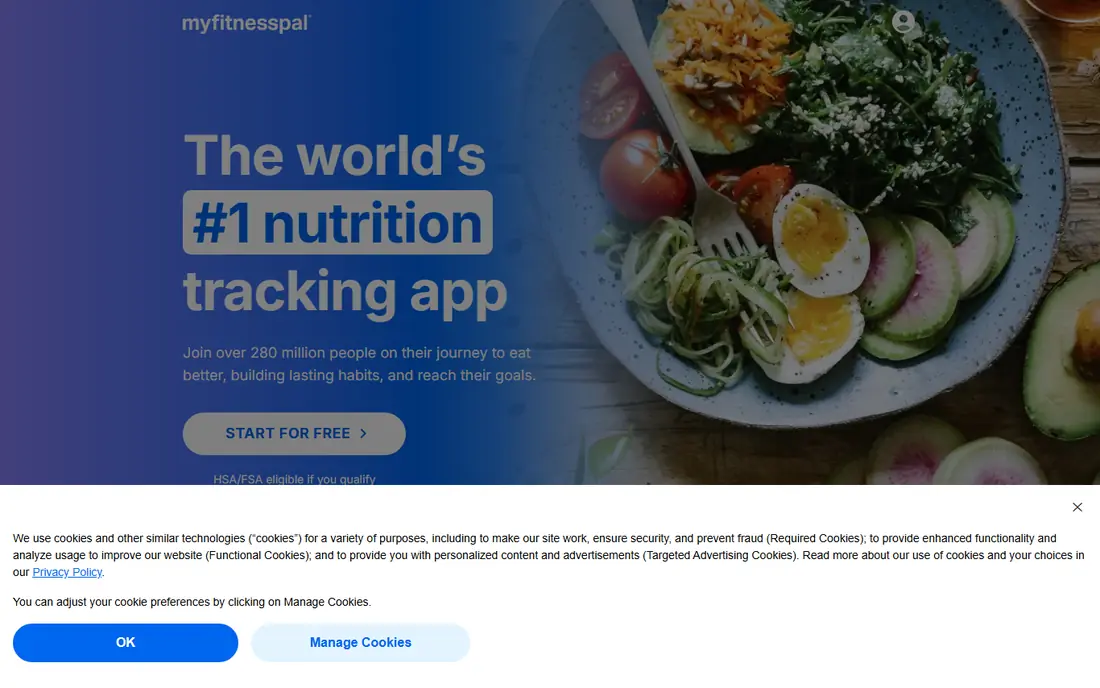
MyFitnessPal is the most widely used food journal app, with a large food database, barcode scanning, and recipe logging. Users can track calories, macros, and exercise, set goals, and connect wearables. A free tier covers core logging, with premium adding macro goals, meal plans, and ad-free use.
The free tier includes ads, and premium features need payment. For a user who wants the largest database and easiest logging, MyFitnessPal remains the default choice.
- Largest food database
- Barcode scanning
- Huge community
- Premium features need a paid plan
- Ads in free tier
Lose It
Ideal for: Simple calorie tracking
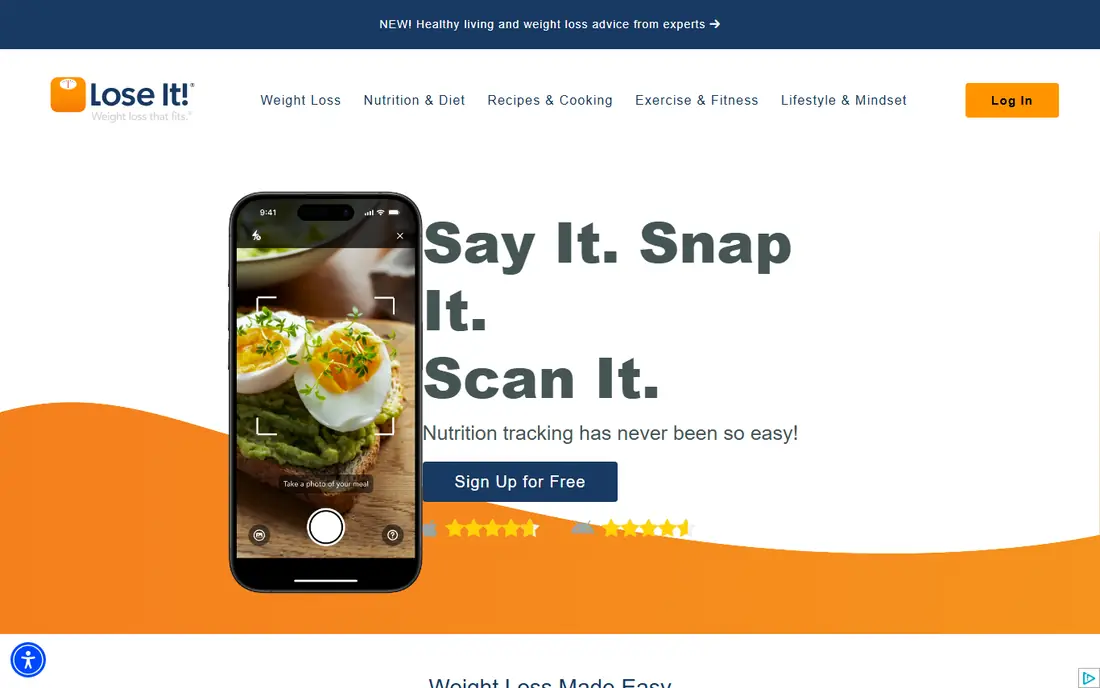
Lose It is a simple calorie tracking app with a clean interface, barcode scanning, and goal setting based on weight, activity, and timeline. Its food database is large, and its logging flow is fast, which helps users stick with daily tracking. A free tier covers core use, with premium adding macro goals and meal planning.
Nutrient detail is thinner than Cronometer's, so users who want vitamins and minerals should look elsewhere. For a user who wants simple, consistent calorie tracking, Lose It is an excellent choice.
- Simple, clean logging
- Barcode scanning
- Good goal setting
- Nutrient detail is thinner than Cronometer
- Premium for full features
Cronometer
Ideal for: Detailed nutrients
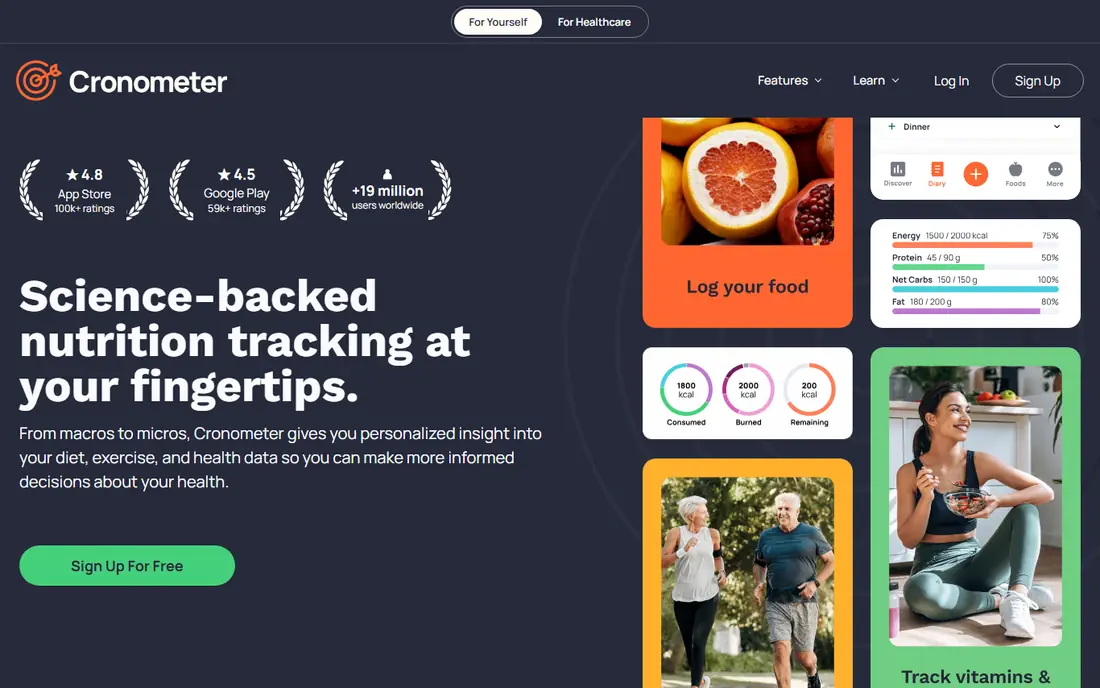
Cronometer tracks calories plus detailed vitamins, minerals, and other nutrients, with a verified food database and tools for fasting, biometrics, and custom foods. It suits users who want precision, including athletes, clinicians, and people managing specific nutrient needs. A free tier covers core tracking, with premium adding more features.
The interface is data-heavy, and new users face a learning curve. For a user who wants nutrient detail beyond calories, Cronometer is the most thorough app here.
- Detailed vitamin and mineral tracking
- Verified database
- Fasting and biometric tracking
- Interface is data-heavy
- Learning curve for new users
Yazio
Ideal for: Fasting plus tracking
Yazio combines calorie tracking with an intermittent fasting timer, meal plans, and a clean interface. Users can log food, track fasting windows, and follow plans for weight loss or maintenance. A free tier covers core tracking, with premium adding meal plans and advanced features.
The fasting focus may not suit users who do not fast, though calorie tracking works without it. For a user who wants tracking plus fasting in one app, Yazio is a strong fit.
- Calorie tracking plus fasting timer
- Meal plans
- Clean interface
- Premium features need a paid plan
- Fasting focus may not suit all users
Lifesum
Ideal for: Meal plans and habits
Lifesum is a health app with food tracking, meal plans, and habit tracking, plus a clean design and sync with Apple Health and Google Fit. Its plans cover weight loss, muscle gain, and healthy eating, with recipes and water tracking. A free tier covers core use, with premium adding full plans.
The food database is smaller than MyFitnessPal's, and premium features need payment. For a user who wants meal plans plus habits in a polished app, Lifesum is a good choice.
- Meal plans and habit tracking
- Clean design
- Apple Health and Google Fit sync
- Premium features need a paid plan
- Database is smaller than MyFitnessPal
MyNetDiary
Ideal for: Diabetes-friendly tracking
MyNetDiary offers food tracking with diabetes-friendly features, including carb counting, blood sugar tracking, and detailed nutrient reports. Its database is large, and its logging flow supports custom foods and recipes. A free tier covers core use, with premium adding more analysis.
The interface feels dated in places compared with Lifesum or Yazio. For a user managing diabetes or carb intake who wants detailed tracking, MyNetDiary is a strong choice.
- Diabetes and carb tracking
- Detailed nutrients
- Good reports
- Interface feels dated in places
- Premium for full features
FatSecret
Ideal for: Free community tracking
FatSecret is a free food journal app with a large database, barcode scanning, and a community for support and challenges. Users can track calories, macros, and exercise, with a free account covering core use. Its community features suit users who want peer support.
The interface feels dated, and premium features are limited compared with rivals. For a user who wants free tracking with community support, FatSecret is a practical choice.
- Free tracking with community
- Large database
- Barcode scanning
- Interface feels dated
- Premium features are limited
Carb Manager
Ideal for: Low-carb tracking
Carb Manager is a food journal app built for low-carb and keto diets, with net carb calculations, keto meal plans, and tracking for macros, fasting, and exercise. Its database covers keto-friendly foods, and its premium plan adds advanced meal plans and analysis. A free tier covers core tracking.
The low-carb focus means general trackers may prefer MyFitnessPal or Lose It. For a keto or low-carb user, Carb Manager's net carb math and meal plans are a clear advantage.
- Low-carb and keto tracking
- Net carb calculations
- Meal plans
- Focused on low-carb
- Less useful for general tracking
How we picked these
We compared official feature pages, pricing pages, and app-store listings for food journal apps available in October 2026. We favored apps with current products, a large food database, and a clear audience, from general trackers to keto and diabetes users. We also tested logging speed, database coverage for varied diets, and export options, since a journal must be fast, accurate, and portable. We did not include our own product in this list.
How to choose a food journal app
Start with your goal. General calorie tracking points to MyFitnessPal or Lose It, while nutrient detail points to Cronometer. Fasting points to Yazio, meal plans point to Lifesum, diabetes tracking points to MyNetDiary, and keto points to Carb Manager. Free community tracking points to FatSecret.
Then test logging for a week. Check whether barcode scanning finds your foods, whether the database covers your meals, and whether the interface encourages daily use. A journal only helps if you log consistently, so ease matters more than feature count.
Food journaling fails when logging feels like a chore, so test speed above all. Time yourself logging a typical day, including a home-cooked meal and a restaurant dish, and see which app gets it done fastest. Database coverage matters for your actual diet: an app strong on packaged foods may be weak on ethnic dishes or home recipes, so check your most common meals before subscribing. Also consider what happens on a bad day: an app that shames missed days or sets rigid targets can harm motivation, while one that shows weekly trends keeps perspective. For medical needs such as diabetes or kidney disease, confirm that the app tracks the nutrients your clinician cares about, and share reports with them. Finally, protect your data: check export options and privacy terms, since food logs reveal health information. A journal you can export and trust is one you can keep using for years.
Streaks and goals can help or hurt, depending on how an app presents them. Check whether the app encourages consistency without punishing missed days, since guilt-driven design often leads users to quit entirely after a break. Weekly trends and averages give a fairer picture than daily pass-or-fail scores, especially for users with irregular schedules. Also test recipe logging with a home-cooked meal, since recipe builders vary in ease and accuracy, and a clumsy recipe flow discourages logging the meals that matter most. For users tracking with a partner or clinician, check sharing and report options, since a clear weekly summary is more useful than raw daily logs. Choose an app whose tone keeps you logging honestly, even on imperfect days.
Frequently asked questions
What is the best food journal app?
MyFitnessPal suits most users for its large database and easy logging, while Lose It suits users who want simpler tracking. Cronometer suits nutrient detail, and Carb Manager suits low-carb users.
Are food journal apps free?
Yes, most offer free tiers for core tracking, with premium plans adding macro goals, meal plans, and ad-free use. MyFitnessPal, Lose It, Cronometer, Yazio, Lifesum, MyNetDiary, FatSecret, and Carb Manager all offer free tiers.
Can food journal apps help with weight loss?
Food journaling can help users notice patterns and stay within calorie goals, which supports weight loss for many people. Results vary, and a health professional can help set safe goals, especially for medical conditions.
What is the difference between MyFitnessPal and Cronometer?
MyFitnessPal offers the largest food database and easiest logging for general tracking, while Cronometer offers deeper vitamin and mineral tracking with a verified database. General users suit MyFitnessPal, while nutrient-focused users suit Cronometer.
Do I need to track every meal?
Tracking works best when it is consistent, but perfection is not required. Log most meals, estimate when needed, and focus on patterns over time rather than a single day. If tracking feels stressful, talk to a health professional about a gentler approach.
Is it better to track calories or nutrients?
It depends on your goal. Calorie tracking suits weight management, since total intake drives weight change, while nutrient tracking suits specific health needs, such as fiber, sodium, or vitamin intake. Many users start with calories and macros, then add nutrient detail if a clinician recommends it. Cronometer suits nutrient-focused tracking, while MyFitnessPal and Lose It suit calorie-focused tracking. Whichever you choose, consistency matters more than precision: an approximate log kept daily beats a perfect log kept for a week.